
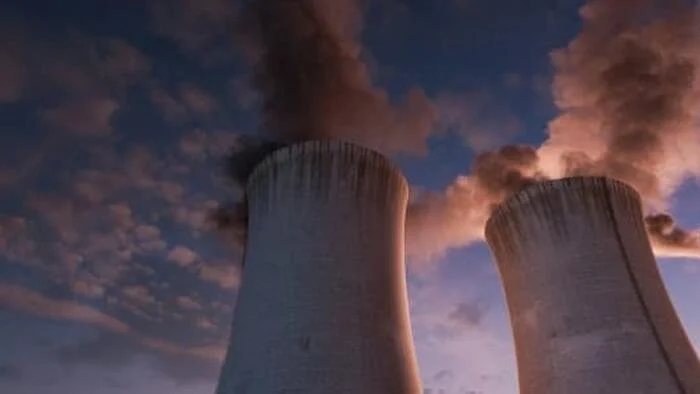
India has achieved a monumental milestone in its ambitious nuclear energy program with the successful attainment of criticality by its state-of-the-art Prototype Fast Breeder Reactor (PFBR) at Kalpakkam, Tamil Nadu. This achievement, announced earlier this month, signifies that the complex nuclear chain reaction within the reactor is now self-sustaining, a crucial step before its full commercial operation. The PFBR’s success is not merely a technical triumph; it represents a strategic leap forward for the clean energy transition in the world’s most populous nation, promising enhanced energy security, reduced reliance on imported uranium, and a pathway to harness India’s vast domestic thorium reserves for fuel.
The Significance of Criticality: A Nuclear Milestone
The term "criticality" in nuclear engineering refers to the point at which a nuclear reactor sustains a chain reaction, meaning that for every nucleus that undergoes fission, at least one neutron produced goes on to cause another fission. This delicate balance is fundamental to power generation in a nuclear plant. For the Prototype Fast Breeder Reactor, achieving criticality is particularly significant due to the reactor’s advanced design and its central role in India’s long-term nuclear strategy. This milestone positions India as only the second country globally, after Russia, to operate a commercial-scale fast breeder reactor, underscoring its indigenous technological prowess in a highly complex and sensitive field.
Prime Minister Narendra Modi lauded the achievement as "a proud moment for India" and "a defining step" in advancing the nation’s nuclear program. In a post on X, he stated, "This advanced reactor, capable of producing more fuel than it consumes, reflects the depth of our scientific capability and the strength of our engineering enterprise. It is a decisive step towards harnessing our vast thorium reserves in the third stage of the programme." His remarks highlight both the scientific accomplishment and the profound strategic implications for India’s energy future.
Understanding Fast Breeder Reactors: A Paradigm Shift in Nuclear Fuel Cycles
Fast Breeder Reactors (FBRs) represent a radical departure from conventional light water or heavy water reactors, which primarily consume fissile uranium-235. FBRs are designed to "breed" more fissile material than they consume, primarily by converting abundant but non-fissile uranium-238 into fissile plutonium-239. They achieve this by utilizing "fast" (high-energy) neutrons, unlike thermal reactors that slow down neutrons. The process involves surrounding the reactor core with a "blanket" of uranium-238, which captures neutrons and transmutes into plutonium. This unique capability dramatically extends the world’s nuclear fuel resources, transforming what was once considered nuclear waste into a valuable energy source.
The concept of FBRs has been explored by several nations, including the United States, France, Japan, Germany, and the United Kingdom, since the mid-20th century. However, many of these programs were scaled back or abandoned due to a combination of technical challenges, high costs, safety concerns (particularly related to the use of liquid sodium as a coolant), and a perceived abundance of uranium in the past. Russia, with its BN-600 and BN-800 reactors, has been a consistent proponent and operator of FBR technology. India’s unwavering commitment to its FBR program, despite these global trends, reflects a deeply strategic vision for its energy independence.
India’s Three-Stage Nuclear Power Program: A Thorium-Based Future
The PFBR’s success is a cornerstone of India’s meticulously planned three-stage nuclear power program, a vision conceived by the legendary physicist Dr. Homi J. Bhabha in the 1950s. This indigenous program was designed to leverage India’s unique nuclear fuel resource profile, characterized by limited uranium but vast reserves of thorium, estimated to be among the largest in the world.
- Stage 1: Pressurised Heavy Water Reactors (PHWRs): This stage involves the use of natural uranium in PHWRs to produce electricity. A byproduct of this stage is plutonium-239. India has successfully mastered this technology, operating a fleet of PHWRs that form the backbone of its current nuclear capacity.
- Stage 2: Fast Breeder Reactors (FBRs): This is where the PFBR plays its critical role. FBRs use the plutonium-239 generated in Stage 1 as fuel, along with uranium-238. In doing so, they not only generate power but also "breed" more plutonium-239, and crucially, convert thorium-232 into fissile uranium-233. This stage is vital for expanding India’s fissile material inventory.
- Stage 3: Advanced Heavy Water Reactors (AHWRs): The ultimate goal of India’s program, this stage envisions reactors fueled primarily by uranium-233, which is bred from thorium in FBRs. This stage will allow India to tap into its colossal thorium reserves, ensuring energy security for centuries. The development of AHWRs is currently underway, with designs focusing on enhanced safety and efficiency.
The PFBR, therefore, is not just a reactor; it is the linchpin connecting the first stage of India’s nuclear program to its ambitious third stage, promising energy self-sufficiency and a sustainable fuel cycle.
A Long and Arduous Journey: The PFBR Timeline
The journey to PFBR criticality has been a testament to India’s perseverance and scientific dedication, spanning over two decades. The project, overseen by Bharatiya Nabhikiya Vidyut Nigam Limited (BHAVINI), a public sector undertaking under the Department of Atomic Energy, was initiated in 2000. Located at the Indira Gandhi Centre for Atomic Research (IGCAR) in Kalpakkam, Tamil Nadu, the reactor’s construction faced numerous technical challenges inherent in building such a complex and pioneering facility, including the intricacies of liquid sodium cooling and specialized materials handling.
While the specific date for its full commercial operation remains unclear, the PFBR is expected to generate 500 megawatts (MWe) of carbon-free electricity once fully online. This contribution, though seemingly modest in the context of India’s gargantuan energy needs, represents a significant step towards the nation’s ambitious target of achieving 100 gigawatts (GW) of nuclear power capacity by 2047 – the centenary of its independence. Currently, India’s nuclear power capacity stands at approximately 9 GW, contributing just about 2% to its overall energy mix. The PFBR’s operationalization will pave the way for subsequent FBRs, accelerating the expansion of this crucial clean energy source.
Energy Security and Autonomy: Reducing Uranium Dependency
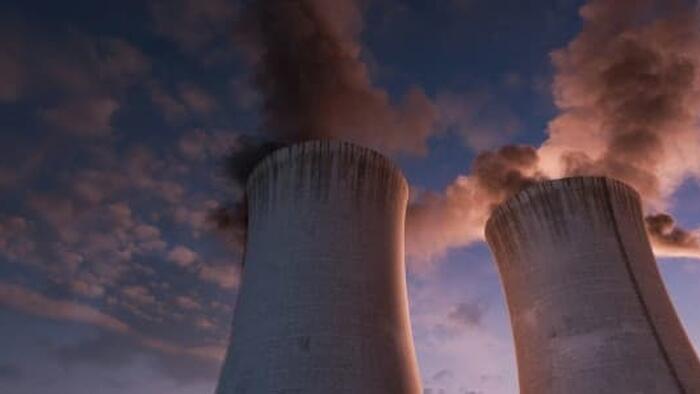
One of the most compelling strategic advantages of the PFBR and India’s broader three-stage program is its potential to significantly enhance the nation’s energy security and autonomy. India possesses relatively limited domestic uranium reserves, making it reliant on imports from countries like Kazakhstan, Canada, and Australia to fuel its existing nuclear fleet. This dependency introduces geopolitical vulnerabilities and economic pressures.
By "breeding" plutonium from uranium-238 and ultimately converting thorium into uranium-233, FBRs drastically reduce the need for external uranium supplies. This capability is a "win-win" for the subcontinent’s energy security, allowing India to leverage its indigenous resources and chart a more independent course for its power generation. The ability to utilize its vast thorium reserves, estimated at over 450,000 tonnes, means India could potentially power itself for centuries without relying on external fuel sources.
Decarbonization and Economic Development: Balancing the Energy Tightrope
India stands at a critical juncture, navigating the complex tightrope of balancing rapid economic development and increasing energy access for its 1.47 billion people with its commitments to decarbonization and global climate goals. As the world’s third-largest energy consumer after the United States and China, India’s energy demand is projected to soar in the coming decades, driven by industrialization, urbanization, and a burgeoning middle class.
Despite considerable economic progress, a significant portion of India’s population still grapples with energy poverty, underscoring the urgency of increasing energy access. "Tackling the energy access gap is a critical step in meeting the country’s economic and social development ambitions, and it has been a top priority for successive Indian governments," noted a Guardian report from September of last year. Meeting the energy needs of such a vast population without derailing global climate efforts requires massive investments across a diverse energy portfolio.
While India has made significant strides in renewable energy, particularly solar and wind, these intermittent sources alone cannot provide the continuous, baseload power required for a rapidly industrializing economy. This is where nuclear power, as a reliable, high-density, and carbon-free energy source, becomes indispensable. The PFBR, with its potential to generate 500 MWe of clean electricity, contributes directly to India’s decarbonization strategy and its target of achieving net-zero emissions by 2070.
Challenges and the "All of the Above" Approach
Despite the monumental success of the PFBR, India’s energy transition path is fraught with challenges. Nuclear projects, particularly advanced ones like FBRs, are characterized by extremely high capital costs, long gestation periods, and complex regulatory frameworks. The global history of FBR development, with many nations abandoning their programs, underscores these difficulties. Concerns regarding nuclear safety, waste management, and proliferation risks also remain persistent, demanding rigorous oversight and technological advancements.
India’s energy strategy has historically been an "all of the above" approach, seeking to expand capacity from both fossil and non-fossil sources to meet ever-growing demand. Coal still dominates India’s energy mix, accounting for over 70% of electricity generation. While this pragmatic approach has enabled economic growth, experts argue that a more streamlined and strategic methodology is now imperative.
Ashwini Swain, an energy transition expert at the Delhi-based Sustainable Futures Collaborative, articulated this sentiment to The Guardian: "India’s energy transition goals have always been an ‘all of the above’ approach, to increase capacity from fossil and non-fossil sources as part of its broader economic growth aspirations – and in response to growing demand. So far the approach has mostly been ad hoc and supply-centric rather than targeted to end users, because it comes from a scarcity mindset. This has worked out so far, but India has reached a stage where we need a much more strategic whole systems approach to energy transition." The PFBR’s success, while a technological triumph, must be integrated into this broader strategic vision.
Beyond the PFBR: India’s Broader Nuclear Ambitions and International Implications
The PFBR’s criticality is not an isolated event but a stepping stone in India’s expansive nuclear ambitions. The nation plans to build several more FBRs in the future, further cementing its position as a leader in this advanced technology. Concurrently, India is also pursuing the development of conventional Pressurised Water Reactors (PWRs) with international collaboration, and actively researching other next-generation nuclear models, including Small Modular Reactors (SMRs), which offer advantages in terms of modularity, reduced capital costs, and flexibility. The ultimate goal remains the full commercial deployment of thorium-based Advanced Heavy Water Reactors.
Internationally, India’s FBR success places it in an elite technological club. As a non-signatory to the Nuclear Non-Proliferation Treaty (NPT), India has developed its nuclear program largely indigenously, a unique trajectory that has sometimes led to isolation but also fostered self-reliance. This achievement demonstrates India’s capacity for independent scientific and engineering excellence. In an era marked by renewed global interest in nuclear power as a tool for climate mitigation and energy independence, India’s FBR program could offer valuable insights and potentially pave the way for future international collaboration, albeit with careful consideration of non-proliferation norms.
The successful attainment of criticality by the Prototype Fast Breeder Reactor at Kalpakkam marks a defining moment for India. It is a testament to decades of scientific endeavor, strategic planning, and national commitment. While the full operationalization of the PFBR and the subsequent development of a robust thorium fuel cycle will undoubtedly face further challenges, this milestone firmly establishes India as a frontrunner in advanced nuclear technology, poised to secure its energy future and contribute significantly to global decarbonization efforts. The long-term implications for India’s energy security, economic development, and technological leadership are profound, cementing nuclear power as an indispensable component of its strategic "whole systems approach" to energy transition.

