
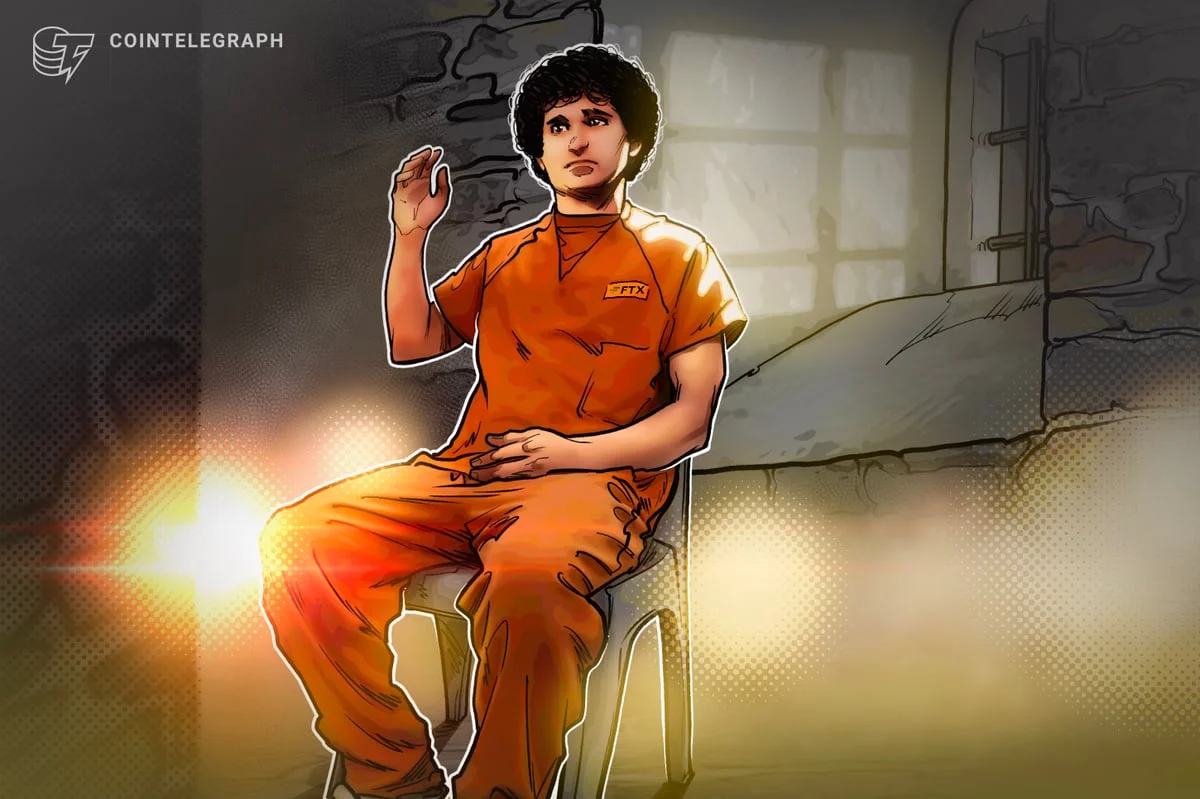
The precarious prospect of a presidential pardon for Sam Bankman-Fried, the former titan of the cryptocurrency world whose FTX empire imploded spectacularly, has seen its odds further diminish, according to data from major prediction markets. Both Polymarket and Kalshi, prominent platforms for assessing the likelihood of future events, now place the probability of Bankman-Fried receiving a presidential pardon within the current year at a mere 11% and 9%, respectively. This downtick, though seemingly marginal, follows a recent interview with Bankman-Fried’s parents, Joseph Bankman and Barbara Fried, who have been actively challenging the fraud conviction of their son.
The interview, aired on March 21st, appears to have had a subtle yet discernible impact on the market’s sentiment. Kalshi saw a 1% decrease in pardon odds, while Polymarket experienced a 2% dip. While these figures may appear modest, they underscore the sensitivity of public and market perception to ongoing narratives surrounding the FTX collapse and the legal proceedings that have ensnared its former CEO. The interview itself brought renewed attention to the parents’ evolving role and their staunch defense of their son, offering a counter-narrative to the widely accepted account of fraud and mismanagement.
Bankman and Fried Mount a Defense Against the FTX Narrative
In a candid conversation with CNN’s Michael Smerconish, Joseph Bankman and Barbara Fried articulated their belief that the judgment against their son was fundamentally flawed. "There’s an appeal on the case, but we don’t think it’s fraud," Bankman stated, directly confronting the core of the charges that led to his son’s conviction.
While acknowledging that Alameda Research, a hedge fund closely associated with FTX, did indeed borrow customer funds from the exchange, Bankman vehemently denied any impropriety in their usage. He argued that Alameda operated similarly to other entities on the platform, engaging in the standard practice of depositing and borrowing funds. "The funds were not used improperly," he asserted, adding, "On the exchange, you were able to put in money, and you were able to borrow money. Alameda acted like everybody else, putting in money and borrowing money."
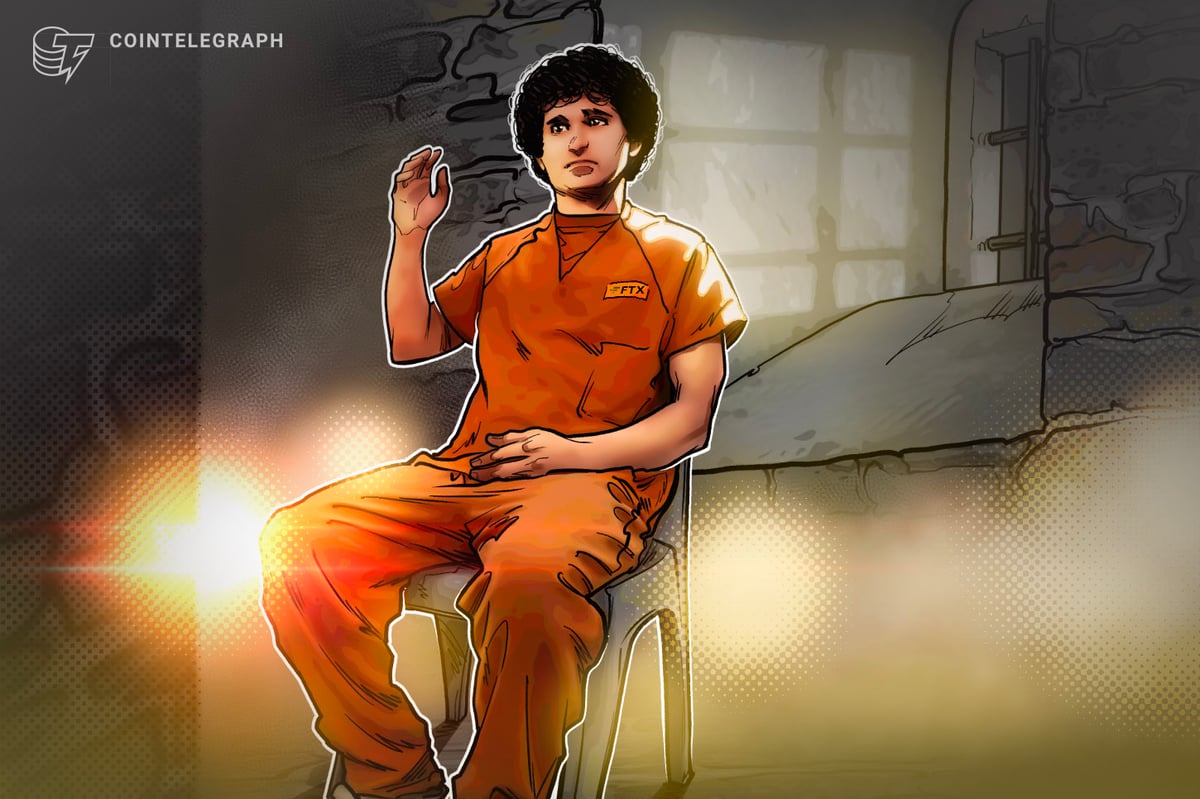
This assertion directly challenges the prevailing narrative surrounding the FTX collapse, a narrative in which Bankman and Fried themselves were once implicated. Both parents played active roles within the FTX ecosystem. Bankman served as a paid advisor, primarily focusing on the exchange’s initiatives in "effective altruism," a philosophy advocating for the maximization of good through rational, evidence-based approaches. Fried, on the other hand, functioned as a political consultant, leveraging her expertise to navigate the complex landscape of political influence.
Their involvement was not without consequence. In 2023, as FTX underwent restructuring, the exchange initiated legal action against them, filing a complaint in the Delaware Bankruptcy Court. FTX sought to reclaim millions of dollars, alleging that Bankman and Fried had "fraudulently transferred and misappropriated" funds. The complaint leveled serious accusations, stating, "Bankman played a key role in perpetuating this culture of misrepresentations and gross mismanagement and helped cover up allegations that would have exposed the fraud committed by the FTX Insiders."
The lawsuit specifically highlighted claims that Bankman and Fried had discussed the transfer of a $10 million cash gift and a $16.4 million luxury property in The Bahamas from Sam Bankman-Fried to themselves. FTX sought the return of these assets, as well as the property itself. This legal battle was eventually dismissed without prejudice in February 2025, a legal outcome that allows for the possibility of refiling the case at a later date and in a different jurisdiction.
A year later, in February 2026, Barbara Fried formally filed an appeal on behalf of her son. Court documents submitted to the New York Southern District Court argued that newly presented testimony would have "refuted three principal claims the Government made about FTX’s financial condition on which its allegations of fraud rested." These core claims, central to the prosecution’s case, were that:
- Misappropriation of Customer Funds: The prosecution alleged that FTX customer funds were systematically transferred to Alameda Research and used for unauthorized purposes, including risky investments and personal enrichment.
- False Financial Statements: The government contended that FTX and Alameda presented misleading financial information to investors and customers, obscuring the true financial health and operational practices of the entities.
- Concealment of Financial Distress: A key element of the fraud charge was the alleged effort to hide the dire financial situation of FTX and Alameda from stakeholders, leading them to believe the companies were solvent and operating responsibly.
In their CNN interview, Joseph Bankman countered these points by asserting that the "money was always there" and that Alameda "always had more than enough security to cover everything." He emphasized that all parties involved had been repaid and that "the money never left the companies." Barbara Fried echoed this sentiment, explaining that "all the money was turned over by Sam voluntarily when there was a liquidity crisis. All the assets ended up in the estate in FTX which was taken over by the debtors, so-called debtors, who ran the bankruptcy. All the money, it was there, every penny of it."

The Pursuit of a Pardon and Political Undertones
Beyond the legal appeals, the Bankman-Fried family has also been exploring avenues for a presidential pardon. The appeal filing itself included a motion to change the presiding judge, Lewis Kaplan, citing "many instances of extreme prejudice" shown towards Bankman-Fried during the trial. This move signals a broader strategy to challenge the fairness of the legal process.
Barbara Fried articulated a strong belief that her son’s prosecution was "essentially political." She controversially suggested that the "Biden administration had decided to destroy crypto, to strangle the baby in the crib." According to Fried, instead of clearly communicating its stance on cryptocurrency regulation and outlining penalties for non-compliance, the administration allegedly engaged in "behind the scenes" efforts to "sabotage the crypto industry." She further posited that these prosecutions were driven by political ambition, stating, "I am describing a part of the Biden administration that I think did really bad things."
This assertion is particularly noteworthy given Sam Bankman-Fried’s significant political donations to the Biden administration and various Democratic lawmakers prior to his downfall. In an attempt to distance their son from partisan affiliations, his parents sought to portray him as having had negative experiences with the Biden administration regarding crypto and business matters. Joseph Bankman claimed that while Sam did contribute to Biden’s campaign, his "bad experiences with the Biden administration on crypto and on business in general" led him to give "at least as much to Republicans." He stressed that the notion of Sam being solely a "liberal Democrat was never true."
This narrative aligns with Bankman-Fried’s own past statements. He has previously downplayed his support for Democratic politicians, expressing frustration and disappointment with the Democratic Party and the Biden administration’s approach to the crypto industry. He has also drawn parallels between his own prosecution and former President Donald Trump’s legal challenges, including his disputes with Judge Kaplan, who presided over a defamation case against Trump.
The parents’ appeals appeared to pivot towards a direct appeal to Donald Trump. When asked what Sam Bankman-Fried’s mother wished to convey to the President of the United States, Fried responded, "I think that Sam was a victim of an out-of-control prosecution and I know that Trump himself feels he was." She continued by highlighting her son’s intellectual prowess and potential, suggesting that his freedom would allow him to contribute significantly to the economy and areas of interest to Trump. "I would say also that being one of the most brilliant, talented young men of this generation and the amount of good that he can do in this world, if he is free to live a life he wants, it would be of enormous benefit to the economy, to a lot of things that Trump cares about in this world. He [Trump] ought to regard Sam as a huge asset going forward for the country."

The Pardon Industry and the Unlikely Path to Clemency
The pursuit of presidential pardons, particularly in high-profile cases, has become a significant aspect of political and legal maneuvering. An analysis by the Campaign Legal Center revealed a pattern in former President Trump’s clemency decisions, often involving pardons for allies in exchange for loyalty, rewards for individuals who acted on his behalf, or brokered pardons secured through well-connected lobbyists and political fixers. This suggests a transactional approach to clemency, often driven by personal or political considerations rather than purely judicial merit.
Despite the parents’ overtures, the prospect of a pardon faces considerable headwinds. Pro-crypto Senator Cynthia Lummis, when questioned by Politico about the potential for a pardon, expressed hope that the president would "not fall for that," emphasizing the harm Bankman-Fried had inflicted on many individuals. Furthermore, former President Trump himself has previously indicated to The New York Times that he would not pardon Bankman-Fried.
Reports from Bloomberg in January 2025 indicated that Barbara Fried and Joseph Bankman had been actively exploring avenues for securing a pardon for their son since Trump’s inauguration, engaging with lawyers and individuals within Trump’s political circle. This proactive approach underscores the family’s determination to leverage any potential political influence.
In a recent development, Bankman-Fried, through legal proxies, posted on social media on March 18th, expressing support for Trump’s decision to bomb Iran. This action, while seemingly unrelated to his legal battles, could be interpreted as an attempt to align himself with Trump’s foreign policy stances and potentially curry favor. However, prediction markets for a U.S./Iran ceasefire by year-end show a significantly higher probability (78%) compared to the slim chances of a Bankman-Fried pardon, highlighting the disparity in perceived outcomes.
The legal and political landscape surrounding Sam Bankman-Fried remains complex and fraught with challenges. While his parents continue to advocate for his release and challenge his conviction, the odds on prediction markets and public sentiment suggest that a presidential pardon remains a distant and unlikely possibility. The interplay of legal appeals, political maneuvering, and the ongoing fallout from the FTX collapse will undoubtedly continue to shape the narrative and the potential future of the former crypto wunderkind.

