
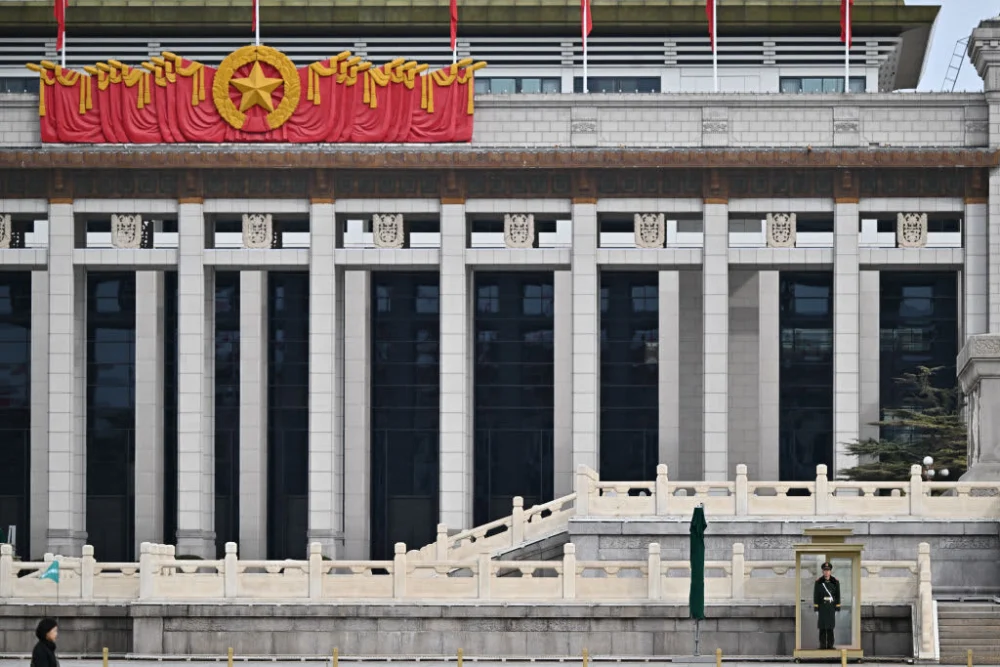
China’s top policymakers are due to release growth targets and stimulus plans for the year at an annual parliamentary meeting that kicks off Wednesday, a pivotal moment for the world’s second-largest economy as it navigates a complex landscape of domestic challenges and global uncertainties. The gathering, dubbed the "Two Sessions," comprises two key bodies: the consultative Chinese People’s Political Consultative Conference (CPPCC), which will commence later in the day, and the National People’s Congress (NPC), China’s top legislature, scheduled to open on Thursday. Chinese Premier Li Qiang is slated to deliver a comprehensive government work report at the NPC, outlining a series of economic and social targets that were largely decided during a high-level Central Economic Work Conference held in December.
This year’s "Two Sessions" holds particular significance as policymakers are also expected to release the detailed framework of a new five-year development plan, the 15th such program in China’s modern history, covering the period from 2026 to 2030. Global investors, analysts, and trading partners will be scrutinizing these announcements for clear signals on how Beijing intends to address pressing economic issues, bolster domestic demand, and accelerate its ambitious domestic technological aspirations, especially against a backdrop of simmering geopolitical tensions. These forthcoming goals will mark the penultimate strategic step towards China’s overarching 2035 vision, with a pronounced focus on achieving comprehensive technological self-sufficiency and fostering high-quality development. Senior Chinese leaders, including top diplomat Wang Yi and the heads of key economic and financial ministries, typically engage with the press during the "Two Sessions," offering further insights into the government’s policy directives. The gathering usually spans approximately one week and is anticipated to conclude on March 11 this year. Analysts from the Asia Society have observed that China’s intensified anti-corruption campaign has led to a reduction in the number of delegates participating in the "Two Sessions" this year, signaling continued efforts to streamline governance and enhance accountability within the Party and state apparatus.
The Significance and Structure of the "Two Sessions"
The "Two Sessions" (Lianghui, 两会) represent the most important annual political event in China, serving as a platform for the Communist Party of China (CPC) to consolidate its policy agenda, showcase its achievements, and outline its vision for the future. The two constituent bodies, the National People’s Congress (NPC) and the Chinese People’s Political Consultative Conference (CPPCC), play distinct but complementary roles. The NPC, with its nearly 3,000 delegates, is constitutionally China’s highest organ of state power, responsible for enacting laws, electing state leaders, and approving the government’s work report, budget, and development plans. While its legislative functions are often seen as largely ceremonial, given the Party’s ultimate authority, the NPC sessions are crucial for formalizing policies and demonstrating national unity behind the Party’s leadership. The CPPCC, a broader advisory body composed of delegates from various political parties, social organizations, and prominent individuals, serves as a consultative forum. Its members offer suggestions and recommendations on national affairs, reflecting a wider spectrum of societal views, albeit within the Party-led framework.
Historically, the "Two Sessions" has been the stage for announcing major policy shifts, economic targets, and leadership changes. Its timing in early March allows the government to set the tone and direction for the entire year, providing clarity to provincial governments, state-owned enterprises, and the private sector on national priorities. The rigorous security measures, exemplified by a People’s Liberation Army (PLA) soldier standing guard in front of the National Museum of China in Beijing on March 3, 2025, underscore the political gravity and national focus surrounding this event. The reduction in delegate numbers due to the ongoing anti-corruption campaign, which has been a hallmark of President Xi Jinping’s administration since 2012, highlights the Party’s sustained drive to maintain discipline and loyalty, potentially leading to a more unified and streamlined policy-making process. This institutional streamlining is often viewed as a means to enhance the Party’s effectiveness in implementing its ambitious agenda, from economic restructuring to national security.
Economic Targets Under Scrutiny: Growth, Inflation, and Fiscal Policy
Economists worldwide are keenly anticipating Premier Li Qiang’s announcements, particularly regarding the key macroeconomic indicators that will guide China’s economic policy for the coming year. These targets offer a window into Beijing’s assessment of its economic health and its strategic priorities.
GDP Growth Target: Balancing Ambition with Reality
One of the most closely watched figures will be the Gross Domestic Product (GDP) growth target. Several Chinese local governments have already adjusted their growth ambitions downwards for 2026, signaling that Beijing might follow suit with the national target. Expectations are coalescing around a target of "around 4.5% to 5%." Should the target fall below 5%, it would represent the lowest on record, excluding 2020 when China notably did not set a GDP goal due to the unprecedented disruption caused by the COVID-19 pandemic. In the three preceding years, the target had consistently been "around 5%." For context, China’s economic growth averaged over 9% for three decades, with recent years seeing a gradual moderation.
A slightly lower target, as suggested by economists at Economist Intelligence Unit who project a 4.6% growth, could afford policymakers greater flexibility to prioritize structural reforms over headline growth figures and improve the quality and reliability of economic data. This shift aligns with China’s broader strategy of transitioning from high-speed, quantity-driven growth to high-quality, sustainable development, a concept often termed "new normal" in official discourse. This approach emphasizes innovation, environmental protection, and domestic consumption over export-led growth and heavy investment. However, Morgan Stanley analysts express a "low probability" that Beijing will set a significantly smaller growth target. They argue that policymakers typically resort to GDP ranges – rather than single-figure targets – only during periods of severe economic stress. Furthermore, 2026 marks the inaugural year of China’s 15th Five-Year Plan, a period that traditionally demands robust growth figures to anchor confidence, attract investment, and ensure the successful implementation of long-term strategic goals. The balancing act lies in demonstrating confidence and stability while acknowledging underlying structural headwinds like an aging population and declining foreign direct investment.

Inflation Target: Combating Deflationary Pressures
The inflation target, expected to be "around 2%," will be another critical indicator. China has been grappling with persistent deflationary pressures, particularly evident in its producer price index (PPI) and, at times, its consumer price index (CPI). For instance, in January 2026, China’s CPI unexpectedly fell by 0.8% year-on-year, the steepest decline in over 14 years, while the PPI dropped for the 16th consecutive month, indicating a sustained period of falling factory-gate prices. This trend reflects weak domestic demand, intense competition among manufacturers, and a struggling property sector. A 2% target, while seemingly modest given global inflation trends, would signal the government’s intention to stimulate aggregate demand and prevent a prolonged deflationary spiral, which could cripple corporate profits, increase the real burden of debt, and depress consumer spending. Policies to achieve this might include targeted monetary easing, increased fiscal spending, and measures to boost consumer confidence through job creation and income growth initiatives.
Budget Deficit Target: Expanding Fiscal Support
The budget deficit target is anticipated to be "around 4%." Such a target would mirror last year’s figure, which marked a rare and significant expansion of government spending relative to GDP. The 4% deficit set in 2025 was the highest on record since 2010, according to data accessed via Wind Information, surpassing the prior high of 3.6% recorded in 2020 during the initial phase of the pandemic. An elevated budget deficit indicates Beijing’s readiness to leverage fiscal policy more aggressively to support economic growth, acknowledging that monetary policy alone may be insufficient. This increased spending is likely to be directed towards strategic infrastructure projects (e.g., high-speed rail, digital infrastructure), support for key industrial sectors deemed critical for technological self-reliance (e.g., semiconductors, electric vehicles), social safety nets (e.g., healthcare, education, pensions), and targeted subsidies to stimulate consumption. This commitment to higher fiscal outlays underscores the government’s resolve to stabilize the economy amid ongoing challenges in the property sector and subdued consumer confidence, effectively substituting for weaker private sector demand.
The 15th Five-Year Plan (2026-2030): Blueprint for China’s Future
Beyond the immediate economic targets, the unveiling of the 15th Five-Year Plan (FYP) for 2026-2030 is arguably the most significant long-term policy document to emerge from the "Two Sessions." These plans are the cornerstone of China’s economic and social governance, setting overarching goals and specific targets across various sectors. The 15th FYP is expected to consolidate and amplify themes from previous plans while introducing new priorities reflecting current domestic and international realities. It will be the penultimate FYP before China aims to achieve its "socialist modernization" goals by 2035.
Key pillars of this plan are anticipated to include:
- Technological Self-Sufficiency and Innovation: A central tenet, driven by ongoing geopolitical competition and U.S. restrictions on advanced technology. The plan will likely detail ambitious investments in research and development (R&D) in critical areas such as semiconductors, artificial intelligence, quantum computing, biotechnology, and advanced manufacturing. The goal is to reduce reliance on foreign technology, foster indigenous innovation, and build robust domestic supply chains, often referred to as "hard technology." This strategy is deeply embedded within the "new productive forces" framework, emphasizing advanced manufacturing and digital economy.
- Boosting Domestic Consumption and "Dual Circulation": Recognizing the need to rebalance the economy away from an over-reliance on exports and investment, the plan will likely outline strategies to enhance household incomes, expand social welfare programs, and create a more robust domestic market. This aligns with the "dual circulation" strategy, emphasizing internal demand as the primary driver of growth ("internal circulation") while remaining open to international trade and investment ("external circulation"). Policies will focus on improving the business environment for private enterprises and fostering fair competition.
- Green Development and Sustainability: China’s commitment to peak carbon emissions before 2030 and achieve carbon neutrality by 2060 will be reinforced. The 15th FYP will likely accelerate investments in renewable energy (solar, wind, hydro, nuclear), energy efficiency, environmental protection (e.g., pollution control, ecological restoration), and sustainable urbanization. This includes developing green industries and fostering a circular economy.
- Rural Revitalization and Regional Development: Efforts to bridge the urban-rural divide, improve rural living standards, modernize agricultural practices, and ensure food security will continue to be a priority. The plan will also likely emphasize balanced regional development, reducing disparities between coastal and inland areas.
- National Security and Resilience: In an increasingly volatile global environment, the plan will likely emphasize strengthening national security across economic, technological, food, and energy domains, building resilience against external shocks and safeguarding strategic interests. This includes modernizing the military and enhancing disaster preparedness.
This plan will serve as a crucial roadmap for China’s journey towards its 2035 goals, which envision a moderately developed socialist country with a significant increase in per capita GDP and a leading position in global innovation.
Addressing Deeper Economic Challenges and Policy Responses
The policy announcements at the "Two Sessions" will be meticulously scrutinized for tangible details on how Beijing intends to tackle several entrenched domestic challenges that are exerting significant drag on the economy.
The Property Market Crisis: A Lingering Shadow
The struggling property market remains one of China’s most significant economic headwinds. The crisis, characterized by widespread defaults among major developers, plummeting sales, declining property values, and unfinished housing projects, has severely impacted consumer confidence, local government finances (heavily reliant on land sales), and the broader financial system. Recent data from S&P Global Ratings indicated that China’s property slump was "worse than expected," highlighting the severity and persistence of the downturn. In January 2026, new home prices in 70 major cities fell by 0.7% month-on-month, marking the seventh consecutive decline.
Policymakers are expected to unveil further support measures. These could include expanding "trade-in subsidies" beyond appliances and vehicles to encompass housing, where existing homeowners are incentivized to sell their old properties to purchase new ones, often with government assistance or developer discounts. Other anticipated measures include further relaxation of property buying restrictions in major cities (e.g., easing Hukou requirements, reducing down payments), increased financial support for distressed developers (e.g., through state-backed funds, direct lending), accelerating the "white list" mechanism to ensure financing for viable projects, and pushing forward with urban village renovation schemes to absorb excess housing inventory and improve urban infrastructure. The challenge lies in stabilizing the market without reigniting speculative bubbles and ensuring a sustainable long-term development model for the sector.

Stimulating Consumer Demand and Combating Deflation
Beyond the property sector, overall consumer demand has remained subdued, contributing to deflationary pressures. The government’s previous "41 billion plan to boost consumption" was widely seen as "just a start," having a limited impact. The "Two Sessions" is expected to outline more comprehensive strategies, potentially including further extensions of trade-in subsidies for durable goods, targeted vouchers, and broader efforts to improve social safety nets (healthcare, education, pensions) and reduce precautionary savings among households. The underlying issue is a lack of confidence in future income and job security, exacerbated by the property downturn and economic uncertainties, making sustained consumer stimulus a complex undertaking that requires addressing root causes of household anxiety.
Local Government Debt and Financial System Stability
Logan Wright, a partner at U.S.-based research firm Rhodium Group, pointed to a "widening gap between Beijing’s targets (and data measuring economic performance) and the actual capacity of China’s policymakers to support domestic demand with the tools at their disposal." He elaborated that China’s financial system is currently lending heavily to unproductive local government financing vehicles (LGFVs) and state-owned enterprises (SOEs) primarily to prevent their collapse, rather than to generate new productive investment. This dynamic means that "fiscal spending was largely executed by those same institutions."
The "net result is a declining payoff in terms of investment and economic activity for the same volume of lending or fiscal spending, while private sector investment remains weak," Wright concluded in a recent report. This analysis underscores a critical structural issue: the inefficiency of capital allocation and the crowding out of private investment, which is generally more efficient and innovative. The "Two Sessions" might offer clues on how Beijing plans to address this, potentially through fiscal reforms, local government debt restructuring (e.g., swapping high-interest debt for lower-interest bonds), and measures to boost private sector confidence and investment, which are crucial for sustainable growth and innovation. This includes ensuring a level playing field and reducing regulatory uncertainties.
Geopolitical Headwinds
Beyond domestic issues, the "Two Sessions" will likely shed light on Beijing’s strategies for navigating a challenging international environment. The impact of U.S. trade and technology tensions continues to loom large, pushing China to accelerate its drive for technological self-reliance and reduce vulnerabilities in critical supply chains. Policymakers will likely reiterate commitments to multilateralism, globalization, and open markets, while simultaneously emphasizing national resilience and self-strengthening. Furthermore, the developing conflict in the Middle East poses risks to global energy markets and supply chains, which China, as a major energy importer and trading nation, will need to address in its economic planning. The ongoing war in Ukraine and broader global economic fragmentation also add layers of complexity to China’s foreign policy and trade strategies.
Official Responses and Future Outlook
While the "Two Sessions" is a carefully choreographed event, statements from Premier Li Qiang and other senior officials provide crucial insights into the Party’s thinking and strategic direction. The government work report will be the primary vehicle for communicating the official line, likely emphasizing "high-quality development," fostering "new productive forces" (referring to innovation-driven industries and advanced manufacturing), and continuing the pursuit of "common prosperity" as long-term strategic objectives. There will likely be reassurances to foreign investors about China’s commitment to opening up further and improving the business environment, even as the domestic focus intensifies. Speeches by top diplomat Wang Yi will likely address China’s stance on international affairs, promoting its vision for global governance and stability.
The

