
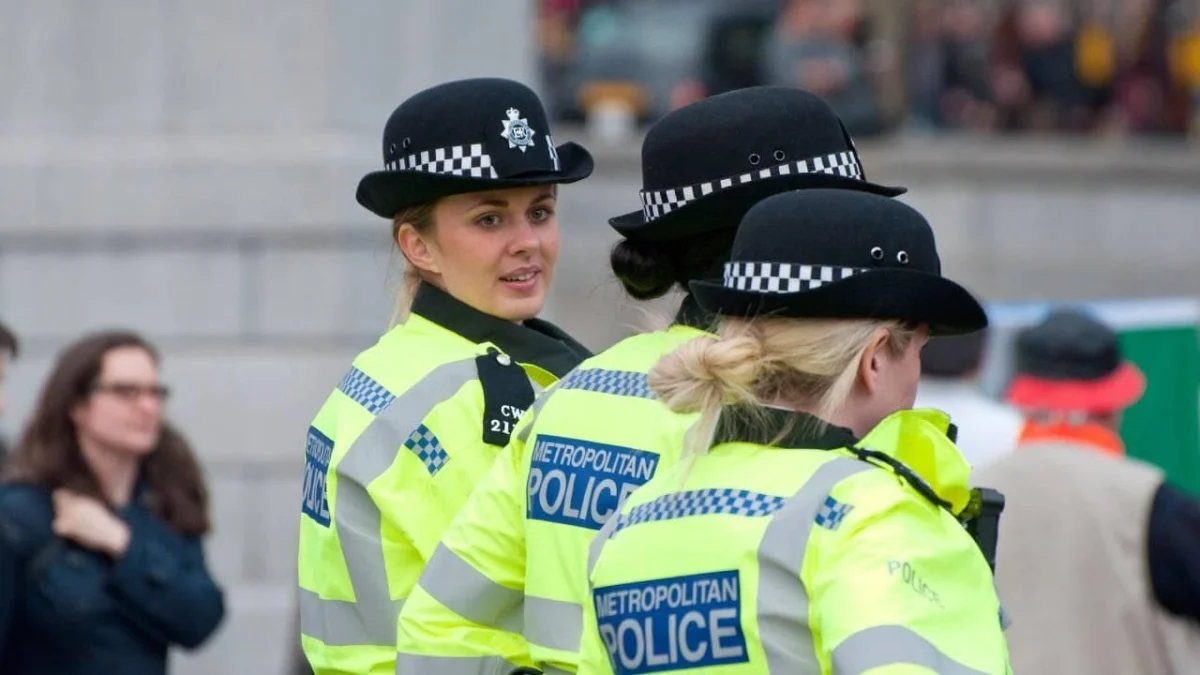
A newly revealed document, the National Police Chiefs’ Council (NPCC) National Faith Toolkit, has ignited a fierce debate across Britain, advising female police officers to consider "cultural factors" when engaging with Muslim men, dress modestly in Muslim homes or mosques, avoid the use of dogs, and in some situations, defer interactions to a same-sex colleague. The guidance, published by Modernity, has drawn widespread condemnation from politicians and commentators who argue it promotes "two-tier policing" and undermines the principle of equality before the law.
Unpacking the Controversial Guidance
The National Faith Toolkit, a comprehensive document intended to guide officers on engaging with 23 different faiths and belief systems, has come under intense scrutiny specifically for its section on Islam. This particular segment is notably more extensive and detailed than those dedicated to other religions, containing specific directives that have provoked significant public and political backlash.
Key recommendations within the Islam section instruct officers to:
- "Consider cultural factors when interacting with the opposite sex," explicitly applying this to both physical and verbal communication.
- Suggest that "in some situations, someone from the same sex would be best placed to interact with a Muslim individual."
- Advise officers to "dress modestly and cover or remove shoes" when visiting a mosque or Muslim household.
- Enjoin "quiet and respectful behavior" and the avoidance of "parts of the building designated for members of the opposite sex."
- Explicitly "avoid the use of dogs," acknowledging their perception as unclean in some Islamic contexts.
- Urge mindfulness regarding religious artifacts such as the Qur’an, prayer mats, and prayer beads.
Furthermore, the toolkit’s Islam section uniquely includes a specific instruction to report "anti-Muslim hate," an emphasis not paralleled for any other community or faith group within the document. This disparity has become a central point of contention for critics. The guidance also recommends that forensic examinations of deceased Muslim women should ideally be carried out by female officers of the same faith, further illustrating the specialized considerations outlined for this community.
Political and Public Outcry
The publication of these guidelines has triggered a torrent of criticism from various political figures and public commentators, who view the advice as an egregious departure from the core tenets of impartial policing.
Nigel Farage, leader of Reform UK, vehemently denounced the guidance, telling The Telegraph it was "outrageous and yet more proof of institutional two-tier policing." Farage argued that "The police should not be bending over backwards to placate sexist and outdated cultures," demanding the immediate withdrawal of the guidance and the dismissal of those responsible, asserting that "If the police actually believed in equality before the law, the NPCC would remove this immediately."
Shadow Home Secretary Chris Philp echoed these sentiments, stating unequivocally, "This is precisely the kind of guidance that is harming policing." Philp emphasized the foundational principle that "The police should treat everyone the same, whatever their faith or the color of their skin, and any document telling officers otherwise is plainly wrong." He critically noted that his prior appeals to the NPCC and two Labour home secretaries to scrap similar guidance had been "ignored until the Henry Nowak murder," suggesting a pattern of problematic policies. Philp concluded by calling for the withdrawal of the toolkit, likening its underlying "dangerous ideology" to the controversial Police Race Action Plan, stating, "We cannot continue to treat people differently because of their faith or skin color, in policing or anywhere else, is morally wrong and ends in disaster."
Social media platforms also became a forum for outrage and discussion. Businessman and activist Adam Brooks, speaking on GB News, expressed alarm, stating, "’We are losing our identity as a country,’" in response to the reports. Other commentators highlighted the perceived double standard, with Bernie (@Artemisfornow) on X (formerly Twitter) pointing out, "There is no equivalent instruction in the Christian sections," implying that the guidance "explicitly… treats one religion differently." Another user, Tony (@EvacTony), raised a hypothetical scenario regarding a female officer investigating a serious crime, questioning, "How can anything other… [than treating everyone equally] be effective?"
The core of these criticisms revolves around the perception that the NPCC’s guidance introduces a differential standard of policing based on religious and cultural affiliations, thereby compromising the universal application of law and the equal standing of all citizens before it.
NPCC’s Defense and Rationale
In response to the mounting criticism, an NPCC spokesman issued a statement defending the toolkit. The spokesman asserted that the document is "a practical toolkit to help officers and staff to understand and engage effectively with different communities" and critically, that "Religious and cultural considerations do not override the law or the operational duties of police officers." The NPCC also maintained that "The same process… was followed for every faith group."
Rachel Kearton, NPCC chair for race, inclusion, religion and belief and former chief constable of Suffolk, further elaborated on the rationale behind the toolkit in its introduction. She stated that "it is essential that we, as a police service, understand the cultural and religious contexts in which we operate" and acknowledged that faith communities "play a vital role in supporting policing efforts." This perspective suggests an intention to foster better community relations and more effective policing through cultural awareness.
The toolkit itself was developed through collaboration with various organizations, including the College of Policing and staff networks such as the National Association of Muslim Police, the Christian Police Association, the National Sikh Police Association, and the British Association for Women in Policing. This collaborative approach, according to the NPCC, was designed to ensure comprehensive and representative guidance. The document explicitly notes that operational needs take precedence, attempting to balance cultural sensitivity with the practical demands of law enforcement.
Broader Context and Implications for Policing
The debate surrounding the NPCC’s National Faith Toolkit is not an isolated incident but rather a flashpoint in a larger, ongoing discussion about diversity, inclusion, and the application of law in an increasingly multicultural society. The UK’s Muslim population stood at 3.9 million people, or 6.5 percent of the population of England and Wales, according to the 2021 census, making effective and respectful engagement a significant consideration for public services.
However, critics argue that while cultural sensitivity is important, the current guidance crosses a line into creating operational distinctions that could compromise the efficacy and impartiality of policing. Former officers and commentators have highlighted the "practical implication": a female constable investigating a serious crime in a Muslim household could find herself advised to "step back from basic verbal communication, or to wait for a male colleague," precisely because of the sex and religion of the individual she is addressing. This raises serious questions about the operational independence and authority of female officers and the potential for delays or complications in critical investigations.
The unique emphasis on reporting "anti-Muslim hate" within the toolkit, contrasted with the absence of equivalent instructions for other groups, further fuels concerns about institutional bias. The Community Security Trust figures, for instance, recorded 1,926 antisemitic incidents in the first six months of the relevant year, yet the toolkit does not contain a comparable specific instruction to prioritize reporting hate against Jewish communities. This disparity, critics argue, undermines the police’s commitment to protecting all communities equally.
The principle of "equality before the law" is a cornerstone of the British justice system. When police guidance suggests differential treatment based on faith or gender, even with the stated intention of cultural respect, it can be perceived as eroding this fundamental principle. The operational advice regarding interactions with Muslim men—covering both physical contact and ordinary conversation—has no direct counterpart in sections dealing with other communities, leading to accusations that the NPCC’s document, despite its stated aims, inadvertently creates an unequal framework for engagement.
The implications extend beyond individual police interactions. Such guidance can affect public trust in the police, particularly among those who feel that certain communities are being afforded special treatment or, conversely, that their rights are being diluted. For female officers, it could pose professional challenges, potentially undermining their authority and requiring them to navigate complex social dynamics that are not uniformly applied across all communities.
The Henry Nowak murder, referenced by Chris Philp, though lacking specific details in the original report, serves as a rhetorical touchstone for critics who believe that past instances have demonstrated the perils of overly accommodating cultural sensitivities at the expense of universal legal principles. The call to withdraw the toolkit, alongside the Police Race Action Plan, underscores a broader political and public desire for policing strategies that prioritize impartiality and equal treatment above all else.
Ultimately, the controversy surrounding the NPCC National Faith Toolkit highlights a profound tension: how to balance the legitimate need for cultural understanding and community engagement with the unwavering commitment to universal legal standards and equal application of the law for every citizen and every officer. The current debate suggests that, in the eyes of many, the NPCC’s document has, perhaps unintentionally, made a choice that risks compromising that fundamental equality. The ongoing dialogue will undoubtedly shape future policies on police engagement in diverse communities across the UK.

