
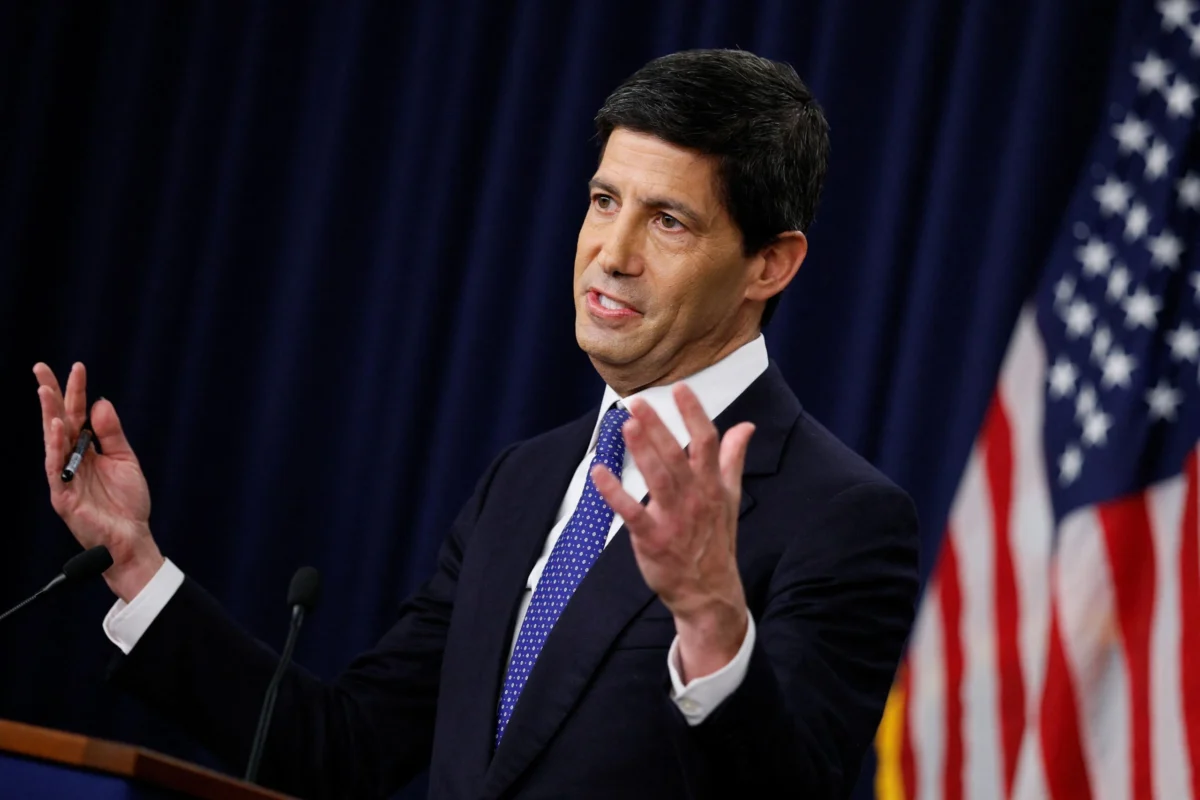
The extreme market gyrations and the drama surrounding Nvidia this past week have highlighted a profound dilemma confronting Federal Reserve Chairman Kevin Warsh. His ambition to steer monetary policy with a longer-term perspective, informed by market indicators rather than traditional forecasts, is being tested by the very volatility these markets exhibit. The intricate dance between immediate market signals and the enduring economic fundamentals presents a complex challenge for the nation’s chief central banker.
The Unpredictable Swings of the Market: Nvidia’s Influence
The financial markets experienced a week of remarkable volatility, largely catalyzed by the performance of Nvidia, a bellwether in the artificial intelligence sector. On Friday, November 22nd, a significant sell-off across equity markets saw major indices decline, with the S&P 500 falling by approximately 1.5% and the tech-heavy Nasdaq Composite shedding nearly 2%. This downturn was partly attributed to profit-taking in high-growth technology stocks, including Nvidia, which had seen meteoric rises throughout the year. As a direct consequence of this market retreat, the probabilities implied by futures markets for the Federal Reserve to raise interest rates in upcoming meetings noticeably declined. Investors and analysts interpreted the market weakness as a potential precursor to slowing economic activity, thereby reducing the perceived urgency for further monetary tightening.
However, the narrative shifted dramatically on Monday, November 25th. Following reports that Nvidia CEO Jensen Huang was "back in office" and perhaps signaling a renewed commitment to the company’s growth trajectory, a powerful rally swept through the markets. Nvidia’s stock rebounded sharply, pulling the broader technology sector and subsequently the entire market upward. The S&P 500 recovered a significant portion of its losses, and market confidence was swiftly restored, leading to a resurgence in the market-implied probabilities for two additional rate hikes from the Fed in the near future, specifically targeting December and January meetings. This rapid reversal underscored the extreme sensitivity of financial markets to headline news and individual corporate performance, particularly from influential companies like Nvidia, which boasted a market capitalization exceeding $2 trillion at certain points, making its movements capable of swaying overall market sentiment.
Warsh’s Vision: Long-Term Focus Amidst Short-Term Noise
At the core of Chairman Warsh’s evolving philosophy for the Federal Reserve is a desire to look beyond such daily market vicissitudes. His strategic objective involves a fundamental shift in how the Fed interprets economic signals, aiming to cultivate a monetary policy framework that prioritizes long-term economic stability over reactive responses to fleeting data points. This approach posits that the central bank should not be swayed by every market twitch but rather focus on enduring trends and structural changes within the economy.
Paradoxically, Warsh has also been an outspoken proponent of leveraging market indicators more extensively to guide policy, asserting that markets often possess superior forecasting capabilities compared to traditional econometric models or internal Fed projections. He believes that the collective wisdom embedded in asset prices, yield curves, and credit spreads can offer a more accurate, real-time assessment of economic conditions and future expectations. However, the very events of the past week, particularly the dramatic swings influenced by a single company, highlight the inherent challenge in this dual approach: market indicators, while potentially insightful, are frequently subject to extreme volatility and short-term speculative forces.
A prime example of this conundrum is the benchmark Goldman Sachs Financial Conditions Index (FCI). This comprehensive index measures the tightness or looseness of financial conditions in the economy, encompassing factors such as interest rates, credit spreads, and equity market valuations. Last week, the market decline, coupled with a widening of credit spreads (indicating increased perceived risk in lending), sent a clear signal for the Fed to potentially ease back on its plans to tighten monetary policy. Some economic commentators, observing the tightening financial conditions, even suggested that further rate hikes should be taken off the table entirely to avoid exacerbating an already fragile market sentiment.
Yet, just days later, on Monday, following the market rebound, the Goldman Sachs FCI eased by a notable 22 basis points. This single-day movement reversed nearly half of the prior week’s tightening, swiftly bringing both December and January rate hikes back into market consideration. This episode vividly illustrates the challenge: how does a central bank distinguish between genuine shifts in underlying economic conditions reflected in market indicators and mere speculative noise or transient market reactions? Warsh’s challenge is to harness the predictive power of markets without becoming a slave to their often-erratic short-term movements.
Intellectual Investment: The AI Task Force and Broader Thinking
In both his pronouncements and actions, Warsh has consistently advocated for markets and policymakers alike to look beyond immediate volatility. This commitment was underscored by his recent trip to San Francisco, where he patiently presided for three hours over a conference dedicated to the outlook for artificial intelligence and its potential economic impact. The meeting, held last week, saw Warsh actively engaging with leading economists and technology executives, peppering them with incisive questions about both the dangers and the immense potential upside of AI for the global economy.
This conference was not an isolated event but an integral part of a broader initiative: the AI task force, one of five such groups Warsh has convened to study different critical areas of Fed policymaking. These task forces represent a deliberate effort to broaden the intellectual horizons of the Federal Reserve, moving beyond conventional economic models and data points to encompass a wider range of expert insights. In his opening remarks at the AI conference, Warsh articulated the rationale behind these initiatives: "These groups are a way of broadening our thinking, of inviting robust discussions that take us far deeper… than fleeting data points [or] daily market moves. Our task forces are an intellectual investment to help better equip us for the next policy conjuncture and beyond."
This desire for deep intellectual investment stands in stark contrast to the format of Warsh’s press conferences following Federal Open Market Committee (FOMC) meetings. Under his leadership, these conferences have been streamlined to a mere half-hour, a significant departure from previous, more extensive sessions. During these abbreviated events, Warsh routinely spends a considerable portion of the time parrying reporter questions about the Fed’s immediate next move, a clear manifestation of his general aversion to explicit forward guidance. At the June press conference, he famously paraphrased former Secretary of State George Schultz, stating, "Press conferences are useful. But when you have one, you want to make sure you have something important to say." In a regime where the Chairman actively seeks to minimize specific forward guidance, the scope for detailed pronouncements on future policy paths is inherently diminished. This shift reflects a deliberate strategy to reduce market reliance on central bank signaling for short-term trading decisions, encouraging instead a focus on broader economic trends.
Monetary Policy: Learning from the Duquesne Model

To understand Warsh’s approach to monetary policy, it is instructive to consider his previous role at the Duquesne Family Office, working alongside legendary investor Stan Druckenmiller. There, Warsh was tasked with evaluating startup companies, many of which existed as little more than a nascent idea in the mind of a tech entrepreneur, for their long-term profit potential, often many years down the road. In such an environment, daily "marked to market" valuations might show significant negative numbers, reflecting the high-risk, long-horizon nature of venture capital. While some of these ventures would inevitably fail, others would eventually deliver handsome returns, validating the patience and foresight of the initial investment.
In a sense, Warsh appears to aspire to manage monetary policy with a similar long-term, fundamental-driven perspective. This involves looking past immediate market noise and quarterly earnings reports to identify and respond to profound structural shifts in the economy. This approach aligns with the Federal Reserve’s dual mandate of achieving maximum employment and price stability, objectives that are inherently long-term and require sustained attention rather than knee-jerk reactions.
The AI Frontier: Unveiling New Economic Paradoxes
Warsh’s intense focus on artificial intelligence, while demonstrating his forward-looking approach, simultaneously highlights the complexities of his desired policy framework. The outlook for AI, as the Chairman himself has readily admitted, is rapidly evolving and deeply uncertain. While markets may currently be pricing in significant earnings upside and substantial investment in the AI buildout, the actual adoption rate of the technology, its true impact on productivity, and its ultimate effects on inflation and economic growth remain highly speculative.
The potential economic impacts of AI are vast and contradictory. On one hand, the frenzied investment in AI infrastructure, ranging from advanced chips to data centers, is fueling demand and could exert upward pressure on prices, potentially contributing to inflation and necessitating higher interest rates. The demand for specialized labor and computing power could push up costs across various sectors.
On the other hand, Warsh, during his San Francisco discussions, showed particular interest in the potential for a "China Shock" to hit jobs in the U.S. service sector. This refers to the profound disruption caused by a surge in Chinese imports earlier this century, which devastated large swathes of the U.S. manufacturing sector, leading to widespread job losses and downward pressure on wages in affected regions. If AI advancements lead to significant automation and displacement of jobs in the service sector – from customer support to administrative roles – it could result in widespread unemployment. Such an outcome would typically prompt the Fed to consider lowering interest rates to stimulate economic activity and employment, acting as a deflationary force.
This presents a stark dilemma for the Fed chairman: the same technological development, AI, could simultaneously be sparking inflationary pressures that push rates upward, while also threatening widespread job displacement that would argue for lower rates. The signals emanating from this nascent economic revolution are, therefore, inherently ambiguous and contradictory, making policy formulation exceptionally challenging.
The Lags of Monetary Policy and the Limits of Market Signals
A well-established principle in monetary policy literature is that changes in the current interest rate level affect the broader economy with what are known as "long and variable lags." This means that the full impact of a rate hike or cut implemented today may not be fully realized for several quarters, or even a year or more, into the future. Consequently, the objective of central bank policymaking is not to react to current economic conditions but to set policy based on where one anticipates the economy will be in the future, typically 12 to 18 months out.
Forecasting the economy, however, is an inherently imprecise science. Wide error bands surround most economic forecasts, including those produced by the Federal Reserve’s own highly skilled staff. This inherent uncertainty underscores the difficulty in "looking around corners" to set appropriate policy.
The same applies to market pricing, which also comes with similarly wide error bands and is often influenced by factors beyond pure economic fundamentals, such as sentiment, liquidity, and even geopolitical events. The critical question for Warsh’s market-centric approach is: which market signals are truly reliable indicators of future economic conditions, and for how long do these signals need to persist to warrant a policy response? The recent Nvidia situation serves as a potent reminder that markets can be exceptionally short-term in the signals they send, often reacting to immediate news cycles rather than consistently reflecting long-term economic trends.
Implications for Fed Communication and Future Strategy
The evolving landscape under Chairman Warsh suggests a significant shift in the Federal Reserve’s communication strategy and its approach to policy formulation. The deliberate scaling back of forward guidance, while aimed at reducing market over-reliance on Fed pronouncements, places a greater onus on market participants to interpret the Fed’s actions and broader economic signals independently. This move seeks to foster more robust, self-correcting markets, but it also increases the potential for misinterpretation and heightened volatility in the short term.
The establishment of specialized task forces, particularly the one focused on AI, represents a forward-thinking institutional adaptation. By inviting diverse perspectives from outside traditional central banking circles, Warsh aims to broaden the Fed’s understanding of complex, rapidly evolving phenomena that defy conventional economic analysis. This "intellectual investment" is crucial for equipping the Fed to navigate unprecedented challenges posed by technological disruption and shifting global economic paradigms.
Ultimately, Warsh’s challenge lies in balancing his commitment to long-term, fundamentally driven monetary policy with his desire to harness the predictive power of market indicators, all while confronting an economic future shaped by rapidly advancing technologies like AI. The past week’s market drama, heavily influenced by a single company’s trajectory, encapsulates this dilemma perfectly. It underscores the difficulty of distinguishing between transient market noise and signals that genuinely reflect enduring shifts in the economic landscape. As the Federal Reserve grapples with inflation, employment, and the profound implications of AI, Chairman Warsh’s ability to refine and implement his unique vision for monetary policy will be under intense scrutiny, shaping not only the nation’s economic future but also the very methodology of central banking in a hyper-connected, technologically driven world.

