
Foundation Future Industries, a San Francisco-based startup aiming to revolutionize military applications with humanoid robots, has plunged into a severe financial crisis, failing to pay its employees in October 2026. This alarming development comes as the company, known for its Phantom-01 robot and claims of developing a "weapons-ready" next-generation model, faces dwindling cash reserves and mounting questions about its leadership, corporate governance, and past controversies. The situation is further complicated by the high-profile involvement of Eric Trump, son of the U.S. president, as an advisor and investor, drawing accusations of nepotism and corruption.
Financial Distress and Missed Payroll
Employees at Foundation Future Industries, which develops the humanoid robot Phantom-01, have not received their paychecks after the company missed its scheduled payroll on October 30, 2026. This marks a critical juncture for the ambitious startup, which has garnered significant media attention for its vision of deploying robots on battlefields in Ukraine and for border patrol duties. Sources with direct knowledge of the matter, who requested anonymity to speak candidly about the private company, confirmed the payroll failure, underscoring the severity of the firm’s cash crunch. This isn’t the first time Foundation has faced such an issue; in August 2026, the company also ran out of cash for payroll, though a bridge loan from an existing investor allowed employees to be paid after a two-day delay. In a recent memo to staff, CEO Sankaet Pathak reportedly informed employees that he was actively working to secure funds to cover the outstanding wages, a message that has done little to quell anxieties among the workforce.
CEO’s Luxury Home Purchase Sparks Outrage
Adding fuel to the internal discontent is the revelation that CEO and co-founder Sankaet Pathak borrowed a staggering $4.6 million from the company just last year to acquire a luxury home. Public records confirm that an LLC with Pathak as its sole principal purchased a $4.6 million property in Sausalito, California, in October 2025. This lavish acquisition, boasting "sweeping, cinematic views" of the San Francisco Bay, stands in stark contrast to the company’s current inability to meet its most basic financial obligations to its employees. Insiders express particular anger, highlighting that the funds used for Pathak’s personal real estate venture could have significantly bolstered the company’s cash reserves and prevented the current payroll crisis. Pathak’s spokesman acknowledged receiving a detailed list of inquiries regarding these points but did not provide a comment.
Governance Under the Microscope
The contentious loan to Pathak has cast a harsh spotlight on Foundation’s corporate governance structure. Pathak serves as the sole board member of Foundation and also holds the majority of the firm’s shares. This highly concentrated power structure, which allowed Pathak to designate the $4.6 million as a "short-term loan" from the company, has raised significant red flags among prospective investors. Sources familiar with the ongoing fundraising efforts indicate that the lack of independent oversight and a diverse board is a major deterrent for potential backers. One insider lamented the situation, stating, "This is what happens in a company with no governance. Are you just going to let it ride into the ground, and you ride off into the sunset?" The absence of checks and balances at the executive level appears to have facilitated decisions that prioritize personal gain over corporate stability and employee welfare.
A Troubled Past: The Synapse Collapse
The current crisis at Foundation is not Sankaet Pathak’s first brush with financial turmoil. Before founding Foundation Future Industries, Pathak was widely known as the founder of Synapse, a fintech firm that acted as a critical intermediary, enabling other fintech companies like Mercury, Dave, and YieldStreet to offer banking services and credit cards through partnerships with smaller community banks. Synapse’s operations were largely behind-the-scenes until its dramatic collapse in 2024, which left more than 100,000 Americans locked out of their savings accounts, totaling a combined $265 million in deposits.
The aftermath of Synapse’s bankruptcy was chaotic and protracted. While some customers eventually received partial payments, thousands remained without access to their funds for over two years. Jelena McWilliams, the former FDIC Chair appointed as a bankruptcy trustee for Synapse, reported that as much as $96 million in customer funds had gone missing. The bankruptcy proceedings concluded in 2025 without conclusively determining the whereabouts of these funds. Pathak publicly blamed a banking partner, Evolve, for the debacle, while Evolve, in turn, pointed fingers at Synapse. Regulatory intervention was belated, with the Consumer Financial Protection Bureau (CFPB) suing Synapse in 2025, eventually establishing a $55 million fund for customer relief.
Further compounding Pathak’s previous record, the independent journalist and consultant Jason Mikula revealed that Pathak withdrew $320,000 in loans from Synapse as the company spiraled towards bankruptcy in 2024, amidst disputes over unmatched ledgers. The Wall Street Journal also reported in 2025 that federal prosecutors had convened a grand jury to investigate possible criminal misconduct at Synapse, though the report did not specifically name Pathak. This history of financial mismanagement, accusations of missing funds, and personal withdrawals during a company’s decline presents a troubling precedent for Pathak’s current leadership at Foundation.
High-Profile Backing and Ethical Quandaries
Foundation Future Industries gained significant public attention in April 2026 when Eric Trump, son of the U.S. president, was introduced as an investor and chief strategy advisor during a television interview on Fox Business. While the size of his stake remains undisclosed, Eric Trump’s involvement immediately raised questions, particularly given his family’s deep ties to defense industries. A July 2026 Washington Post investigation revealed that startups backed by investment vehicles linked to Eric Trump and his brother, Donald Trump Jr., had collectively secured at least $3.2 billion in government business during their father’s administration.
In the April interview, Eric Trump extolled Foundation’s potential, stating, "We have to win robotics in the United States of America." He enthusiastically described interactions with the robots: "When you go up and interact with these robots… they fist bump you, they high-five you, they follow your commands." However, his endorsement and the company’s subsequent claims of winning Pentagon contracts drew swift condemnation from Senator Elizabeth Warren (D-Mass.). On April 23, 2026, Senator Warren posted on social media, "Eric Trump went on FOX to brag about winning ANOTHER multimillion-dollar contract from the Trump administration. This looks like corruption in plain sight."
Eric Trump did not respond to requests for comment regarding the current financial crisis or Senator Warren’s accusations. However, his spokesperson previously told the Financial Times that Eric Trump had "no involvement in Foundation’s management, operations, strategic decisions or commercial activities, including the solicitation, negotiation, procurement or execution of any government contracts." This statement attempts to distance him from the day-to-day operations and contractual dealings of Foundation, despite his advisory role. The controversy surrounding his involvement has not only invited political scrutiny but also created internal speculation within Foundation that a Democratic-led Congress might initiate investigations into the company’s dealings.
Unfulfilled Promises and Exaggerated Claims
Beyond the financial and governance issues, Foundation Future Industries has faced scrutiny over some of its public claims. Despite widespread reporting in news outlets, including the Wall Street Journal, that Foundation had won $24 million in Pentagon contracts, this assertion appears to be misleading. According to a person with knowledge of the matter, Foundation itself did not directly win these contracts. Instead, it acquired Florida-based Boardwalk Robotics in late 2024, and the government research contracts secured by Boardwalk Robotics account for the claimed figure. Foundation subsequently used Boardwalk’s robot, "Alex," as the foundational design for its first humanoid model, the Phantom MK-1. Crucially, a separate source with direct knowledge of the acquisition deal indicated that the agreement included performance milestones for the robot that have yet to be met, further complicating the company’s narrative of success.
This is not the first instance of Foundation, or Pathak, being accused of exaggerating claims to prospective investors. In 2024, CNBC reported that letters sent by Pathak to potential investors for a robotics startup (later identified as Foundation) cited an "imminent investment" and a "$300 million purchase order" from General Motors. The automaker, however, explicitly rejected these claims. Mike LeBlanc, a co-founder of Foundation, reportedly expressed embarrassment over these marketing materials at the time. Such a pattern of overstated achievements could significantly erode investor confidence and hinder the company’s ability to secure desperately needed funding.
The Vision vs. Reality: Foundation’s Robotic Ambitions
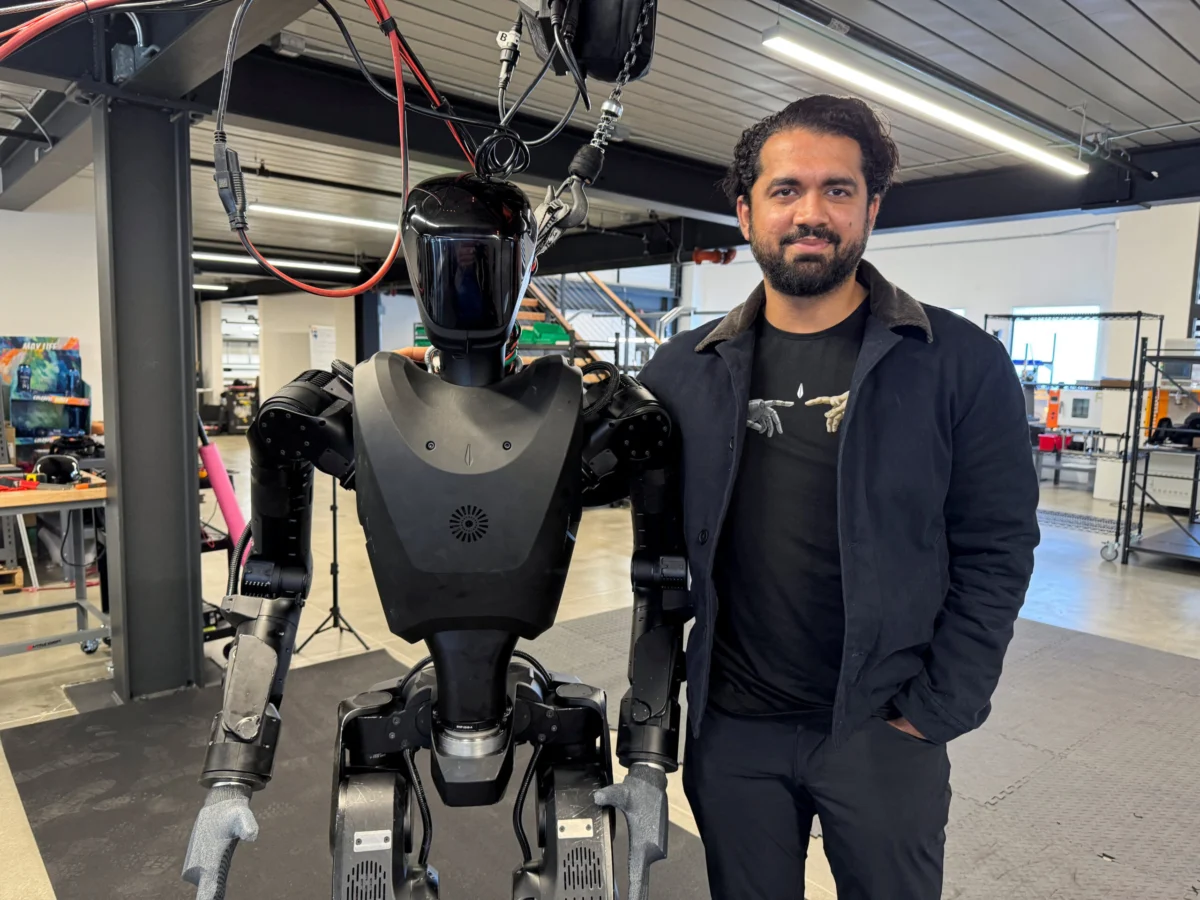
Foundation Future Industries operates in the rapidly evolving and highly competitive field of humanoid robotics, a sector attracting significant investment and global interest, particularly in military and defense applications. Pathak has frequently articulated an ambitious vision for Foundation, claiming the company is close to unveiling a "next-generation, weapons-ready robot" designed to bolster U.S. competitiveness against rivals like China. In an April 2026 television interview, Pathak stated, "What we’re about to unveil in the next couple of months [is] going to be the strongest humanoid robot that exists anywhere in the world, including China." The company’s Phantom-01 robot, pictured in its San Francisco factory in February 2026, represents the initial foray into this market.
Pathak has publicly championed his robots as potential solutions for challenging and dangerous roles, suggesting they could undertake "battlefield tasks in Ukraine" or "patrol the U.S. border with Mexico." Broadcast interviews and articles have propagated these aspirations, portraying Foundation as a frontrunner in a critical technological race. The company successfully lured dozens of robotics engineers and artificial intelligence experts from industry giants like Tesla, Amazon, and Zoox, a testament to the initial appeal of its mission and leadership. However, the current financial meltdown and the controversies surrounding its CEO threaten to derail these grand ambitions. The inability to pay its highly skilled workforce not only impacts morale but also jeopardizes the very development of the advanced robots Pathak promises.
Outlook and Broader Implications
The future of Foundation Future Industries appears precarious. With Pathak reportedly seeking to raise hundreds of millions of dollars at an ambitious $3 billion valuation since at least January 2026, the current financial instability, coupled with revelations about his past business dealings and personal conduct, makes securing such funding an uphill battle. The concerns over corporate governance, particularly Pathak’s sole control and the absence of independent oversight, are significant barriers for sophisticated investors. Insiders openly fret that the company could soon collapse if fresh funding is not secured urgently.
The unfolding situation at Foundation raises broader questions for the defense technology sector, venture capital due diligence processes, and the ethical considerations surrounding high-stakes startups with political connections. The entanglement of a company developing potentially lethal autonomous systems with issues of financial mismanagement, misleading claims, and political influence underscores the need for rigorous oversight and transparency. For the employees of Foundation, the immediate future is uncertain, marked by missed paychecks and the looming threat of job losses. For the wider industry, Foundation’s struggles serve as a cautionary tale about the perils of unchecked ambition, questionable leadership, and insufficient governance in the pursuit of revolutionary technology.

