
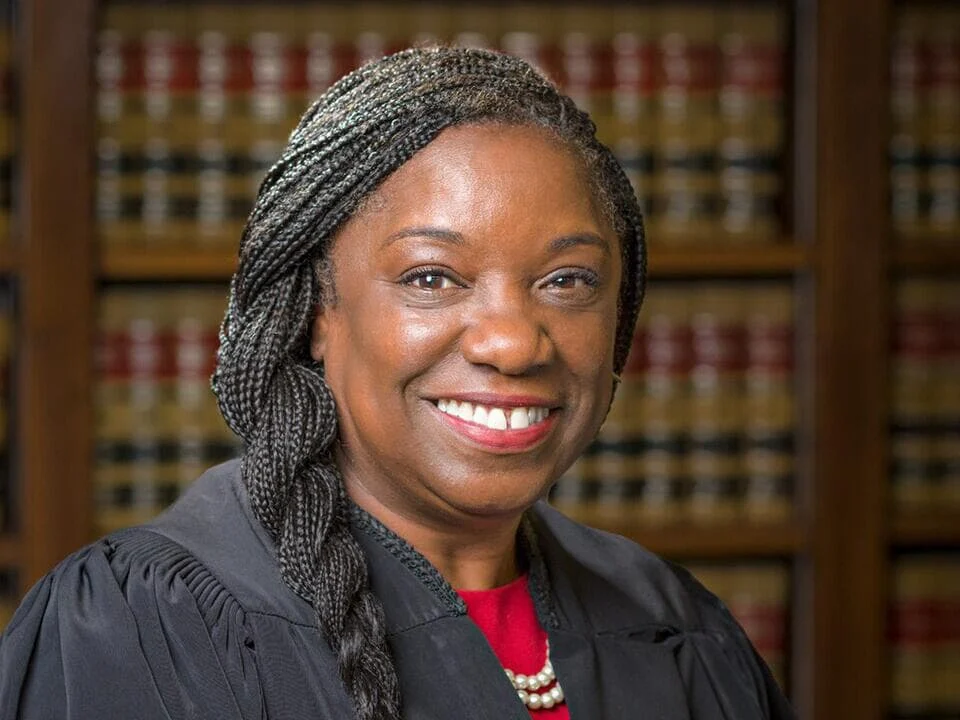
A federal judge in San Francisco on Thursday issued a preliminary injunction, effectively barring Agriculture Secretary Brooke Rollins from transmitting Christian messages and Scripture in official communications to Department of Agriculture (USDA) staff. The prohibition comes as a direct response to a lawsuit filed by a group of USDA employees and a federal union, who argued that Rollins’ holiday greetings, particularly those for Christmas and Easter, constituted government-sponsored religious coercion. U.S. District Judge Trina Thompson of the Northern District of California ruled that these official emails likely violated the First Amendment’s Establishment Clause, which mandates governmental neutrality toward religion. This significant ruling holds while the broader case proceeds, immediately impacting the approximately 100,000 individuals employed by the U.S. Department of Agriculture.
Federal Judge Imposes Injunction on Agriculture Secretary’s Religious Communications
The preliminary injunction, issued by Judge Thompson, specifically prohibits Secretary Rollins from including any religious content, including direct references to Christian holidays or scripture, in her official communications to employees. This landmark decision stems from a lawsuit filed in May [year, likely 2026, given the email dates of Dec 2025 and April 2026] by seven current USDA employees and the National Federation of Federal Employees (NFFE) union. The plaintiffs, identifying themselves as a diverse group of "multifaith and nonreligious USDA employees," articulated their distress over the Secretary’s emails, describing them as an unwelcome imposition of religious views within a professional context. They emphasized that these messages, delivered through the same official channels used for critical work-related communications, could not simply be ignored, creating an environment of discomfort and perceived pressure.
Judge Thompson’s 21-page ruling meticulously detailed the basis for her decision, focusing on the inherent power dynamics within a federal agency. She asserted that Rollins’ high rank as a Cabinet Secretary, combined with her utilization of official government communication platforms, created an undue pressure on subordinates. The judge specifically highlighted Rollins’ use of inclusive pronouns such as "we," "us," and "our" in her religious messages, which, Thompson noted, implicitly suggested that all USDA employees shared the Secretary’s Christian faith. This linguistic choice, according to the court, contributed to an environment where employees might feel compelled to adopt or feign adherence to the Secretary’s beliefs, or at least conceal their own, to avoid potential professional repercussions.
The Heart of the Dispute: Official Channels and Perceived Coercion
The core of the legal challenge rested on the principle that government officials, particularly those in positions of significant authority, must maintain strict neutrality in matters of religion when acting in their official capacity. The plaintiffs argued that Secretary Rollins’ messages crossed the line from personal religious expression to governmental endorsement. The two primary communications cited in the ruling were an Easter message sent on April 5, 2026, and a Christmas message disseminated on December 23, 2025.
In her Easter message, Secretary Rollins invoked powerful Christian imagery, likening USDA workers to "the very first disciples to encounter our risen Lord in the Upper Room" and urging staff to embrace "Paschal joy." The message continued, "Team USDA, Happy Easter – He is Risen indeed! Today we celebrate the greatest story ever told, the foundation of our faith, and the abiding hope of all mankind. From the foot of the Cross on Good Friday to the stone rolled away from the now empty tomb, sin has been destroyed. Jesus has been raised from the dead. And God has granted each of us victory and new life." Rollins further added, "And where there is life – risen life – there is hope. No matter the very real trials and hardships we face, fear and sin and death do not get the last word. Because on Easter morning, ‘Hell took a body, and discovered God. It took earth and encountered Heaven. It took what it saw, and was overcome by what it did not see.’"
The Christmas message, sent just before the previous year’s holiday, included a video where Secretary Rollins stated that the spirit of generosity during the Christmas season originated from God’s "gift of his Son and our Savior Jesus Christ." The plaintiffs underscored that Rollins had not sent any comparable official messages recognizing holidays or celebrations from other religious traditions, further solidifying their argument that her communications constituted an endorsement of Christianity rather than a general acknowledgment of diverse faiths. Judge Thompson, in her ruling, concluded that these specific messages "go too far," creating "coercive pressure; a pressure of conformity sufficient to raise an Establishment Clause violation."
Navigating the First Amendment: Establishment Clause in Federal Employment
The First Amendment to the U.S. Constitution contains two key clauses concerning religion: the Establishment Clause and the Free Exercise Clause. The Establishment Clause states that "Congress shall make no law respecting an establishment of religion," which the Supreme Court has interpreted to mean that the government cannot endorse, favor, or promote any religion, nor can it coerce individuals into religious observance. This principle, often summarized as the "separation of church and state," ensures that the government remains neutral in religious matters, protecting both religious freedom and freedom from religion.
For federal employees, especially those in positions of authority, the application of the Establishment Clause is particularly stringent. While individuals retain their right to religious freedom and expression in their private lives, their official actions and communications as government representatives must not convey an endorsement of religion. This distinction is crucial: a government official can personally practice their faith, but they cannot use their official position, resources, or communication channels to promote it to subordinates, who may feel obligated to conform.
Federal agencies typically have policies on religious expression in the workplace that aim to balance these rights. These policies generally permit employees to engage in private religious expression, such such as wearing religious attire or displaying religious items in their personal workspace, as long as it does not disrupt the workplace or coerce others. However, they strictly prohibit supervisors from proselytizing or endorsing religious views to their subordinates, precisely to avoid the kind of "coercive pressure" identified in Judge Thompson’s ruling. The court’s decision in the Rollins case reaffirms the long-standing legal precedent that a Cabinet Secretary, as a high-ranking federal official, is bound by these principles and must exercise extreme caution to ensure their official communications remain religiously neutral. The ruling itself was careful to clarify this point, with Judge Thompson writing, "This Court’s judgment says nothing about the value of prayer or those who believe in its power," underscoring that the issue was not religious practice itself, but its official endorsement by a government official.

A Chronology of Messages and Legal Action
Brooke Rollins, a Texas native and a self-described practicing Christian, has a history of openly sharing her faith, both in her personal capacity and, as alleged, through official USDA channels. Beyond the Christmas and Easter messages central to this lawsuit, she has reportedly used official USDA emails on other occasions, including Thanksgiving, to express her religious views. Her social media presence, particularly on the platform X (formerly Twitter), also frequently features posts about her faith.
The timeline of events leading to the injunction began with these official communications:
- December 23, 2025: Secretary Rollins sends an official Christmas message, including a video, referencing "the gift of his Son and our Savior Jesus Christ."
- April 5, 2026: Secretary Rollins sends an official Easter message, invoking Christian scripture and themes, likening USDA employees to "disciples."
- May [2026, inferred]: Seven USDA employees, representing various faiths and non-religious stances, along with the National Federation of Federal Employees (NFFE) union, file a lawsuit against Secretary Rollins. Their complaint outlines the messages as "government sponsored religious coercion."
- Thursday, November 19, 2026 (inferred from tweet date): U.S. District Judge Trina Thompson issues her preliminary injunction, barring Rollins from sending religious content in official communications.
The judge overseeing this case, Trina L. Thompson, brings a significant judicial background to the federal bench. President Joe Biden first nominated her to the federal bench in November 2021, and her nomination was resubmitted to the Senate in January 2022. She was confirmed by the Senate in a 51-44 vote on May 18, 2022, becoming a U.S. District Judge for the Northern District of California. Prior to her federal appointment, Thompson had a distinguished career as an Alameda County Superior Court Judge in California, a position she held for over a decade. Her experience also includes a prior federal appointment by former President Barack Obama in 2011 to the Coordinating Council on Juvenile Justice and Delinquency Prevention, highlighting her long-standing involvement in legal and governmental capacities.
Secretary Rollins’ Defense and the Department’s Stance
Immediately following the court’s decision, Secretary Rollins publicly challenged the ruling, using her personal social media accounts to voice her discontent. On Friday, November 20, 2026, she posted on X, questioning the perceived double standard: "So the Biden White House could recognize Transgender Day of Visibility on Easter Sunday, but sharing a Christian Easter message with USDA employees crosses the line?" This statement not only expressed her disagreement with the ruling but also attempted to frame it within a broader cultural and political debate, implying a selective application of constitutional principles. The "Transgender Day of Visibility" reference, which coincidentally fell on Easter Sunday in 2024, has been a point of contention for some conservative groups who criticized the Biden administration for acknowledging it on the Christian holiday. Rollins’ invocation of this comparison suggests a belief that her religious expression is being unfairly targeted while other forms of identity recognition are permitted.
The U.S. Department of Agriculture, as an institution, has also expressed strong opposition to the judge’s order. In an official statement, the department characterized the ruling as an "unprecedented attempt to muzzle a Cabinet Secretary." The USDA indicated that it is currently "weighing an appeal" of the injunction. If an appeal is pursued, the case would advance to the U.S. Court of Appeals for the 9th Circuit, which covers the federal courts in several Western states, including California. An appeal would signify a continued legal battle over the boundaries of religious expression by high-ranking government officials.
It is crucial to note that the injunction does not universally prohibit Secretary Rollins from speaking about her faith. The court’s order explicitly permits her to engage in personal religious expression, including discussing her beliefs with interested colleagues, as long as it is done in a private capacity. The established department policy on religious expression in the workplace still applies in these circumstances, requiring her to cease any religious discussion if a colleague requests it and, most importantly, prohibiting her from using her official position or authority to "pressure" her subordinates into religious conversations or beliefs. The distinction remains between personal faith and official governmental endorsement.
Broader Implications for Federal Agencies and Religious Freedom
The ruling against Secretary Rollins carries significant implications, potentially setting a precedent for how religious expression by high-ranking officials is regulated across all federal agencies. It serves as a stark reminder of the delicate balance enshrined in the First Amendment – protecting individual religious freedom while preventing government endorsement or coercion.
For federal workplaces, this decision reinforces the principle that employees from diverse backgrounds, including those of different faiths or no faith, should be able to work in an environment free from religious pressure from their superiors. It underscores the importance of a neutral workplace where professional merit, not religious affiliation or perceived adherence to a superior’s beliefs, is the sole determinant of career advancement and standing. This can foster greater inclusivity and ensure that federal service remains accessible and equitable for all citizens.
The case also reignites the broader societal debate about the role of religion in public life, particularly for those in positions of power. While many believe in the importance of public officials embodying their personal values, the legal framework of the Establishment Clause places distinct limits on how those values can be expressed when exercising governmental authority. The tension between an individual’s right to free speech and free exercise of religion, and the government’s obligation to religious neutrality, is a perennial challenge in American jurisprudence. This ruling clarifies that, for Cabinet Secretaries, the official capacity takes precedence in official communications.
Should the USDA pursue an appeal to the 9th Circuit, the legal battle will continue, with the potential for further judicial interpretation of the Establishment Clause in the context of high-level government employment. The outcome of such an appeal could either solidify Judge Thompson’s preliminary injunction or introduce new nuances to the understanding of religious expression in federal service. Regardless of the final outcome, this case has already served as a critical reminder of the constitutional boundaries designed to protect both religious freedom and the neutrality of government.

