
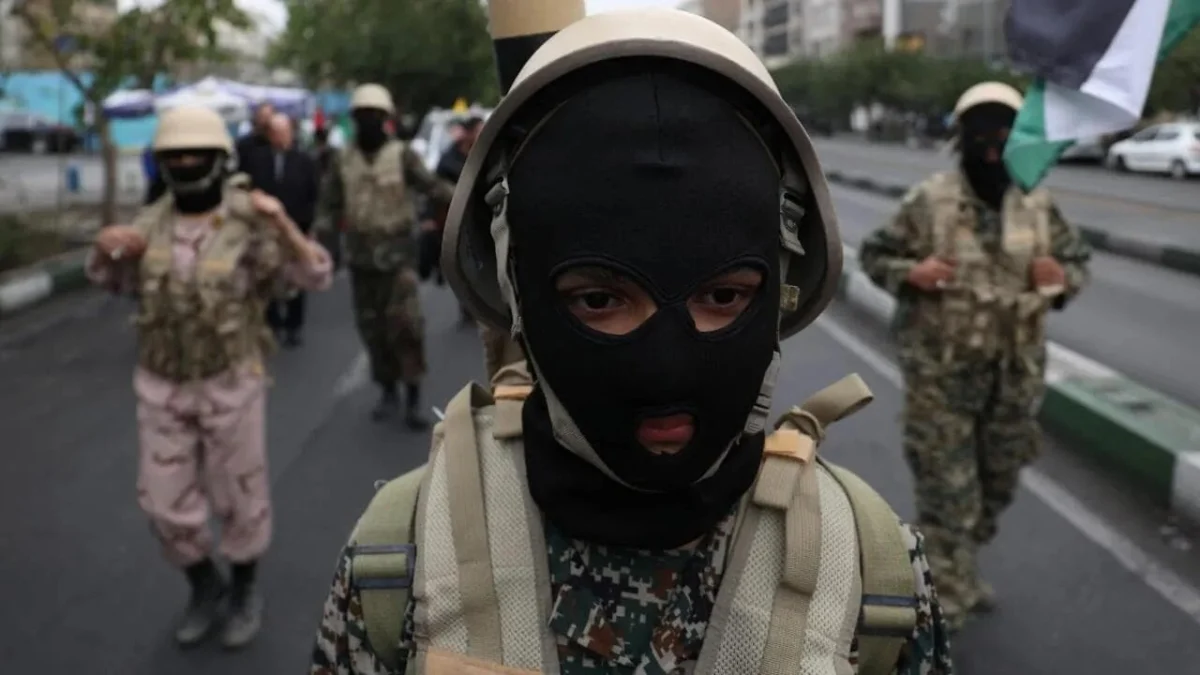
Washington’s persistent efforts to tighten economic constraints on Iran, coupled with the explicit ambitions of the Trump administration and Israel to destabilize the Iranian economy and society, appear to be manifesting in an uptick of internal unrest. While Iran’s historic ethnic borderland areas have long been recognized as focal points for anti-Tehran sentiment and activity, recent reporting indicates a significant escalation in violent incidents, posing a renewed challenge to the embattled leadership in Tehran. This surge in localized conflict, though not yet a direct threat to the central government’s authority, adds considerable pressure to a nation already grappling with severe international sanctions and a precarious geopolitical environment.
The Intensification of Economic Warfare and its Stated Aims
The United States, particularly under the Trump administration, pursued a "maximum pressure" campaign against Iran, withdrawing from the Joint Comprehensive Plan of Action (JCPOA) in 2018 and reimposing a sweeping array of sanctions. These measures targeted Iran’s vital oil exports, financial sector, and strategic industries, aiming to severely curtail the regime’s revenue streams and force it back to the negotiating table on terms more favorable to Washington. The explicit goal, as articulated by senior US officials and echoed by Israeli leaders, was not merely to alter Iran’s behavior but, in some interpretations, to foster internal dissent and ultimately lead to regime change. Figures like then-Treasury Secretary Scott Bessent openly acknowledged that the sanctions were designed to create "intensified social discontent" within Iran, a strategy predicated on the belief that economic hardship would translate into public opposition to the ruling establishment. This external economic pressure forms a critical backdrop against which the internal security challenges are now escalating.
Historical Roots of Borderland Discontent
Iran is a diverse nation, home to numerous ethnic and religious minority groups, many of whom reside in strategically important border regions. These communities, including Kurds in the northwest, Baloch in the southeast, Arabs in the southwest, and Azeris in the northwest, have historically experienced varying degrees of marginalization, economic disparity, and cultural suppression under successive Iranian governments, including the Islamic Republic. Their grievances often stem from a perceived lack of political representation, economic underdevelopment in their regions, and restrictions on their cultural and linguistic rights.
The Kurdish regions in the northwest, bordering Iraq and Turkey, have been a hotbed of nationalist and separatist movements for decades. Groups like the Kurdistan Democratic Party of Iran (KDPI) and Komala have waged intermittent armed struggles against the central government, advocating for greater autonomy or an independent Kurdistan. Similarly, in the southeastern province of Sistan and Baluchestan, bordering Pakistan and Afghanistan, the Baloch minority has long felt neglected by Tehran. This region, one of Iran’s poorest, has been a nexus for smuggling, drug trafficking, and, crucially, the activities of Baloch insurgent groups like Jaish al-Adl (Army of Justice), which claim to fight for the rights of the Sunni Baloch population against the Shia-dominated government. These groups have a long history of cross-border operations and have targeted Iranian security forces and government infrastructure. The Islamic Republic has consistently attributed these movements to external instigation and support, particularly from rival regional powers and Western intelligence agencies.
A Sharp Rise in Violent Incidents
New reporting from The Wall Street Journal underscores a significant and concerning surge in violent activity within these historically restive borderlands. The publication highlights that "Heavily armed insurgents in Iran’s restive borderlands are posing a new challenge to the embattled leadership in Tehran, carrying out an increasing number of attacks in recent months that have targeted regime security forces." This marks a discernible shift from the usual ebb and flow of sporadic clashes, indicating a more sustained and coordinated campaign by these groups.
Detailed conflict data monitor, Armed Conflict Location and Event Data (ACLED), cited by the WSJ, provides concrete figures illustrating this escalation. In the southeastern border region with Pakistan, militants reportedly armed with sophisticated weaponry such as rocket-propelled grenades and heavy machine guns have engaged in a series of ambushes against security patrols and attacks on intelligence and police buildings. This region has witnessed "nearly 120 violent incidents so far this year, including 85 armed clashes," a staggering figure. What is particularly alarming is that "more than half of all incidents occurring since September," suggesting a concentrated period of increased aggression. This annual count represents "the highest annual number in at least a decade," signaling a significant deterioration in the security situation in Sistan and Baluchestan.
Concurrently, in Iran’s northwest, Kurdish militants are suspected of carrying out targeted assassinations. These include the killings of "senior members of the Basij," the regime’s volunteer militia, and "a cleric affiliated with the group." Such high-profile attacks demonstrate a willingness to target key figures associated with the state’s security and ideological apparatus, aiming to undermine its presence and authority in these regions. The Basij, an omnipresent force in Iranian society, plays a crucial role in maintaining internal security and suppressing dissent, making its members high-value targets for insurgent groups seeking to challenge the regime.
Analysis of the Threat and Strategic Implications
Despite the alarming statistics and the increased lethality of the attacks, the consensus among analysts, including those quoted in the WSJ report, is that "this ‘localized’ violence poses no real threat to the country’s ruling authority." The Islamic Republic possesses a formidable security apparatus, including the Islamic Revolutionary Guard Corps (IRGC), the Basij, and various intelligence agencies, which have extensive experience in counter-insurgency operations. These forces are well-equipped and deeply entrenched, making a successful, nationwide insurrection by disparate ethnic groups highly improbable. The insurgent movements, while capable of inflicting casualties and causing localized disruption, lack the centralized command structure, popular national support, and military capability to genuinely challenge the regime’s hold on power in Tehran.
However, labeling the threat as "localized" does not diminish its strategic significance. As Behnam Ben Taleblu of the Foundation for Defense of Democracies, a hawkish DC-based think tank, was quoted saying, "Ethnic insurgencies are increasingly a thorn in the side of the regime and chipping away at the Islamic Republic’s ability to project power or order." This "chipping away" effect is crucial. It forces Tehran to divert resources – military personnel, intelligence assets, and financial expenditure – from other strategic priorities to address internal security concerns. This diversion can strain the regime’s capabilities, especially amidst a "wartime situation and ongoing standoff with the US for control of the Strait of Hormuz" and other regional flashpoints. The need to maintain a robust internal security posture can limit Iran’s ability to project power externally, influence regional conflicts, or even effectively manage its border security against external threats. It also exacerbates the existing sense of instability and insecurity within the country, further testing the resilience of the population and the state.
Allegations of External Support and Geopolitical Calculations
The persistent question that arises with any significant uptick in insurgent activity in such a strategically vital nation is the possibility of external support. The original article directly raises the query of "outside support to these border area insurgent groups, for example from the CIA or Mossad." This is not an unfounded speculation in the context of long-standing geopolitical rivalries.
Both the United States and Israel have a declared interest in weakening the Iranian regime. Israeli intelligence, in particular, has openly boasted in the recent past about having "assets on the ground inside Iran," suggesting a capacity for intelligence gathering and potentially covert operations. While direct, verifiable evidence of state-sponsored material support to these specific insurgent groups is rarely made public, the strategic logic for such actions is clear. Supporting or even merely encouraging separatist movements can create internal pressure, divert Iranian resources, and sow discord, aligning with the broader strategy of destabilization.
Furthermore, US officials have, in the past, openly considered leveraging these dynamics. The article reminds us that "Last spring, US officials openly floated the possibility of using Kurdish separatist groups as some kind of ground force." This highlights a tactical consideration within certain policy circles to utilize existing ethnic grievances as a tool in a broader geopolitical strategy against Tehran. Such inferences, while not definitive proof, certainly contribute to Tehran’s narrative that external enemies are actively working to undermine the nation’s integrity and security by exploiting internal divisions. For Iran, these insurgencies are not just domestic security issues but elements of a larger hybrid war waged by its adversaries.
Tehran’s Call for Unity Amidst Mounting Challenges
In response to the multifaceted pressures, Iranian President Pezeshkian has appealed to the citizenry, urging them to "band together and stay the course." His rhetoric emphasizes national unity and resilience in the face of external economic warfare and internal challenges. His primary focus, as articulated in a recent speech, is on preserving Iran’s "economic capacity" amidst a "US-imposed blockade, as well as global sanctions."
Pezeshkian stated, "The goal is to manage the current situation while supporting production and maintaining the country’s economic capacities." This highlights the regime’s immediate priority: to mitigate the devastating impact of sanctions on the national economy and prevent a complete collapse of key industries. He also issued a stark warning about the potential consequences of economic failure, stating that "any major halt in production could lead to ‘rising unemployment, the spread of poverty, and intensified social discontent.’" This statement, delivered at a student congress and cited by IRNA, reveals the deep concern within the leadership about the social ramifications of economic decline. The specter of widespread job losses, increased poverty, and heightened social unrest represents a significant threat to the regime’s stability, potentially fueling the very dissent that US sanctions aim to cultivate.
The irony is not lost on observers, as US Treasury Secretary Scott Bessent had long openly boasted that "intensified social discontent" is precisely what US sanctions on the country aim to create. This direct juxtaposition of Tehran’s fears and Washington’s stated objectives underscores the deliberate and calculated nature of the economic pressure campaign and its intended internal effects.
Broader Implications and Future Outlook
The escalating borderland insurgencies, combined with the relentless economic pressure, paint a complex and challenging picture for Iran. The implications extend beyond immediate security concerns:
- Regional Stability: Internal instability in Iran can have significant ripple effects across the Middle East. A weakened or distracted Iran might alter its regional posture, potentially impacting proxy conflicts in Yemen, Syria, Iraq, and Lebanon. Conversely, increased pressure could lead Tehran to double down on its regional assertiveness as a means of projecting strength and diverting attention from domestic woes.
- International Relations: The ongoing internal security challenges could complicate any future diplomatic efforts regarding Iran’s nuclear program or its ballistic missile development. A regime preoccupied with internal threats might be less willing or able to engage constructively on international issues, or it might seek concessions in exchange for stability.
- Domestic Political Landscape: The rising unrest tests the legitimacy and unity of the ruling establishment. It could exacerbate internal power struggles, particularly in the lead-up to any potential succession for the Supreme Leader. The regime’s ability to effectively suppress these insurgencies without resorting to excessive force, which could further alienate minority populations, will be crucial.
- Humanitarian Concerns: Increased conflict in border regions invariably leads to human suffering, displacement, and potential human rights abuses. The civilian populations caught between insurgent groups and state security forces often bear the brunt of the violence and instability.
- Economic Resilience: Despite the sanctions, Iran has demonstrated a degree of economic resilience, developing domestic capacities and forging new trade routes. However, the additional strain of internal security costs, coupled with the explicit goal of fostering social discontent, poses a severe test to this resilience. The long-term ability of the government to provide basic services and maintain social cohesion under such conditions remains a critical unknown.
In conclusion, the surge in violent insurgent activity in Iran’s borderlands, as highlighted by The Wall Street Journal, signifies a dangerous new phase in the country’s struggle for internal stability. While these localized conflicts may not directly threaten the central government’s authority, they act as a potent "thorn in the side," draining resources, challenging the regime’s narrative of national unity, and exacerbating the profound social and economic discontent fueled by international sanctions. The interplay of historical ethnic grievances, deliberate external pressure, and Tehran’s efforts to maintain economic capacity and social cohesion creates a volatile environment, making the future trajectory of the Islamic Republic increasingly uncertain.

