

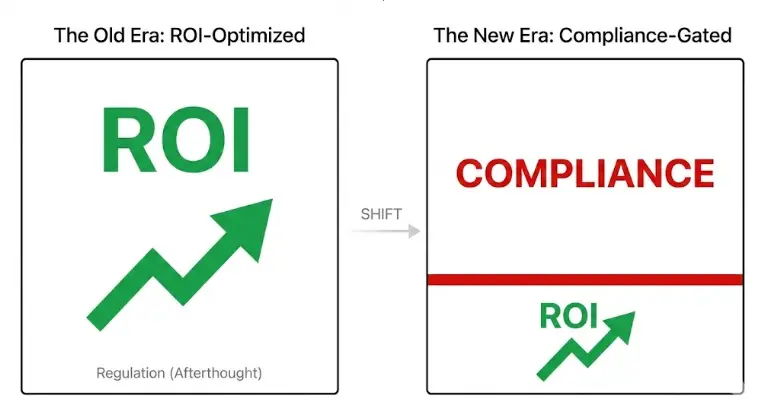
For nearly a decade, the short-term rental (STR) market operated with a distinct set of priorities for investors: maximizing nightly rates, optimizing occupancy curves, and mastering platform algorithms. If the financial projections were favorable, the investment was typically deemed sound. Regulatory compliance was often an afterthought, a procedural checkbox addressed late in the investment lifecycle, typically after financing and furnishing were secured. This era of unfettered growth and regulatory ambiguity has definitively concluded.
Today, the regulatory landscape surrounding STRs has transformed from a minor legal hurdle into a significant underwriting risk. A single municipal decision can instantaneously eliminate non-owner-occupied rentals, a newly implemented permit cap can abruptly halt new supply, and aggressive enforcement cycles can rapidly decimate occupancy rates across entire neighborhoods. In this dynamic environment, the pursuit of yield without a foundation of legal compliance has become an illusion. For PropTech platforms, marketplaces, analytics dashboards, and STR lending engines, this fundamental shift necessitates a re-evaluation of their operational infrastructure. Compliance can no longer be relegated to blog posts or manual research; it must be integrated as a core, programmatic underwriting input.
The API as a Policy Enforcement Engine
In the realm of real estate compliance, an Application Programming Interface (API) transcends its role as a mere data conduit. It evolves into the essential infrastructure for automated policy enforcement. The concept of "staying compliant by city" translates into the ability to translate thousands of disparate local municipal codes into a single, executable logic gate. This programmatic approach is critical for navigating the complex and often fragmented regulatory frameworks governing STRs.
Deterministic vs. Probabilistic Data: The Compliance Threshold
A crucial distinction in real estate technology lies between probabilistic modeling and deterministic data. Historically, most PropTech platforms have relied on probabilistic data – estimations, inferred classifications, and Automated Valuation Models (AVMs). While such data may be acceptable for ROI calculations where estimations are often sufficient, it presents a significant liability in the context of compliance.
Probabilistic data operates on "likelihoods." For instance, it might infer that a property is a single-family home based on its square footage or neighborhood profile. However, if a city ordinance explicitly bans STRs in multi-family units while permitting them in single-family homes, a "likely" classification is inadequate and carries substantial risk.
Deterministic data, conversely, is underpinned by authoritative records, including tax assessments, deed filings, and official land-use codes. For a platform to function as a true underwriting tool, its API must provide these deterministic metadata points. Compliance necessitates a binary "Yes" or "No" answer, grounded in legal truth. When a platform relies on inferred data for compliance, it exposes its users to catastrophic capital risk. An institutional investor deploying substantial capital into a market based on "probable" eligibility, only to find that metadata is inaccurate, could see the entire portfolio’s cash flow evaporate due to a single enforcement action.
The "Ghost Listing" Problem and Enforcement Signals
Standard real estate APIs often falter when addressing the "Ghost Listing" problem. In markets experiencing aggressive regulatory crackdowns, thousands of listings may remain accessible on booking platforms even after their legal permits have been revoked. If a platform solely tracks active listings, it might present a deceptively robust market picture. In reality, that market could be undergoing a significant "supply contraction."
A compliance-aware API must offer more than a static snapshot; it needs to provide historical performance trends. By cross-referencing a sudden drop in supply with sustained demand, platforms can detect an "enforcement signal." For example, if the number of active rentals in a specific zip code plummets by 40% within a single quarter, while nightly rates remain high, it is seldom an indicator of market failure. Instead, it typically signals a regulatory "clean sweep." Platforms capable of programmatically identifying these signals empower their users to avoid markets where the "door is closing," even if current ROI projections appear attractive.
Turning Ordinances Into Logic
To automate compliance effectively, platforms must translate complex legal language into structured, queryable data. At a practical level, most STR regulations can be categorized into three operational "guardrails":
-
Zoning & Property-Type Restrictions: Many municipalities impose restrictions on STRs based on building classifications. Utilizing property-level metadata, a platform can automatically flag ineligible property classes or exclude restricted asset types from search results, ensuring users are presented only with legally viable inventory. This proactive filtering prevents investments in properties that are fundamentally non-compliant.

-
Residency & Ownership Mandates: A growing number of cities now permit STRs only if the property is owner-occupied. By leveraging ownership indicators within the property dataset, a platform can transition from purely "ROI modeling" to "operational viability modeling." This fundamental shift distinguishes between a tool that suggests potential earnings and one that accurately informs users of their legal earning potential. The latter is critical for mitigating risk and ensuring long-term operational sustainability.
-
Market Saturation & Permit Caps: Some cities regulate STR supply through strict permit caps. While ordinance databases define the official limits, performance trends reveal the real-world enforcement patterns. This is where platforms move beyond static data to sophisticated predictive risk modeling, anticipating the impact of regulatory actions on market dynamics.
Technical Architecture: Building the Compliance Layer
If compliance is to be an integral underwriting input, it must reside within the platform’s technical architecture. By leveraging structured data, platforms can feed their own validation frameworks, creating a robust compliance layer. A compliance-aware underwriting engine can be constructed by integrating various API endpoints that expose deterministic property metadata and historical rental performance.
Phase 1: The Eligibility Filter (Property Info)
The foundational data pull involves retrieving the Property Object. When a user selects a listing, the platform queries an endpoint to obtain comprehensive property details. This initial step is crucial for an immediate assessment of basic eligibility based on physical characteristics and zoning.
Phase 2: Ownership & Residency Screening (Property Ownership)
In jurisdictions where primary residency is a requirement for STR operation, the platform must evaluate ownership indicators. This involves assessing whether the owner resides at the property or if it’s an absentee-owned property. This programmatic check is vital for distinguishing between owner-occupied rentals and those that may fall outside regulatory allowances.
Phase 3: Regulatory Pressure Detection (Rental Activity Data)
Static rules capture what is legally mandated, but trend data captures what is actively happening in the market. By analyzing historical performance, platforms can identify subtle shifts in market dynamics that often precede or coincide with regulatory enforcement. This includes tracking changes in listing volume, occupancy rates, and pricing trends to detect potential "enforcement signals."
Case Study: Institutional Underwriting for a Multi-Market REIT
Consider a Real Estate Investment Trust (REIT) targeting the Florida market, specifically Miami, where city-level ordinances are dynamic and carry significant fiduciary implications. For a REIT, compliance is not merely a legal objective but a capital markets requirement. Their investment committee (IC) demands an audit-traceable risk framework before deploying institutional capital.
Step 1: The Metadata "Gateway"
The process begins by querying property data to retrieve a high-fidelity Property Object. In a traditional workflow, an analyst might spend hours navigating a city’s GIS website. Programmatically, the system can assess critical attributes like property_type and occupancy_status within milliseconds. If a property is flagged as a "Second Home" in a zone requiring primary residency, the potential investment is immediately disqualified, saving valuable analytical resources.
Step 2: Ownership & Residency Verification
Ownership details are then verified. The system extracts the owner’s mailing address and cross-references it with the subject property’s address. For a REIT evaluating a large portfolio, manual verification is logistically impossible. The API provides the deterministic proof required for IC memos and regulatory filings, ensuring adherence to residency mandates at scale.
Step 3: Market Contraction & Enforcement Analysis
By querying historical rental performance, the REIT can identify a sharp decline in active listing counts, signaling "Regulatory Pressure." This allows the REIT to proactively pivot its capital allocation towards more stable micro-markets, thereby preserving capital amidst municipal volatility. Such analysis is crucial for mitigating the risk of investing in markets undergoing sudden regulatory shifts.
Step 4: Output – The Unified Underwriting Score
The platform aggregates these data points into its own decision engine, generating a comprehensive underwriting score. This score might include metrics such as:
| Metric | Mashvisor API Source | Value |
|---|---|---|
| Projected ROI | Investment Analysis | 8.2% |
| Zoning Match | Property Info (property_type) |
Pass (Single Family) |
| Residency Match | Property Ownership (mailing_address) |
Fail (Absentee Owner) |
| Market Pressure | Historical Performance Trends | High (Supply contraction) |
The resulting "No-Buy" signal from this integrated system ensures that every deal in the pipeline adheres to the REIT’s stringent fiduciary standards for operational certainty and legal compliance.
Compliance as a Fiduciary Guardrail
As short-term rentals mature from opportunistic retail plays into institutional asset classes, the demand for repeatable risk frameworks has shifted from a "nice-to-have" to a capital markets imperative. For institutional funds, compliance serves as the ultimate fiduciary guardrail. Lenders and capital partners are increasingly sensitive to "regulatory drift"—the phenomenon where an asset is acquired under one legal framework only to become legally untenable under subsequent regulations.
In this high-stakes environment, a platform’s reliance on manual research or disclaimers of "best effort" is insufficient. Institutional underwriting demands an audit-traceable data lineage. By leveraging deterministic property metadata, platforms provide a digital paper trail for every investment decision. When a lender inquires about the rationale behind approving a specific asset for a high-leverage loan, the platform can point to the specific occupancy_status and property_type indicators, sourced from reliable data providers, that aligned with the city’s ordinance at the time of underwriting. This transforms compliance from a legal burden into a liquidity feature, enhancing the attractiveness of assets to risk-averse institutional buyers.
Conclusion: From ROI to Operational Viability
The short-term rental market has moved beyond its "growth at all costs" phase. In this evolving landscape, the most sophisticated calculation is no longer about how much a property could generate in revenue, but whether it is legally allowed to operate. For PropTech platforms, this signifies a fundamental evolution in their product category.
By integrating deterministic property metadata and real-time performance signals directly into the underwriting workflow, platforms transcend their role as mere ROI calculators. They become essential risk infrastructure, tools that protect capital, ensure fiduciary compliance, and provide the operational certainty that institutional investors demand. As regulatory scrutiny continues to intensify, platforms that embed legality into their technical architecture will not only survive but will define the next era of real estate investing.
Scaling Compliance in Your Real Estate Data Stack?
If you are evaluating how to integrate structured property metadata into your underwriting engine or transition from manual research to a programmatic compliance workflow, consider engaging with experts to pressure-test your architecture. Booking an introductory call with a data team specializing in real estate APIs can provide insights into specific use cases, technical requirements, and strategies for leveraging their data to build a compliance-aware roadmap. This proactive approach is essential for navigating the increasingly complex regulatory environment of the short-term rental market.

