
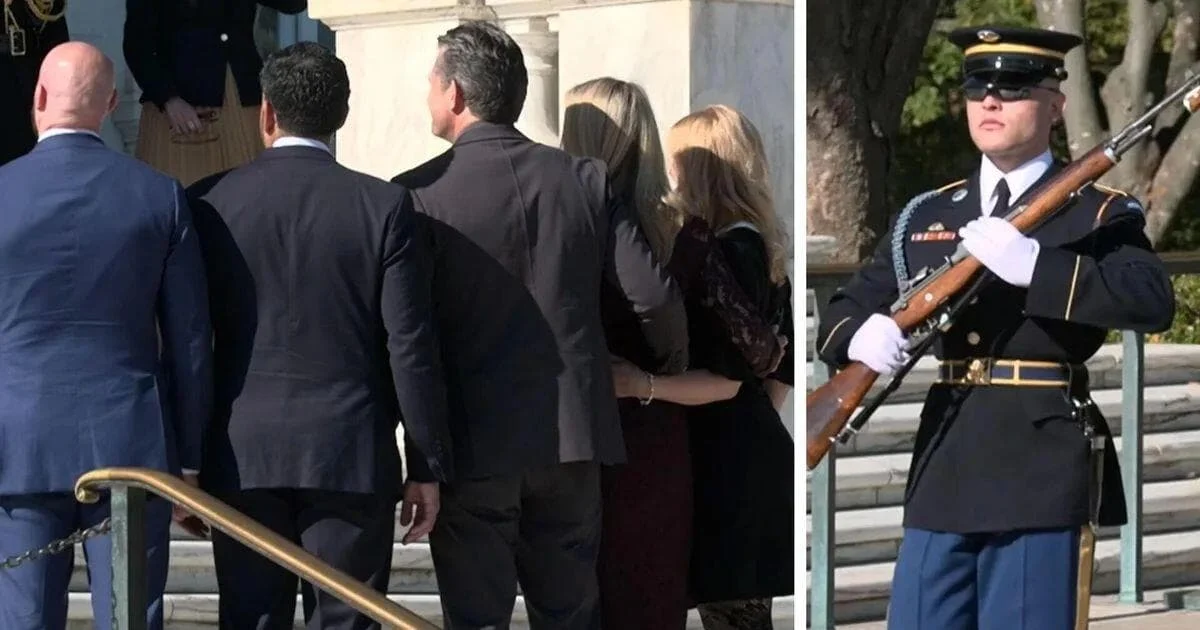
The solemn atmosphere of Arlington National Cemetery, a sacred resting place for America’s fallen heroes, was momentarily broken by an unexpected intervention from a sentinel of the 3rd U.S. Infantry Regiment, known as "The Old Guard." The incident, captured live by media outlets including CNN, highlighted the unwavering commitment to reverence maintained by those who guard the Tomb of the Unknown Soldier. Defense Secretary Pete Hegseth, accompanied by his wife, Jennifer, Chief of Staff Ricky Buria, Deputy Chief of Staff Patrick Weaver, and Senior Adviser Tami Radabaugh, had gathered near the Tomb for photographs after participating in the official Veterans Day wreath-laying ceremony with President Trump and Vice President JD Vance. It was during this period that laughter and conversation emanated from the group, prompting the sentinel to issue a stern, audible reminder of the strict protocols governing visitor conduct. "All visitors will maintain an atmosphere of silence and respect at all times," the sentinel’s voice resonated across the plaza, a stark and immediate correction that underscored the sanctity of the memorial. While footage of the incident did not definitively show who among the group was responsible for the laughter, or whether Secretary Hegseth himself was directly involved, the public nature of the reprimand sent a clear message about the universal expectation of decorum at such a hallowed site.
The Sacred Trust: Guardians of the Tomb
The Tomb of the Unknown Soldier stands as a poignant symbol of sacrifice, dedicated to American service members who died without their remains being identified. Its origins trace back to the aftermath of World War I, when a single Unknown Soldier was interred in 1921. Subsequent interments followed for World War II and the Korean War, with a Vietnam War Unknown added in 1984, whose remains were later identified and removed in 1998, leaving the crypt vacant as a testament to the advances in forensic science and a continuing tribute to those still missing. The monument, crafted from Yule marble, represents a nation’s collective gratitude and sorrow for the immeasurable cost of freedom.
Since April 6, 1948, soldiers of the 3rd U.S. Infantry Regiment, "The Old Guard," have maintained a perpetual vigil over the Tomb. This watch, which has been continuous around the clock since 1937, is a testament to an unbroken chain of honor. The earliest guards were primarily tasked with preventing visitors from climbing or stepping on the Tomb, a physical protection that has evolved into a highly ritualized and deeply symbolic duty. The Tomb Guards, as they are known, are an elite corps selected for their impeccable bearing, discipline, and profound understanding of the Tomb’s significance. Their training is rigorous, demanding not just physical endurance but also an unwavering mental focus and an encyclopedic knowledge of military history and protocols. They perform their duties with a precision that borders on perfection, executing a 21-step walk across the mat, a number symbolic of the 21-gun salute, followed by a pause, a turn, and a repeat of the march. This intricate dance of duty is a constant, regardless of weather conditions or time of day, embodying the nation’s eternal gratitude.
Protocols of Reverence: An Unwritten Code of Conduct
The rules governing visitor behavior at the Tomb of the Unknown Soldier are not merely suggestions but strictly enforced protocols designed to preserve the solemnity of the site. Prior to each changing of the guard ceremony, the relief commander explicitly addresses spectators, requesting them to stand and maintain silence throughout the ritual. This request extends beyond the formal ceremony to encompass all interactions within the immediate vicinity of the Tomb. The expectation of "an atmosphere of silence and respect" is paramount. This unwritten code of conduct is deeply ingrained in the ethos of Arlington National Cemetery and is universally understood by those who visit. The sentinel’s rifle, always shouldered on the side closest to the visitors, symbolically stands "between the Tomb and any possible threat," a visual representation of their role as protectors of not just the physical monument, but also the reverence it commands. The reprimand served as a forceful reminder that these protocols apply to all, irrespective of rank or public office, highlighting the sentinel’s role as the ultimate enforcer of this sacred trust.
Veterans Day Observance and High-Profile Attendance
The incident occurred during Veterans Day, a federal holiday dedicated to honoring military veterans. The day is marked by ceremonies across the nation, with the wreath-laying at the Tomb of the Unknown Soldier being one of the most prominent and deeply symbolic. This year’s event saw President Trump and Vice President JD Vance lead the nation in remembrance, a ceremony that drew numerous dignitaries and high-ranking officials, including Defense Secretary Pete Hegseth. The presence of such officials underscores the national significance of the day and the memorial. Secretary Hegseth’s participation in the wreath-laying was part of his official duties, representing the Department of Defense and the nation’s armed forces. The day’s solemnity was further highlighted by the ongoing political climate, with discussions around articles of impeachment against the Secretary having been sent back to the Judiciary Committee the previous night, effectively shelving the effort until the new congressional session. However, the political backdrop faded into insignificance in the face of the sentinel’s direct challenge to perceived disrespect at the Tomb.
Immediate Reactions and Media Scrutiny
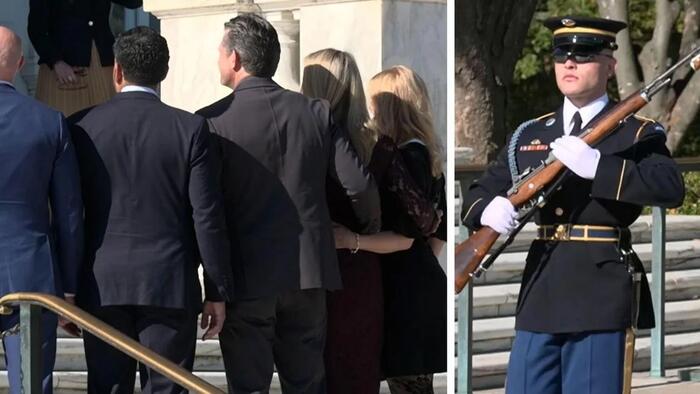
The public reprimand quickly became a focal point of media attention, particularly as CNN had been airing the events live. CNN anchor Brianna Keilar underscored the routine nature of such corrections, noting that "this is something that happens if people are at the tomb" and that anyone who breaks the silence "will get similarly reprimanded by the Army Sentinel who is guarding the tomb at the time." This journalistic explanation served to contextualize the sentinel’s actions not as an isolated or personal affront, but as a consistent enforcement of established protocols. The swiftness and directness of the sentinel’s intervention resonated widely, eliciting strong reactions across social media and public forums. Many praised the sentinel’s professionalism and unwavering dedication to duty, viewing the incident as a powerful affirmation of the respect owed to those who have served and sacrificed. The episode served as a stark reminder to public figures and ordinary citizens alike about the solemnity required at national memorials.
Broader Implications and Public Discourse
The incident, while seemingly minor in its immediate scope, carries significant symbolic weight and broader implications. It underscores the profound and deeply held reverence many Americans have for their military service members, particularly those who made the ultimate sacrifice. The sentinel, a relatively junior enlisted service member, standing firm against a Cabinet Secretary and his entourage, represented the unwavering principles of respect and honor that transcend rank and political power. This act of upholding protocol, regardless of the individual’s position, reinforces the idea that the Tomb of the Unknown Soldier is sacrosanct and immune to the informalities sometimes associated with high office.
The public nature of the reprimand also serves as a potent civics lesson, reminding the populace of the solemn duties performed by service members and the standards of conduct expected at national shrines. It highlights the unique culture of the U.S. military, where discipline and adherence to regulations are paramount, even when directed at superior officers or civilian leaders. For many, the sentinel’s actions were a source of pride, affirming the integrity and dedication of the armed forces. It sparked discussions about leadership by example, the importance of humility, and the perennial need to remember the sacrifices that underpin the nation’s freedoms. While no immediate official statement was issued from the Department of Defense regarding the incident, the visual impact and the widespread media coverage undoubtedly prompted internal discussions regarding official conduct at such revered sites.
Historical Precedents and Adherence to Cemetery Protocols
This is not the first instance where high-profile visits to Arlington National Cemetery have drawn scrutiny regarding adherence to established protocols. A previous incident in August 2024 involved allegations that an Army employee at Arlington attempted to stop Trump campaign staff from filming in Section 60, an area where troops killed in Iraq and Afghanistan are interred, only to be pushed aside. The campaign disputed this account, and the Army later released a heavily redacted report on the incident. While distinct in nature, both events highlight the ongoing challenge of balancing public access and official visits with the solemn and respectful atmosphere demanded by the cemetery. Arlington National Cemetery has strict guidelines for all visitors, and these guidelines are enforced to ensure that the peace and dignity of the fallen are maintained. The sentinel’s intervention on Veterans Day reinforces the message that these rules are not merely bureaucratic formalities but are fundamental to the sacred purpose of the cemetery. The act of a sentinel physically placing their rifle on the shoulder closest to visitors, signifying they "stand between the Tomb and any possible threat," extends beyond physical security to include guarding against any form of disrespect or distraction from the Tomb’s solemn purpose.
The Unwavering Standard of Reverence
The incident involving Defense Secretary Pete Hegseth and his party at the Tomb of the Unknown Soldier serves as a powerful testament to the unwavering standards of reverence demanded at one of America’s most sacred sites. The sentinel’s firm yet respectful reprimand underscored the profound significance of the Tomb and the tireless dedication of the Old Guard to upholding its sanctity. In a world often characterized by fleeting attention and casual interactions, the enduring vigil at the Tomb stands as a constant reminder of sacrifice, duty, and the enduring power of respect. The event reinforced that at Arlington, particularly at the Tomb of the Unknown Soldier, an atmosphere of silence and respect is not merely preferred; it is a non-negotiable imperative, enforced by those who embody the very honor they protect.

