

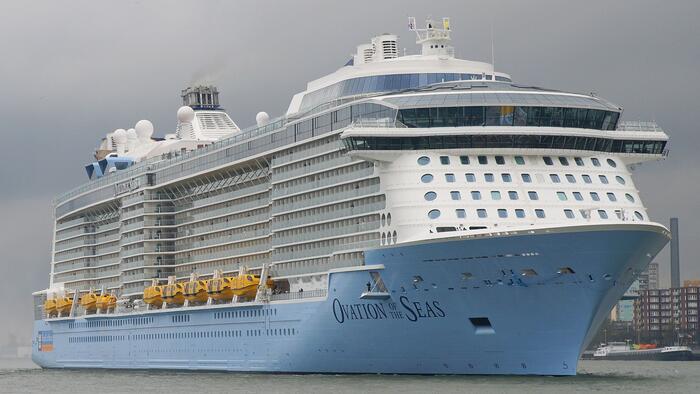
Two dedicated fishermen, returning from a successful marlin trip off the Southern California coast, became unwitting heroes on November 6 when they pulled a Royal Caribbean crew member from the vast expanse of the Pacific Ocean. The man, later identified as a pianist aboard the Ovation of the Seas, had endured an astonishing nine hours adrift, battling the elements and the crushing isolation of the open sea. His improbable rescue, reported by CruiseHive, unfolded approximately 15 to 20 miles off the coast near Catalina Island, a location Newport Beach Lifeguard Battalion Chief Adam Yacenda starkly described as "pretty much in the middle of the ocean," according to CBS LA.
The harrowing ordeal began in the early hours of the morning, with authorities estimating the crew member went overboard around 2:30 a.m. The precise circumstances of his fall remain under investigation by the Coast Guard, but for nearly half a day, he was alone, contending with the profound challenges of open-ocean survival. It was not until around noon that Grant Garrett and his fishing partner, who served as the boat’s captain, made their incredible discovery. As their vessel cut through the waves, the captain spotted a faint, anomalous form in the water. "Yeah, it’s a human being. Stop the boat; let’s get all of our lines in," Garrett recounted, describing the immediate shift from fishing expedition to life-saving mission. Without hesitation, the two men maneuvered their boat, reaching the struggling individual. "We each got an arm and lifted him up," Norton, the captain, later explained, describing the raw effort required to bring the exhausted man aboard.
Once safely on deck, the rescued man, in a state of profound shock and relief, uttered words that underscored the gravity of his situation: "Thank you. I thought I was gonna die." An emergency maritime call was promptly placed, and Newport Beach lifeguards swiftly responded, taking custody of the survivor and transporting him to shore for urgent medical attention. He was subsequently hospitalized, where he is expected to make a full recovery, a testament to his incredible resilience and the timely intervention of his rescuers.
A Timeline of Peril and Providence
The chronology of this extraordinary event paints a vivid picture of near-catastrophe averted by a slender thread of chance and human compassion.
- Estimated Time Overboard (Nov. 6, approx. 2:30 a.m. PST): The Royal Caribbean crew member is believed to have fallen from the Ovation of the Seas somewhere between the Southern California mainland and Catalina Island. The ship was on a four-night itinerary from Los Angeles, including a stop at Catalina Island and Ensenada, Mexico. At this early hour, most passengers and crew would be asleep, and the vastness of the Pacific would have quickly swallowed any sound or immediate sign of distress.
- Hours Adrift (2:30 a.m. – 12:00 p.m. PST): For nearly nine hours, the crew member was left to the mercy of the ocean. During this period, he would have faced extreme physical and psychological challenges: the onset of hypothermia, dehydration, exhaustion, disorientation, and the ever-present threat of marine life. The lack of an immediate alert from the cruise ship suggests his fall went unnoticed at the time.
- Discovery (Nov. 6, approx. 12:00 p.m. PST): The fishing boat, returning from a marlin trip, stumbled upon the man. Their location, 15 to 20 miles off Catalina Island, placed them squarely in open water, far from regular coastal traffic lanes. The sheer improbability of being spotted in such a vast area, particularly by a non-search-and-rescue vessel, highlights the element of fortune.
- Rescue and Recovery (Nov. 6, afternoon PST): The immediate actions of the fishermen to halt their vessel, secure their lines, and physically retrieve the man were critical. Following the successful recovery, an emergency maritime call alerted authorities. Newport Beach lifeguards swiftly deployed, took over the rescue, and transported the man to shore for medical assessment and treatment.
- Hospitalization and Recovery (Ongoing): The crew member was hospitalized, where his condition was stabilized. The Coast Guard confirmed he was expected to survive, initiating an investigation into the circumstances of his fall.
Defying the Odds: Survival in the Open Ocean
Surviving nine hours in the open Pacific Ocean is an extraordinary feat, defying statistical probabilities that weigh heavily against such an outcome. The ocean, while beautiful, is an unforgiving environment. The primary threats to anyone lost at sea include hypothermia, dehydration, exhaustion, exposure to the sun, and encounters with marine life.
- Hypothermia: This is typically the most immediate and severe threat. Cold water rapidly saps body heat, leading to core body temperature drop, impaired judgment, muscle weakness, and eventually, organ failure. Survival times in water below 60°F (15°C) can be measured in hours, or even minutes, without protective gear. Even in warmer waters, prolonged exposure leads to significant heat loss.
- Dehydration: Despite being surrounded by water, the human body cannot consume saltwater. The lack of fresh water leads to rapid dehydration, exacerbating exhaustion and organ strain.
- Exhaustion: Treading water for hours on end is physically grueling. Fatigue can lead to accidental ingestion of saltwater, panic, and a reduced ability to stay afloat.
- Exposure: Sunburn, windburn, and saltwater irritation can cause significant skin damage, increasing vulnerability to infection and further contributing to discomfort and exhaustion.
- Marine Life: While often exaggerated in popular culture, the presence of sharks or other large marine predators is a legitimate concern in open ocean environments, adding a psychological burden to the physical ordeal.
The man’s survival against these formidable odds points to a combination of personal fortitude, perhaps some inherent buoyancy or ability to conserve energy, and crucially, favorable environmental conditions.
The El Niño Factor: A Lifeline in Warm Waters
One of the most significant factors credited with the crew member’s survival was the unusually warm ocean water, attributed to the presence of a super El Niño current. Captain Norton, one of the rescuers, emphatically stated, "A different year, no way he makes it." This observation is supported by scientific understanding of human survival in marine environments.
El Niño is a climate pattern characterized by the unusual warming of surface waters in the equatorial Pacific Ocean. These warmer waters can extend beyond the equator, affecting ocean temperatures along the coasts of North and South America. In November 2023, the Eastern Pacific was indeed experiencing warmer-than-average sea surface temperatures, consistent with a developing strong El Niño event.
Typical ocean temperatures off Southern California in November can range from the low to mid-60s Fahrenheit (around 15-18°C). While not freezing, prolonged exposure in this range without a wetsuit can still lead to significant hypothermia within a few hours. However, an El Niño effect could elevate these temperatures by several degrees, potentially pushing them into the upper 60s or even low 70s Fahrenheit (around 19-22°C).
The difference of even a few degrees can dramatically impact survival time. In water temperatures of 60-70°F (15-21°C), estimated survival times for an unprotected person can extend from 2-7 hours up to 2-40 hours or more, depending on individual factors, body fat, and exertion levels. The warmer water significantly slows the onset and progression of hypothermia, allowing the body to conserve core heat for a longer duration. This critical environmental buffer undoubtedly played a pivotal role in keeping the crew member alive long enough to be found.
The Ovation of the Seas and Maritime Protocols
The Ovation of the Seas is a formidable vessel, one of Royal Caribbean International’s Quantum-class cruise ships. Launched in 2016, she boasts a gross tonnage of 168,666 and can carry over 4,900 passengers and 1,500 crew members. Such a large ship is equipped with extensive safety features and strict protocols, making the unnoticed fall of a crew member a significant point of inquiry.
Cruise ships operate under stringent international maritime regulations, including the Safety of Life at Sea (SOLAS) convention. These regulations mandate various safety measures, including railings of specific heights, surveillance systems, and procedures for "Man Overboard" (MOB) situations.
When an MOB incident is detected, standard procedure involves:

- Immediate Alarm: Sounding the alarm and notifying the bridge.
- Visual Sighting: Attempting to maintain visual contact with the person in the water.
- Bridge Procedures: Initiating a search-and-rescue operation, turning the ship, deploying life rings with lights and smoke signals, and alerting the Coast Guard.
- Search Pattern: Following established search patterns to cover the area where the person was last seen.
The fact that the crew member was adrift for nine hours before being found by a private fishing vessel strongly suggests that his fall went undetected by the Ovation of the Seas itself. This raises questions about the effectiveness of surveillance systems, watchkeeping procedures, or perhaps the specific circumstances of his fall, which might have occurred in an unmonitored area or without a witness. Modern cruise ships are increasingly equipped with advanced detection systems, including thermal cameras and radar, designed to identify persons in the water, though these systems are not foolproof and their deployment varies.
Official Response and Ongoing Investigation
Following the miraculous rescue, multiple authorities became involved. The Newport Beach Lifeguard Battalion Chief Adam Yacenda confirmed the location and the extraordinary nature of the survival, highlighting the rarity of such an outcome without immediate intervention.
The U.S. Coast Guard, the primary federal agency responsible for maritime safety and search and rescue in U.S. waters, immediately launched an investigation into the incident. Their inquiry will seek to determine:
- How the crew member went overboard: Was it an accident, an intentional act, or potentially something more sinister?
- Why the incident went undetected by the cruise ship: Were standard protocols followed? Were there any equipment malfunctions?
- The precise location and trajectory of the individual: To understand drift patterns and confirm details of the fall.
Royal Caribbean International issued a brief statement acknowledging the incident. The company stated it is "providing support and assistance to our crew member during this difficult time" and declined to share further details, citing respect for the individual’s privacy. This is a standard response from cruise lines in such sensitive situations, balancing public interest with the privacy of their employees. As of the time of reporting, no findings from the Coast Guard’s investigation have been publicly released.
A Testament to Human Resilience and Good Samaritanship
This incident stands as a profound testament to the indomitable spirit of human resilience and the critical role of good Samaritans in maritime safety. The pianist’s sheer will to survive, coupled with the serendipitous arrival and quick thinking of the two fishermen, transformed what could have been a tragic loss into a story of hope and miraculous recovery.
The broader implications of this event extend to discussions on maritime safety protocols, particularly regarding man overboard detection systems on large cruise vessels. While such incidents are statistically rare compared to the millions of passengers and crew members who travel by cruise ship annually, each case highlights the inherent dangers of the open sea and the importance of robust safety measures. The investigation by the Coast Guard will be crucial in potentially identifying any gaps or areas for improvement in existing procedures or technologies.
Ultimately, this extraordinary rescue serves as a powerful reminder of the unpredictable nature of the ocean and the profound impact that a moment of vigilance and kindness can have. For the Royal Caribbean pianist, it was a second chance at life, granted by a combination of personal tenacity, a benevolent ocean current, and the timely intervention of two ordinary men who became heroes at sea.

