
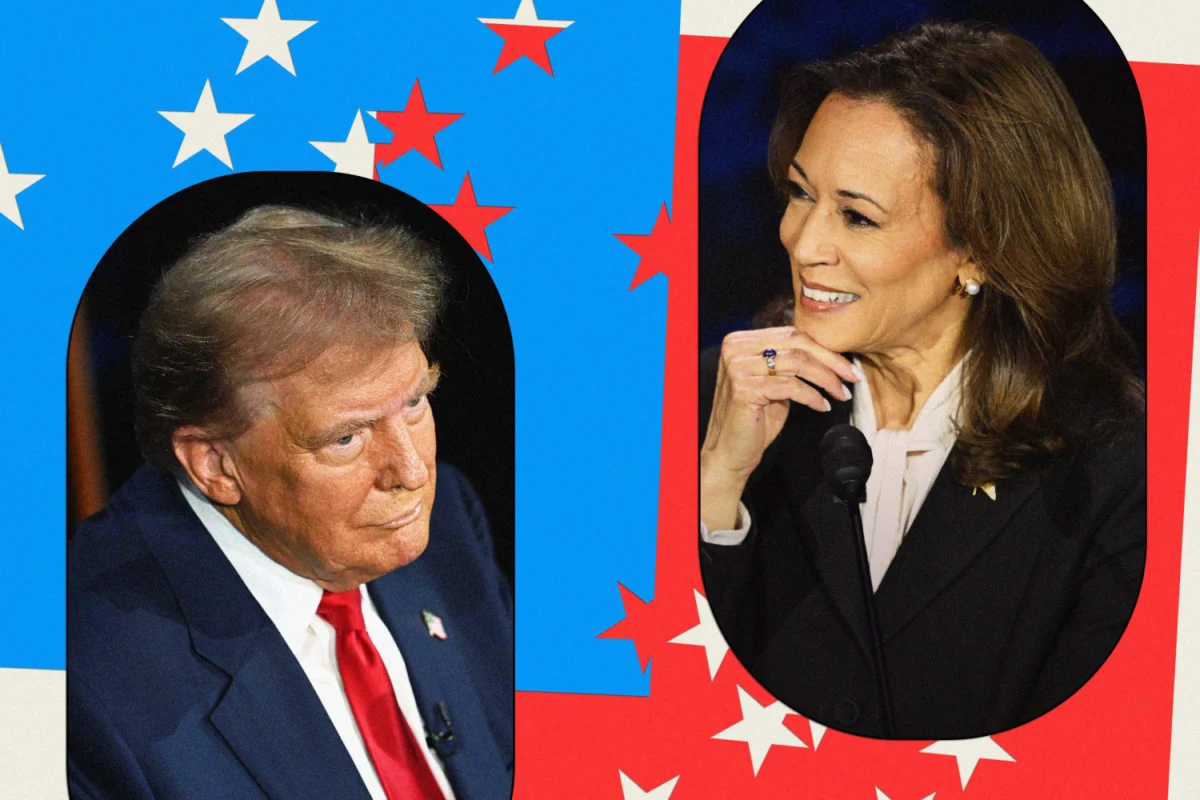
As the United States once again enters a pivotal election year, the national discourse inevitably converges on the economy, becoming a central battleground for competing political narratives. With high-profile candidates like Vice President Kamala Harris and former President Donald Trump vying for public support, economic performance and policy proposals are under intense scrutiny. While citizens are encouraged to engage thoughtfully through research and voting, a critical challenge arises when political rhetoric on economic issues diverges significantly from empirical data. This article aims to provide a fact-based analysis of prevalent economic discussions, distinguishing between political posturing and the underlying realities that shape the nation’s financial health.
The Current Economic Landscape: A Data-Driven Overview
The current economic climate in the U.S. presents a complex picture, characterized by robust indicators alongside persistent public skepticism. Official statistics paint a largely positive outlook, yet a significant portion of the electorate perceives economic hardship.
Strength in Numbers: Unemployment and Growth
Contrary to some political claims of a "bad economy," the U.S. has experienced a period of remarkable economic strength. The unemployment rate has consistently hovered at historic lows, often below 4% for extended periods, a level not seen in decades. For instance, the Bureau of Labor Statistics reported unemployment rates that have remained near or below 4% since early 2022, signifying a tight labor market where job opportunities are abundant. This translates into increased bargaining power for workers and fewer individuals struggling to find employment. Gross Domestic Product (GDP) growth, a primary measure of economic output, has also demonstrated resilience, indicating a dynamic and expanding economy recovering robustly from the pandemic-induced downturn. While growth rates fluctuate, the overall trend has been positive, defying predictions of recession and demonstrating underlying economic vitality. This sustained growth, coupled with high employment, typically defines a robust economic environment.

Navigating Inflation: Trends and Real Wages
The period following the COVID-19 pandemic saw a significant surge in inflation, driven by a confluence of factors including unprecedented fiscal stimulus, strong consumer demand, and global supply chain disruptions. The Consumer Price Index (CPI) rose sharply, peaking at over 9% year-over-year in mid-2022. This rapid increase in the cost of living undoubtedly presented challenges for many households, eroding purchasing power. However, it is crucial to examine the trajectory of inflation and its relationship with wage growth. The Federal Reserve, in response to inflationary pressures, implemented a series of interest rate hikes designed to cool the economy. By late 2023 and into 2024, inflation rates had largely receded, with the CPI generally falling back towards the Fed’s target of 2%.
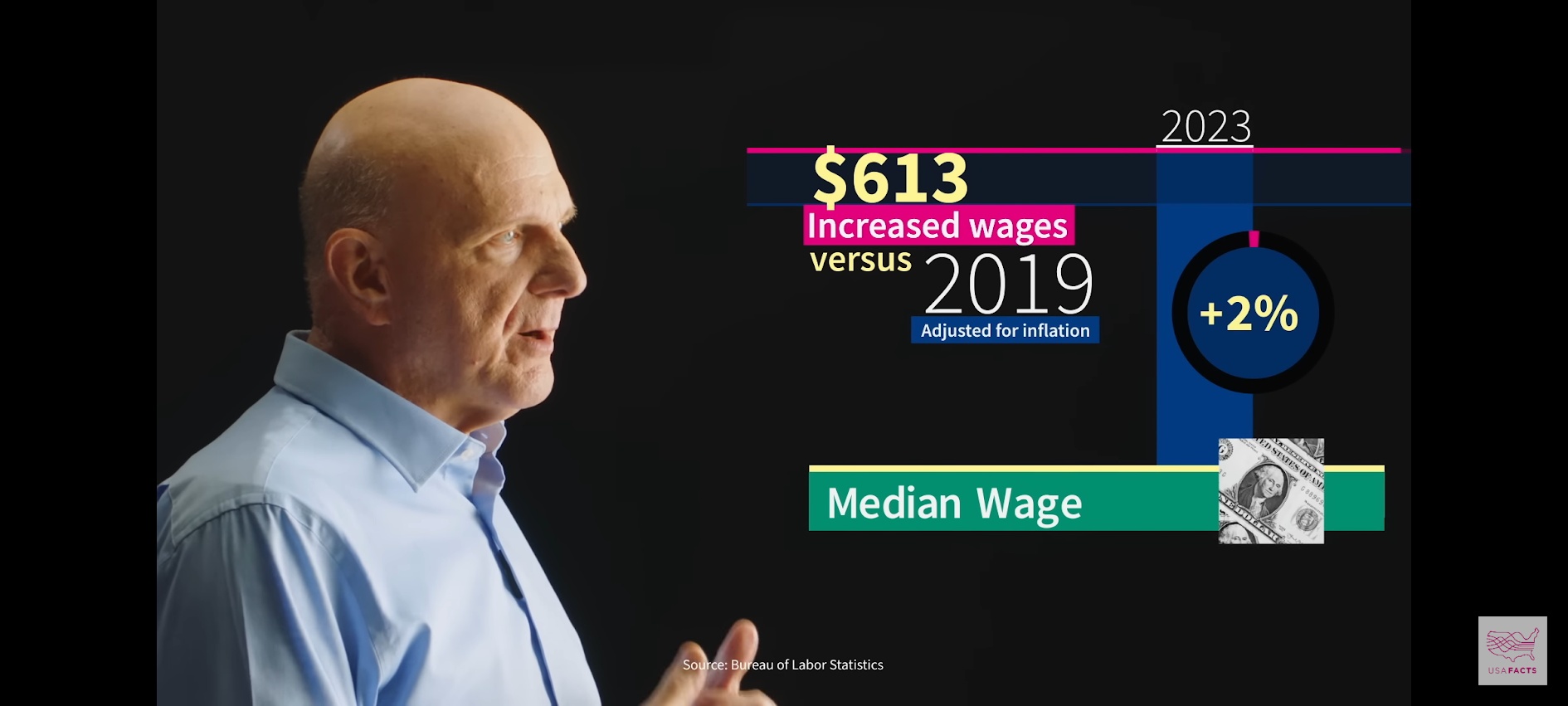
More significantly, an analysis of real wages reveals that for most Americans, wage growth has outpaced inflation over the past few years. Data from sources like the Bureau of Economic Analysis (BEA) and the Atlanta Fed Wage Tracker indicate that since 2019, aggregate wages have risen by approximately 21%, while overall prices have increased by about 19%. This means that, on average, the purchasing power of American workers has improved, not diminished, despite the inflationary period. Politicians, however, frequently frame "higher wages and prices" as a negative, neglecting the critical distinction of real wage growth.
The Perception Gap: Public Sentiment vs. Economic Indicators
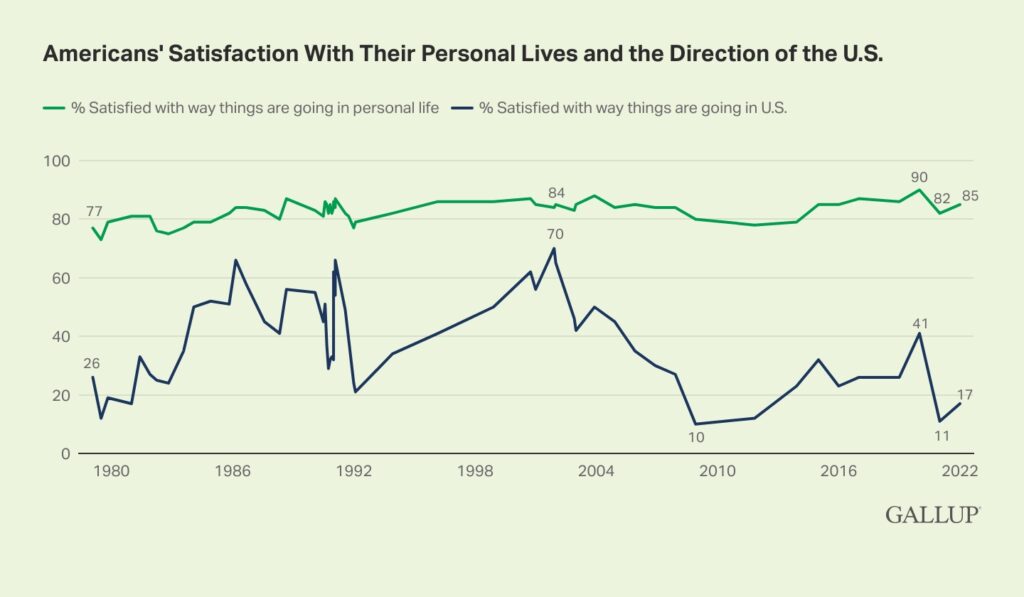
One of the most perplexing aspects of the current economic debate is the significant disparity between official economic data and public perception. A recent Gallup poll highlighted this phenomenon, showing that while a substantial majority of Americans (around 85%) reported doing well personally, only a small fraction (approximately 17%) believed the national economy was performing well. This disconnect suggests that individual financial well-being is not translating into a positive assessment of the broader economy. This "perception gap" can be attributed to several factors:
- Recency Bias: Memories of peak inflation, when prices rose dramatically, tend to linger longer than the subsequent stabilization or real wage gains.
- Media Framing: News coverage often emphasizes negative economic stories, which can shape public opinion more powerfully than positive data.
- Social Media Echo Chambers: Misinformation and emotionally charged narratives can proliferate rapidly on social platforms, reinforcing negative perceptions regardless of factual accuracy.
- Political Partisanship: Voters often align their economic perceptions with their political allegiances, leading supporters of an opposition party to view the economy more negatively.
This phenomenon underscores how emotional responses and information consumption patterns can overshadow objective economic realities, creating fertile ground for political manipulation.
Deconstructing Political Economic Narratives
Political campaigns frequently simplify complex economic issues, often attributing credit or blame in ways that do not align with economic principles. Understanding these common misrepresentations is crucial for an informed electorate.
The Myth of Presidential Economic Control
A pervasive misconception in American politics is the belief that the sitting president single-handedly controls the nation’s economy. While a president’s policies and leadership can certainly influence economic trajectories, the U.S. economy is a colossal, intricate, and largely free-market system that defies unilateral control. With a GDP representing approximately 26% of the global economy, it is deeply integrated into international markets and subject to a multitude of domestic and global forces beyond the White House’s direct influence. These forces include:
- Global Economic Cycles: International trade, geopolitical events, and economic conditions in other major economies significantly impact the U.S.
- Market Dynamics: Consumer behavior, business investment, technological innovation, and investor sentiment are powerful drivers.
- Independent Institutions: The Federal Reserve, an independent central bank, plays a far more direct role in managing economic cycles through monetary policy.
Government fiscal policies, such as tax rates and spending, certainly have an impact, but their effects are often delayed, diffuse, and can be difficult to isolate from other factors. Attributing short-term economic fluctuations solely to the president’s actions oversimplifies a complex interplay of market forces, global trends, and the independent actions of millions of businesses and consumers.
The Federal Reserve’s Independent Role in Interest Rates
Another area of frequent political misrepresentation concerns interest rates. Candidates often pledge to "fight" to lower borrowing costs, implying direct presidential control over this critical economic lever. This claim fundamentally misunderstands the structure and function of the Federal Reserve. The Fed is designed to operate independently of political pressure, guided by a dual mandate to achieve maximum employment and price stability. It sets the federal funds rate, which influences other interest rates across the economy, as a primary tool of monetary policy.
- When the economy slows or unemployment rises: The Fed may lower interest rates to stimulate borrowing, investment, and hiring.
- When inflation accelerates due to an "overheating" economy: The Fed raises interest rates to cool demand and bring prices back under control.
Allowing a sitting president to dictate interest rate policy would be highly problematic. As history has shown in countries where central banks lack independence (e.g., Argentina, Turkey), political interference often leads to short-sighted decisions, hyperinflation, and economic instability, as politicians prioritize immediate electoral gains over long-term economic health. The Fed’s independence is a cornerstone of sound economic management, shielding monetary policy from the political cycles and ensuring decisions are based on economic data rather than electoral expediency.
Beyond "Greedflation": Understanding Price Dynamics
The concept of "greedy corporations" driving inflation by raising prices to hoard profits is a politically appealing but largely unsubstantiated claim in competitive market economies. While businesses aim for profitability, widespread "greedflation" as a primary driver of sustained, broad-based inflation is generally not supported by economic analysis. In competitive markets, if one company excessively raises prices, consumers typically have alternatives, forcing businesses to remain competitive.
Economists largely attribute recent inflation to the fundamental principles of supply and demand:
- Demand Shock: Massive government stimulus and pent-up consumer demand post-pandemic.
- Supply Chain Disruptions: Factory closures, shipping bottlenecks, and labor shortages limited the availability of goods.
- Energy Prices: Geopolitical events and production cuts impacted global oil and gas prices.
While some sectors might exhibit temporary pricing power, comprehensive analyses, such as the NPR report on grocery prices referenced in the original article, often show that aggregate corporate profit margins do not consistently increase across the board during inflationary periods in a way that would suggest "greed" is the primary cause. Instead, businesses often face their own increased costs for labor, materials, and transportation, which they must pass on to consumers to remain viable.
Addressing Key Economic Concerns
Beyond broad economic indicators, specific sectors often become focal points of political debate, particularly housing and energy costs.
Housing Affordability: Supply-Side Solutions
The rapid escalation of U.S. house prices and rents over the past decade has indeed outpaced general inflation and wage growth, creating significant affordability challenges. This trend has been exacerbated by rising interest rates, which increase the cost of mortgages, making homeownership more expensive despite the higher prices. Politicians often propose demand-side solutions, such as subsidies for first-time homebuyers or programs to reduce interest rates. However, many economists and urban planners argue that such measures, while seemingly helpful, can inadvertently worsen the problem by further inflating demand without addressing the fundamental issue of insufficient supply.
The consensus among many experts is that the most effective long-term solution to housing affordability is a substantial increase in housing supply. This requires addressing systemic barriers to construction, including:
- Permitting Processes: Streamlining and accelerating complex, often bureaucratic, local permitting procedures.
- Building Codes: Modernizing and rationalizing expensive or overly restrictive building codes that add unnecessary costs.
- Zoning Regulations: Reforming exclusionary zoning laws (e.g., single-family-only zoning) that restrict density and limit the types of housing that can be built. Eliminating minimum setback requirements and excessive parking mandates can also reduce construction costs.
- NIMBYism ("Not In My Backyard"): Reforming laws that grant disproportionate power to local residents to block new development, often citing concerns that benefit existing homeowners at the expense of broader housing needs.
By reducing the regulatory burden and increasing the feasibility of building diverse housing types, experts estimate that construction costs could be significantly lowered, making housing more accessible and affordable in the long run.
Gasoline Prices: A Diminishing Economic Factor
Gasoline prices have historically been a highly visible and politically charged economic issue. However, their actual impact on household budgets and their relevance in the broader energy landscape are diminishing.
- Historical Context: On an inflation-adjusted basis, gasoline prices, typically ranging from $3-$4 per gallon, are comparable to what they were in the 1950s. While prices fluctuate due to global oil markets, they are not historically unprecedented.
- Budget Impact: Despite public perception, the average American household spends a relatively small portion of its disposable income (around 2.5%) on gasoline. This figure is often dwarfed by other vehicle-related expenses such as insurance, maintenance, and depreciation.
- The Rise of Electric Vehicles (EVs): Perhaps the most significant shift is the increasing viability and affordability of electric vehicles. Used EVs can now be found for prices competitive with or even lower than comparable gasoline cars. New EV models are also becoming more accessible, offering significant savings on fuel and maintenance. EVs provide a faster, quieter, and often more technologically advanced driving experience, virtually eliminating the need for gasoline.
Given these trends, the continued political fixation on gasoline prices appears increasingly anachronistic. Debating the price of an "antique fuel" while neglecting the transformative potential of electric mobility is akin to discussing the cost of Kodak film in the age of digital photography. It diverts attention from more impactful and forward-looking energy policies.
The Deeper Question: Beyond Economic Anxiety to Well-being
The constant focus on economic growth and material accumulation in political discourse often overlooks a more fundamental question: what truly contributes to human happiness and well-being?
The Pursuit of "Enough": Redefining Prosperity
From a societal perspective, developed nations like the U.S. crossed the threshold of providing "enough" for basic human needs decades ago. While issues of income and wealth inequality persist and warrant attention through progressive tax systems and social safety nets to foster a more equitable and peaceful society, the relentless pursuit of ever-greater material wealth for its own sake often yields diminishing returns in terms of happiness.
Research in behavioral economics and psychology consistently shows that beyond a certain income level sufficient to meet basic needs and provide security, additional money does not significantly increase subjective well-being. This concept of "enough" is often more defined by an individual’s mindset, financial literacy, and life skills than by their raw income or net worth. The perpetual focus on economic expansion and consumption, often fueled by political rhetoric, can inadvertently create a societal dissatisfaction, as citizens are implicitly encouraged to always desire "more," rather than appreciating existing abundance.
The Role of Informed Citizenship
The political cycle, by its nature, incentivizes candidates to pander to anxieties and offer simplistic solutions. This dynamic often overshadows the complex realities of economic management and personal financial empowerment. An informed citizenry, equipped with a clear understanding of economic principles and factual data, is better positioned to discern substantive policy proposals from mere rhetoric. By focusing on verifiable data, understanding the limitations of presidential power, and recognizing the true drivers of economic trends, individuals can make more informed decisions, both at the ballot box and in their personal financial lives. This empowerment allows individuals to prioritize what is truly within their "circle of control" – their personal spending, saving, and investment habits – rather than being consumed by external political narratives.
In conclusion, while election years will always bring intense economic debates, it is imperative for citizens to approach these discussions with a critical, fact-based perspective. Distinguishing between political expediency and economic reality is not just an academic exercise; it is fundamental to fostering a more rational public discourse and making choices that genuinely contribute to the nation’s and individuals’ long-term prosperity and well-being. Engaging with reliable data sources and understanding the nuances of economic systems empowers voters to transcend partisan rhetoric and advocate for policies grounded in sound principles.
Further Resources:
For those interested in exploring economic data without political spin, resources like Steve Ballmer’s USA Facts (available on YouTube: @USAFacts_Official) provide a valuable service. This initiative compiles and presents government data on various topics, including the economy, in an accessible format, allowing individuals to form their own conclusions based on factual information. Additionally, innovative tools like Google’s NotebookLM can generate custom audio summaries of online articles, offering alternative ways to digest complex information and enhance understanding.

