
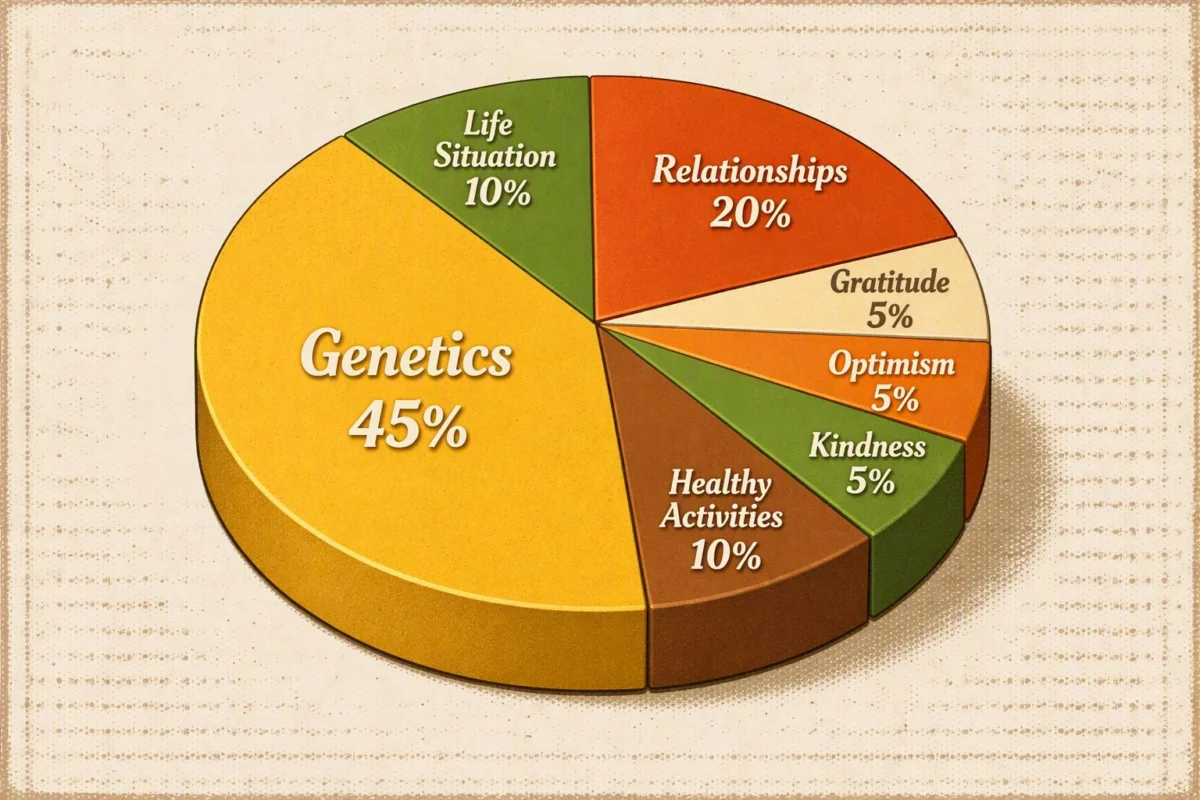
The global stock market currently exhibits a state of heightened valuation, a phenomenon frequently observed throughout financial history. Driven significantly by the rapid advancements and immense investment pouring into Artificial Intelligence (AI), the market has surged to what many perceive as "super-duper-crazy record valuations." This meteoric rise, however, is invariably accompanied by a familiar undercurrent of apprehension among investors and the general public: the fear that such an accelerated boom portends an equally significant, if not larger, market correction. The prevailing question echoes previous eras of speculative frenzy: is this AI-fueled rally another boom-bubble destined for an even bigger crash, perhaps surpassing the dot-com bust of the early 2000s or the 2008 financial crisis?

Historical Context of Market Booms and Busts
The notion of an "AI bubble" is rooted in the cyclical nature of market psychology, where periods of technological innovation often trigger intense investor enthusiasm that can sometimes outpace underlying fundamentals. Historically, the market has demonstrated a propensity for significant upswings followed by periods of contraction, only to recover and ascend to new peaks over the long term. For instance, the dot-com bubble, which peaked in March 2000, saw the NASDAQ Composite Index plummet by approximately 78% from its high to its low in October 2002. Similarly, the housing market boom of the mid-2000s culminated in the Great Financial Crisis (GFC) of 2008, where the S&P 500 experienced a peak-to-trough decline of about 57%.

These historical precedents fuel contemporary anxieties. Investors and analysts express concern that while AI represents a genuinely transformative invention, the current market mania around it is characterized by "too much, too fast" speculation. This sentiment suggests that valuations may be inflated beyond what current earnings or immediate future prospects can justify, potentially setting the stage for a sharp downturn. The memory of past bubbles, where promising technologies were met with irrational exuberance, serves as a cautionary tale for many observers today.
Beyond the Hype: The Fundamentals of AI’s Impact

Despite the speculative concerns, Artificial Intelligence is widely acknowledged as a foundational technology poised to reshape industries and economies. The recent breakthroughs in generative AI, exemplified by large language models, have demonstrated unprecedented capabilities in areas such as content creation, data analysis, and complex problem-solving. This technological leap is expected to drive significant increases in productivity across various sectors, from healthcare and finance to manufacturing and logistics. Investment in AI companies has reached record levels, with venture capital pouring billions into startups and established tech giants like Nvidia experiencing exponential growth in market capitalization.
However, the rapid deployment of AI also raises legitimate concerns. Economists and policymakers are grappling with the potential for widespread job displacement, particularly in roles involving routine cognitive tasks. While AI is anticipated to create new industries and job categories, the transition period could be disruptive, impacting labor markets and potentially exacerbating wealth inequality. The benefits of AI, much like previous technological revolutions, tend to concentrate initially among the innovators, owners of intellectual property, and shareholders of leading AI companies. This concentration of economic reward, while contributing to overall prosperity, can also intensify social and economic disparities.
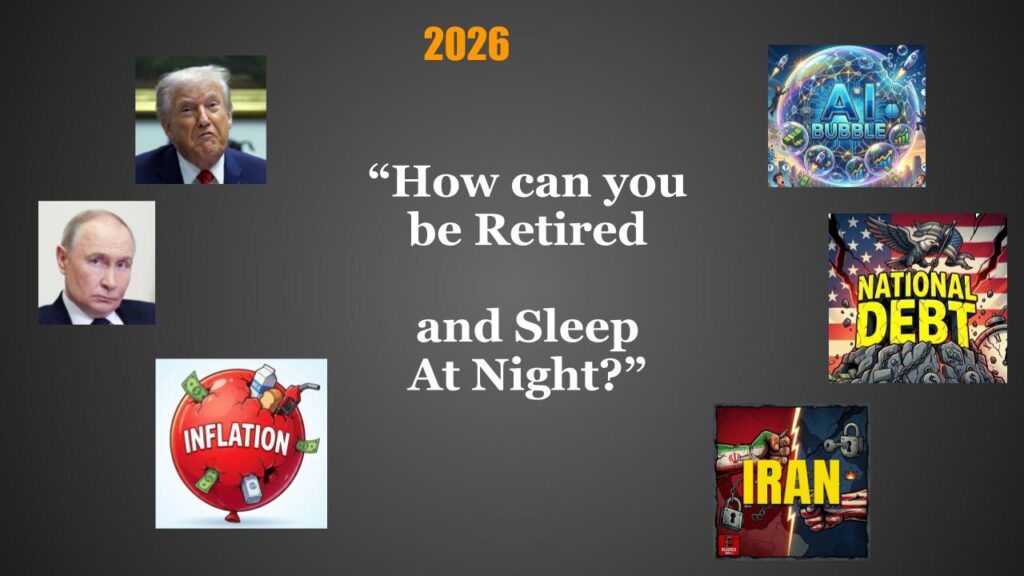
A Look Back: The Worries of 2006 vs. Real-World Outcomes
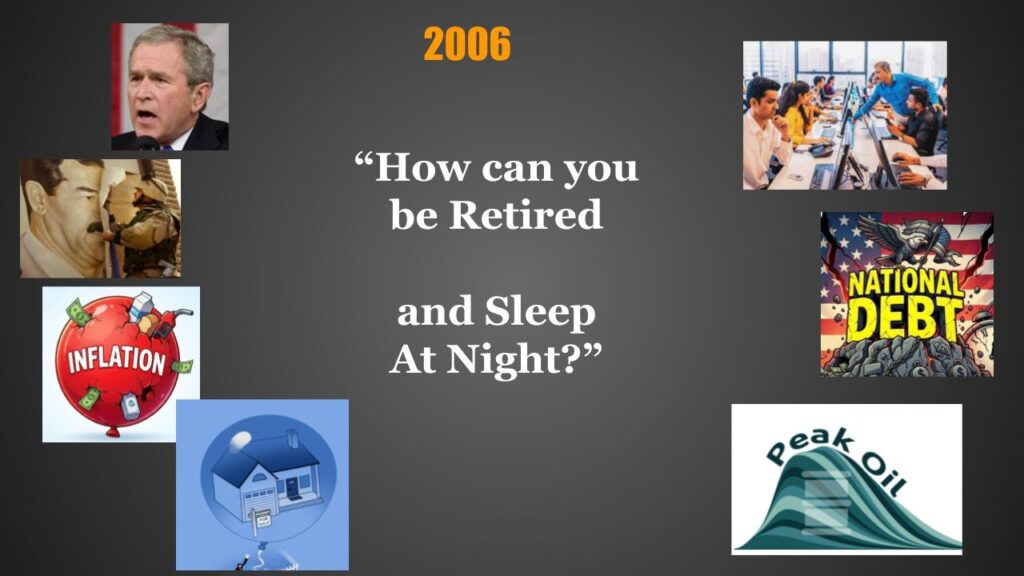
To contextualize current anxieties, it is instructive to recall the dominant fears of previous eras. Consider the landscape of concerns in 2006. At that time, global anxieties were heavily focused on a different set of perceived threats: the escalating housing bubble and its potential to collapse, geopolitical instability in the Middle East (specifically the Iraq War), the looming threat of outsourcing jobs to emerging economies like India and China, and the widely debated concept of "Peak Oil," which predicted an imminent and irreversible decline in global fossil fuel production, threatening economic collapse. The U.S. national debt and inflation were also perennial worries.
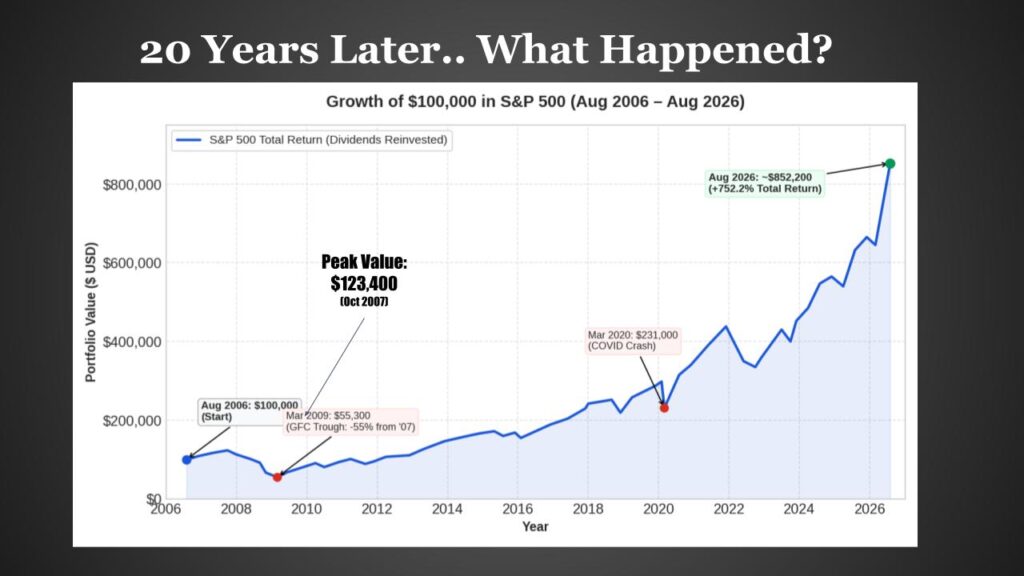
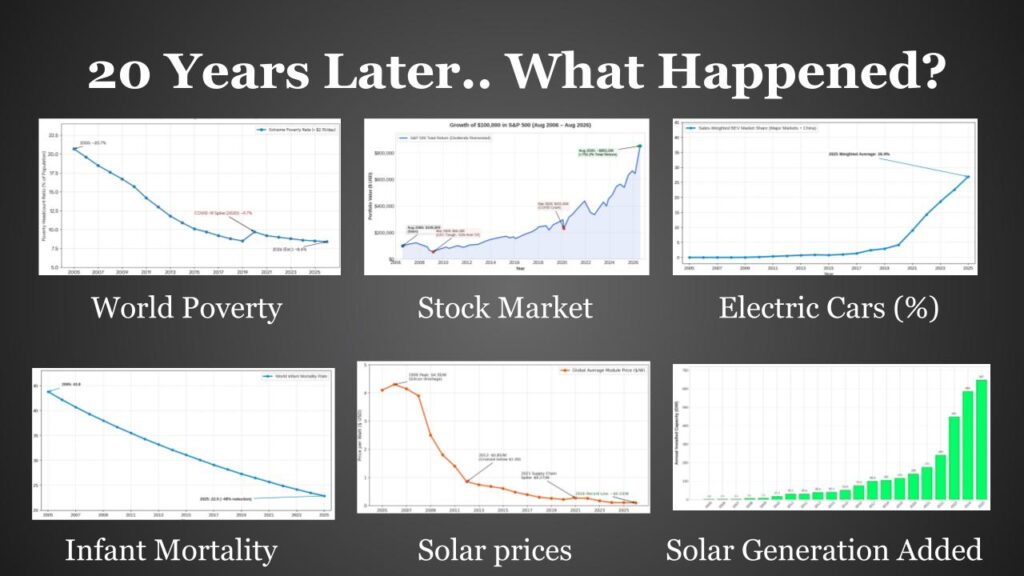
Fast forward nearly two decades, and the actual outcomes diverge significantly from many of these dire predictions. While the housing bubble did indeed burst, triggering the Great Financial Crisis, the global economy demonstrated remarkable resilience. A hypothetical $100,000 investment in a broad market index like the S&P 500 in 2006, despite enduring the GFC and the brief but sharp COVID-19 crash in 2020, would have appreciated substantially, illustrating the market’s long-term upward trajectory.
Moreover, global societal indicators generally improved. According to the World Bank, the proportion of people living in extreme poverty worldwide significantly decreased from around 20% in 2005 to approximately 8% by 2023. Infant mortality rates, as reported by UNICEF and the World Health Organization, were nearly halved globally over the same period. Clean energy technologies, once nascent, experienced a revolution, with the cost of solar panels plummeting by over 80% in the last decade, making solar power the cheapest form of electricity generation in many regions. Consequently, solar generation now accounts for the vast majority of new power capacity added annually. Electric vehicle sales, negligible in 2006, have surged to represent nearly a quarter of all new car sales globally, with some countries like Norway achieving near 100% adoption rates for new vehicles. These developments underscore a historical pattern: despite persistent anxieties and genuine crises, humanity has often found ways to innovate, adapt, and improve living standards.
Prosperity’s True Source: Productivity and Innovation
A fundamental economic principle often overlooked amidst market volatility is that genuine prosperity stems from productivity. Financial markets and economic systems, while crucial, are essentially frameworks for valuing and allocating resources. The true engine of growth is the capacity of individuals and societies to produce more goods and services with the same or fewer inputs. New inventions and technological advancements, from the printing press to the internet and now AI, serve as "productivity multipliers," enabling greater output and efficiency.
When a system experiences a "crash" – a re-evaluation of asset prices – it does not diminish the underlying capacity for human ingenuity, the existing physical infrastructure, or the collective knowledge that drives productivity. As economists often note, if the financial system falters, societies can, in essence, "make up new numbers" and recalibrate, eventually returning to the fundamental work of creating value. This resilience, evident after the 2008 crisis and countless previous downturns, highlights that the tools, skills, and drive to innovate remain intact, providing a foundation for recovery and continued growth.
The Psychology of Fear in Financial Decision-Making

The persistent cycle of market anxiety also has deep roots in human psychology. As biological entities, humans are inherently "danger detection machines," a trait evolved to ensure survival in environments rife with threats. However, this evolutionary wiring can become maladaptive in modern society, leading to irrational fears, especially concerning financial security. Studies in behavioral economics and psychology consistently show that individuals often exhibit a negativity bias, giving more weight to potential losses than equivalent gains, and are susceptible to cognitive biases like anchoring and the contrast effect when evaluating their financial standing.
This innate fear mechanism often "moves the goalposts." Once basic needs are met, anxieties shift to relative wealth, social standing, and even highly improbable scenarios. For instance, the concern among some affluent individuals about "Required Minimum Distributions" (RMDs) – government mandates to withdraw funds from retirement accounts if one has "too much money" by age 75 – illustrates how fear can persist even in conditions of extreme abundance. Financial media, by design, often amplifies these anxieties, focusing on sensational, fear-inducing narratives rather than long-term trends or nuanced analysis, further contributing to a pervasive sense of dread about the future.
Strategies for Mitigating Fear and Fostering Resilience
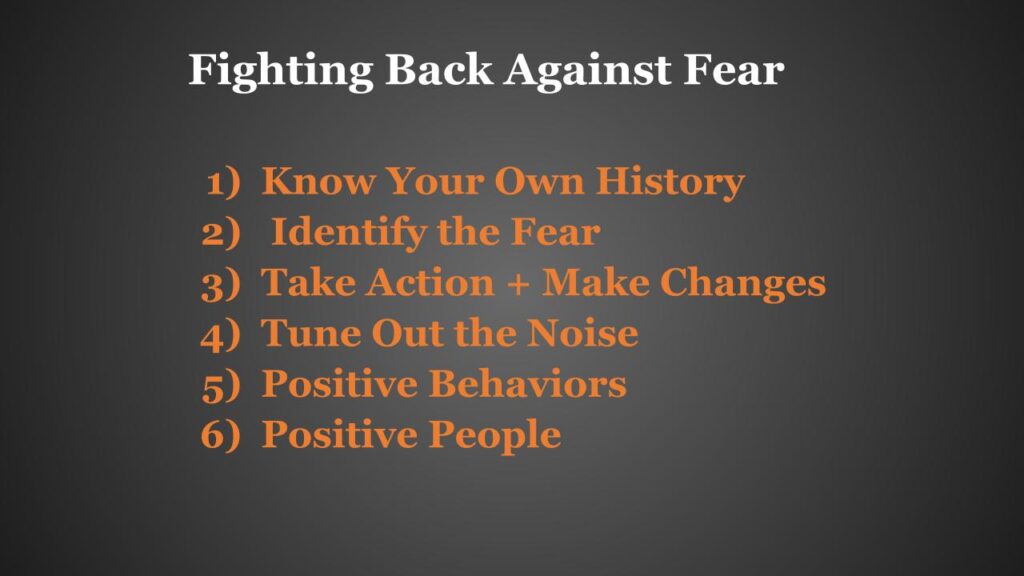
Combating irrational fear requires self-awareness and deliberate action. Psychologists and financial advisors advocate several strategies:

- Understand Personal History: Acknowledging how childhood experiences, family financial attitudes, or past traumas might shape current anxieties can provide critical insight.
- Identify and Analyze the Fear: Articulating specific fears and exploring worst-case scenarios often reveals that potential outcomes are less catastrophic than initially imagined. Techniques like "pre-mortem" analysis can help objectively assess risks.
- Action Cures Fear: Taking concrete steps, however small, towards addressing a perceived threat builds confidence and familiarity, replacing apprehension with a sense of control and competence. This iterative process fosters resilience – the ability to adapt to any new situation.
- Tune Out Unnecessary Information: Minimizing exposure to sensationalist news cycles, which often profit from fear-mongering, can significantly improve mental well-being. Instead, seeking in-depth, factual information from reputable sources allows for a more balanced perspective.
- Cultivate Positive Behaviors and Relationships: Engaging in physical activity, especially outdoors, learning new skills, and actively solving problems align with human evolutionary design and contribute to mental health. Surrounding oneself with optimistic, solution-oriented individuals, as often found in communities focused on financial independence (FI), can also foster a more positive outlook.
- Embrace an "Everything is an Experiment" Mindset: Viewing new situations, whether personal or global, as opportunities for learning and adaptation rather than insurmountable challenges can transform anxiety into curiosity and engagement.
AI as a "Cognitive Nail Gun": Economic Implications
Applying this experimental mindset to the AI era reveals it as a monumental global experiment. AI, fundamentally, acts as a "cognitive nail gun" – a powerful tool that dramatically boosts intellectual efficiency and productivity. This efficiency translates directly into economic prosperity by enabling faster innovation, lower costs, and the creation of entirely new products and services.
While AI will undoubtedly displace workers in certain sectors, particularly those involving repetitive cognitive tasks, it is also expected to catalyze the creation of novel industries and job roles, much like the internet and smartphones did. The economic benefits, however, will not be evenly distributed. Early adopters, innovators, and shareholders of AI-centric companies are likely to accrue significant wealth, potentially widening the gap between capital owners and labor. This phenomenon mirrors historical patterns of technological adoption, where the initial rewards of innovation are concentrated before diffusing more broadly through the economy over time.
Conclusion: Navigating the Future with Optimism and Action

The current AI boom, like past technological revolutions and market cycles, presents both immense opportunities and legitimate concerns. While the fear of an "AI bubble" and its potential economic fallout is palpable, a historical perspective suggests that progress often triumphs over perceived doom. The world has consistently adapted to challenges, driven by human ingenuity and a relentless pursuit of improved living standards.
Ultimately, navigating periods of uncertainty, whether personal or global, depends less on external circumstances and more on internal fortitude. By understanding the psychological roots of fear, actively cultivating resilience, making informed choices about information consumption, and focusing on productive behaviors and positive relationships, individuals can transform anxiety into an impetus for learning and growth. As observers of human progress often note, the path to achieving one’s aspirations frequently lies beyond the initial apprehension of the unknown, requiring a willingness to confront fears and embrace change as an ongoing experiment in life.

