
The practice of bullet journaling, a highly adaptable system for personal organization, offers a powerful tool for enhancing productivity, with the humble to-do list emerging as a cornerstone. This method transcends mere task enumeration, providing a structured yet flexible framework to tackle responsibilities efficiently. By strategically organizing tasks by priority, timeframe, or category, and employing visual cues like color-coding, individuals can transform their daily, weekly, and monthly planning, leading to a significant boost in output and a reduction in overwhelm. The versatility of bullet journal to-do lists means there is a format to suit every preference, from the rigorously structured to the elegantly minimalist. Exploring creative implementations of to-do lists within a bullet journal can unlock new levels of personal organization and productivity.
The Foundation of an Organized Life: Simple To-Do Lists
At its core, the bullet journal to-do list is an exceptionally effective strategy for managing daily responsibilities. This approach is not only straightforward but also profoundly impactful, enabling users to maintain order and achieve their objectives. Whether one leans towards a minimalist aesthetic or a more detailed, segmented layout, a well-crafted to-do list within a bullet journal serves as a robust organizational anchor. This foundational spread is the starting point for many who seek to bring order to their busy lives, providing a clear overview of what needs to be accomplished. Its simplicity belies its power, making it an indispensable element for those striving for greater efficiency.
Enhancing Clarity Through Color-Coding
Color-coding transforms a standard to-do list into a dynamic, visually intuitive system for task prioritization. By assigning specific colors to different categories of tasks—such as urgent work items, personal errands, or leisure activities—individuals can quickly identify what demands immediate attention and what can be deferred. This visual categorization system, whether implemented with highlighters, colored pens, or stickers, streamlines the planning process, allowing for more efficient allocation of time and energy. For instance, a common scheme might designate red for high-priority, time-sensitive tasks, yellow for essential but less urgent items, and blue for optional activities that can be undertaken when other priorities are met. This method not only enhances readability but also provides a psychological cue, making it easier to engage with and complete tasks.
Strategic Prioritization: The "Must Do," "Should Do," and "If I Have Time" Framework
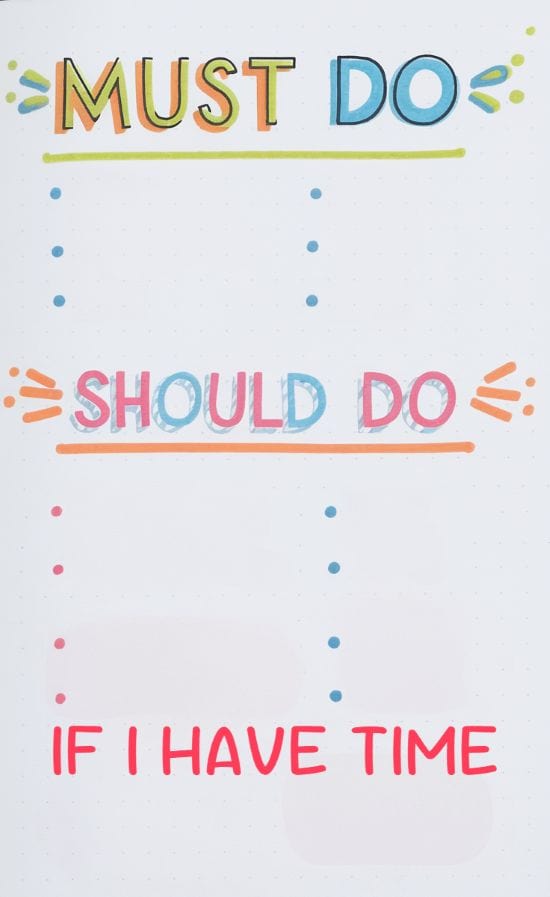
For individuals who grapple with prioritizing their workload, the "Must Do – Should Do – If I Have Time" format offers a highly effective solution. This tiered approach categorizes tasks based on their urgency and importance, ensuring that the most critical items are addressed first. By segmenting responsibilities into these distinct levels, users can maintain focus on essential objectives while keeping secondary and discretionary tasks visible but not overwhelming. This method cultivates a sense of accomplishment as critical tasks are completed, while also providing a flexible space for less pressing activities when time allows. This structured approach helps prevent the feeling of being perpetually behind, fostering a more balanced and productive workflow.
Refining Prioritization: The "Must Do" and "Should Do" Dichotomy
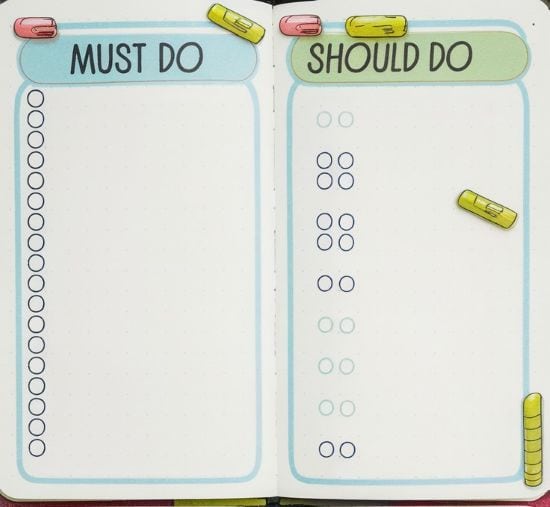
Alternatively, a simplified version of this prioritization system focuses on a two-tiered approach: "Must Do" and "Should Do." This streamlined method still effectively distinguishes between critical tasks and those that are important but perhaps less time-sensitive. By narrowing the focus to these two categories, individuals can further sharpen their attention on the absolute essentials, ensuring that core responsibilities are never overlooked. This can be particularly beneficial for individuals who find the three-tiered system too granular or who prefer a more direct approach to task management.

Adapting To-Do Lists for Different Planning Horizons
The nature of tasks and the required level of detail often dictate the most effective planning horizon. Whether one plans on a daily, weekly, or monthly basis, the bullet journal can accommodate these varying needs with specialized to-do list layouts.
The Daily Top 3: Focused Daily Execution
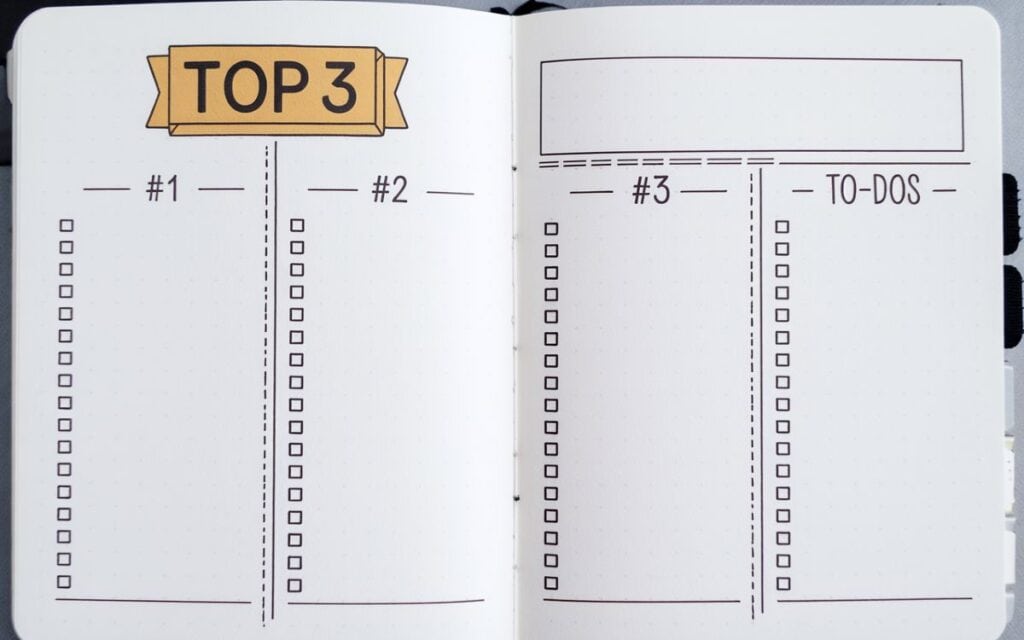
The "Daily Top 3" method is a powerful strategy for maintaining focus on the most impactful tasks each day. By identifying and committing to completing just three key objectives, individuals can avoid the paralysis that often accompanies an overly long to-do list. This approach ensures that even on the busiest days, progress is made on critical priorities. Whether integrated into a daily spread or used as a standalone list, this method simplifies task management and fosters a sense of consistent achievement. Its efficacy lies in its conciseness, forcing a deliberate selection of what truly matters on any given day.

Weekly To-Do List Spreads: A Broader Overview
For a more comprehensive view of weekly responsibilities, a dedicated weekly spread is invaluable. These layouts typically divide the page by day, allowing for the enumeration of tasks that need to be completed within that specific week. This format is particularly useful for tracking recurring tasks, appointments, and project milestones that span several days. It provides a visual roadmap of the week ahead, helping to prevent scheduling conflicts and ensuring that all important activities are accounted for. The ability to see the week laid out in a single view can significantly reduce anxiety and improve time management.
Monthly To-Do List Spreads: Strategic Long-Term Planning
Monthly to-do lists serve as a crucial tool for strategic planning and tracking larger goals or projects that extend beyond a single week. These spreads offer a bird’s-eye view of the entire month, allowing users to map out key deadlines, events, and significant tasks. By dedicating a page to monthly objectives, individuals can ensure that long-term goals remain in focus amidst the demands of daily life. This proactive approach to planning helps in breaking down large projects into manageable phases and in anticipating potential challenges. It is an essential component for anyone aiming for substantial achievements over a longer period.
Tackling Routine Tasks with Dedicated Lists
Routine tasks, while often essential for maintaining order and well-being, can easily slip through the cracks. Establishing dedicated to-do lists for recurring activities within a bullet journal ensures accountability and consistency.
Time-Based Task Management
For individuals with fluid schedules or those who prefer to tackle tasks as time permits, a time-based task list is an ideal solution. This format allows users to list activities and allocate them to specific time blocks throughout the day or week. It is particularly effective for managing a variety of responsibilities that have varying time requirements. By noting down when a task can realistically be completed, individuals can optimize their schedule and ensure that no important activity is left undone due to a lack of designated time. This method is a practical way to integrate tasks into the natural flow of one’s day.
Recurring Weekly Tasks
A dedicated spread for recurring weekly tasks provides a clear and consistent method for tracking obligations that repeat on a weekly cycle. By listing these tasks once in a column and then checking them off each week as they are completed, users can build strong habits and ensure that essential routines are maintained. This visual tracking system offers a satisfying sense of progress and accountability, reinforcing the importance of these regular activities, whether they pertain to household chores, personal care, or professional duties.
Flexible Weekly Task Management
In situations where weekly tasks vary considerably, a flexible spread for rotating tasks is highly beneficial. This format allows for the dynamic inclusion of different activities each week, providing the adaptability needed to manage evolving responsibilities. Users can simply write in the specific tasks for that week and mark them as completed as they progress. This approach ensures that the to-do list remains relevant and useful, even when the nature of weekly demands changes. It is a practical solution for managing diverse workloads across multiple weeks.
Project Planning with Bullet Journal To-Do Lists
Managing large-scale projects can be daunting, but breaking them down into smaller, actionable steps using a project planner to-do list within a bullet journal makes the process more manageable. This approach involves structuring the project into distinct phases, milestones, or deadlines, thereby transforming an overwhelming objective into a series of achievable tasks. Whether for professional assignments, personal development goals, or creative endeavors, a project-focused bullet journal spread provides clarity, helps in tracking progress, and ensures that all necessary steps are taken to reach successful completion. This systematic approach to project management is a key benefit of integrating to-do lists into a bullet journal system.
The Enduring Power of Bullet Journal To-Do Lists
A thoughtfully constructed to-do list within a bullet journal is more than a simple record of tasks; it is a strategic tool that fosters clarity, alleviates feelings of being overwhelmed, and drives steady progress toward one’s objectives. The key to maximizing its effectiveness lies in identifying a layout and organizational method that resonates with individual needs and adhering to it consistently. The bullet journal itself becomes a reflection of an individual’s approach to time management, prioritization, and habit formation, ultimately supporting a more productive and organized life. By embracing experimentation with different formats and continually refining their approach, users can leverage the inherent flexibility of bullet journaling. The most effective planner pages are not necessarily the most elaborate or aesthetically striking, but rather those that empower users to organize their thoughts, take decisive action, and achieve their goals efficiently.

