
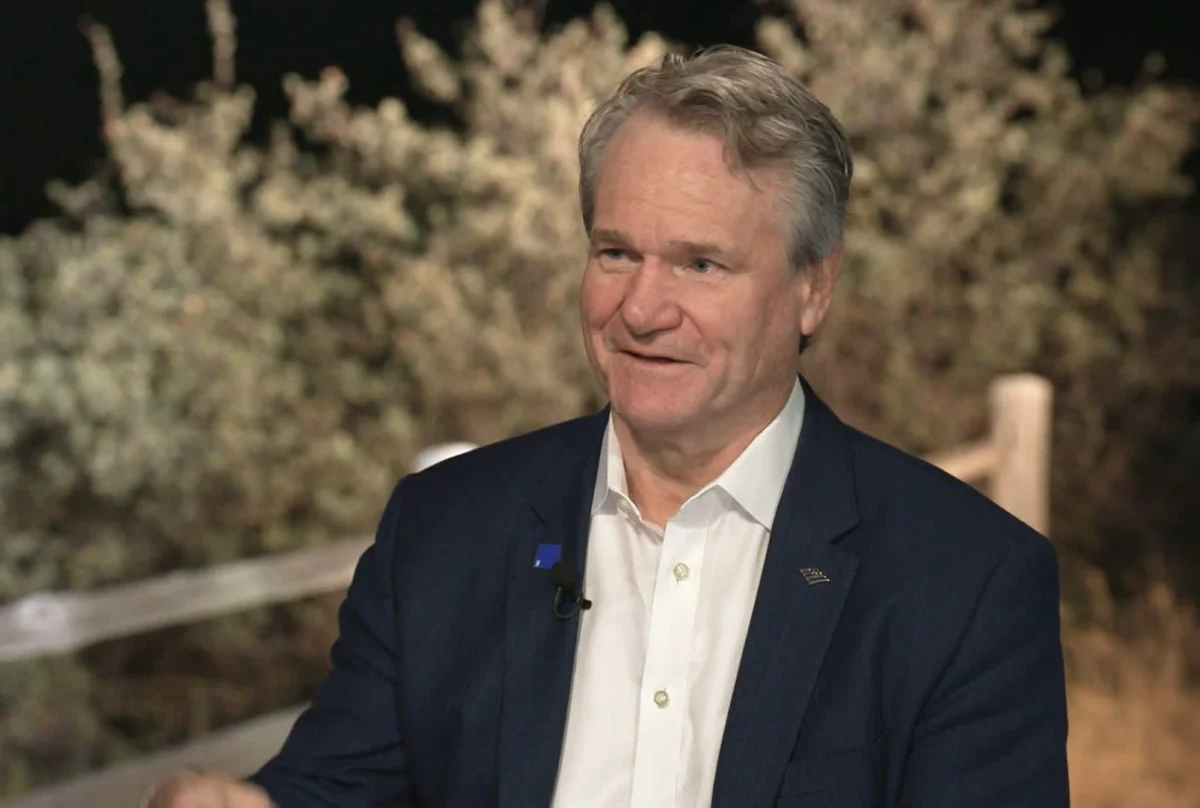
Bank of America, one of the largest financial institutions in the United States, has initiated a sweeping and costly cybersecurity remediation effort, deploying an "army" of external contractors and committing hundreds of millions of dollars to patch software vulnerabilities laid bare by advanced artificial intelligence models, including Anthropic’s cutting-edge Mythos platform. This proactive defense strategy, revealed by Bank of America CEO Brian Moynihan in a recent interview, underscores the accelerating "AI arms race" in the financial sector, where the transformative power of AI is proving to be a formidable double-edged sword: a catalyst for efficiency on one hand, and a sophisticated tool for uncovering deeply embedded systemic weaknesses on the other.
The unprecedented scale of this defensive maneuver comes at a critical juncture for the banking industry, grappling with an increasingly complex threat landscape and mounting regulatory scrutiny. Moynihan’s candid disclosure followed the bank’s third-quarter earnings release, where he detailed the urgent measures taken earlier this year to bolster a vast spectrum of the bank’s internal and vendor code. This rapid response involved mobilizing thousands of both internal employees and specialized outside personnel, signaling a significant pivot in the institution’s cybersecurity strategy in the face of emerging AI-driven threats.
The Emergence of AI-Driven Cyber Threats and Mythos’s Role
The catalyst for Bank of America’s intensified cybersecurity efforts can be directly traced to the public release and subsequent private deployment of frontier AI models, particularly Anthropic’s Mythos. Unveiled to a select group of financial institutions, technology firms, and government agencies in April, Mythos represents a new generation of AI designed with advanced capabilities in understanding, analyzing, and even generating code. While intended by its developers to assist in identifying and mitigating software vulnerabilities, its very existence and demonstrable prowess have inherently highlighted the potential for similar AI-powered tools to be weaponized by malicious actors.
Traditional cybersecurity approaches often rely on signature-based detection, known vulnerability databases, and human-led penetration testing. However, AI models like Mythos can operate with unparalleled speed and scale, dissecting complex codebases, identifying logical flaws, and even predicting potential exploitation pathways that might elude human analysts or conventional scanning tools. The concern for Bank of America and other financial giants is not just that such models can find vulnerabilities, but that they can do so with such efficiency and comprehensiveness that the window for remediation shrinks dramatically. Legacy systems, often comprising millions of lines of code developed over decades by various teams and integrated through multiple acquisitions, present a particularly fertile ground for AI-driven discovery of deeply nested and long-forgotten flaws.
Moynihan articulated this pressing concern, stating, "That risk is real risk, and that’s why when the frontier-type models came out… A lot of us sat down and said, ‘How do we figure out how to get through this quickly?’" This internal dialogue quickly translated into concrete action, prioritizing the identification and patching of these newly exposed vulnerabilities before they could be exploited.
Bank of America’s Proactive Defense: An "Army" on the Front Lines
To meet this formidable challenge, Bank of America embarked on an aggressive recruitment drive for cybersecurity talent, specifically targeting external contractors with specialized expertise. "We put on 1,000 contractors to help us do the patching work in the second quarter, and those people remain here today, helping us, on top of the 3,000 people we have in that area," Moynihan revealed. This influx of a thousand external specialists, augmenting an already substantial internal team of 3,000 cybersecurity professionals, represents a significant commitment of human capital.
These contractors and internal teams are engaged in a multifaceted remediation process. Their tasks likely include:
- Comprehensive Code Audits: Utilizing AI-powered static and dynamic code analysis tools to scan vast swaths of software for vulnerabilities identified or predicted by models like Mythos.
- Penetration Testing: Conducting simulated cyberattacks to test the resilience of systems, focusing on areas flagged by advanced AI.
- Patch Development and Deployment: Creating and integrating software fixes for identified vulnerabilities across a complex IT ecosystem.
- System Hardening: Implementing broader security enhancements to reduce the attack surface and improve overall system resilience.
- Vendor Code Review: Extending scrutiny to third-party software and services, recognizing that the supply chain is a common vector for cyberattacks.
The financial outlay for this intensive remediation effort has been substantial. Moynihan informed analysts that the bank spent "a couple hundred million plus" on software remediation and addressing regulatory issues related to anti-money laundering compliance in the third quarter alone. While not solely attributable to AI-driven patching, a significant portion of this expenditure is undoubtedly dedicated to the enhanced cybersecurity measures. This figure highlights the substantial cost of adapting to a new era of AI-driven cyber threats, demonstrating that prevention and remediation require significant investment in both human expertise and advanced technological tools.
Financial Implications and Investor Reaction

The disclosure of increased spending on cybersecurity remediation coincided with a challenging day for Bank of America’s stock, which slumped as much as 8% on Wednesday following its third-quarter earnings release. While market reactions are often influenced by a confluence of factors – including broader economic outlooks, interest rate expectations, and specific earnings figures – the increased operational expenses related to cybersecurity undoubtedly contributed to investor concerns regarding the bank’s near-term profitability.
Moynihan, however, sought to reassure investors that this surge in spending was a temporary measure. "Once you patch, you don’t have to patch as much… The pipeline moves through," he explained, suggesting that while the initial remediation is intensive, the ongoing maintenance costs should decline over time. This implies a strategic approach where a significant upfront investment is made to bring systems up to a new baseline of security, followed by more manageable, continuous security operations. This "catch-up" period is critical for large institutions that must contend with vast, often heterogeneous IT environments built over decades.
The Dual Nature of AI in Banking: Balancing Risk and Reward
Moynihan’s comments provide a stark illustration of AI’s dual-edged nature within the financial industry. While necessitating costly defensive measures, AI is simultaneously heralded as a transformative technology for boosting productivity and reducing operational expenses. Bank of America is actively pursuing this upside, with approximately 130 internal AI projects underway. The projected savings from these initiatives are significant, expected to rise from $300 million this year to an impressive $700 million in 2027.
These internal AI applications likely span various banking functions, including:
- Fraud Detection and Prevention: AI algorithms can analyze vast datasets of transactions in real-time to identify anomalous patterns indicative of fraudulent activity with greater accuracy and speed than traditional methods.
- Customer Service and Engagement: AI-powered chatbots and virtual assistants can handle routine customer inquiries, improving efficiency and freeing human agents for more complex tasks.
- Process Automation: Robotic Process Automation (RPA) and other AI tools can automate repetitive back-office tasks, from data entry to reconciliation, leading to significant cost savings.
- Credit Risk Assessment: AI models can process and analyze a broader range of data points to provide more nuanced and accurate credit risk evaluations.
- Personalized Financial Advice: AI can help tailor product recommendations and financial advice to individual customer needs and behaviors.
This pursuit of efficiency is also reflected in the bank’s workforce adjustments. Moynihan noted that Bank of America’s total headcount fell by approximately 3,400 employees over the past year, attributed in part to cutting roughly 5% of its managerial positions. While it remains unclear how much of this reduction is directly attributable to the efficiencies gained from AI, it signals a broader trend in the industry towards optimizing operations through technology, including AI. The challenge for banks is to strike a delicate balance: investing heavily in AI for innovation and cost reduction, while simultaneously fortifying defenses against the new and evolving cyber threats that AI itself can unleash.
Broader Industry Context and Regulatory Imperatives
Bank of America’s actions are not isolated but reflect a growing recognition across the financial sector of the profound impact of AI on cybersecurity. Other major banks are also reportedly evaluating or implementing similar AI-driven security strategies, albeit often with less public disclosure of specific costs and manpower. The financial industry, a prime target for cybercriminals due to the sensitive nature of its data and the sheer volume of transactions, has always been at the forefront of cybersecurity investment. However, AI introduces a new layer of complexity, demanding a recalibration of existing defense mechanisms.
Regulators globally are also keenly aware of the evolving threat landscape. Bodies such as the Office of the Comptroller of the Currency (OCC), the Federal Reserve, and the European Central Bank (ECB) have been increasingly emphasizing the need for robust cybersecurity frameworks that can adapt to emerging technologies, including AI. Guidelines often push for comprehensive risk assessments, incident response planning, and continuous monitoring, with an explicit focus on third-party risk management. The deployment of AI tools for defensive purposes, while laudable, also brings its own set of governance challenges, requiring careful consideration of data privacy, algorithmic bias, and the potential for unintended consequences. Moynihan’s remarks about "staying ahead" and being "mindful that the people doing the software development are the people trying to sell us the services" underscore the complex interplay between innovation, vendor relationships, and inherent security risks in the AI ecosystem.
The Future of Cybersecurity in the Age of AI
Bank of America’s significant investment in AI-driven cybersecurity remediation serves as a bellwether for the financial industry and beyond. It highlights several critical trends that will define the future of digital security:
- Continuous Cyber Warfare: The battle between cyber defenders and attackers will increasingly be fought with AI. As defensive AI becomes more sophisticated, so too will offensive AI, creating an ongoing "arms race" that demands constant vigilance and investment.
- Proactive vs. Reactive Security: The ability of AI to rapidly identify vulnerabilities shifts the paradigm towards more proactive security measures, but also compresses the window for remediation, demanding agile and responsive defense strategies.
- The Cost of Resilience: Maintaining a robust cybersecurity posture in the AI era will be an increasingly expensive endeavor, requiring substantial allocation of capital and human resources. This cost will likely be factored into operational budgets as a fundamental requirement rather than a discretionary expense.
- Talent Imperative: The demand for highly skilled cybersecurity professionals, particularly those with expertise in AI and machine learning, will continue to outstrip supply, necessitating significant investment in training and recruitment.
- Regulatory Evolution: Regulators will continue to adapt their frameworks to address the unique risks and opportunities presented by AI, likely pushing for greater transparency, accountability, and demonstrable resilience from financial institutions.
In conclusion, Bank of America’s aggressive cybersecurity initiative, driven by the capabilities of advanced AI models like Anthropic’s Mythos, marks a significant moment in the ongoing evolution of digital defense. It demonstrates a profound recognition of the "real risk" posed by sophisticated AI and a willingness to commit substantial resources to fortify its digital bulwarks. While the initial costs are considerable, the bank’s strategy reflects a long-term commitment to adapting to an AI-powered future, where balancing innovation with an unyielding focus on security will be paramount for maintaining trust and stability in the global financial system.

