
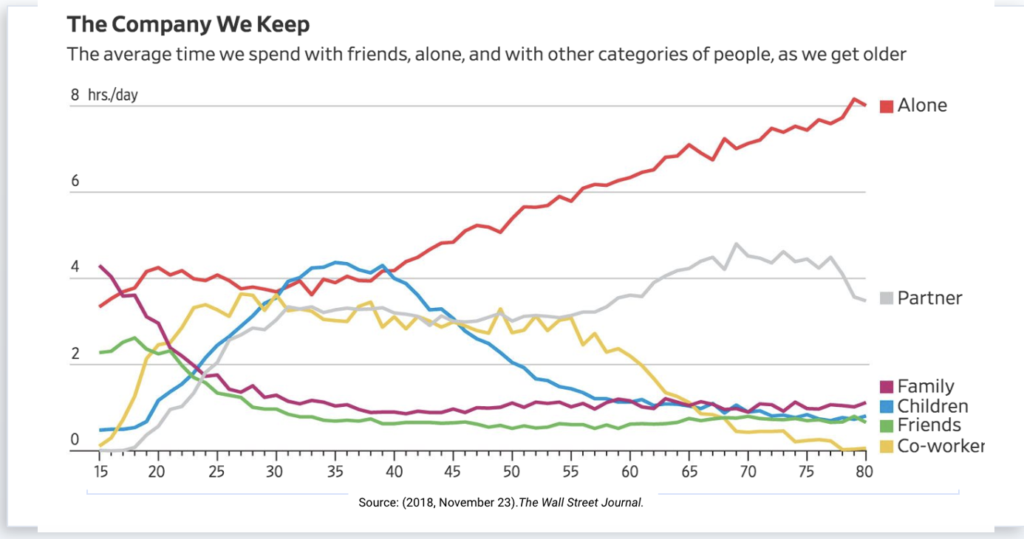
Retirement, often heralded as a period of liberation and newfound freedom, introduces a profound shift in daily life, particularly concerning the amount of time individuals spend in solitude. This solitude, for many, is not merely an absence of external company but a deep dive into the landscape of their own thoughts. The internal dialogue that ensues becomes one of the most significant, and sometimes surprising, conversations of this life stage. These internal exchanges, whether focused on planning, imagining, reflecting, or conversely, on worrying, replaying past events, questioning decisions, self-criticism, or blame, can profoundly shape the trajectory of one’s retirement. As highlighted in recent discussions on The Retirement Wisdom Podcast, the nature of this inner conversation can either constrict an individual’s life or serve as a powerful catalyst for embracing the next chapter with intention and expanded possibility.
The Science of Self-Talk: Shaping Mindsets and Navigating Transitions
At the forefront of understanding the impact of inner dialogue is Dr. Marilee Adams, Founder and CEO of The Inquiry Institute. Her seminal work, Change Your Questions, Change Your Life, now in its fifth edition, posits that the questions we ask ourselves are fundamental architects of our mindset. Dr. Adams identifies two primary operating mindsets: the "Judger" and the "Learner."
The Judger mindset is characterized by backward-looking or inward-focused questions, often tinged with self-recrimination or blame. Examples include "What’s wrong with me?" "Why did this happen?" or "Why bother?" These questions tend to reinforce negative patterns and limit potential. In contrast, the Learner mindset is driven by curiosity, agency, and a forward-looking perspective. Questions like "What do I want now?" "What can I contribute?" or "How else can I think about this?" open doors to exploration, growth, and proactive engagement with life.
This distinction is particularly salient for individuals entering retirement. The transition from a structured professional life, replete with defined roles, identity markers, and external feedback mechanisms, to a more autonomous existence can amplify the influence of these internal questioning patterns. Without the familiar scaffolding of work, Judger questions can easily gain traction, leading to a downward spiral of dissatisfaction. Conversely, cultivating wise, Learner-oriented questions can redirect attention toward what truly matters, fostering a sense of meaning, joy, contribution, fulfilling relationships, and continuous personal growth.
Complementing this perspective is the research of Dr. Ethan Kross, Director of the Emotion & Self Control Laboratory at the University of Michigan and author of Chatter: The Voice in Our Head, Matters, and How to Harness It. Dr. Kross’s work delves into the science of self-talk, distinguishing between ordinary negative thoughts and "chatter"—a more pernicious, repetitive cycle of worry, rumination, and catastrophizing. While acknowledging that negative emotions, in measured doses, can serve as valuable learning experiences, Dr. Kross emphasizes the detrimental effects of becoming trapped in these negative loops.
The convergence of Dr. Adams’ and Dr. Kross’s research underscores a shared principle: the objective is not to silence the inner voice but to engage with it more skillfully. Both experts highlight the universality of an inner critic and the necessity of acceptance. Crucially, they agree that heightened awareness of our internal dialogue is the precursor to choice, empowering individuals to move from automatic reactions to intentional responses.
Practical Frameworks for Navigating the Inner Landscape
Dr. Adams’ contribution lies in the elegant simplicity of "The Choice Map," a framework that provides both a vocabulary and a practical pathway for managing one’s inner dialogue. The process involves recognizing when the Judger mindset is active, pausing to interrupt its momentum, and then intentionally shifting into the Learner mindset. A particularly potent switching question offered by Dr. Adams is: "Who do I choose to be in this moment?" This question, when posed with sincerity, can immediately reorient an individual’s perspective and empower them to make conscious choices about their attitude and actions.
Dr. Kross, on the other hand, advocates for a "toolbox" approach, recognizing that different situations call for different self-talk strategies. Among his recommended techniques is "distance self-talk," where individuals use their own name to coach themselves as they would a trusted friend. This method can create a crucial psychological distance from overwhelming emotions, allowing for a more objective assessment of the situation. Another valuable tool is "mental time travel," which involves contemplating a current challenge from a future perspective—asking how significant it will feel in six months or a year. Integrating physical activity, such as a walk in nature, is also presented as a potent ritual for managing internal chatter, transforming individuals into more effective "chatter advisors" with a personalized toolkit.
Emerging Trends and Data in Self-Talk Research
Research into self-talk has gained significant traction in recent decades, driven by advancements in neuroscience and psychology. Studies have employed neuroimaging techniques to observe brain activity during different forms of self-talk, revealing distinct neural pathways associated with self-criticism versus self-compassion. For instance, research published in journals like Psychological Science has indicated that using one’s own name during self-talk activates prefrontal cortex regions associated with self-regulation and emotional control more effectively than using the first-person pronoun "I."
Furthermore, longitudinal studies on retirement transitions have begun to correlate positive self-talk patterns with better psychological well-being, lower rates of depression, and increased life satisfaction among retirees. A 2022 study published in the Journal of Gerontology: Psychological Sciences found that retirees who actively engaged in reflective and forward-looking self-dialogue reported higher levels of purpose and engagement in new activities compared to those who predominantly engaged in ruminative or self-critical inner monologues. The study tracked over 500 individuals over a five-year period post-retirement, providing robust data on the long-term effects of internal dialogue.
Implications for Retirement Planning and Well-being
The insights from Dr. Adams and Dr. Kross have significant implications for retirement planning and the broader field of gerontology. Financial and lifestyle planning for retirement are crucial, but the psychological preparation for this major life transition is equally, if not more, vital. The ability to navigate the inherent uncertainties and the increased periods of introspection with a constructive inner voice can be the differentiating factor between a fulfilling and a challenging retirement.
Organizations and therapists specializing in retirement transitions are increasingly incorporating these principles into their programs. Workshops and coaching sessions now often focus on identifying and reframing negative self-talk, cultivating a growth mindset, and developing personalized strategies for managing internal dialogue. The broader societal impact of this focus could lead to a generation of retirees who are not only financially secure but also psychologically resilient and actively engaged in meaningful pursuits.
Actionable Strategies for Cultivating a Wiser Inner Voice
Individuals preparing for or currently experiencing retirement can implement several practical strategies to foster a more supportive and constructive inner dialogue:
- Heighten Awareness: The foundational step is to simply pay attention to your internal conversations. Notice the patterns, the recurring themes, and the emotional tone of your self-talk.
- The "Stop. Breathe. Be." Practice: Inspired by Dr. Adams’ work, this simple technique involves a conscious pause. Physically stopping your current activity, taking a few deep breaths, and simply being present can interrupt negative momentum and create space for a more intentional response.
- Identify Question Types: Once aware, categorize your questions. Are they Judger questions, dwelling on problems or past mistakes, or Learner questions, seeking solutions and new perspectives?
- Engage the Switching Lane: If you find yourself in a "Judger Pit" of negative self-talk, consciously employ Dr. Adams’ "Switching Lane" move. Ask a powerful Learner question to shift your mindset. For example, instead of "Why did I make that mistake?", ask "What can I learn from this experience to do better next time?"
- Change the Voice (Kross’s Method): When facing a challenge, try addressing yourself by your own name. Ask, "What advice would [Your Name] give a good friend in this situation?" This simple reframing can create objectivity and empathy.
- Practice Mental Time Travel: Consider the long-term perspective. Ask yourself, "How important will this issue be six months or a year from now?" This can help diminish the perceived magnitude of current stressors.
- Mindful Venting: Recognize when venting becomes a loop that perpetuates negativity rather than offering release. Seek out individuals who offer empathy but also help broaden your perspective and guide you toward constructive solutions.
- Embrace Nature: Incorporate walks in nature or other mindful physical activities as rituals to help reset your mental state and reduce the intensity of internal chatter.
Retirement offers unparalleled freedom, but this freedom is most potent when coupled with a sophisticated approach to one’s internal world. By consciously cultivating a wiser inner voice, individuals can transform their inner critic into a valuable ally and coach, leading to a more fulfilling, meaningful, and joyful retirement. This journey of self-discovery and internal recalibration is an ongoing process, but one that yields profound benefits for overall well-being and life satisfaction.
Further Exploration and Resources:
For those seeking to deepen their understanding and apply these principles, the following resources offer valuable insights:
-
Podcast Conversations:
- Listen to the podcast conversation with Dr. Marilee Adams on "Change Your Questions, Change Your Life in Retirement."
- Explore two podcast discussions with Dr. Ethan Kross: "Chatter & Your Inner Voice" and "Shift: Managing Your Emotions."
-
Books:
- Change Your Questions, Change Your Life, 5th Edition by Marilee Adams, PhD.
- Chatter: The Voice in Our Head, Why It Matters, and How to Harness It by Ethan Kross, PhD.
- Shift: Managing Your Emotions—So They Don’t Manage You by Ethan Kross, PhD.
-
Tools and Assessments:
- Take the survey and download "The Choice Map" from The Inquiry Institute.

