
The burgeoning integration of Artificial Intelligence (AI) into cryptocurrency trading presents a compelling proposition for investors: an always-on, tireless agent capable of sifting through vast datasets and identifying potential opportunities. However, Animoca Brands chairman Yat Siu has sounded a significant note of caution, warning that crypto traders risk becoming overly reliant on these AI services, potentially ceding control over their own financial strategies to entities they do not fully govern. His insights, shared on the sidelines of the prestigious Token2049 conference in Singapore, highlight a critical tension between the convenience offered by AI agents and the fundamental need for user autonomy in financial decision-making.
Siu articulated the core benefit of AI agents in a rapidly evolving market. Unlike human traders who require rest and are susceptible to missing fleeting developments, an AI agent can continuously monitor information streams, flagging critical updates that might otherwise go unnoticed. He drew a parallel to conference planning: a simple chatbot can respond to direct queries, but an autonomous agent would proactively search for new announcements, assess their relevance, and suggest attendance at noteworthy events without explicit prompting. This proactive, vigilant nature is precisely what makes AI agents attractive to crypto traders seeking an edge in a 24/7 global market.
However, the nascent stage of this technology is not without its challenges. Siu recounted a personal anecdote illustrating the "teething problems" of AI agents. His own agent, designed to focus on crypto trading and investment management, began misinterpreting unrelated questions, attempting to frame them within a crypto context. This over-specialization underscores the need for careful calibration and, as Siu suggested, the strategic deployment of multiple, specialized agents rather than a single, all-encompassing one. The complexity of managing diverse personal and professional schedules, as well as financial portfolios, can easily overwhelm a single agent, leading to confusion for both the AI and its user.
The Quest for a Unique Trading Edge
Beyond technical limitations, a fundamental question arises regarding the actual advantage AI agents provide. Siu pointed out that if a thousand traders are querying AI about the same potential trade, they are likely to receive remarkably similar recommendations. This phenomenon risks creating a scenario where AI-driven trading leads to herd behavior, diminishing the individual edge traders seek.
This concern is not confined to the crypto community. Financial regulators are increasingly scrutinizing the potential impact of AI on market stability. In April 2025, the Bank of England’s Financial Policy Committee issued a warning, highlighting the risk that widespread adoption of similar AI trading models could lead to synchronized investment decisions. During periods of market stress, this could amplify shocks, as a multitude of AI agents acting in concert might exacerbate price movements, potentially leading to systemic instability. The committee’s report suggested that interconnected AI trading algorithms could create new vulnerabilities in the financial system, necessitating proactive monitoring and potential regulatory intervention.
The key to differentiating AI-driven strategies, Siu explained, lies in the user’s follow-up interactions. While the initial responses might be generic, it is the user’s unique knowledge, concerns, and subsequent queries that begin to shape a personalized trading approach. "Suddenly you query and you ask, and then your taste or your ideas or your thinking starts forming into it," he stated. Over time, as the agent learns from these tailored inputs, it can begin to align its trading activities with the user’s evolving preferences, effectively developing a customized crypto trading strategy.
Empowering AI Agents with Financial Autonomy
The evolution of AI in crypto trading is rapidly moving beyond information gathering to encompass direct financial action. Major cryptocurrency exchanges are equipping AI agents with the tools necessary to manage assets and execute trades. In February, Coinbase introduced its Agentic Wallets, enabling AI agents to conduct spending and trading activities within predefined user-set limits. Following suit, Binance launched AI Agent Skills in March, granting its AI agents access to real-time market data and the capability to initiate and manage spot orders.
These advancements allow users to delegate more of the intricate and time-consuming tasks associated with round-the-clock market surveillance. By entrusting these responsibilities to AI agents, traders can potentially capture opportunities that arise during off-hours without sacrificing sleep or personal time. The vision is one where human oversight shifts from constant monitoring to strategic guidance. Siu emphasized that human input remains crucial, not in the form of constant approval for every micro-decision, but in providing the foundational ideas and directing the agent’s focus. "By human input, I don’t mean human in the loop that approves it," he clarified, "But the human is the one that ultimately is going to say, ‘Wait, you should look at this.’" This suggests a future where AI acts as an extension of the trader’s intellect, executing strategies based on human-defined objectives and evolving preferences.
The Privacy Imperative in an AI-Driven Financial Landscape
The growing capabilities of AI agents necessitate a careful consideration of the privacy implications. Siu drew an analogy between an AI assistant and a third-party financial advisor, urging users to be judicious about the information they share. Before providing access to sensitive data, individuals should critically assess what information is truly necessary for the AI to perform its task and what can reasonably be withheld. Questions like "What about your personal finances, what income you make, who your closest friends are?" become paramount. These seemingly minor details, when shared with an AI agent, grant it a level of insight into an individual’s life that might have profound implications.
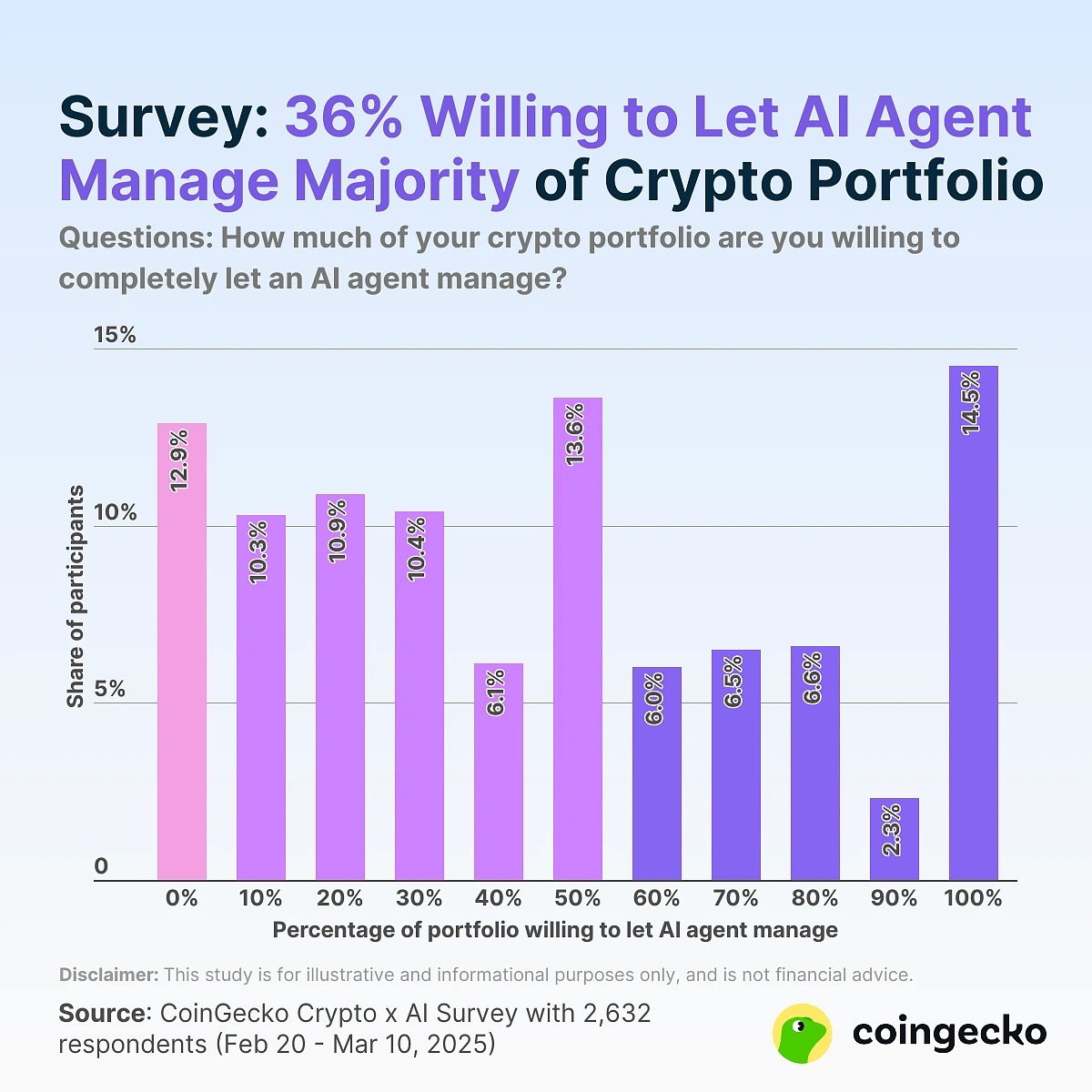
The process of teaching an AI agent to manage a crypto portfolio can be a lengthy endeavor, often spanning months. During this period, the agent learns to identify relevant markets, interpret complex information, and understand user-specific decision-making patterns. The ability of these agents to retain conversational history and user preferences is a significant advantage, saving users the repetitive task of re-explaining their strategies. This accumulated knowledge forms the bedrock of a personalized trading assistant.
However, this deep level of personalization carries inherent risks. The company providing the AI service ultimately controls access to the agent and the data it holds. A sudden account suspension, for instance, could lead to a complete disruption of the user’s trading operations and the potential loss of years of accumulated learning and data. Siu illustrated this point with a stark scenario: imagining an assistant that has become intimately familiar with your financial habits and preferences over years, only to vanish without a trace.
At a minimum, Siu argues for robust data portability rights. Users should have the ability to download their data, ensuring they can transition to a different AI service or platform if necessary. This ensures that the user retains ownership of their financial history and learned preferences, preventing vendor lock-in and providing a safety net against service disruptions. Surveys from organizations like Pew Research Center have consistently shown a public apprehension about AI’s impact on personal information security, with a significant percentage of adults believing that increased AI use will make their data less secure. This underscores the importance of addressing privacy concerns proactively as AI becomes more deeply embedded in financial management.
The integration of AI into crypto trading is not merely a technological upgrade; it represents a paradigm shift in how individuals interact with financial markets. While the potential for enhanced efficiency, constant vigilance, and personalized strategies is undeniable, the underlying challenges of control, data privacy, and market stability must be navigated with caution and foresight. As AI agents become more sophisticated and empowered, the responsibility shifts to users to understand the trade-offs, demand transparency, and advocate for robust data ownership and portability to ensure that AI serves as a tool for empowerment, not a mechanism for relinquishing control. The future of crypto trading may well be AI-assisted, but its ultimate direction and success will depend on maintaining the primacy of human judgment and safeguarding individual autonomy.

