
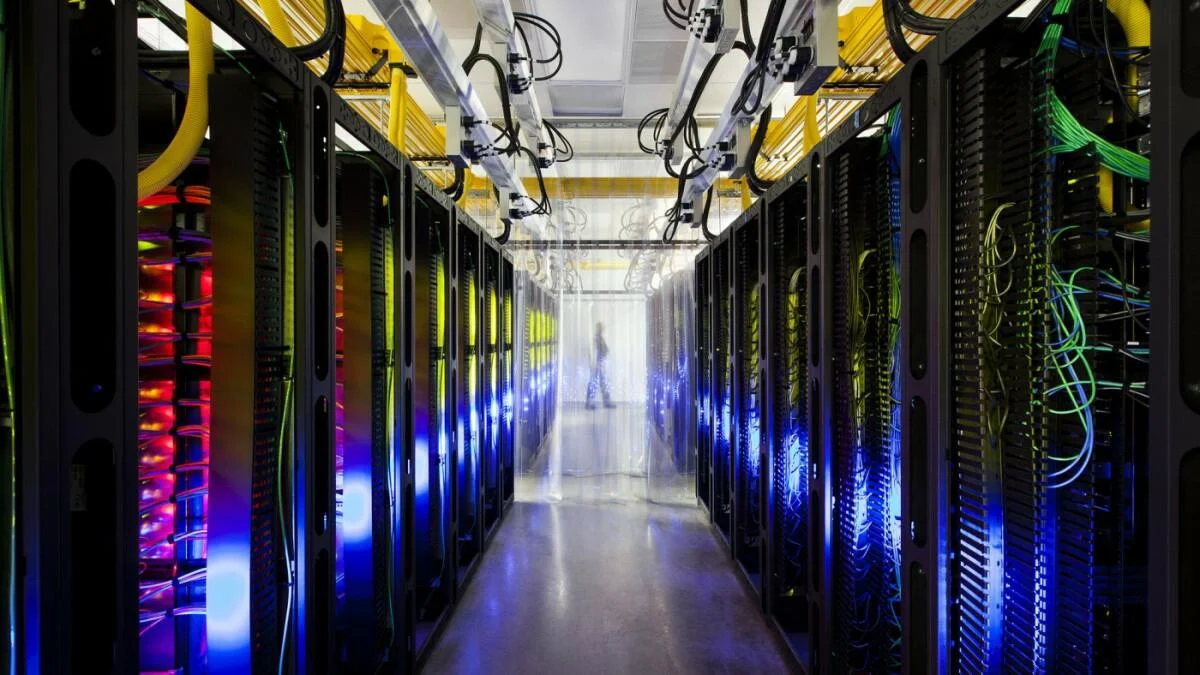
The U.S. Department of Energy (DoE) has officially announced a transformative $100 billion private investment to convert the former uranium enrichment facility in Western Kentucky into the cutting-edge Paducah American Energy Hub. This ambitious undertaking, marking one of the largest economic development projects in Kentucky’s history, aims to establish a massive artificial intelligence (AI) and high-performance computing (HPC) innovation campus powered by advanced, dedicated energy infrastructure. The initiative, spearheaded by U.S. Secretary of Energy Chris Wright, represents a significant step in the nation’s strategy to bolster its AI capabilities and energy independence, yet it unfolds against a backdrop of increasing market skepticism and public resistance towards large-scale AI infrastructure development.
The Paducah American Energy Hub: A Phoenix Rises
The site selected for the Paducah American Energy Hub carries profound historical significance. For decades, the Paducah Gaseous Diffusion Plant played a critical role in America’s Cold War efforts, enriching uranium for both military and commercial purposes. Its operations, spanning from 1952 until its shutdown in 2013, were vital to national security but also left a legacy of environmental remediation challenges. The DoE’s decision to repurpose this brownfield site into a hub for 21st-century innovation exemplifies a strategic approach to revitalizing former industrial landscapes, transforming a symbol of past nuclear endeavors into a beacon for future technological advancement.
The sheer scale of the Paducah project underscores its national importance. A private-sector coalition has been assembled, with Brookfield Asset Management (NYSE:BAM) taking the lead on developing the 1.8-gigawatt (GW) AI and HPC data center campus. Concurrently, NextEra Energy (NYSE:NEE), a prominent clean energy company, will develop 2 GW of natural gas-fired generation, complemented by an impressive 2.6 GW of battery energy storage. This integrated energy solution is designed to provide the massive, reliable power supply essential for hyper-scale data center operations. Project leaders emphasize that this dedicated power infrastructure will also be capable of feeding excess energy back to the regional grid, a crucial design element aimed at mitigating potential increases in utility bills for local families and businesses, a common concern with new, large energy consumers.
Environmental stewardship is a cornerstone of the Paducah American Energy Hub’s design. The new campus will deploy a modern closed-loop cooling system, engineered for continuous water recirculation to minimize external consumption. This advanced system stands in stark contrast to the site’s previous tenant, the Paducah Gaseous Diffusion Plant, which was originally designed to draw up to 30 million gallons of water per day from the Ohio River. The transition to a vastly more resource-efficient operation highlights a commitment to sustainable development, addressing one of the most significant environmental concerns associated with data centers: their prodigious water footprint.
The phased buildout of the Paducah hub is targeted for completion by 2032. This extensive construction period is projected to generate approximately 8,000 construction jobs, providing a substantial economic boost to Western Kentucky. Upon completion, the operational phase of the campus is expected to create 600 permanent, high-skilled jobs, further solidifying the region’s economic base and positioning it as a key player in the national AI ecosystem. This comprehensive approach, encompassing economic revitalization, technological advancement, and environmental responsibility, positions the Paducah American Energy Hub as a model for future large-scale infrastructure projects.
Broader Landscape: The Shifting Tides of AI Infrastructure Investment
While the Paducah announcement injects optimism into the AI infrastructure landscape, it arrives at a time when the broader market is experiencing significant headwinds, with growing caution around heavy AI infrastructure spending. Several high-profile projects have encountered substantial obstacles, highlighting the complex interplay of financing challenges, regulatory hurdles, energy demands, and increasing public opposition. These developments suggest a period of recalibration for an industry grappling with unprecedented growth and the practicalities of deployment.
The Stargate Initiative: Lofty Ambitions Meet Financial Headwinds
One of the most prominent examples of these challenges is the Stargate initiative, unveiled last year by a formidable coalition including former President Trump, Oracle’s Larry Ellison, OpenAI CEO Sam Altman, and SoftBank CEO Masayoshi Son. Touted as the "largest AI infrastructure project in history," Stargate was envisioned as a private-sector joint venture aiming to invest up to $500 billion over four years. Its ambitious goal was to construct hyper-scale AI data centers and develop associated energy infrastructure across the United States, thereby securing American dominance in AI against global competitors like China. Oracle was positioned as the core cloud and infrastructure provider, with initial development commencing in Abilene, Texas, involving multiple 500,000-square-foot data center buildings designed to house the immense computing power required for next-generation AI models.
However, the Stargate initiative quickly encountered significant financial difficulties, casting a shadow over its grand aspirations. Just months after its launch, reports emerged in January indicating that JPMorgan Chase was struggling to syndicate the $38 billion in construction debt it had underwritten for the project. Institutional investors, it appeared, were growing increasingly cautious about concentrated exposure to the tech sector, particularly to massive piles of debt heavily tied to single-tenant AI operations. Banks spent over six months attempting to distribute these multi-billion-dollar debt packages for Stargate campuses planned in Texas and Wisconsin, but buyers remained largely uninterested. This reluctance forced banks to sell the debt at a discount, as investors demanded a higher return to assume the associated risks. The situation was further complicated by S&P’s decision in July to cut Oracle’s credit rating to BBB-, just one notch above junk status, citing concerns over the company’s aggressive data center spending. This downgrade exacerbated investor apprehension, making it even harder to offload the Stargate debt. The financing struggles of Stargate underscored the immense capital demands and the inherent risks associated with building out infrastructure at an unprecedented scale for a rapidly evolving technology.
International Setbacks: OpenAI’s Stargate UK Pause

The challenges for OpenAI’s capacity expansion extended beyond U.S. borders. In April, OpenAI officially announced the pause of its Stargate UK data center project, citing high industrial electricity prices and regulatory uncertainty as primary deterrents. This UK venture, planned in partnership with hardware firms Nvidia (NASDAQ:NVDA) and Nscale (founded by Josh Payne), aimed to deploy thousands of advanced AI chips, starting with 8,000 GPUs and scaling up to 31,000, across strategic sites in North-East England, including Cobalt Park near Newcastle and Blyth. The project was intended to be a cornerstone of Britain’s ambition to emerge as a sovereign AI superpower.
While OpenAI did not cancel the project outright, the AI giant stated that development would only resume when "the right conditions" allowed for long-term infrastructure investment. This pause delivered a significant blow to Nscale, which had been rapidly scaling its operations and even considering a potential stock market IPO, and dampened Britain’s broader aspirations in the global AI race. The decision highlighted the critical role of stable energy costs and predictable regulatory environments in attracting and sustaining large-scale, long-term technological investments.
Oracle’s Project Jupiter Encounters Permitting Hurdles
Adding to the series of setbacks, Oracle’s pivotal $18 billion Project Jupiter, a massive 1,400-acre data center campus in New Mexico, also stalled. Bloomberg reported in the previous month that this facility, critical for supporting Oracle’s broader AI infrastructure goals, faced significant delays. Oracle issued a force majeure notice to its lender, Blue Owl Capital, concerning the 2.45-gigawatt hyperscale data center after failing to secure vital state and federal land-use permits for a planned natural gas plant. The inability to obtain these crucial permits for conventional power generation forced Oracle to announce a shift towards solid oxide fuel cells (SOFCs). While SOFCs offer a cleaner energy alternative, their deployment on such a massive scale is experimental and largely unprecedented, introducing a new layer of technical and operational uncertainty to an already complex project. The New Mexico situation exemplifies the growing difficulties in securing permits for large energy-intensive projects, particularly those relying on fossil fuels, amidst heightened environmental scrutiny and local opposition.
Growing Public Resistance: The Local Impact of Global AI Ambitions
Beyond financial and regulatory obstacles, AI infrastructure development is increasingly confronting a formidable challenge: growing public resistance. Communities across the United States, Europe, and Asia are pushing back against the perceived massive environmental and economic footprint of AI data centers. A recent Gallup poll revealed that roughly 71% of Americans oppose the construction of AI data centers in their localities, underscoring a significant disconnect between national technological ambitions and local community concerns.
The pushback is multifaceted. Environmentally, data centers are criticized for their enormous energy consumption, which places strain on existing grids and often relies on carbon-intensive power sources. Their substantial water usage for cooling, as seen in the original Paducah plant’s design, is another major concern, especially in water-stressed regions. Furthermore, communities raise issues about noise pollution from cooling systems, visual impact of large industrial facilities, and the potential for increased traffic. Economically, while data centers promise jobs and tax revenue, critics argue that the jobs are often highly specialized and few in number compared to the land and resources consumed, and that they can drive up electricity costs for existing residents and businesses.
This burgeoning opposition has had tangible consequences across the U.S. Reports indicate that projects worth over $130 billion have been blocked or significantly delayed due to local resistance. More than 500 active data center bans or moratoriums have reportedly been enacted nationwide, reflecting a widespread movement by local governments and citizens to control or halt the proliferation of these facilities. This public sentiment represents a critical factor that developers and policymakers must increasingly address, necessitating greater transparency, community engagement, and a demonstrable commitment to sustainable practices.
Navigating the Future: Implications for AI Development and Energy Strategy
The Paducah American Energy Hub, with its careful planning and integrated approach, stands out as a potential model for future AI infrastructure projects in this challenging environment. By repurposing a brownfield site, incorporating dedicated and flexible energy solutions, and prioritizing advanced, resource-efficient cooling systems, the project directly addresses many of the concerns that have plagued other initiatives. Its focus on generating both construction and permanent jobs, alongside a commitment to not burden local utility grids, demonstrates an awareness of the broader community and economic impacts.
The strategic importance of robust AI infrastructure cannot be overstated. As AI continues to evolve and integrate into nearly every sector of the economy, reliable and scalable computing power becomes a national imperative for economic competitiveness, scientific advancement, and national security. The current market dynamics, however, indicate that simply building bigger data centers is no longer a sustainable or universally accepted strategy.
The experiences of Stargate, Project Jupiter, and OpenAI’s UK pause highlight several critical implications:
- Financing Innovation: The sheer capital requirements for hyper-scale AI infrastructure demand innovative financing models that can withstand market volatility and investor scrutiny.
- Integrated Energy Solutions: Reliance solely on existing grids or conventional power sources is becoming problematic. Dedicated, resilient, and ideally low-carbon energy generation, coupled with storage, will be essential.
- Environmental Responsibility: Future projects must prioritize water and energy efficiency, and embrace sustainable design from inception, moving away from resource-intensive legacy models.
- Community Engagement: Proactive and transparent engagement with local communities, addressing their concerns about environmental impact, utility costs, and land use, will be crucial to avoid delays and outright bans.
- Regulatory Clarity: Predictable and supportive regulatory frameworks, particularly concerning energy sourcing and land use, are vital to attract and retain large-scale investments.
The transformation of a former Cold War nuclear site into a cutting-edge AI hub in Kentucky represents a bold vision for the future, demonstrating how legacy industrial sites can be repurposed for next-generation technology. However, the broader landscape of AI infrastructure development is complex and fraught with challenges. The success of projects like Paducah will depend not only on technological prowess and financial backing but also on the ability to navigate a shifting environment marked by increasing public scrutiny, environmental concerns, and the fundamental need for sustainable, community-conscious growth. The future of American AI dominance will hinge on how effectively these multifaceted challenges are addressed.

