
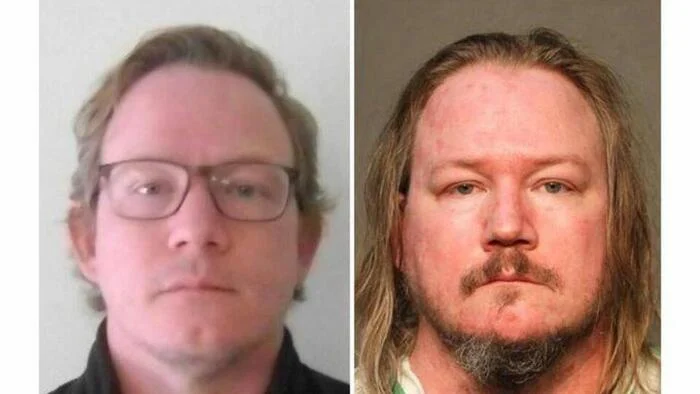
A federal judge in Hattiesburg, Mississippi, on October 14, sentenced former youth gymnastics coach Sean Gardner, 39, to the maximum 90 years in prison for producing child sexual abuse material (CSAM). U.S. District Judge Kristi Johnson imposed a sentence of 30 years on each of three federal counts, a cumulative term that effectively amounts to a life sentence given Gardner’s age. The severe judgment underscores the grave nature of the offenses and the judiciary’s commitment to protecting vulnerable children.
The Conviction and the Crime
Gardner pleaded guilty to three federal counts related to his abhorrent actions between December 2017 and April 2018. During this period, while employed as a coach at Jump’In Gymnastics in Purvis, Mississippi, he secretly concealed a camera within a bathroom at the facility. His illicit activities involved covertly videotaping young gymnasts in various states of undress or nudity within the restroom, exploiting the trust placed in him as a coach. The Justice Department, in its official announcement, detailed the grim specifics of the case, which revealed a systematic violation of privacy and a profound breach of safeguarding responsibilities.
Investigators later confirmed that the recordings captured at least 10 minor victims. The discovery of these horrific materials only years after their creation highlighted significant lapses in oversight and reporting mechanisms within the sports community. An FBI affidavit, referenced by CBS News, disclosed that federal agents seized approximately 50 videos and 400 photographs from Gardner’s residence, painting a disturbing picture of the extent of his criminal enterprise. The sheer volume of evidence presented in court left little doubt about the premeditated and pervasive nature of his offenses.
A Detailed Chronology of Events and Allegations
The case against Sean Gardner is not merely a single incident but a complex web of alleged misconduct, delayed responses, and institutional failures spanning multiple states and years.
- December 2017 – April 2018: Gardner commits the federal offenses in Purvis, Mississippi, by hiding a camera in a gym bathroom and recording minors.
- December 2017: According to two civil lawsuits later filed, USA Gymnastics and the U.S. Center for SafeSport (SafeSport) were allegedly alerted to "inappropriate and abusive behaviors" involving Gardner at the Mississippi gym. These lawsuits claim that no substantial investigation ensued, his credentials were not revoked, and law enforcement was not contacted.
- January 2018: Gardner’s boss at the Mississippi gym reportedly emailed USA Gymnastics about his "grooming behavior." SafeSport, however, contends that USA Gymnastics only reported a non-sexual misconduct issue at an affiliated gym, lacking sufficient detail for further action on their part.
- 2018 – 2022: Despite the earlier warnings, Gardner secured employment at Chow’s Gymnastics and Dance Institute in West Des Moines, Iowa, a renowned institution associated with Olympic success. Allegations of sexual abuse against at least three young gymnasts at Chow’s during this period are cited in court records reviewed by NBC News, though these remain untested in court.
- 2022: SafeSport states it first received specific allegations of sexual misconduct against Gardner. A young girl reportedly filed a complaint with the center, prompting a more direct response.
- July 2022: Following the formal report, SafeSport provisionally suspended Gardner. Concurrently, Chow’s Gymnastics terminated his employment.
- May 2024: Despite his suspension, an Associated Press report indicated that Gardner obtained a job at a hospital, raising questions about the effectiveness and reach of provisional bans.
- Early 2025: Sources familiar with the case told AP that Gardner expressed willingness to accept a lifetime coaching ban from SafeSport. However, this ban was reportedly never formalized, an omission that later drew criticism and concern.
- May 2025: West Des Moines police, investigating the Iowa allegations, searched Gardner’s apartment. This search was a critical turning point, leading to the discovery of the hidden recordings from his time in Mississippi.
- August 2025: The FBI arrested Gardner based on the evidence uncovered. He was initially indicted on 10 federal counts. The FBI subsequently launched a dedicated website to encourage potential victims from his coaching stints in Louisiana, Mississippi, and Iowa to come forward.
- April 2026: A superseding indictment added two more federal counts against Gardner.
- May 2026: Gardner entered a guilty plea to counts 1, 3, and 7 of the indictment, signaling his acceptance of responsibility for the core offenses.
- October 14, 2026: Sean Gardner is sentenced to 90 years in federal prison in Hattiesburg, Mississippi.
- December 1, 2026: Two civil lawsuits are formally filed in Polk County, Iowa, by former gymnasts against USA Gymnastics, SafeSport, Chow’s, and its founder, Liang "Chow" Qiao, alleging negligence and failure to protect athletes.
The Nature of the Investigation and Gardner’s Multi-State Career
The investigation that ultimately led to Gardner’s federal conviction was a multi-agency effort, spearheaded by the FBI and involving local law enforcement in both Iowa and Mississippi. The recordings of minors were discovered during the execution of a search warrant at Gardner’s West Des Moines apartment, part of an investigation into the Iowa abuse allegations. This cross-state investigative effort highlighted the fluid nature of abuse, where perpetrators often move between jurisdictions, complicating tracking and accountability.
Gardner’s coaching career spanned at least three states, providing him with opportunities to interact with and potentially victimize numerous young athletes. His professional trajectory included:
- 2004 to 2014: Athletes in Motion in Prairieville, Louisiana.
- 2014 to 2018: Jump’In Gymnastics in Purvis, Mississippi.
- 2018 to 2022: Chow’s Gymnastics and Dance Institute in West Des Moines, Iowa.
The FBI’s creation of a dedicated website for potential victims underscored the belief that Gardner likely targeted children across all these locations, exploiting the vulnerable environment of youth sports.
Background: A Sport Under the Shadow of Abuse
The case of Sean Gardner inevitably revives painful memories and questions surrounding athlete safety within gymnastics, particularly in the wake of the Larry Nassar scandal. Nassar, a former USA Gymnastics team doctor, was convicted of sexually abusing hundreds of gymnasts, leading to widespread condemnation and a reckoning for the sport’s governing bodies. His crimes exposed systemic failures, a culture of silence, and a profound lack of accountability that prioritized medals over the well-being of young athletes.
In response to the Nassar scandal and other instances of abuse, the U.S. Center for SafeSport was established as an independent organization tasked with protecting athletes from abuse in all Olympic, Paralympic, and Pan American sports. Its mandate is to investigate allegations, provide training, and enforce policies designed to create a safer environment. USA Gymnastics, as the national governing body for the sport, also implemented reforms aimed at improving athlete safety and reporting mechanisms. The Gardner case, however, suggests that despite these reforms, significant challenges persist in effectively safeguarding young gymnasts and ensuring prompt, decisive action against alleged perpetrators.
Accountability Questions and Legal Challenges
The ongoing civil lawsuits filed against USA Gymnastics, SafeSport, Chow’s Gymnastics, and its founder Liang "Chow" Qiao, directly challenge the effectiveness of these safeguarding systems. The plaintiffs, two former gymnasts, allege that the organizations were explicitly warned about Gardner’s "inappropriate and abusive behaviors" in Mississippi as early as December 2017. They contend that the failure to investigate, revoke his credentials, or report him to law enforcement allowed Gardner to continue coaching and potentially harm more children in Iowa. This forms the crux of the negligence claim: that inaction enabled further abuse.
SafeSport has publicly disputed the timeline presented in the lawsuits. It maintains that it first received actionable sexual misconduct allegations against Gardner in 2022 and responded swiftly by provisionally suspending him. Regarding the earlier 2018 communication, SafeSport stated that USA Gymnastics had only reported a general issue from an affiliated gym, which did not concern sexual misconduct and lacked sufficient detail for them to pursue further. This defense highlights the critical issue of information sharing and the clarity required for independent bodies to act effectively. However, reports of Gardner’s former boss in Mississippi emailing USA Gymnastics about "grooming behavior" in January 2018 complicate SafeSport’s narrative, suggesting a potential failure in internal communication or interpretation of warning signs.
Further questions of accountability arise from SafeSport’s own internal investigation, which, according to OutKick, found that Chow and other coaches at the Iowa gym were aware of the allegations against Gardner but failed to report them, a direct violation of mandatory reporting policies. This points to a pattern of alleged institutional cover-ups or negligence at the local gym level, mirroring concerns raised in previous abuse scandals. Police records also indicate that a detective requested SafeSport to encourage families to file criminal complaints, yet only one parent contacted police in 2022, leading to a stalled investigation. This suggests a disconnect between criminal investigations and the actions of sports safeguarding bodies.
The revelation that Gardner was reportedly willing to accept a lifetime coaching ban in early 2025, but SafeSport never finalized it, adds another layer of scrutiny. While SafeSport asserted that temporary and permanent bans carry the same restrictions, the failure to formalize a permanent ban could be perceived as an administrative lapse that undermines confidence in their long-term enforcement capabilities.
The Iowa allegations against Gardner, though not yet leading to criminal charges and remaining unproven in court, further fuel the debate over accountability. West Des Moines police have stated they will decide on how to proceed with these allegations now that the federal case has concluded, indicating that Gardner’s legal troubles may not be entirely over.
Broader Implications for Athlete Safety and Institutional Reform
Sean Gardner’s sentencing and the ongoing civil litigation underscore the persistent challenges in safeguarding young athletes across all sports. This case highlights several critical implications:
- Effectiveness of Safeguarding Bodies: The discrepancies in timelines and reporting between different organizations and the alleged failures to act on early warnings raise serious questions about the overall effectiveness of SafeSport and USA Gymnastics in fulfilling their primary mission of athlete protection.
- Mandatory Reporting Compliance: The alleged failure of Chow’s Gymnastics coaches to report known allegations, as found by SafeSport’s own investigation, demonstrates that mandatory reporting policies are only as effective as their enforcement and adherence at the grassroots level.
- Information Sharing: The difficulty in sharing timely and accurate information between local gyms, national governing bodies, SafeSport, and law enforcement agencies remains a significant hurdle in preventing perpetrators from moving between roles and jurisdictions.
- Victim Empowerment: The civil lawsuits, while seeking justice and compensation for the victims, also serve as powerful tools to force institutional change and hold organizations accountable for their perceived negligence.
- Culture of Accountability: The case reinforces the need for a pervasive culture of accountability, where all individuals involved in youth sports – from coaches and administrators to parents and athletes – understand their roles and responsibilities in preventing and reporting abuse.
The sentencing of Sean Gardner sends a clear message about the legal consequences for those who exploit children. However, the broader narrative of this case serves as a stark reminder that the fight for athlete safety is far from over. It necessitates continuous vigilance, transparent processes, and unwavering commitment from all stakeholders to ensure that youth sports are truly safe havens for development and growth, free from the threat of abuse. Gardner’s right to appeal his federal conviction remains, and the civil suits against him and the involved organizations are still pending, promising further legal proceedings in this complex and deeply troubling saga.

