
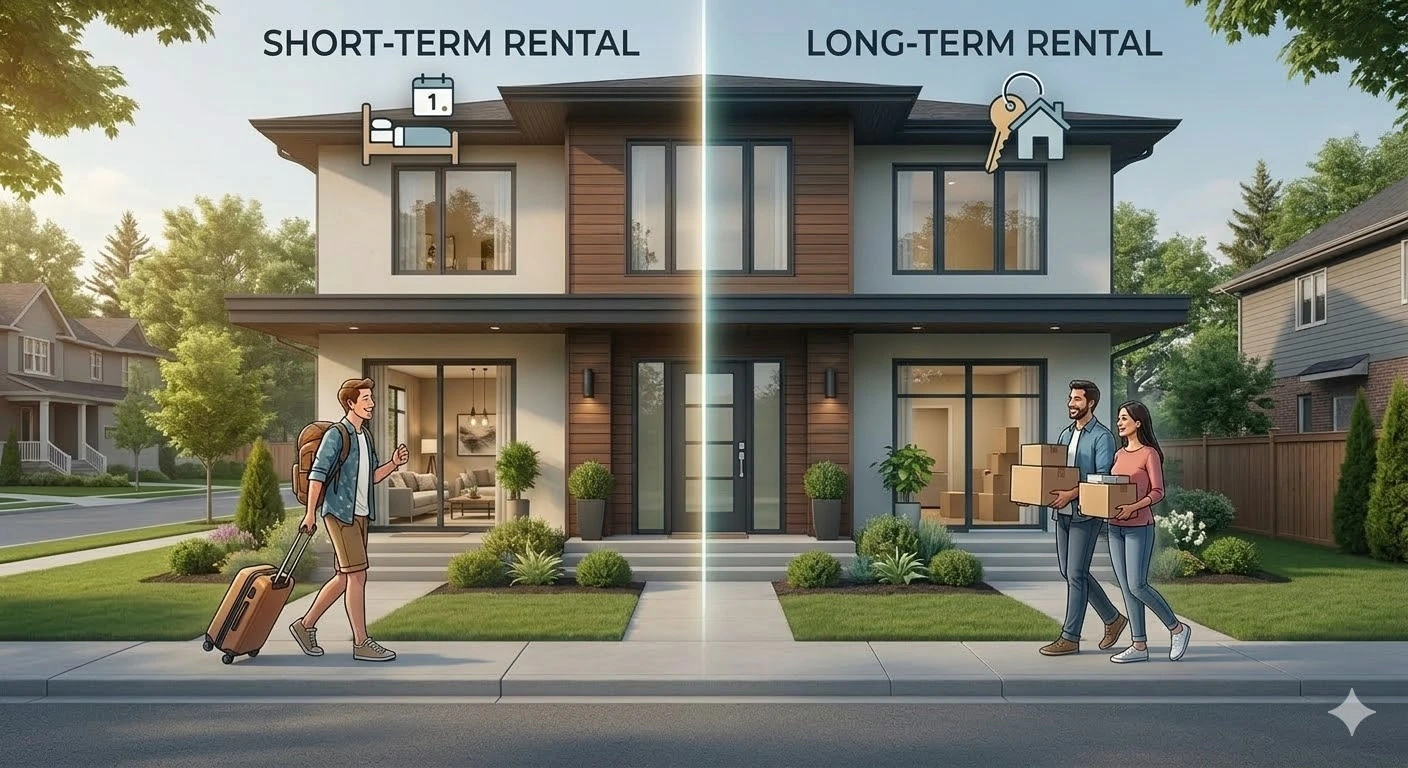
Just a few years ago, the allure of short-term rental properties, particularly through platforms like Airbnb, promised a seemingly effortless path to passive income. College students reportedly supplemented their earnings by renting out spare bedrooms, and the narrative of easy money permeated the real estate investment community. This perception, amplified by a post-pandemic travel surge in 2021-2022, drew an unprecedented wave of investors. The prevailing sentiment was that acquiring a rental property almost anywhere, listing it on Airbnb, and watching the cash flow in was a straightforward strategy to bolster any investment portfolio. Data from that era often supported this notion, with market averages indicating that short-term rentals frequently outperformed their long-term counterparts in numerous U.S. locations.
However, by 2026, the landscape has undergone a significant transformation. In many previously booming markets, Airbnb occupancy rates and revenue growth have plateaued or declined, while regulatory scrutiny has intensified. The notion of passive income from short-term rentals has largely dissolved, replaced by the reality that operating such a property is now unequivocally a business, demanding active management and strategic planning.
Simultaneously, the traditional long-term rental market, while often perceived as more stable, is not without its own burgeoning complexities. This evolving environment has paved the way for a third, increasingly popular rental strategy: the mid-term rental. Consequently, the clear-cut winner in rental property investment that once existed has become far less defined. This necessitates a more rigorous evaluation by real estate investors when selecting their rental strategy.
This article delves into the critical factors that real estate investors are re-evaluating in 2026 when navigating the choice between short-term and long-term rental properties.
Re-evaluating the Pillars of Rental Property Investment in 2026
1. The Evolving Regulatory Environment
Historically, the legislative framework surrounding new business models has lagged behind their emergence. In the early days of the short-term rental market, this lack of regulation often made entry into this sector significantly easier than traditional long-term leasing. However, the present landscape in 2026 reveals a stark contrast. Most housing markets, particularly those heavily reliant on tourism, now have comprehensive short-term rental regulations in place. Cities like New York City, Honolulu, Santa Monica, New Orleans, and San Francisco have implemented what are often described as "de-facto" bans, with regulations so stringent that they effectively prohibit most short-term rental operations.
These regulations now encompass a wide array of operational aspects for vacation rental owners, including:
- Licensing and Permits: Requirements for obtaining specific operating licenses and annual permits, often with associated fees.
- Zoning Restrictions: Limitations on where short-term rentals can operate, with many residential zones now off-limits.
- Occupancy Limits: Strict rules on the number of guests allowed per property.
- Safety Standards: Mandates for smoke detectors, carbon monoxide detectors, and fire extinguishers, among other safety measures.
- Tax Obligations: Collection and remittance of local occupancy taxes, which can be substantial.
- Duration Restrictions: Limits on the number of days a property can be rented out on a short-term basis annually.
The sheer volume and complexity of these rules mean that any real estate investor contemplating a short-term rental acquisition in 2026 must thoroughly assess their capacity for legal compliance. For many, the heightened regulatory burden and palpable pushback from local communities against platforms like Airbnb have simplified the decision-making process, leaning them towards traditional long-term rentals.
However, the legal terrain for traditional rental properties is also undergoing significant shifts in major urban centers. While landlords have long adhered to location-specific rental laws dating back to the 1920s in the U.S. housing market, which historically included:
- Lease Agreements: Standardized contracts outlining terms and conditions.
- Eviction Procedures: Legal processes for removing non-compliant tenants.
- Property Maintenance Standards: Requirements for habitability and essential services.
- Fair Housing Laws: Prohibitions against discrimination.
In 2026, new legislation is increasingly favoring tenants, thereby increasing operational costs and complexities for landlords. Examples of these emerging trends include:
California:
- Rent Control Measures: Statewide rent caps that limit annual rent increases.
- Just Cause Eviction Ordinances: Requiring landlords to have specific, legally recognized reasons to terminate a tenancy.
- Tenant Protections: Expanded rights regarding notice periods for rent increases and lease terminations.
Washington:
- Rent Stabilization Policies: Measures to curb excessive rent hikes.
- Tenant Relocation Assistance: Requirements for landlords to provide financial assistance to tenants displaced by certain evictions.
- Increased Notice Requirements: Longer notice periods for lease terminations and rent increases.
The passage of such impactful legislation in major states like California and Washington often sets a precedent, with other states frequently following suit if similar policies prove effective. Therefore, real estate investors must conduct thorough due diligence and comprehensively understand the legal intricacies applicable to both short-term and long-term rental properties, regardless of their chosen investment strategy. Resources such as Mashvisor’s portal, offering U.S.-wide short-term rental regulations, can provide a crucial starting point for this research.
2. Escalating Costs Across the Board
The cost of real estate investment has generally increased across both short-term and long-term rental strategies. While short-term rentals have traditionally been the more capital-intensive option, the overall investment environment in 2026 has seen a universal rise in expenses. U.S. home prices continue to trend upwards, and this is compounded by increased property taxes, higher mortgage rates, and elevated insurance premiums.
For Short-Term Rental Properties:
The evolving regulatory landscape directly translates into increased costs. Investors now face:
- Annual Permit and Registration Fees: Costs associated with obtaining and maintaining necessary operating licenses.
- Hefty Fines for Violations: Significant financial penalties for non-compliance with local ordinances.
- Additional Taxes: Potential for new or increased occupancy taxes levied on short-term stays.
- Platform Fees: In 2025, Airbnb introduced new platform fees, further impacting host profitability.
Beyond these direct costs, the competitive nature of the short-term rental market necessitates ongoing investment to stand out. A basic offering is no longer sufficient. For instance, a prevailing sentiment among hosts in popular destinations like Gatlinburg, Tennessee, suggests that amenities like a hot tub have become a baseline expectation, not a negotiable luxury. The drive to differentiate and attract guests in a crowded marketplace inherently adds to operational expenses. Consequently, owning a vacation rental property in 2026 is demonstrably more expensive than it was even a few years prior.
For Long-Term Rental Properties:
New legislative mandates are also contributing to increased overheads for long-term rentals. These can include requirements for functional appliances such as stoves and refrigerators, ensuring properties meet modern energy efficiency standards, and addressing tenants’ growing demand for sustainable living.
The cumulative effect of these rising start-up and ongoing costs means that real estate investors must re-evaluate their financial projections meticulously. A generalized understanding of expenses is insufficient; precise cost estimates, alongside realistic income projections, are crucial for determining the most profitable rental strategy before committing capital.
3. Strategic Location Selection in a Dynamic Market
Beyond the legal and financial considerations, the choice of location remains a paramount factor in rental property investment. The dynamics of both short-term and long-term rental markets are heavily influenced by evolving consumer behavior and demographic shifts.
Travel trends are notoriously fluid, and the short-term rental market must contend with increasing oversaturation in popular destinations. For traditional rentals, demographic movements indicate a significant migration towards the Southeast and Mountain West regions, often referred to as the Sunbelt. This contrasts with earlier decades when larger metropolitan areas were the primary magnets for renters.
Understanding where people are moving or traveling is only one part of the equation; effectively positioning an investment asset within those markets is the true challenge. Daryl Fairweather, Chief Economist for Redfin, offers valuable insights into this complex decision-making process:
Mashvisor: "Are there any markets where you expect more short-term rentals to convert to long-term rentals?"
Fairweather: "Conversions are most likely where short-term economics weaken or regulations tighten. This typically occurs in areas that have experienced a rapid influx of short-term rentals, leading to market saturation and reduced profitability for individual hosts. When the revenue potential of short-term rentals diminishes, and the operational challenges, including regulatory hurdles and guest management, become more pronounced, owners may look to the stability of long-term leases. The key is that the underlying demand for long-term housing in these areas must remain robust. Therefore, conversions are most probable in markets where STR revenue softens but long-term fundamentals remain solid."
Mashvisor: "Are there any markets where short-term rentals might outperform long-term rentals in 2026?"
Fairweather: "Yes, some markets will still favor STRs. These are typically areas with consistent, high-demand tourism or event-driven visitor traffic, where the nightly rates achievable through short-term rentals significantly outweigh those of long-term leases. However, success in these markets is increasingly dependent on professional management, dynamic pricing strategies to capture peak demand, and a deep understanding of local market conditions. Passive Airbnb investments in random towns without a clear demand driver are inherently riskier."
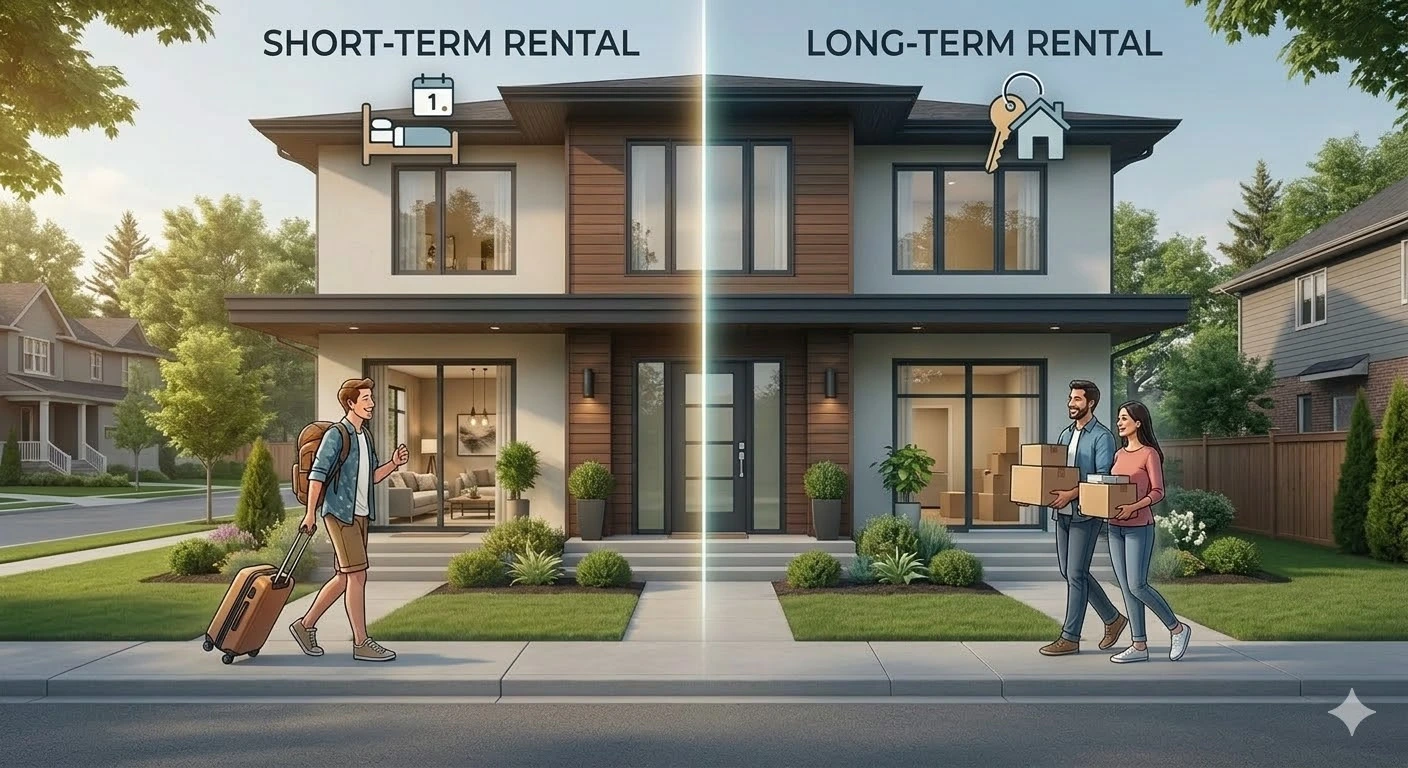
The core takeaway is that a thorough analysis of location-specific trends, including tourism patterns, demographic shifts, and the competitive landscape, is essential for selecting the most suitable rental strategy. Real estate investors must remain adaptable and informed about these changing dynamics.
4. Understanding the Occupant Profile
The perceived simplicity of dealing with temporary guests was a significant draw for many investors entering the short-term rental market. The assumption was that short-term occupants would present fewer issues than long-term tenants, who might involve complications such as:
- Tenant Screening: The need for thorough background and credit checks.
- Lease Enforcement: Managing lease terms and ensuring compliance.
- Evictions: Navigating the legal complexities of tenant removal.
- Property Damage: Potential for more significant wear and tear or intentional damage.
- Late Payments: Dealing with inconsistent or missed rent payments.
The image of the Airbnb guest as an ideal, low-maintenance occupant seemed to hold true initially. However, the proliferation of online "horror stories" has painted a more nuanced picture of short-term guest behavior. These accounts detail incidents of:
- Parties and Disturbances: Guests hosting unauthorized gatherings and causing noise complaints.
- Property Damage and Vandalism: Instances of guests intentionally damaging furnishings or the property itself.
- Theft of Property: Guests stealing items from the rental.
- Unreasonable Guest Demands: Guests making excessive requests that strain host resources.
- Security Concerns: Issues related to guest safety and privacy.
Adding to the complexity are the inherent costs associated with hosting short-term guests. These often include providing high-speed internet, stocking hotel-like amenities, and incurring professional cleaning fees after each stay.
In 2026, it is no longer a simple matter of one occupant type being inherently superior to the other. Both short-term guests and long-term tenants require distinct management approaches and entail specific costs. Real estate investors must carefully assess their capacity to manage these differing demands, evaluate potential risks, and develop robust mitigation strategies for the unique challenges presented by each type of occupant.
5. The Shift from Passive to Active Investment
A recurring theme within online communities and forums dedicated to Airbnb and short-term rental hosts is the realization that operating a hospitality business demands significant effort. For hosts who manage their properties directly rather than outsourcing to a property management company, the investment is inherently active. The early perception of short-term rentals as a source of passive income has largely dissipated.
Similarly, being a landlord of a long-term rental property has always been recognized as an active role, albeit with different types of demands. While not requiring the constant turn-over management of short-term rentals, traditional landlords face periods of intense activity, including managing tenant turnover, handling emergency maintenance requests, and navigating the legalities of evictions.
The possibility of achieving passive income through either strategy hinges on hiring a property manager. However, this decision is contingent upon the potential impact on cash flow. Property management fees for long-term rentals typically range from 8% to 12% of the monthly rental income, whereas for short-term rentals, these fees can be considerably higher, often between 15% and 25%.
Ultimately, neither hosting a short-term rental nor managing a long-term rental is truly passive without professional oversight. Real estate investors must realistically assess their capacity for day-to-day operations and the time commitment required. Alternatively, incorporating property management costs upfront into investment analysis is essential for anyone seeking a truly passive rental income stream.
6. The Emergence of the Mid-Term Rental as a Viable Third Option
The decision-making process for rental property investors in 2026 is no longer confined to a binary choice between short-term and long-term rentals. The rise of the mid-term rental has introduced a compelling third alternative.
A mid-term rental, often referred to as a monthly rental, typically spans a duration of one to six months, and sometimes up to twelve months. It occupies a strategic middle ground, appealing to a specific demographic. Common occupants include traveling nurses and other healthcare professionals, individuals on extended business assignments or lengthy vacations, digital nomads, and those in the process of relocating.
The unique tenant profile attracted to mid-term rentals lends itself to success in particular types of locations:
- Areas with a Strong Healthcare Presence: Proximity to hospitals and medical facilities.
- Cities with a Significant Corporate Relocation Component: Hubs for business travel and employee relocation.
- University Towns: Attracting visiting faculty, researchers, or students on extended programs.
- Areas with High Demand for Temporary Housing: Such as near military bases or during major seasonal events.
A significant advantage of mid-term rentals is their ability to often circumvent the complex regulations that govern short-term rentals in many markets. While the Average Daily Rates (ADRs) for short-term rentals may be higher on a per-night basis, mid-term rental data indicates a tendency towards higher occupancy rates over extended periods. This, combined with reduced turnover costs and fewer cleaning fees compared to short-term rentals, can lead to greater overall profitability within the same real estate market.
When contrasted with traditional long-term rental properties, mid-term rentals offer greater flexibility and are typically furnished. This convenience often translates into tenants being willing to pay a premium—often cited as $600 to $800 more per month than a standard long-term lease—for these temporary accommodations. With a third distinct rental strategy now promising significant cash flow potential, real estate investors must carefully re-evaluate which option aligns best with their investment goals and the specific characteristics of their target markets.
Short-Term vs. Mid-Term vs. Long-Term: A Strategic Decision Matrix
The choice of rental strategy is profoundly influenced by an investor’s location analysis and their tolerance for risk. Ultimately, the most prudent decision will be the strategy that promises the highest cash flow and the most favorable return on investment. Leveraging reliable market data, including projected Airbnb occupancy rates, estimated long-term rental income, and historical performance trends, is indispensable for discerning which strategy is genuinely profitable before making a purchase. Platforms like Mashvisor offer tools and data analytics to assist investors in this critical evaluation process.
7. Navigating the Next Move: Convert or Sell?
For a segment of real estate investors, 2026 may necessitate a comprehensive re-evaluation of their existing rental properties. A short-term rental that was once a lucrative asset might now be operating in an oversaturated market, leading to diminished profit margins. Alternatively, new regulations could have rendered the operation of such a business legally untenable.
For those investors deciding to exit the short-term rental market, two primary paths emerge: converting the property to a long-term rental or selling it outright. This decision is far from simple and requires a meticulous examination of current real estate market trends and an investor’s individual financial circumstances. Is it an opportune moment to sell, or could holding the property longer yield greater profits? Can the property be sustained financially during a sale period, or will carrying costs result in negative cash flow? Crucially, how are long-term rentals performing in the same housing market?
Daryl Fairweather of Redfin provides guidance on this critical juncture:
Mashvisor: "When should an investor consider selling a vacation property instead of converting it to a long-term rental?"
Fairweather: "An investor should consider selling when the property no longer justifies the complexity and risk of short-term rentals or when the capital could be better used elsewhere. This scenario arises when the net operating income from short-term rentals significantly declines due to increased competition, rising operational costs, or stricter regulations. If the property’s market value has appreciated substantially, cashing out might be more prudent than enduring the ongoing management efforts and potential for future regulatory changes. Additionally, if the capital tied up in the vacation property could generate a higher, more stable return in a different investment vehicle or market, selling becomes a strategic financial move. In essence, sell if the property no longer provides strong returns, market prices are favorable, or regulations make your STR strategy unprofitable."
If the real estate market conditions support a successful conversion from a short-term to a long-term rental, Fairweather offers strategic advice:
"If converting makes sense, focus on these four things:
- Market Analysis: Understand the local long-term rental demand, average rental rates, and tenant demographics.
- Property Preparation: Make necessary upgrades or repairs to meet the standards expected by long-term tenants. This might include updating kitchens, bathrooms, or ensuring the property is move-in ready.
- Pricing Strategy: Set a competitive rental price based on market research to attract reliable tenants quickly.
- Tenant Screening: Implement a rigorous tenant screening process to find responsible and reliable occupants."
The overarching principle of converting to long-term rentals is to embrace predictability over the potential for higher, but more volatile, short-term gains. This transition should be approached as a deliberate business decision, carefully weighed against the alternative of selling the asset.
Conclusion: Data-Driven Decisions in a Transforming Market
The real estate investment landscape, encompassing both short-term and long-term rental markets, has undergone significant evolution. However, the fundamental truth remains: opportunities for profitable real estate investment are abundant. The critical differentiator in 2026 is the necessity for increased selectivity and a data-driven approach to decision-making.
For investors committed to a specific strategy, the key is to identify the optimal real estate market and property that align with that strategy. Utilizing analytical tools and comprehensive market data is paramount to making informed choices. Platforms like Mashvisor are designed to provide investors with the necessary insights, offering data on both short-term and long-term rental performance to guide immediate investment decisions. For mid-term rentals, integrating supplemental data with existing tools can provide a clearer picture of future earnings potential. The era of guesswork has passed; informed strategy is the new currency in real estate investment.

