
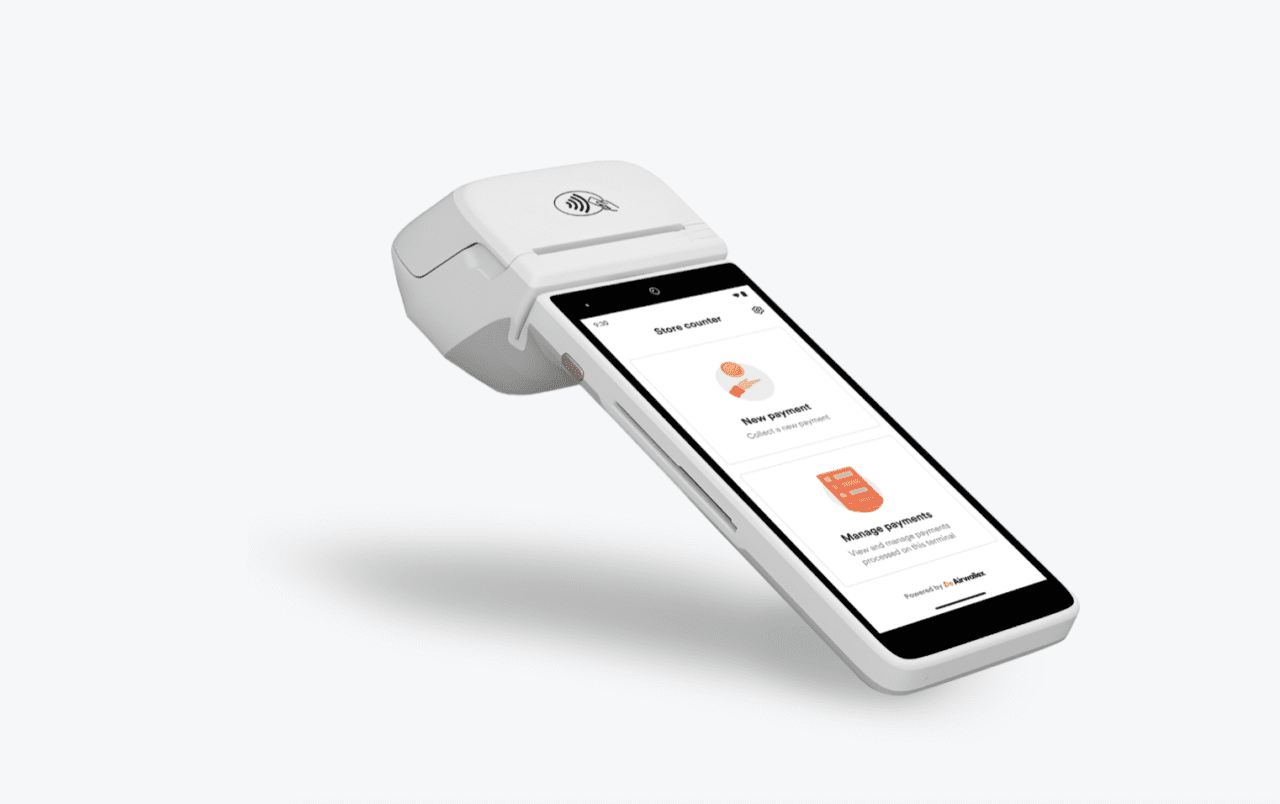
The Singapore-based financial technology giant Airwallex has officially entered the physical hardware market with the launch of Airwallex POS Payments, a strategic move designed to bridge the gap between digital and brick-and-mortar commerce. While much of the global fintech industry has shifted its focus toward "agentic payments"—automated systems driven by artificial intelligence—Airwallex is doubling down on the physical countertop. This new point-of-sale (POS) device represents a significant evolution for the company, transforming it from a cross-border digital payment processor into a comprehensive, omnichannel financial platform capable of managing the entire lifecycle of a merchant’s transactions, regardless of where they occur.
The introduction of Airwallex POS Payments allows merchants to integrate their in-store sales directly into the company’s existing commerce stack. This integration is designed to eliminate the historical fragmentation that has plagued retailers who operate both online and physical storefronts. By unifying these channels, Airwallex provides enterprise retailers with a single source of truth for reporting, reconciliation, and customer data, while offering SaaS platforms the ability to embed physical payment capabilities directly into their own software products.
The Strategic Shift Toward Omnichannel Integration
The decision to launch physical hardware marks a pivotal moment in Airwallex’s ten-year history. Since its founding in 2015, the company has primarily focused on the "invisible" side of finance: cross-border transfers, foreign exchange, and virtual issuing. However, as the retail landscape evolves into a "phygital" model—where the boundaries between physical and digital shopping are increasingly blurred—the need for a unified backend has become a primary pain point for global enterprises.
Fragmented payment systems often force merchants to use different providers for their website, their physical stores, and their backend accounting. This creates "data silos" where a customer’s purchase history in a physical store is invisible to the online marketing team, and vice versa. Airwallex’s new POS device addresses this by ensuring that every transaction, whether swiped at a counter in London or clicked in a mobile app in Singapore, flows through the same unified financial infrastructure.
For enterprise-level retailers, this visibility translates to better inventory management and more accurate financial forecasting. For software-as-a-service (SaaS) providers—such as those offering restaurant management or boutique retail software—the Airwallex POS provides a "plug-and-play" solution. These platforms can now offer their clients a branded, integrated payment terminal without having to build the underlying hardware or navigate the complex regulatory requirements of physical payment processing themselves.
Competitive Positioning and the "Stripe-Square" Rivalry
The launch of physical hardware places Airwallex in direct competition with some of the largest names in the fintech sector, most notably Block Inc. (formerly Square) and Stripe. Square pioneered the mobile POS space by targeting small businesses with its iconic white card readers. Stripe, meanwhile, expanded from an online-only API to include physical terminals through its "Stripe Terminal" offering several years ago.
The relationship between Airwallex and its competitors is particularly nuanced. In 2019, Stripe reportedly made an offer to acquire Airwallex for approximately $1.2 billion, an offer that Airwallex leadership ultimately declined. Since then, Airwallex has grown its valuation significantly and expanded its licensing footprint to rival that of the industry’s incumbents.
However, Airwallex holds a distinct advantage over legacy players in specific high-growth regions, particularly in Asia. Unlike many competitors that rely on third-party banking partners to hold and move funds, Airwallex has aggressively pursued its own banking and payment licenses. In Japan, for example, the company holds a full banking license, allowing it to own the entire "stack"—from the physical POS device and the software interface to the backend banking infrastructure.
When a merchant in Japan processes a payment through an Airwallex POS device, the funds can stay within the Airwallex ecosystem rather than being transferred to an external primary bank account. This "closed-loop" capability allows for faster settlement times, lower transaction fees, and the ability for merchants to use those funds immediately for other business expenses, such as paying international suppliers via Airwallex’s cross-border network.
A Chronology of Global Expansion and Licensing
The rollout of the POS device is the culmination of a massive regulatory and geographic expansion effort. Airwallex’s journey from a Melbourne-born startup to a global powerhouse is defined by its commitment to building its own infrastructure rather than "white-labeling" existing systems.
2015 – 2018: Foundation and Core Infrastructure
Airwallex was founded in Melbourne, Australia, by Jack Zhang and colleagues, initially focusing on solving the high costs of cross-border foreign exchange for small businesses. During this period, the company focused on building its core proprietary network.
2019 – 2022: Scaling and Refusing Acquisition
After declining Stripe’s acquisition offer, Airwallex focused on scaling its "Global Account" product, allowing businesses to open local currency accounts worldwide. The company achieved "Unicorn" status and began its aggressive push into the EMEA and North American markets.
2023 – 2024: Licensing Dominance
The company focused on securing the regulatory groundwork required for hardware deployment. By the end of 2024, Airwallex held nearly 90 regulatory licenses and permits across 50 markets, a feat that few fintechs have matched.
2025: The Year of Rapid Market Entry
In 2025 alone, Airwallex extended its regulated capabilities across 12 new markets. The company secured licenses and launched various products in France, the Netherlands, Israel, Canada, Korea, Japan, New Zealand, Malaysia, Vietnam, Brazil, Mexico, and the UAE. This rapid expansion laid the tracks for the physical POS rollout, ensuring that the hardware would be backed by local compliance and settlement capabilities in every major region.
Technical Specifications and Market Availability
The Airwallex POS Payments device is designed for modern retail environments, featuring high-speed connectivity, robust security protocols, and a sleek aesthetic intended to compete with high-end hardware. The device supports a wide array of payment methods, including traditional chip-and-pin, contactless cards, and digital wallets like Apple Pay and Google Pay.
At launch, the POS device is available to merchants in the United Kingdom, Europe, Hong Kong, and Singapore. These regions represent Airwallex’s strongest current markets, where its digital payment ecosystem is already deeply embedded. The company has confirmed that it plans to launch the device in Australia and the United States in the near future.
In the United States, Airwallex currently serves approximately 46,000 businesses. The introduction of physical hardware to the U.S. market will be a critical test for the company, as it will be entering the most saturated POS market in the world, dominated by Square, Toast, and Clover. However, Airwallex’s pitch remains consistent: for businesses that operate internationally, a POS system that is natively tied to a global multi-currency account is a superior alternative to domestic-focused systems.
Analysis of Economic Implications and Market Impact
The move into hardware is more than just a product launch; it is a defensive and offensive play in the broader "war for the merchant’s wallet." By providing the physical terminal, Airwallex increases its "stickiness" within a business’s operations. It is much harder for a merchant to switch financial providers when they have physical hardware deployed across multiple store locations than when they are simply using a software API.
Furthermore, the data harvested from physical transactions provides Airwallex with a more holistic view of a company’s financial health. This data is invaluable for credit scoring and lending. As Airwallex continues to expand its services, the insights gained from POS transactions could allow the company to offer working capital loans or revolving credit lines to merchants with much higher accuracy and lower risk than traditional banks.
Industry analysts suggest that this move is also a response to the "platformization" of finance. Retailers no longer want a collection of disparate tools; they want a single platform that handles everything from their website’s checkout page to the payroll of their store employees. By adding the final piece of the puzzle—the physical sale—Airwallex has positioned itself as a legitimate alternative to traditional commercial banks for the next generation of global enterprises.
Official Responses and Industry Outlook
In its official announcement, Airwallex emphasized that this launch is about removing the "fragmentation that has long held in-store payments back." The company’s leadership views the physical countertop not as an outdated mode of commerce, but as a vital touchpoint in a global financial foundation.
"By extending our global financial platform to the physical countertop, we’re bringing online and in-store payments together," the company stated. "We are giving enterprises a truly global foundation for growth."
While the fintech world continues to buzz about the potential of AI-driven agentic payments—where software agents negotiate and execute payments on behalf of humans—Airwallex’s launch serves as a reminder that the majority of global commerce still involves a human being standing at a counter, card in hand. By mastering both the digital future and the physical present, Airwallex is attempting to build an ecosystem that is both future-proof and grounded in the realities of today’s retail economy.
As the rollout continues into the US and Australia, the industry will be watching closely to see if Airwallex can successfully disrupt the established hardware players. Given its massive licensing footprint and its unique ability to handle the backend banking stack, the company is well-positioned to become the primary financial partner for businesses that view the world as a single, unified marketplace.

