
The cryptocurrency market is navigating a complex landscape, marked by the precarious nature of Bitcoin’s recent recovery, a significant shift in European stablecoin strategy towards implementation, and urgent warnings about potential privacy breaches through push notifications. Coin Bureau analyst Nic Puckrin has characterized the week-long rebound of Bitcoin as "fragile," citing persistent geopolitical and macroeconomic uncertainties stemming from the ongoing conflict in the Middle East. Concurrently, the European financial sector is moving decisively from the theoretical discussions of stablecoins to their practical integration, a transition significantly influenced by the Markets in Crypto-Assets Regulation (MiCA). Meanwhile, Telegram co-founder Pavel Durov has raised a stark warning regarding the vulnerability of user privacy, highlighting how push notification logs could inadvertently expose sensitive message histories.
Bitcoin’s Delicate Rebound Amidst Geopolitical Headwinds
The recent uptick in Bitcoin’s price, now approaching a week in duration, is being met with caution by market observers. Nic Puckrin, a prominent crypto market analyst and founder of the Coin Bureau media outlet, has articulated concerns that this recovery remains on shaky ground. The broader cryptocurrency ecosystem is grappling with significant geopolitical and macroeconomic pressures, primarily emanating from the protracted conflict in the Middle East. Puckrin’s assessment suggests that the repercussions of this conflict will likely cast a long shadow over market dynamics well into 2026, potentially dominating the narrative for the second quarter of that year.
"Even if the war ends now, its repercussions will likely be the story of 2026, and certainly the dominant narrative for Q2," Puckrin stated in an interview with Cointelegraph. He further elaborated on the potential impact on monetary policy, predicting, "I don’t expect to see a rate cut until late Q3 or Q4, if at all." This outlook directly contrasts with market expectations that often anticipate interest rate cuts as a stimulus for asset prices, including cryptocurrencies.
From a technical analysis perspective, Puckrin identified key price levels for Bitcoin. He suggested that a sustained weekly close above the $71,000 mark could indicate further upward momentum for BTC. However, he cautioned that significant resistance is anticipated around the $74,000 level, a threshold that has historically presented challenges for the digital asset.

The inflationary pressures exacerbated by the ongoing conflict have been a focal point of economic analysis. The U.S. Bureau of Labor Statistics (BLS) Consumer Price Index (CPI) report, released on Friday, indicated an inflationary spike. This development has cooled expectations for imminent interest rate cuts by central banks. Historically, periods of monetary easing, characterized by lower interest rates and credit expansion, have tended to boost asset valuations across various markets, including equities and digital assets. The current inflationary environment, however, suggests a more cautious approach from policymakers, potentially prolonging a period of tighter financial conditions.
Supporting Data: As of recent market data, Bitcoin has been trading below its 200-day exponential moving average, a technical indicator often used to gauge long-term trends. The price action suggests that while there has been a recovery, it has not yet decisively broken through longer-term bearish signals. TradingView charts illustrate this trend, with BTC encountering resistance at the $74,000 mark. The correlation between geopolitical stability, inflation rates, and central bank monetary policy decisions remains a critical factor influencing Bitcoin’s price trajectory. Analysts are closely monitoring inflation data and statements from central bankers for any shifts in sentiment that could impact future rate decisions and, consequently, the broader crypto market.
Europe’s Stablecoin Momentum: From Strategy to Execution
In stark contrast to the volatility surrounding traditional digital assets, the European financial landscape is witnessing a pronounced acceleration in stablecoin adoption. Lamine Brahimi, co-founder and managing partner at Taurus, a provider of crypto custody technology, has reported a significant shift from exploratory phases to concrete implementation. Banks and corporations across Europe are reportedly moving beyond initial assessments and are now actively engaged in selecting infrastructure partners to facilitate the widespread integration of stablecoins.
Brahimi noted a dramatic evolution in discussions over the past eighteen months. "Eighteen months ago, most conversations were still educational, focused on understanding stablecoins and their risks," he told Cointelegraph. "Today, firms with board-level approval are preparing to go live." This transition, he asserts, has been significantly catalyzed by the introduction of the Markets in Crypto-Assets Regulation (MiCA) in the European Union. MiCA has been instrumental in harmonizing a previously fragmented regulatory environment, replacing disparate national rules with a unified framework that provides greater clarity and certainty for financial institutions.
The impact of MiCA cannot be overstated. By establishing a clear and consistent regulatory pathway, the legislation has demystified the operational and compliance challenges associated with digital assets. This has emboldened financial institutions to move forward with their integration plans. Brahimi observed a convergence of thought among leading financial entities: "In the past twelve months alone some of Europe’s most stringent financial institutions are all arriving at the same conclusion, digital assets, including stablecoins, belong inside the existing banking stack, not beside it." This sentiment underscores a strategic imperative to incorporate digital asset functionalities within established financial infrastructure rather than treating them as an ancillary or separate domain.

Corporate treasury departments are identified as key drivers of this burgeoning demand. Initially, the focus was primarily on payments and settlement efficiencies. However, companies are now exploring a broader spectrum of use cases for stablecoins. These include facilitating faster fund transfers, reducing transaction costs, and enabling operations outside traditional banking hours, thereby enhancing operational agility and cost-effectiveness.
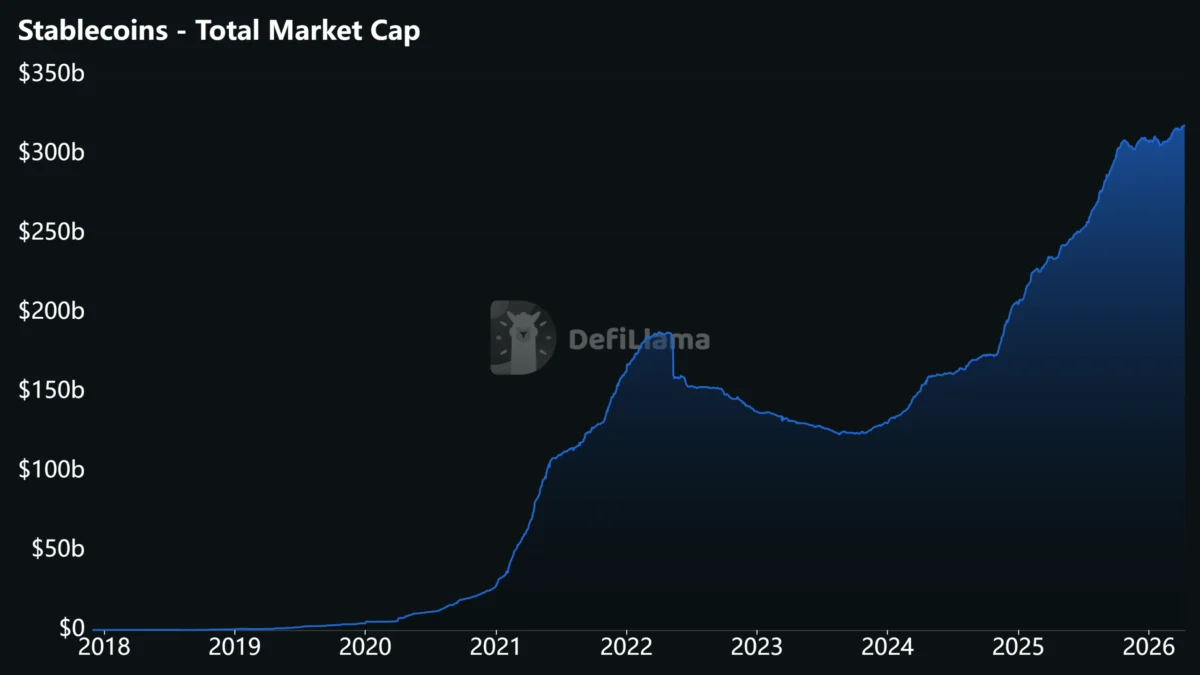
Supporting Data: The global stablecoin market capitalization, tracked by platforms like DefiLlama, has seen substantial growth, indicating increasing investor and institutional confidence. While specific European adoption figures are still emerging, the trend towards integration suggests a significant increase in transaction volumes and the development of new financial products and services leveraging stablecoins. The regulatory clarity provided by MiCA is expected to further fuel this growth by attracting more institutional capital and fostering innovation within the European digital asset space. The inclusion of stablecoins within existing banking infrastructure signals a maturing market where digital assets are increasingly viewed as a tool for enhancing traditional financial operations.
Pavel Durov’s Stark Warning: Push Notifications as a Privacy Backdoor
Amidst the financial and regulatory developments, a critical concern regarding digital privacy has been amplified by Pavel Durov, the co-founder of the popular messaging application Telegram. Durov has issued a strong caution concerning the potential for push notification logs on user devices to be exploited, creating a significant vulnerability that could breach user privacy and grant unauthorized access to message histories.
His warning was prompted by recent reports detailing how forensic analysts at the U.S. Federal Bureau of Investigation (FBI) were reportedly able to retrieve deleted messages from the privacy-focused messaging application Signal. This extraction was reportedly achieved by accessing the push notification system logs on an Apple iPhone. Durov shared these findings on his official Telegram channel, emphasizing the severity of the threat:
"Turning off notification previews won’t make you safe if you use those applications, because you never know whether the people you message have done the same," Durov stated. This highlights a crucial point: the security of communication does not solely depend on end-to-end encryption, but also on the metadata and ancillary information generated by applications and device operating systems.

The incident underscores a broader concern within the digital security community: the potential for metadata and system-level data to circumvent even robust encryption protocols. While end-to-end encryption ensures that the content of messages cannot be read by third parties during transit or by the service provider, the information contained within push notification logs, even if truncated or pre-viewed, could offer valuable insights into communication patterns, participants, and potentially even fragments of message content.
Implications: This revelation has significant implications for users of all messaging applications, regardless of their encryption standards. It suggests that the security posture of an application is only as strong as the weakest link in its data handling chain. For privacy-conscious individuals, this means scrutinizing not only the encryption methods employed by an app but also how it interacts with device operating systems and how data is logged and stored. The ability of law enforcement or other actors to access such logs, even if indirectly, represents a substantial challenge to the notion of private digital communication. Durov’s warning serves as a critical reminder that user privacy in the digital age requires a multi-layered approach, extending beyond encryption to encompass the entire data lifecycle and the vulnerabilities inherent in system-level functionalities.
In conclusion, the cryptocurrency market is currently characterized by a confluence of factors: the economic uncertainties impacting Bitcoin’s recovery, the tangible progress in stablecoin integration within Europe’s financial sector, and the emerging threat to digital privacy posed by push notification vulnerabilities. These developments collectively highlight the evolving and complex nature of the digital asset landscape, demanding continuous vigilance and adaptation from market participants, regulators, and technology providers alike.

