
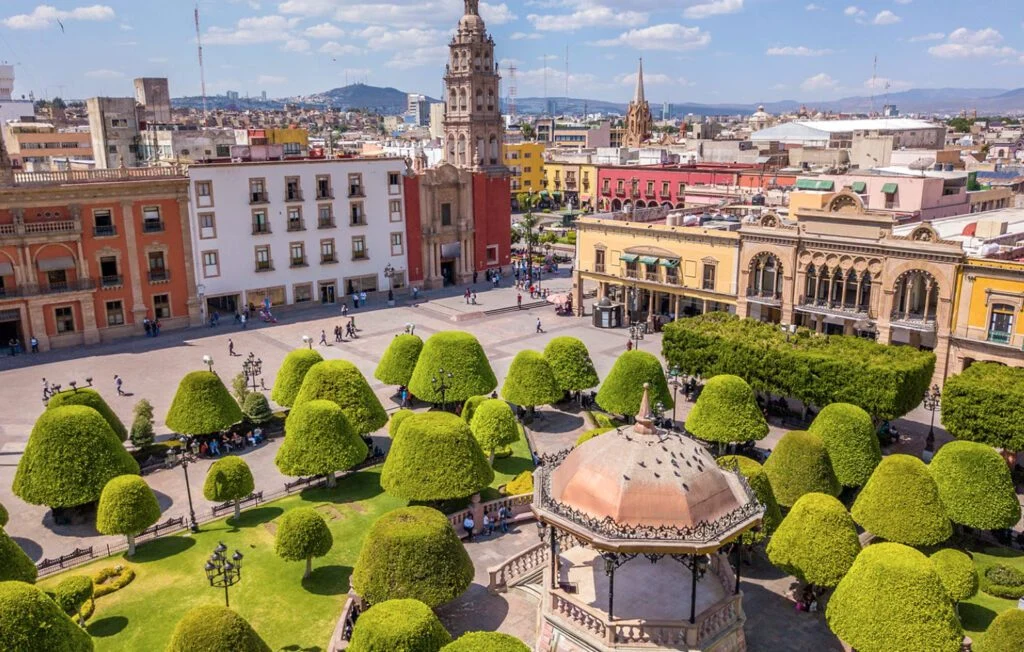
The allure of retirement often sparks dreams of new horizons, and for an increasing number of Americans, that horizon lies beyond the borders of the United States. Anne Nicolai, a writer and entrepreneur, exemplifies this growing trend. Having transitioned from a full-time corporate career and a home in Minnesota to a life as a freelance writer and karaoke host in San Miguel de Allende, Mexico, Nicolai has accumulated nearly two decades of experience as an expatriate. Her insights, shared with fellow writer Bev Bachel, offer a compelling roadmap for those contemplating a similar path, highlighting five key lessons learned through her transformative journey.
Embracing the Uncharted: The Power of Personal Growth
Nicolai’s first profound realization is the extent of her own capability, a sentiment often underestimated by individuals venturing into unfamiliar territory. "You are capable of more than you give yourself credit for," she asserts. Her initial years in Mexico were marked by linguistic challenges, currency conversion struggles, and a perceived lack of coordination. However, fourteen years later, Nicolai is not only bilingual but also a confident karaoke host and dancer, having fully integrated into the local economy by earning, spending, and thinking in pesos.
The process of establishing residency in Mexico, a labyrinthine bureaucratic undertaking, served as a significant catalyst for her personal growth. This involved navigating the complex application for a temporary residency visa, its subsequent renewals—one of which necessitated nine separate visits to the immigration bureau—and ultimately securing permanent residency. Beyond administrative hurdles, Nicolai has undertaken the arduous four-day drive from San Miguel to Minneapolis more than twenty times, often solo. These journeys, punctuated by experiences of getting lost and encountering demands for bribes, have demonstrably expanded her comfort zone, fostering a resilience and self-reliance she now cherishes. This personal evolution underscores the transformative power of confronting and overcoming challenges in a new environment, a sentiment echoed by many expatriates who report increased confidence and adaptability. Data from organizations like the U.S. Census Bureau indicates a consistent, albeit small, annual outflow of Americans residing abroad, with a significant portion being retirees seeking new life experiences.
Navigating the Unfamiliar: The Crucial Role of Community and Security
The transition to a foreign country necessitates a heightened awareness of safety and security protocols. Nicolai elaborates on this critical aspect, stating, "There is safety in numbers." In San Miguel de Allende, as in many communities with a significant expatriate presence, visible security measures are commonplace, such as decorative ironwork on windows and doors and protective barriers on garden walls. The ubiquitous advice to never leave personal electronics unattended in vehicles highlights the practical realities of crime prevention. Furthermore, exercising caution when walking alone after dark, particularly in less-trafficked areas, is a standard recommendation.
However, Nicolai emphasizes that the presence of a robust expatriate community significantly mitigates these concerns. In San Miguel, this translates to English-speaking emergency services and direct access to the American consular agency. The amicable relationship between locals and expatriates often fosters a greater degree of communication, with many locals possessing English language skills. This allows for diverse living arrangements, from mixed neighborhoods to gated communities or entirely Spanish-speaking enclaves, as Nicolai herself chooses. Her personal sense of security is deeply rooted in cultivating strong relationships with her neighbors, enabling her to seek assistance readily and without hesitation. This phenomenon of community-driven safety is a recurring theme in expat literature and forums, suggesting that social cohesion plays a vital role in the well-being of expatriates globally. A 2021 survey by InterNations, a global community for expatriates, found that safety and security were among the top considerations for individuals choosing their retirement destinations, with strong expat networks often cited as a key factor in alleviating concerns.
Bridging Distances: Technology as a Lifeline
In an era defined by rapid technological advancement, geographic distance no longer equates to isolation. Nicolai underscores the indispensable role of technology in maintaining connections, stating, "Technology will keep you connected." The widespread availability of high-speed internet and affordable mobile services across much of the globe ensures that expatriates can remain intimately involved in the lives of their loved ones. Applications such as WhatsApp, Duo, and Facetime facilitate free, real-time voice and video communication, enabling participation in important family milestones, from birthdays to holidays.
Beyond personal connections, technology offers practical solutions for managing affairs back home. Virtual healthcare appointments and online bill payment systems streamline logistical challenges. Furthermore, direct deposit of Social Security benefits into foreign bank accounts, often in either U.S. dollars or local currency, simplifies financial management. The digital landscape also serves as a vital resource for navigating the new community. Online forums and social media groups, like those on Facebook for San Miguel expats, provide a wealth of information, ranging from local events and classifieds to safety alerts and recommendations for goods and services. Navigation tools such as Google Maps and Waze, when paired with reliable internet access, empower individuals to explore their surroundings with confidence, easily locating shops, restaurants, and public transportation. The increasing reliance on digital platforms for expat support networks highlights a broader trend in global mobility, where technology acts as a critical enabler of successful integration and sustained connection. Reports from telecommunications companies consistently show increased data usage and mobile penetration in emerging markets, reflecting the growing digital connectivity that supports this lifestyle.
Cultural Immersion: A Catalyst for Personal Transformation
The decision to retire abroad is often driven by a desire for a richer, more vibrant experience of life. Nicolai articulates this profound shift, noting, "Immersion in another culture will change you for the better." Her initial motivations for moving to Mexico included a yearning for more sunshine, vibrant colors, cultural diversity, and the intellectual stimulation of learning a new language. Having previously lived a "Type A" lifestyle characterized by consumerism and a demanding corporate career, her experience in Mexico has fostered a profound appreciation for patience, humility, and simplicity.
Her spending habits have significantly shifted; the need to acquire material possessions has diminished, with expenses largely confined to food and music for her karaoke endeavors. The majority of her wardrobe, packed at the time of her move, remains functional, largely due to an increased emphasis on walking, dancing, and healthier eating habits inherent to her Mexican lifestyle. This transformation is not unique to her experience; friends living as expatriates in various parts of the world report similar shifts towards a more minimalist and mindful existence. This cultural immersion often leads to a re-evaluation of priorities, a de-emphasis on material accumulation, and a greater appreciation for experiences and relationships. The concept of "voluntary simplicity" is frequently discussed within expat communities, suggesting that the act of stepping outside one’s familiar cultural context can unlock new perspectives on happiness and fulfillment. Studies on cross-cultural psychology often highlight the benefits of acculturation, indicating that individuals who actively engage with and adapt to a new culture tend to experience greater psychological well-being.
The Unwavering Option: The Freedom to Reassess and Return
A significant, often overlooked, aspect of expatriate life is the inherent flexibility and the reassuring knowledge that a return to one’s home country is always a viable option. Nicolai emphasizes this point, stating, "You can always go home." She observes that many long-term expatriate retirees, some in their eighties and nineties, have resided in Mexico for over three decades. Concurrently, she has witnessed numerous individuals who, after selling their possessions and relocating, have chosen to return to their home countries due to health concerns or a desire to be closer to family. These movements are not confined to Mexico; some individuals have relocated from Mexico to destinations as varied as Thailand, New Zealand, or Portugal.
This underscores a fundamental principle: there is no single "correct" way to retire, no perfect timing, and no universally ideal location. The expat journey is characterized by trial and error, a process of exploration rather than a definitive success or failure. For Nicolai, Mexico has become her home, and while she anticipates spending her final years there, the possibility of returning to the United States is not entirely dismissed. The motivations for expatriation are diverse and deeply personal, ranging from the pursuit of new adventures and the desire to escape harsh climates to the need for personal reinvention, healing from past traumas, or the pursuit of creative passions. The consistent visits from friends and family, and the absence of loneliness, are testament to the enduring bonds that transcend geographical separation. Ultimately, the freedom to choose one’s path, to relocate if circumstances or desires shift, provides a crucial sense of agency and control over one’s retirement years. This adaptability is a hallmark of successful expatriate experiences, allowing individuals to navigate life’s complexities with confidence and the assurance that their choices are not irreversible. The ease of international travel and the evolving nature of global migration patterns further support this notion of fluidity in retirement planning.
The term "expat" itself, short for expatriate, signifies an individual residing outside their native country. This status does not necessarily imply a relinquishment of citizenship or a negative sentiment towards their homeland; rather, it often reflects intellectual curiosity and an adventurous spirit. Bev Bachel, the author of the original piece, is herself a freelance writer with aspirations of becoming an expatriate in the future, indicating the contagious nature of this lifestyle choice and the ongoing exploration of possibilities within the realm of retirement living. The existence of resources like The Retirement Wisdom Podcast further underscores the growing interest and dialogue surrounding this transformative approach to later life.

