
Brazil’s new Finance Minister, Dario Durigan, has strategically placed the nation’s burgeoning cryptocurrency tax policy on an extended hiatus, postponing any public consultations or potential implementations until after the presidential election scheduled for October 2026. This decision, aimed at preempting potentially divisive policy debates during a sensitive election year, signals a cautious approach to regulating a rapidly evolving digital asset landscape. The move suggests that any concrete proposals and subsequent negotiations surrounding new crypto tax frameworks might not materialize until 2027, leaving the current regulatory environment largely unchanged in the interim.
The postponement of public consultations, originally slated for later this year, was confirmed by Reuters, citing sources familiar with the matter. This development is particularly noteworthy given Brazil’s significant position in the global cryptocurrency adoption rankings. According to data from Chainalysis, Brazil ranks fifth worldwide in terms of crypto adoption, a testament to the growing integration of digital assets within its economy. With a population exceeding 213 million people, as per Worldometer data, the South American nation represents a substantial market for cryptocurrency services and investments. The decision to delay tax policy deliberations, therefore, could have a prolonged impact on both individual investors and businesses operating within the Brazilian crypto ecosystem.
The rationale behind this strategic pause appears to be rooted in political pragmatism. Introducing potentially contentious tax reforms during an election year can often become a focal point for opposition and public scrutiny, potentially derailing campaigns and creating uncertainty. By deferring these discussions, Minister Durigan likely aims to foster a more stable political climate and allow for a more thorough and less politically charged examination of crypto taxation once the electoral dust has settled. This approach, while potentially frustrating for those seeking regulatory clarity, reflects a common tactic in political governance to navigate complex and sensitive issues.

Meanwhile, in a stark contrast to the regulatory pause in Brazil, a significant early player in the Ethereum ecosystem has begun a notable re-accumulation of Ether. Identified by blockchain analytics firm Arkham Intelligence as "thomasg.eth," this prominent wallet, which once held an estimated $537 million in crypto assets at the peak of the 2021 market boom, has been actively rebuilding its Ethereum (ETH) holdings. Over the past week, this whale has amassed approximately $19.5 million worth of ETH across various forms, including spot Ether, wrapped Ether (WETH), and Ether deposited in Aave lending protocols. A substantial $3 million purchase was reportedly made on March 20th alone, signaling a renewed conviction in the cryptocurrency.
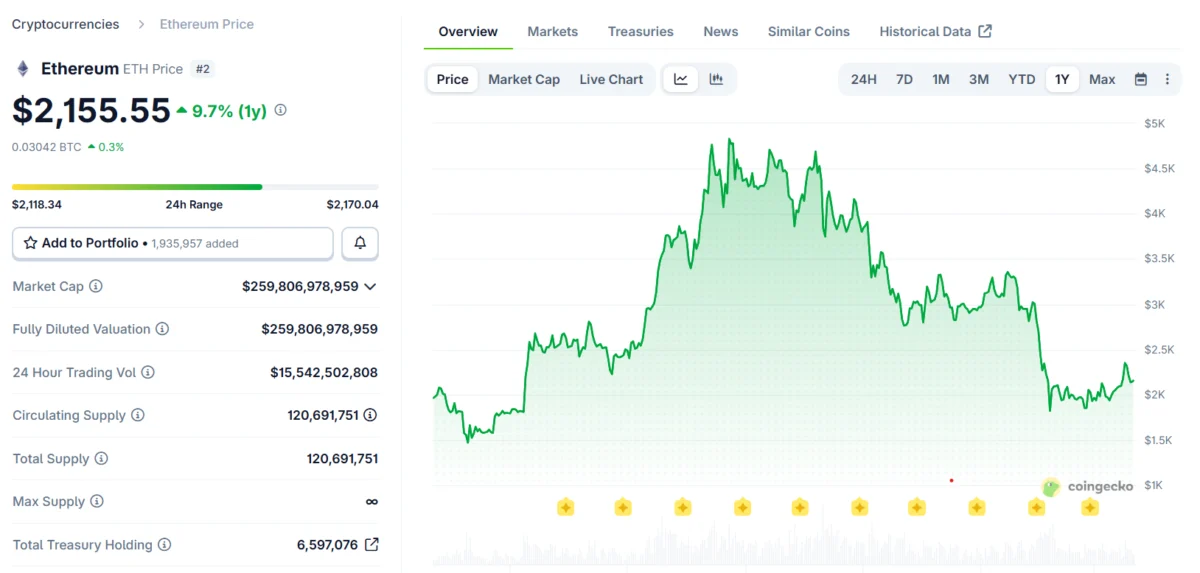
This strategic accumulation by thomasg.eth comes at a time when Ether is trading significantly below its all-time high. According to CoinGecko, ETH is currently approximately 56% below its peak price of $4,946, which was reached on August 24, 2025. This price correction presents a potentially attractive entry point for long-term investors, and thomasg.eth’s actions suggest a belief that current market conditions offer a favorable opportunity for accumulation. The whale’s prior substantial holdings indicate a deep understanding of the Ethereum market and a history of successful investment strategies, making their current re-entry a notable development for market observers.
The timing of these significant ETH purchases by thomasg.eth is also occurring amidst a period of net outflows for U.S. spot Ether exchange-traded funds (ETFs). Data compiled by Farside Investors reveals that these ETFs experienced consistent outflows for three consecutive trading days, with $55.7 million withdrawn on March 18, $136.4 million on March 19, and $42 million on March 20. While these outflows might suggest a waning institutional interest in the short term, the actions of a major accumulator like thomasg.eth could indicate a different perspective from significant individual investors. It is possible that the large-scale purchases by such whales are absorbing some of the selling pressure, or that they perceive these outflows as temporary market fluctuations rather than a fundamental shift in long-term value.
In parallel developments within the institutional investment space, crypto asset manager Grayscale has taken a significant step towards expanding its product offerings by filing for a spot Hyperliquid exchange-traded fund (ETF). This move places Grayscale in direct competition with other prominent players like Bitwise and 21Shares, who are also seeking to launch products tied to the Hyperliquid perpetual futures protocol and its underlying blockchain. The proposed Grayscale HYPE ETF, if approved by the Securities and Exchange Commission (SEC), would aim to track the price movements of the Hyperliquid (HYPE) token and would trade under the ticker GHYP on the Nasdaq.

Grayscale’s S-1 registration statement, filed with the SEC on Friday, outlines the proposed structure of the ETF. Notably, the filing lists Coinbase as the custodian for the assets held within the ETF, a partnership that leverages a well-established and regulated cryptocurrency exchange. However, the filing did not disclose a management fee for the proposed Hyperliquid product, a detail that will be closely watched by potential investors. The absence of this information at this early stage is not uncommon in S-1 filings, with further details often emerging as the approval process progresses.
The decision by Grayscale to pursue a Hyperliquid ETF underscores the growing interest in innovative decentralized finance (DeFi) protocols and the increasing demand for regulated investment vehicles that provide exposure to these emerging technologies. Hyperliquid, a perpetual futures protocol and blockchain, has been gaining traction due to its ability to offer 24/7 trading for tokenized real-world assets, such as oil and gold. This continuous trading capability is particularly valuable for TradFi institutions that operate in traditional markets with fixed trading hours. As crypto platforms increasingly integrate Hyperliquid and its utility expands, the demand for investment products that offer exposure to its ecosystem is likely to grow.
Grayscale has also indicated that it may explore the possibility of incorporating staking rewards into its Hyperliquid ETF at a later date, provided that certain regulatory and operational conditions are met. This potential feature could offer an additional layer of yield generation for investors, further enhancing the attractiveness of the ETF. The integration of staking rewards into regulated financial products is a complex endeavor, involving careful consideration of custody, security, and regulatory compliance. Grayscale’s forward-looking approach suggests a commitment to developing comprehensive and competitive investment solutions within the digital asset space.
The broader implications of these three distinct developments – Brazil’s tax policy deferral, the Ethereum whale’s re-accumulation, and Grayscale’s ETF filing – paint a multifaceted picture of the current cryptocurrency landscape. Brazil’s regulatory caution reflects a global trend of governments grappling with how to effectively regulate digital assets without stifling innovation. The strategic pause allows for a more considered approach, potentially leading to more robust and sustainable regulatory frameworks in the long run, especially in a country with high crypto adoption.

The significant ETH purchases by thomasg.eth highlight the enduring conviction of early and sophisticated investors in the long-term potential of Ethereum, even amidst market volatility and outflows from institutional products. It suggests that substantial capital remains poised to enter the market at perceived attractive price levels, potentially signaling a bottoming process or a resurgence of bullish sentiment among key market participants. This activity from a whale of this magnitude can also influence market sentiment and encourage broader retail participation.
Finally, Grayscale’s proactive pursuit of a Hyperliquid ETF demonstrates the ongoing maturation of the crypto investment ecosystem. The increasing number of ETF filings for various digital assets and protocols indicates a growing institutional appetite for regulated exposure to the crypto market. The success of these filings could pave the way for further innovation in investment products, making digital assets more accessible and integrated into traditional financial portfolios. The focus on Hyperliquid specifically points to the increasing recognition of specialized DeFi protocols as investable assets, moving beyond just major cryptocurrencies like Bitcoin and Ether.
Collectively, these events underscore the dynamic and evolving nature of the cryptocurrency industry. Regulatory bodies worldwide are still finding their footing, while market participants are demonstrating varying degrees of confidence and strategic positioning. The interplay between regulatory developments, the actions of major investors, and the innovation in financial products will continue to shape the future trajectory of digital assets. As Brazil navigates its electoral cycle and considers its approach to crypto taxation, and as institutions like Grayscale continue to push the boundaries of regulated crypto investment, the global cryptocurrency market remains a focal point of both opportunity and ongoing adaptation. The coming years will likely witness further shifts in regulatory approaches, evolving investor strategies, and the continued integration of digital assets into the global financial system.

