

The global financial landscape has experienced a significant uplift in recent years, particularly evident in the performance of major stock indices. The S&P 500 index, a benchmark for many retirement portfolios held in diversified index funds, has recorded a remarkable ascent, increasing by approximately 57 percent over the past two years and more than doubling its value over the last five years. This sustained bullish trend has profound implications for investors, with many seeing their net worth grow substantially, potentially accelerating retirement timelines for some, while prompting others to re-evaluate their financial strategies amidst what appears to be an era of elevated asset prices.
This rapid appreciation has naturally led to widespread discussion regarding the sustainability of current market valuations. A common query among investors, as recently highlighted by a reader’s email, is whether the market’s current trajectory signifies a "huge bubble" fueled by the burgeoning enthusiasm surrounding Artificial Intelligence (AI). Concerns persist about the potential for a significant market correction in the future and its subsequent impact on retirement savings. To address these pertinent questions, a deeper examination of the contemporary financial world and the fundamental principles underpinning stock valuation is essential.

Understanding Stock Valuation: Beyond the Price Tag
At its core, a stock represents a fractional ownership in a business, entitling the owner to a share of the company’s future earnings. This concept can be effectively analogized to owning a rental property. When an individual owns a rental house, they are entitled to collect rent, and after covering operational expenses, the remainder constitutes profit. The valuation of this rental property, when sold to another investor, is fundamentally tied to this future stream of income. For instance, if a house generates $24,000 annually in net profit and sells for $240,000, the buyer acquires it at a price-to-earnings (P/E) ratio of 10 (240k / 24k). However, if the same house sells for $480,000, the P/E ratio doubles to 20, signifying a less favorable return on investment for the new owner unless the future income stream is projected to increase substantially.
Applying this principle to the stock market, the P/E ratio serves as a critical indicator. It compares a company’s share price to its per-share earnings, providing insight into how much investors are willing to pay for each dollar of earnings. In 2019, an investment of $100,000 in the S&P 500, with dividends reinvested, would now be valued at an estimated $256,960—a 157% gain. However, during the same period, the share of company earnings from that $100,000 investment only increased from $5,290 to $7,540, a comparatively modest 42% gain, according to data from analysis sites like multpl.com. This disparity indicates that the overall P/E ratio for the S&P 500 has risen from approximately 20 in 2019 to around 30 in 2025.

This divergence implies that while stock prices have surged, the underlying corporate earnings have not kept pace proportionally. Similar to the rental property scenario, where house prices outstrip rent increases, a higher P/E ratio for stocks suggests that future returns, as a percentage of portfolio value, may be lower than in periods of more modest valuations. This does not inherently render stock ownership unprofitable but rather recalibrates expectations for future income yields based on current entry prices.
The Influence of Expected Earnings and the "Magnificent Seven"
The willingness of investors to pay a higher price for an asset, despite current earnings, often hinges on the expectation of future growth. If a rental property is overpriced based on current rent but is situated near an impending major economic development, investors might pay a premium anticipating a rapid rise in future rents. This principle applies directly to individual stocks; positive news or promising future prospects often lead to an increase in share price. A notable example is Peloton during the early stages of the COVID-19 pandemic, where a surge in demand for home exercise equipment led to inflated stock prices, only to recede as the trend normalized.

However, when the entire market experiences a significant uplift, it raises questions about the broader economic outlook. In the context of the current stock market euphoria, it is crucial to recognize that this growth is not uniformly distributed across the economy. A detailed analysis of the S&P 500 reveals that a substantial portion—approximately three-quarters—of the recent market growth is attributable to just seven mega-cap technology companies, collectively dubbed the "Magnificent Seven": Apple, Nvidia, Microsoft, Amazon, Google (Alphabet), Meta Platforms (Facebook), and sometimes Tesla.
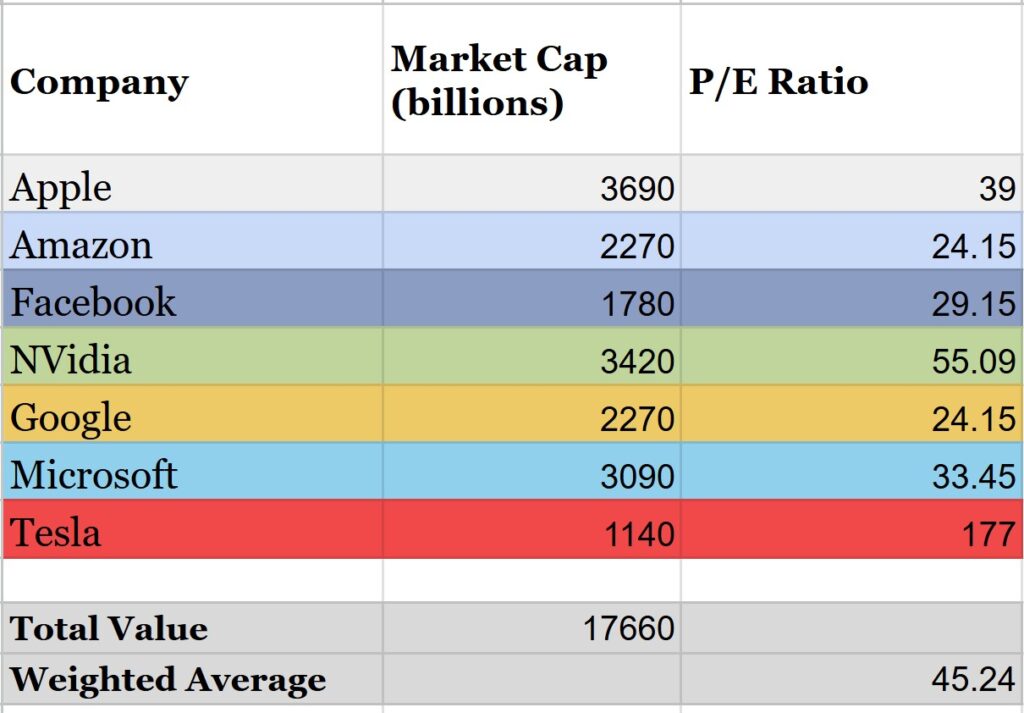
These companies, characterized by their high-flying performance and substantial profitability, collectively command over 25% of the S&P 500’s total market capitalization, amounting to an astonishing $17.66 trillion. Their individual P/E ratios are significantly higher than the broader market, with a weighted average of approximately 45. In stark contrast, if these seven companies are excluded, the P/E ratio for the remaining 493 companies in the S&P 500 drops to a more "reasonable" 20, though still above historical averages. This market concentration suggests that while investors anticipate a healthy overall U.S. economy, they project much faster and more substantial growth from these dominant tech entities.
Artificial Intelligence: The Unprecedented Catalyst
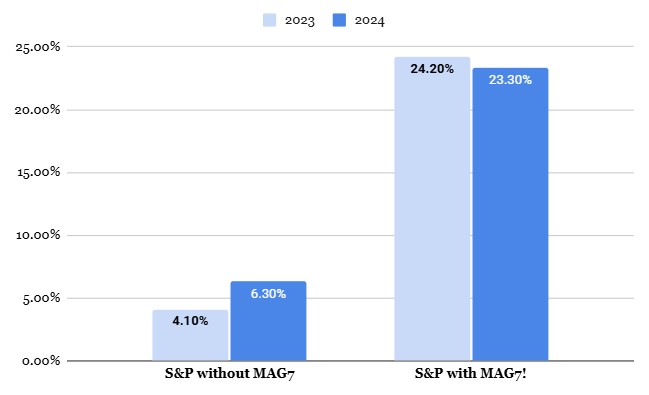
The primary driver behind the heightened valuations of the Magnificent Seven, and by extension, a significant portion of the broader market, is the rapid advancement and transformative potential of Artificial Intelligence. Recent breakthroughs in AI have astonished the business world, demonstrating human-like reasoning capabilities across an expanding array of applications. This technological revolution has ignited a fervent belief across industries that a new era of productivity and profitability is on the horizon.
Six of the Magnificent Seven companies are investing hundreds of billions of dollars into developing AI infrastructure, constructing massive data centers filled with advanced supercomputers. Nvidia, the seventh company, stands as a direct beneficiary of this spending spree, manufacturing the high-demand chips and hardware essential for AI development, enabling them to command premium prices for their products.
Beyond this foundational infrastructure, the anticipated impact of AI permeates nearly every sector. AI’s capabilities now extend to complex tasks such as analyzing vast legal documents, debugging intricate code, identifying medical conditions from images, designing novel medications, and even animating humanoid robots for industrial applications. The overarching vision is an imminent future characterized by an effectively infinite, highly intelligent, and free workforce powered by AI, dismantling historical constraints on human intelligence and labor. While the exact timeline for these transformative changes remains uncertain, the market’s current valuations reflect a strong belief in their eventual realization.
However, this optimism is tempered by inherent uncertainties. The critical question remains whether the projected profits of these companies will materialize at the forecasted levels, or if unforeseen challenges such as cost overruns, intense competition, regulatory hurdles, or even the unpredictable evolution of increasingly autonomous AI systems could derail these expectations. Furthermore, the societal implications of widespread AI adoption, particularly the potential for mass unemployment and subsequent social upheaval, present significant challenges that could profoundly alter economic structures and wealth distribution.
Navigating Uncertainty: Lessons from History and Expert Insights
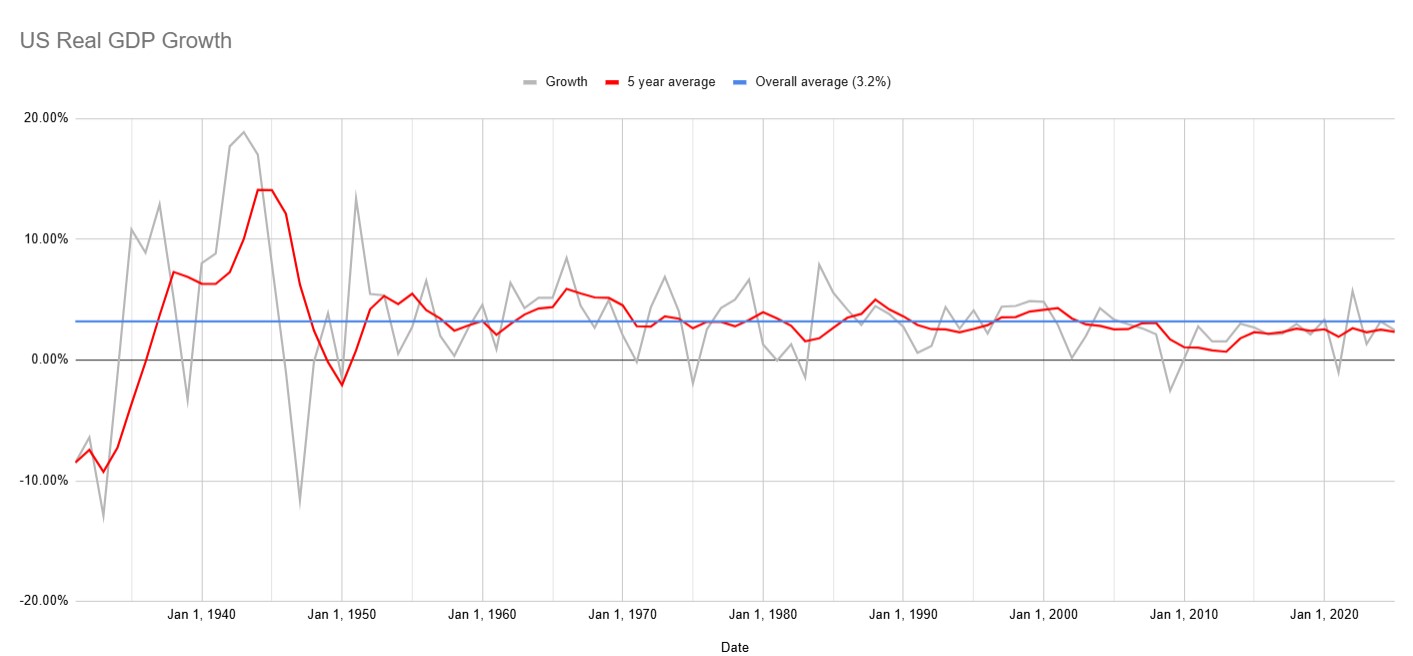
The future, by its nature, remains unknown. However, historical economic patterns can offer valuable guidance. Over decades, the average real Gross Domestic Product (GDP) growth for the U.S. economy has remarkably stabilized at approximately 3% after inflation, even amidst profound technological shifts and global events. Interestingly, recent decades have exhibited growth rates slightly below this long-term average, making the current elevated stock market valuations appear even more pronounced.

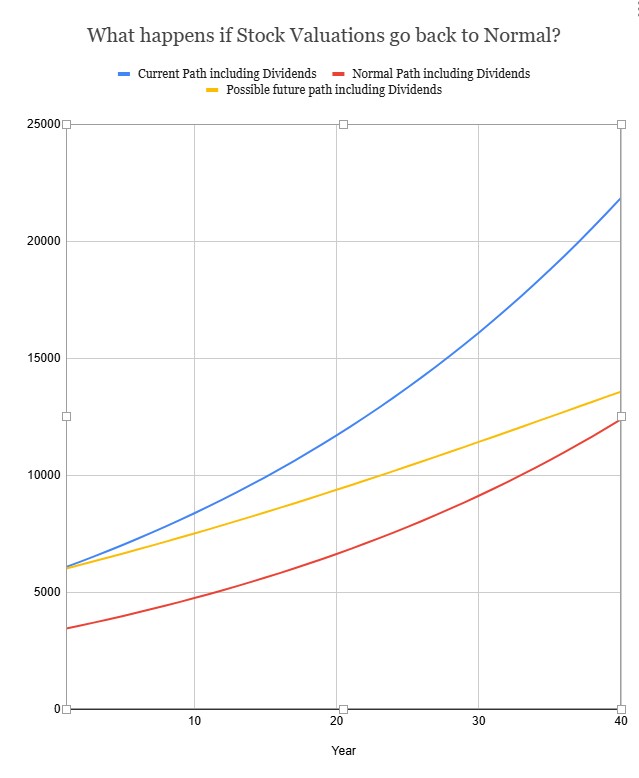
Given this context, what actionable strategies should investors consider? The prevailing wisdom, often reiterated in long-term investing principles, advises against attempting to time the market. Selling off assets in anticipation of a crash and hoping to re-enter at lower prices is a notoriously difficult and often losing game. Over the long term, even if stock valuations revert to more typical levels, economic growth and corporate earnings are expected to continue their upward trajectory, albeit potentially at a slower pace relative to current asset prices. This implies that while the "blue path" of continuous rapid growth would be ideal, a more moderated "yellow path" of steady, albeit slower, appreciation remains a plausible and acceptable outcome.
Diversification and Alternative Investment Perspectives
While the U.S. stock market remains a robust investment avenue, exploring other options provides valuable perspective. Vanguard, a cornerstone of the index fund industry, annually issues 10-year annualized return forecasts. Their most recent projections suggest that international stocks and even bonds may outperform U.S. stocks in the coming decade. This outlook is partly supported by the significantly lower P/E ratio of international stocks (e.g., Vanguard’s VXUS fund stands at 15.9), indicating they are trading at a substantial discount compared to their U.S. counterparts. However, it is noteworthy that Vanguard has made similar predictions in previous years that have yet to fully materialize, largely due to the concentrated AI boom predominantly occurring within the U.S. tech sector.
Diversified strategies, such as those offered by robo-advisors like Betterment, aim to mitigate risk and potentially enhance returns by allocating investments across a broader range of asset classes beyond just U.S. stocks, including international equities and bonds. While historical performance over the past decade has seen U.S.-only portfolios outperform due to the specific market conditions, proponents of diversification argue that such strategies are better positioned to capture returns if market dynamics eventually rebalance, as Vanguard’s analysis suggests. The weighted average P/E ratio for a typical Betterment core portfolio, incorporating these diverse holdings, hovers around 22, representing a more balanced valuation than the S&P 500’s current P/E.
Even seasoned investors like Warren Buffett, the Oracle of Omaha, signal caution. Berkshire Hathaway’s substantial cash reserves, amounting to $334 billion, suggest that attractive investment opportunities are scarce in the current market environment. The company’s reluctance even to repurchase its own shares, which it considers slightly overvalued at a P/E ratio averaging around 21, underscores a broader sentiment of elevated valuations.
For individuals considering debt management, particularly with rising interest rates, the decision to pay off a mortgage versus investing in index funds becomes more nuanced. Historically, investing surplus cash into index funds while maintaining a mortgage often yielded better returns. However, with mortgage rates at 7% or higher, paying off a mortgage can be viewed as securing a guaranteed 7% return, a highly competitive yield in the current climate. Beyond the purely financial calculation, the psychological benefit of being mortgage-free often holds significant personal value for many.
The Enduring Philosophy of Long-Term Investing
Ultimately, the core tenets of prudent long-term investing remain unchanged. Despite market fluctuations, speculative surges, and potential corrections, the most effective strategy involves consistent investment, maintaining a diversified portfolio, and resisting the urge to react to daily news headlines. While staying informed through reputable sources like The Economist is valuable, excessive focus on short-term market noise can lead to irrational decisions.
Instead, redirecting energy away from financial anxieties and towards tangible, real-world pursuits—such as physical activity and engaging with the outdoors—offers guaranteed "returns" in terms of well-being and quality of life, arguably surpassing any market-beating returns. The current market conditions, shaped by technological innovation and shifting economic landscapes, are a reminder that while financial markets are complex, the fundamental principles of patience, discipline, and a focus on long-term goals continue to be the most reliable path to financial security.

