
Global financial markets experienced a significant downturn on Thursday, March 20, 2026, as the escalating conflict between the United States and Iran sent shockwaves through the energy sector, triggering a sharp sell-off across a broad spectrum of metals. Investors, grappling with the profound implications of soaring oil prices on the fragile global economy, divested from both precious and industrial metals, signaling deepening anxieties about inflationary pressures and the increasing likelihood of a recession. The unprecedented volatility underscores the interconnectedness of geopolitical events and commodity markets, revealing how swiftly investor sentiment can pivot in the face of significant international strife.
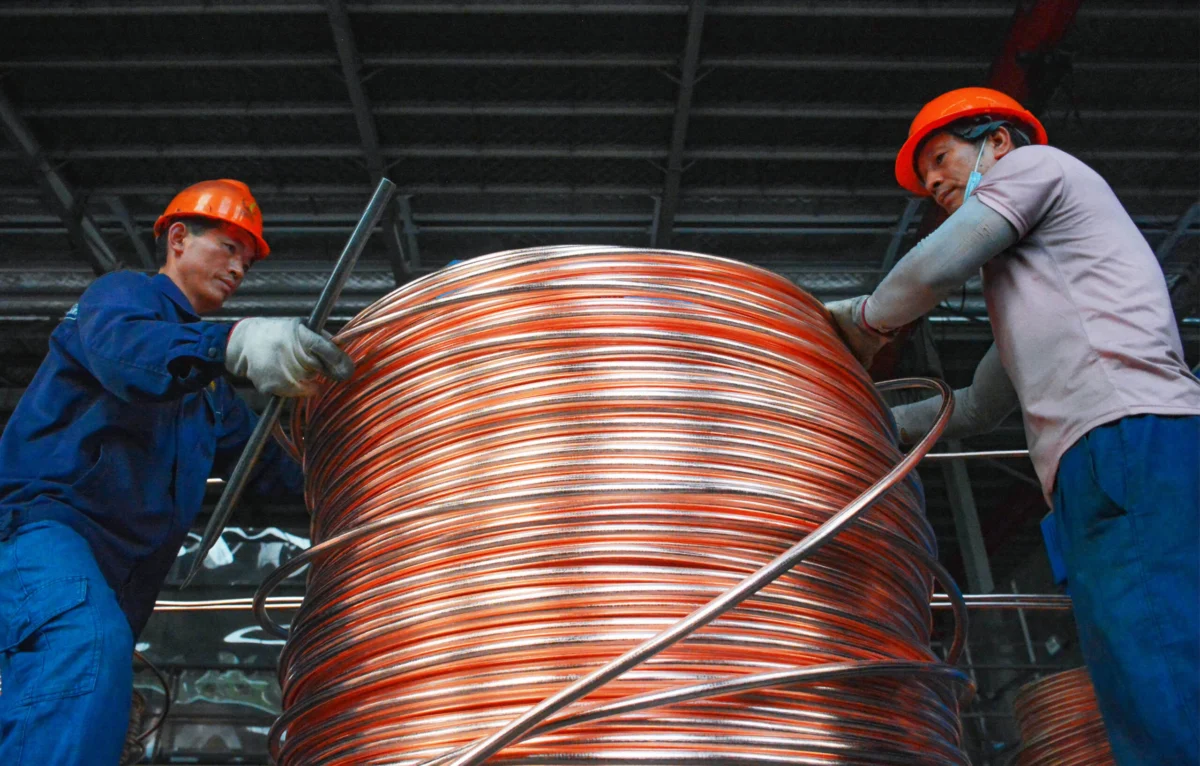
The day’s trading saw gold, traditionally revered as a safe-haven asset during times of geopolitical instability, plummet by nearly 6%, marking one of its steepest single-day declines in recent memory. Its lustrous counterpart, silver, fared even worse, shedding a staggering 8% of its value. This widespread market retreat was not confined to precious metals; industrial stalwarts critical to global manufacturing and infrastructure also faced immense pressure. Copper, often dubbed "Dr. Copper" for its predictive economic prowess, declined by 2%, while palladium, a vital component in catalytic converters and electronics, saw a significant drop of 5.5%. This broad-based capitulation across the metals complex reflects a profound shift in investor priorities, moving away from traditional hedges and towards a more defensive posture against an uncertain economic future.
The Geopolitical Catalyst: U.S.-Iran Conflict and Energy Shock
The immediate trigger for this market upheaval is the protracted U.S.-Iran war, which has dramatically disrupted global oil supplies and sent crude prices spiraling upwards. The conflict, which began earlier this year, has escalated significantly in recent weeks, particularly following a series of strategic strikes and counter-strikes targeting critical oil infrastructure and shipping lanes in the Persian Gulf. Reports on Wednesday, March 19, confirmed a devastating strike on a major Qatari LNG facility, a key energy producer, further exacerbating supply fears and sending benchmark crude prices, Brent and WTI, skyrocketing by over 15% in a single trading session. Brent crude futures, the international benchmark, briefly touched $115 per barrel, a level not seen in over a decade, while U.S. West Texas Intermediate (WTI) futures surged to nearly $110. The strategic importance of the Strait of Hormuz, a narrow waterway through which a significant portion of the world’s seaborne oil passes, has amplified these concerns, with any threat to its transit capabilities immediately priced into crude oil contracts.
The economic ramifications of such a rapid and substantial increase in energy costs are far-reaching. Higher oil prices translate directly into increased operational costs for businesses across virtually all sectors – from manufacturing and transportation to agriculture and retail. Consumers, too, bear the brunt through elevated fuel prices and higher costs for goods and services. This pervasive inflationary pressure threatens to erode purchasing power, curb consumer spending, and ultimately stifle economic growth.
Inflationary Pressures and Monetary Policy Dilemmas
The specter of resurgent inflation is perhaps the most immediate and pressing concern for central banks worldwide. For months leading up to the conflict, global economies had been grappling with persistent inflationary pressures, largely stemming from post-pandemic supply chain disruptions and robust demand. Central banks, led by the U.S. Federal Reserve, had embarked on aggressive interest rate hiking cycles to tame these price increases. However, just as signs of cooling inflation began to emerge, the U.S.-Iran war ignited a fresh inflationary impulse through the energy channel, fundamentally altering the economic outlook.
Investors now worry that this renewed inflationary surge will compel central banks to maintain, or even further raise, interest rates. Federal Reserve Chair Jay Powell, in a recent press conference on Wednesday, March 18, reiterated the central bank’s commitment to price stability but acknowledged the "complex and evolving" nature of the current economic environment. While he expressed hope that the economy could navigate the energy shock without severe disruption, the market interpreted his comments as a cautious signal that the previously anticipated rate cuts for later in 2026 might be off the table, and further tightening could even be considered if inflation proves intractable.
Higher interest rates, particularly "real" interest rates (nominal rates adjusted for inflation), fundamentally diminish the attractiveness of non-yielding assets like gold. When investors can earn higher returns on safer, interest-bearing assets such as Treasury bonds, the opportunity cost of holding gold increases. This dynamic helps explain gold’s unusual decline despite heightened geopolitical risk. The U.S. 10-year Treasury yield, a key benchmark for borrowing costs, reflected this sentiment, briefly surging past 4.300% on Thursday, further solidifying the appeal of fixed-income instruments over bullion. Peter Boockvar, Chief Investment Officer at One Point BFG Wealth Partners, succinctly articulated this dilemma: "The risks to inflation taking away the Fed rate cuts that were priced in, and seeing interest rate increases across the world, and real rates rising, that has been the drag on gold."
Furthermore, a stronger U.S. dollar, typically a byproduct of higher interest rates and a flight to safety during global turmoil, also weighs heavily on gold prices. As the dollar strengthens, gold, which is priced in the U.S. currency, becomes more expensive for holders of other currencies, dampening demand. The Dollar Index (DXY), which measures the dollar against a basket of major currencies, saw a notable appreciation following the escalation of the conflict, adding further downward pressure on gold.
Industrial Metals: A Barometer of Economic Health Signals Recession Risk
While gold’s fall presented a paradox, the decline in industrial metals like copper and palladium offered a more straightforward, albeit grim, economic signal. These metals are intimately tied to global industrial activity and construction, serving as crucial inputs in everything from electronic devices and electrical wiring to automotive components and infrastructure projects. Consequently, their price movements are often considered a reliable barometer of global economic health. A sustained decline in copper prices, in particular, is widely interpreted by Wall Street as a harbinger of slowing economic growth or even an impending recession.
Initially, at the onset of the U.S.-Iran conflict, industrial metals had shown relative stability, possibly due to expectations of increased military spending or limited direct impact on industrial demand. However, this equilibrium has clearly shifted. The sustained surge in oil prices has now triggered widespread "growth concerns" among investors, who are beginning to price in a significant deceleration in global economic activity. The fear is that the "demand destruction" phase of an energy shock is now firmly in play. This phenomenon occurs when energy prices rise so high that they effectively choke off demand by making production and consumption prohibitively expensive, leading to reduced industrial output and consumer spending.
Boockvar highlighted this growing concern, stating, "On the industrial metal side… people are now really worried about the recession risks." This sentiment reflects a growing consensus that the longer oil prices remain elevated, the greater the probability that businesses will cut back on investment, consumers will tighten their belts, and overall economic activity will contract. Analysts at JPMorgan Chase, in a client note released on Wednesday, revised down their global GDP growth forecasts for 2026, citing the "significant downside risks" posed by the prolonged conflict and energy price shock. The International Monetary Fund (IMF) is also reportedly reviewing its global economic outlook, with potential revisions expected in its upcoming quarterly report.
The Specter of Stagflation: A Divisive Debate
The combination of slowing growth and persistent high inflation has reignited discussions about "stagflation," a dreaded economic scenario characterized by stagnant economic growth, high unemployment, and rising prices. This term evokes memories of the 1970s, when oil price shocks, coupled with loose monetary policy, led to a decade of economic malaise.
However, the likelihood of a full-blown stagflationary environment remains a point of contention among economists and policymakers. Ed Yardeni, President of Yardeni Research, expressed skepticism in a Tuesday note to clients, arguing that "oil shocks are less likely to trigger the kind of sustained stagflation seen in the past, particularly during the 1970s." He pointed to the 2022 Russian invasion of Ukraine, which, despite causing a significant oil shock and inflationary spike, did not ultimately lead to a global recession. Yardeni posits that modern economies are more resilient, and central banks are better equipped to manage inflationary pressures without necessarily inducing a deep downturn.
Fed Chair Jay Powell echoed this cautious sentiment, stating in his Wednesday press conference, "I would reserve the term stagflation for a much more serious set of circumstances." This suggests that while current conditions are challenging, policymakers do not yet believe the economy is on the precipice of a 1970s-style downturn.
Despite these assurances, many investors are already making "stagflation trades," shifting portfolios to assets that historically perform well in such an environment. This typically involves reducing exposure to growth-sensitive equities and increasing allocations to commodities, real estate, and inflation-protected securities.
Expert Perspectives and Future Outlook
The path forward for metal prices, and indeed the global economy, remains highly dependent on the trajectory of the U.S.-Iran conflict and its impact on energy markets. Peter Boockvar believes that a stabilization, and eventual recovery, in industrial metal prices is contingent upon a resolution to the war. "The war needs to end for industrial metals’ prices to stabilize," he asserted. He highlighted the devastating impact of prolonged uncertainty on supply chains, manufacturing investment, and consumer confidence.
For gold, however, Boockvar sees a potential recovery, albeit through a different lens. He suggests that once the immediate shock of rising interest rates and a strong dollar subsides, investor focus will likely return to the underlying structural issues of rising national debts and deficits across many developed economies. Gold has historically served as a potent "debasement trade" – an asset that holds its value when governments inflate away debt through monetary expansion. Boockvar further noted that the immense military spending required to sustain the U.S.-Iran conflict could significantly worsen these national deficits, potentially paving the way for gold to regain its luster as a hedge against currency debasement.
Christian Mueller-Glissmann, Head of Asset Allocation Research at Goldman Sachs, concurred with this long-term outlook for gold, particularly if a stagflationary scenario were to materialize. In a Thursday note, he wrote, "In case of a continued stagflationary shock, especially if real yields are declining, we would expect more support for Gold prices due to investor demand for real assets and FX diversification." This suggests that if inflation persists and central banks are unable to raise rates sufficiently to offset it, leading to declining real yields, gold’s appeal as a store of value and a diversifier against currency fluctuations would significantly increase.
Broader Economic and Sectoral Implications
The current crisis extends its shadow far beyond commodity markets, touching various sectors of the global economy. Manufacturing industries, already facing headwinds from geopolitical tensions and trade disputes, are now confronting significantly higher input costs, particularly for energy and raw materials. This could lead to reduced production, delayed expansion plans, and potentially job losses. The automotive sector, heavily reliant on palladium and other industrial metals, faces increased production costs, which may be passed on to consumers or erode profit margins.
Consumer spending, the bedrock of many economies, is also at risk. Higher fuel prices directly reduce discretionary income, while the broader inflationary environment diminishes purchasing power. Businesses may struggle to absorb rising costs, leading to price increases for everyday goods, further squeezing household budgets.
Globally, the crisis could exacerbate existing economic inequalities. Developing nations, often net importers of oil and dependent on stable commodity prices, are particularly vulnerable to the sharp increase in energy costs and the potential for reduced demand for their exports. This could trigger balance of payments crises and social unrest in some regions.
The U.S.-Iran conflict, therefore, is not merely a regional dispute but a potent force reshaping global economic dynamics. Its direct impact on oil prices has initiated a complex chain reaction, driving metals markets into turmoil and forcing a re-evaluation of economic forecasts and monetary policy strategies worldwide. The ongoing debate over stagflation underscores the gravity of the situation, with investors, policymakers, and businesses all navigating an increasingly uncertain and volatile landscape. While the short-term outlook remains fraught with challenges, the long-term implications for global trade, inflation, and economic growth will largely hinge on the de-escalation of hostilities and the subsequent stabilization of energy markets.

