
The United States has reached a critical fiscal juncture, with its public debt officially surpassing 100% of its Gross Domestic Product (GDP). This threshold, often viewed as a red line by economists and fiscal watchdogs, has ignited a fervent debate about the nation’s economic stability and its preparedness for future shocks. While historical precedents suggest that a high debt-to-GDP ratio does not automatically trigger an immediate collapse, the current geopolitical landscape and domestic economic pressures add layers of complexity, compelling a deeper examination of both perceived and legitimate threats.
The Alarming Ascent of National Debt
For decades, the idea of a nation’s debt exceeding its economic output has been a subject of intense scrutiny. The U.S. gross national debt first crossed the 100% mark in 2012, and the official public debt, which excludes intra-governmental holdings, followed suit more recently, reaching 101% last month. As of late 2023, the total national debt stood at over $33 trillion, a figure that continues to climb. The Congressional Budget Office (CBO) projects this trend to worsen, with debt on track to reach 120% of GDP by 2036. More alarmingly, interest payments on this debt are forecast to consume a staggering 26 cents of every dollar the government collects, diverting crucial resources from other public investments and services.
Historically, the implications of such a high debt-to-GDP ratio are not always straightforward. Nations like Japan have maintained ratios significantly above 200% for extended periods without immediate economic collapse, often leveraging unique domestic savings patterns and control over their currency. However, cautionary tales abound, with countries like Greece and Argentina experiencing severe economic downturns and sovereign debt crises after crossing similar thresholds, often exacerbated by external debt denominated in foreign currencies or a lack of monetary independence.
The ‘Exorbitant Privilege’ of the Dollar
A critical factor distinguishing the U.S. from many other indebted nations is the unique status of the U.S. dollar as the world’s primary reserve currency. This "exorbitant privilege," as it’s often called, means that a significant portion of global trade, investment, and financial transactions are denominated in dollars. This demand for dollars allows the U.S. government to borrow at lower rates and to finance its debt more easily than countries whose currencies are not widely accepted internationally. Moreover, the Federal Reserve’s ability to print dollars at will provides a degree of flexibility in managing debt, though this power is not without its own inflationary risks.
This dynamic creates an environment where U.S. debt does not behave like traditional debt for a developing nation. However, this privilege is not immutable. Persistent fiscal imbalances, coupled with aggressive monetary policies and a weakening global confidence in the dollar, could erode its status over time, introducing a far more precarious debt environment.
Shifting Economic Narratives and Political Blame
The recent focus on national debt and inflation by mainstream media outlets marks a notable shift, particularly for those who have long warned of these issues from alternative economic perspectives. This change in discourse prompts questions about the underlying motivations and the timing of such concerns. Critics argue that the mainstream narrative often aligns with political cycles, selectively highlighting economic threats based on who occupies the White House.
For instance, during the Trump administration, tariffs imposed on goods from countries like China were widely predicted by many economists and media outlets to cause an "unprecedented inflationary disaster" and force consumers to bear the full cost of trade taxes. These Section 301 tariffs on Chinese imports, implemented between 2018 and 2019, affected a broad range of goods. However, the anticipated consumer price index (CPI) surge largely failed to materialize. Data from the Bureau of Labor Statistics and the Federal Reserve indicated that while some sectors saw price adjustments, overall inflation remained relatively subdued during this period. Economic analysis suggested that international corporations often absorbed a significant portion of these tariff costs, leveraging substantial retail markups on overseas goods to maintain market share and avoid direct price increases for consumers. This example underscores the complexity of economic impacts and the potential for political narratives to oversimplify or misrepresent outcomes.
Conversely, the period following the 2020 election saw a rise in inflation that many mainstream outlets initially downplayed or dismissed as "transitory" or a "mirage." Publications like Bloomberg and Fortune, which now lament "a wave of global inflation," had previously echoed claims that rising inflation was not a significant concern. This perceived inconsistency fuels the argument that economic reporting can be influenced by political considerations, making it challenging for the public to discern genuine threats from politically motivated alarmism.
The Federal Reserve’s Pivotal Role
At the heart of the U.S. economic debate is the Federal Reserve, the nation’s central bank. Tasked with a dual mandate of maximizing employment and maintaining price stability, the Fed employs various tools, including setting interest rates, conducting open market operations, and quantitative easing (QE) or tightening (QT). The Committee for a Responsible Federal Budget (CRFB), a prominent fiscal watchdog, recently warned in a sweeping report that policymakers are "woefully underprepared" for the next recession or financial shock, citing the national debt and, more critically, the rising interest payments on that debt as major concerns. The CRFB report also highlighted the dangers of inflation linked to monetary policy.
Critics argue that the Federal Reserve’s actions, particularly its extensive money printing and low-interest-rate policies over the past two decades, are the root cause of much of the nation’s debt and inflation problems. They contend that the Fed’s quasi-independent status renders it largely unaccountable to the American public, allowing it to enable massive government spending through the continuous expansion of the money supply.
The current economic climate presents a "Catch-22" for the central bank. If it raises interest rates aggressively to combat inflation, it risks precipitating a recession and dramatically increasing the cost of servicing the national debt, potentially destabilizing the financial system. If it resorts to further quantitative easing to stave off deflationary pressures or support government spending, it risks exacerbating inflation and eroding the dollar’s purchasing power. The political context further complicates this, with some analysts suggesting that if a conservative administration is in power during an economic downturn, the Fed might be more inclined to take drastic measures, knowing that political blame could be conveniently shifted.
Geopolitical Flashpoints: Iran and the Global Oil Market
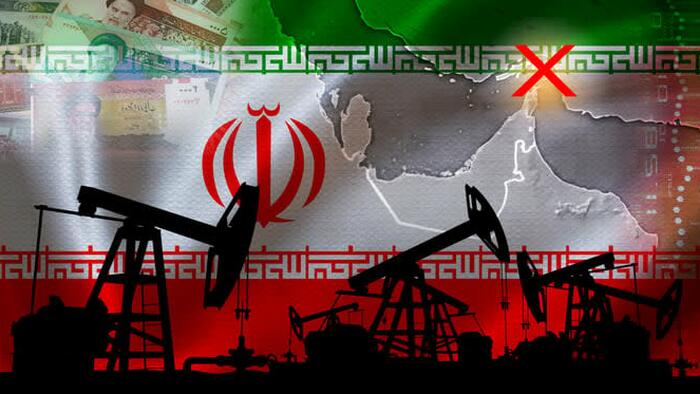
Beyond domestic fiscal challenges, geopolitical tensions present significant external threats to the U.S. and global economy. The long-standing conflict with Iran, particularly concerning the Strait of Hormuz, has been a recurring point of concern. The Strait of Hormuz is a narrow chokepoint between the Persian Gulf and the Arabian Sea, through which approximately 20% of the world’s total petroleum liquids consumption, or about 21 million barrels per day, passes. Any significant disruption to this vital waterway, whether through direct conflict or insurgent tactics, could trigger a substantial increase in global oil prices.
While the U.S. military possesses overwhelming power to dismantle Iran’s conventional military infrastructure, the greater danger lies in the ease with which smaller, insurgent elements could disrupt shipping in the Strait. Even temporary closures could cause panic in energy markets. However, the immediate economic fallout from such a disruption would not be evenly distributed. Only about 7% of U.S. oil imports and 6% of European imports pass through Hormuz. In contrast, East Asian economies are far more reliant on this route: roughly 50% of China’s oil imports, 40% of India’s, and over 70% of Japan’s depend on the Strait.
This disparity in reliance means that a conflict in the Strait of Hormuz would disproportionately affect East Asian markets first. Japan, in particular, with its deep intertwining with U.S. markets through the Yen carry trade, would be highly vulnerable. The Yen carry trade involves investors borrowing at Japan’s near-zero interest rates and investing in higher-yielding assets, often in the U.S. An oil-driven inflationary surge in Japan, prompting the Bank of Japan to tighten monetary policy through rate hikes, would narrow the interest rate differential, erode carry trade profits, and potentially trigger a massive unwinding of these positions. Such an event could send ripple effects through global financial markets, including those in the U.S.
However, the current panic over an energy crisis remains largely speculative. A genuine crisis would be marked by sustained, significant increases in U.S. shale oil production as producers respond to persistently high prices, coupled with weekly gas price spikes of 10-20%, or a large-scale dumping of the dollar by foreign countries as the primary petro-currency. These conditions would likely require a prolonged conflict lasting many months, rather than a short, decisive military action focused solely on neutralizing Iran’s military capabilities and securing the Strait. The duration of any such conflict would heavily depend on stated objectives and strategic execution, distinguishing it from protracted occupations seen in past engagements like Iraq and Afghanistan.
Escalating European Tensions: The Russia-Ukraine Conflict
While the Iran situation presents a significant regional risk, many analysts point to the ongoing conflict in Ukraine as a far greater, potentially catastrophic threat to the global economy. The prospect of a wider European war, particularly any direct involvement of European troops in the conflict, could completely derail an already fragile global economic structure. The conflict has already led to unprecedented sanctions against Russia, disruptions to global energy markets, and significant price increases for commodities, including food.
A broader escalation involving NATO members would trigger immense economic uncertainty, massive capital flight, and potentially a global recession. Europe’s reliance on Russian energy, though diminished, and its intertwined trade relationships would be severely tested. The humanitarian and economic costs of such a scenario would dwarf those of a localized conflict in the Middle East, making it a primary "black swan" event for global stability.
Domestic Instability and Internal Pressures
Beyond international flashpoints, internal pressures within the United States pose significant, though often underestimated, threats to economic stability. Growing societal polarization, fueled by various ideological factions, has led to increased instances of civil unrest, protests, and localized disruptions. While often framed through a political lens, these events carry tangible economic costs, including property damage, business closures, reduced investor confidence, and strains on public safety resources.
The potential for internal insurgencies or sustained civil breakdown, whether driven by political extremism or other grievances, could severely impact economic activity, supply chains, and the overall functionality of the nation. In such scenarios, the burden of maintaining order and protecting property could increasingly fall to local communities and armed citizens, highlighting a diminishing trust in or capacity of government institutions to manage widespread domestic instability.
Discerning Legitimate Threats from Political Narratives
In an era of rapid information dissemination and heightened political rhetoric, the ability to differentiate between legitimate economic dangers and fabricated or exaggerated narratives is paramount. Every crisis, whether real or perceived, can become an opportunity for various actors to advance their agendas, manipulate public opinion, or sow discord.
The interplay of national debt, monetary policy, geopolitical conflicts, and domestic societal pressures creates a complex web of potential vulnerabilities for the U.S. economy. While some threats, like the specter of runaway inflation fueled by unchecked money printing or a wider war in Europe, are deeply concerning and require vigilant monitoring, others may be amplified for political expediency. A nuanced, fact-based approach, free from partisan bias and sensationalism, is essential for policymakers and the public alike to navigate these challenges and ensure the nation’s long-term economic resilience.
Ultimately, the survival and prosperity of the United States in this turbulent environment will depend on its capacity for critical analysis, strategic foresight, and a unified approach to addressing both the immediate and long-term economic and geopolitical challenges it faces.

