
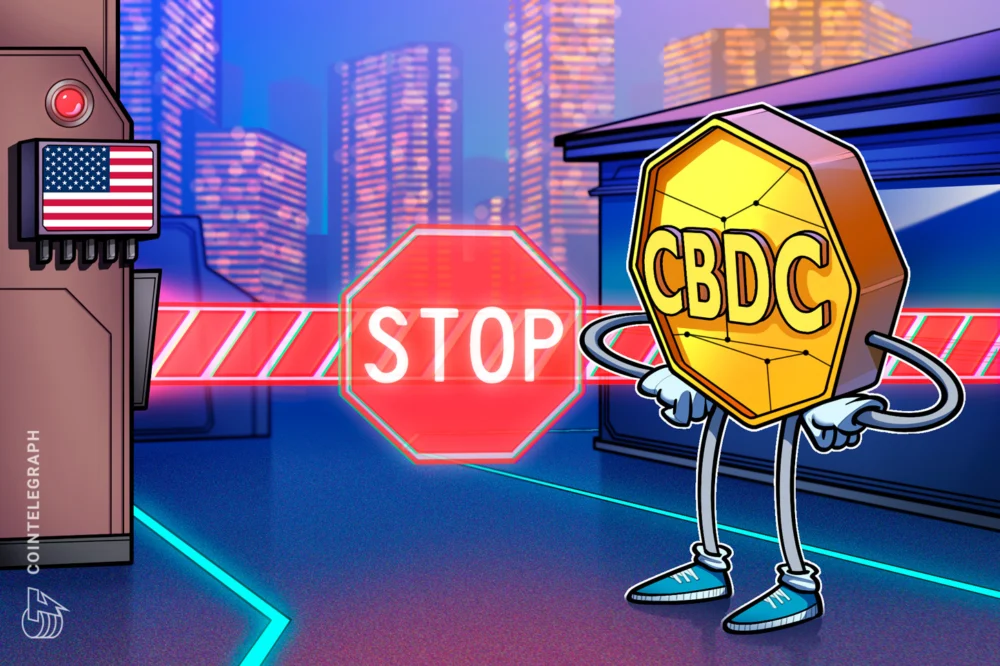
In a significant move that signals a cautious approach to digital currency innovation, the United States Senate overwhelmingly passed an amendment on Thursday that would prohibit the Federal Reserve from issuing a central bank digital currency (CBDC) until December 31, 2030. This amendment was incorporated into the broader 21st Century Road to Housing Act, a piece of legislation whose primary focus is on addressing housing affordability challenges. The bill, which advanced with a strong bipartisan vote of 89-10, explicitly states that neither the Board of Governors of the Federal Reserve System nor any Federal Reserve Bank shall "issue or create a central bank digital currency or any digital asset that is substantially similar to a central bank digital currency, directly or indirectly through a financial institution or other intermediary."
This legislative action represents a substantial roadblock for the Federal Reserve’s exploration and potential development of a CBDC, a concept that has been under discussion and research by central banks globally. While the amendment effectively halts any direct issuance of a U.S. CBDC for the next six years, it notably does not preclude the existence or development of other forms of dollar-denominated digital currencies. Specifically, the legislation carves out an exception for digital currencies that are "open, permissionless, and private," a category that clearly includes stablecoins.
The debate surrounding CBDCs in the United States has been marked by significant partisan divides, with a notable contingent of Republican lawmakers expressing strong reservations. These concerns often center on potential threats to financial privacy, increased government surveillance capabilities, and the erosion of individual economic freedoms. The inclusion of this amendment in a housing bill underscores the growing influence of these concerns within the legislative process and suggests that the pathway to a U.S. CBDC, if it ever materializes, will be fraught with regulatory hurdles.
Background and Chronology of the CBDC Debate
The concept of a central bank digital currency gained significant traction following the rise of private digital currencies like Bitcoin and the increasing exploration of such technologies by other major economies, particularly China with its digital yuan. In March 2023, the Federal Reserve released a discussion paper titled "Money and Payments: The U.S. Dollar in the Age of Digital Transformation," which outlined the potential benefits and risks of a U.S. CBDC, prompting widespread public and congressional commentary.
This paper initiated a period of intense scrutiny and debate. Various stakeholders, including academics, financial institutions, technology companies, and lawmakers, weighed in on the implications of a digital dollar. A key concern that emerged was the potential for a CBDC to grant the government unprecedented access to citizens’ financial transactions, thereby undermining privacy.
By late 2023 and early 2024, the opposition to a U.S. CBDC began to coalesce more formally within Congress. A significant milestone in this growing resistance was a letter sent on March 6th, signed by over 30 U.S. lawmakers. This bipartisan group urged the Senate to adopt a permanent ban on CBDCs, arguing that a temporary moratorium was insufficient to address the fundamental risks. Representative Ralph Norman, a prominent signatory of the letter, articulated these fears, stating, "A CBDC would give unelected bureaucrats unprecedented power over Americans’ finances and threaten basic economic freedom." The sentiment expressed by Norman highlights a core tenet of the opposition: the fear of centralized control and the potential for a digital currency to be weaponized for surveillance or coercion.

The inclusion of the CBDC prohibition in the 21st Century Road to Housing Act is a strategic maneuver that has allowed this specific legislative goal to gain momentum, even as the broader implications of digital currency policy continue to be debated. The act itself, while primarily focused on housing, has become a vehicle for these significant financial policy discussions.
Arguments Against CBDCs: Surveillance and Control
The arguments against the issuance of a U.S. CBDC by opponents are multifaceted, with a strong emphasis on the potential for invasive government surveillance and control. Many lawmakers and commentators draw parallels between a potential CBDC and the privacy concerns associated with digital identification systems and other forms of centralized digital data.
Representative Warren Davidson, a vocal critic of CBDCs, has extended his criticism to include regulated dollar-pegged stablecoins, suggesting that even these privately issued digital currencies could possess similar surveillance capabilities to a CBDC if not structured with robust privacy protections. Davidson has specifically warned that certain legislative proposals, such as the Guiding and Empowering Nation’s Innovation for US Stablecoins (GENIUS) Act, could inadvertently create mechanisms for financial surveillance and "control" or "coerce" the U.S. population through programmable money and the tracking of transactions. The concept of programmable money, where transactions can be programmed with specific rules or restrictions, is a particular point of contention, as it could allow the government to dictate how and where funds can be spent.
This concern about government overreach is not limited to elected officials. Prominent figures in the financial world have also voiced similar anxieties. Hedge fund manager Ray Dalio, for instance, has repeatedly warned that CBDCs would fundamentally alter the relationship between citizens and their government regarding financial matters. In a recent interview, Dalio stated, "There will be no privacy, and it’s a very effective controlling mechanism by the government." He further elaborated on the potential downsides, noting that CBDCs are unlikely to be yield-bearing, meaning they would not offer protection against inflation. Moreover, they could be subject to automatic taxation or even be frozen by the government, stripping individuals of their financial autonomy.
These perspectives highlight a fundamental philosophical disagreement about the role of government in managing digital financial systems. For critics, the potential for a CBDC to become a tool of state control outweighs any perceived benefits in terms of efficiency or monetary policy implementation.
The Role of Stablecoins and the U.S. Dollar Hegemony
While a strong opposition to CBDCs has emerged, there is a concurrent interest from some policymakers and economic strategists in leveraging digital dollar-based instruments to maintain and extend the dominance of the U.S. dollar in the global financial system. Treasury Secretary Scott Bessent and former President Donald Trump have both publicly advocated for the use of dollar-pegged stablecoins as a means to this end.

The argument here is that by promoting the adoption of stablecoins that are fully backed by U.S. dollars and operate within a regulated framework, the United States can ensure the continued international relevance of its currency in an increasingly digital world. This approach seeks to harness the innovation of digital currencies while mitigating the perceived risks associated with a government-issued CBDC. The distinction between a CBDC and a privately issued, regulated stablecoin is crucial in this context. While a CBDC is a direct liability of the central bank, stablecoins are typically issued by private entities and are pegged to the value of a fiat currency.
The inclusion of the "open, permissionless, and private" stablecoin exception in the Senate amendment suggests a legislative pathway that embraces private sector innovation in the digital dollar space, provided it adheres to certain principles that differentiate it from a state-controlled CBDC. This could be seen as an attempt to foster a competitive digital dollar ecosystem that serves U.S. interests without ceding control to a centralized digital currency that could be used for surveillance.
However, even this favored approach to stablecoins faces scrutiny. As mentioned, Representative Warren Davidson has expressed concerns that certain stablecoin regulatory frameworks could still lead to a form of financial surveillance. The specifics of how stablecoins are regulated, particularly regarding data privacy and the potential for government access to transaction information, will remain a critical point of debate.
Implications and Future Outlook
The Senate’s vote to include the CBDC prohibition until 2030 has several significant implications:
- Delayed Digital Dollar Development: The Federal Reserve’s exploration of a CBDC is effectively put on hold for at least six years. This provides a substantial period for further research, public debate, and the development of more robust regulatory frameworks.
- Focus on Private Digital Currencies: The legislative allowance for "open, permissionless, and private" dollar-denominated digital currencies, such as stablecoins, suggests a policy leaning towards fostering private sector innovation in this domain. This could lead to increased investment and development in stablecoin technology and infrastructure.
- Continued Legislative Scrutiny: The strong bipartisan support for the amendment indicates that concerns about CBDCs are deeply entrenched within Congress. It is highly probable that any future proposals for a U.S. CBDC, even after 2030, will face rigorous debate and require significant legislative consensus.
- International Context: While the U.S. is taking a cautious approach, other major economies continue to advance their CBDC initiatives. This divergence in policy could have implications for global financial dynamics and the international role of the U.S. dollar.
- Housing Affordability Connection: The amendment’s inclusion in the 21st Century Road to Housing Act highlights how issues related to financial innovation and national security are increasingly intertwined with other legislative priorities. The debate over housing affordability has inadvertently become a battleground for the future of digital currency policy.
The future of a U.S. CBDC remains uncertain. The current legislative action reflects a significant victory for those who prioritize financial privacy and advocate for limited government intervention in digital finance. However, the ongoing evolution of digital currencies and the global financial landscape mean that this debate is far from over. The period until 2030 will likely be characterized by continued technological advancements, evolving public opinion, and ongoing legislative efforts to shape the digital future of money in the United States. The emphasis on stablecoins as a potential alternative suggests a path forward that seeks to balance innovation with control, a delicate equilibrium that will continue to be tested.

