
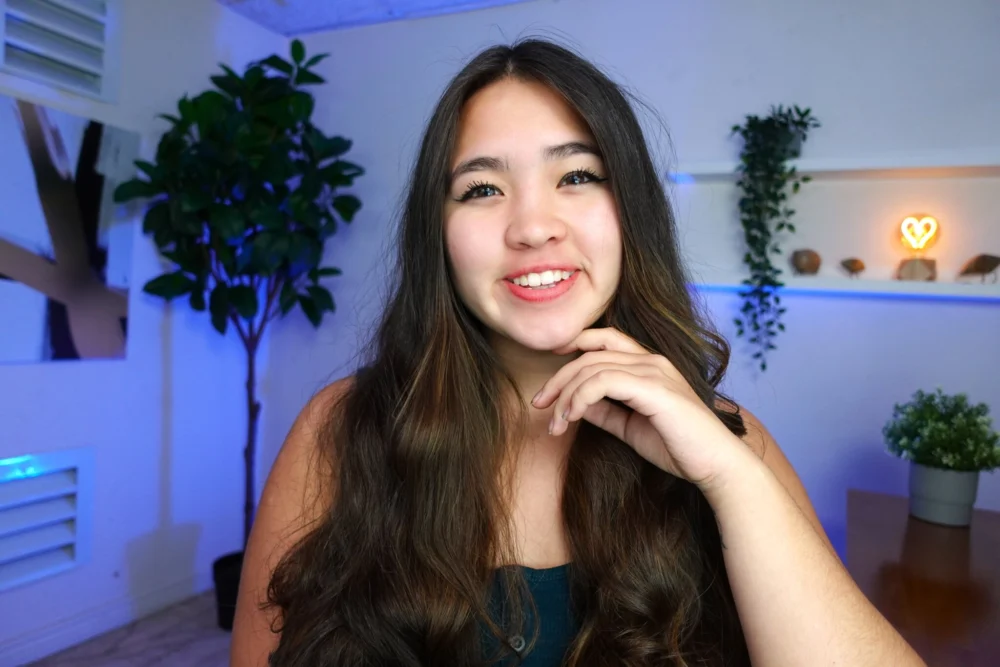
The digital landscape of the creator economy is characterized by high barriers to entry and an increasingly saturated market where millions of new channels are launched annually. However, recent data from the growth trajectory of YouTube creator Aprilynne Alter provides a compelling case study on how rigorous research and a fundamental shift in production philosophy can bypass traditional growth plateaus. By synthesizing hundreds of hours of platform analysis into 73 pages of actionable notes, Alter managed to increase her subscriber count by 12 times within a 30-day window, moving from a baseline of 1,000 subscribers to over 12,000 in four weeks. As of mid-2024, her channel has surpassed 52,000 subscribers, fueled by a strategy that prioritizes psychological engagement over sheer volume of output.
This rapid expansion occurred despite Alter having no formal background in media or video production. A former finance professional, Alter’s success is rooted in a data-driven approach that treats YouTube content as a product requiring specific "packaging" and "retention engineering." Her results are particularly notable given the current competitive climate: YouTube currently hosts over 61 million creators and serves 4.95 billion monthly active users. While the platform offers a robust Partner Program, only a small fraction of creators manage to achieve the viral velocity seen in Alter’s recent campaign, where four of her twenty-four videos garnered over 200,000 views, with one exceeding the 800,000-view milestone.
The Evolution of the Creator Economy and Platform Competition
To understand the significance of this growth, one must look at the broader context of the streaming and social media industry. YouTube is currently the world’s second-largest search engine and the dominant global streaming platform. Its monthly active user base significantly eclipses that of traditional subscription services like Netflix, which reports approximately 270 million paid subscribers compared to YouTube’s nearly 5 billion users.
The "creator middle class"—those earning a sustainable living without reaching celebrity status—has found it increasingly difficult to break through the noise. Industry analysts suggest that the "post-algorithm" era of YouTube requires more than just keyword optimization; it requires a deep understanding of human psychology and viewer retention. Alter’s methodology aligns with this shift, moving away from the "post-and-pray" model toward a highly calculated pre-production workflow.
Chronology of a Pivot: From Failure to Strategic Mastery
Alter’s journey did not begin with immediate success. Her initial foray into YouTube resulted in a challenging experience with a first channel that failed to gain significant traction. This initial setback served as a catalyst for a six-month intensive study period. During this phase, Alter pivoted from focusing on the technical aspects of filming to the psychological aspects of why viewers click and, more importantly, why they stay.
The timeline of her transformation began with a total audit of top-tier creators such as MrBeast (Jimmy Donaldson) and Mark Rober. By deconstructing their content frame-by-frame, Alter identified patterns in visual pacing, narrative hooks, and thumbnail design. This research culminated in the 73 pages of notes that formed the blueprint for her second channel. The implementation phase saw the release of a limited number of high-quality videos—just 24 in total—which achieved a much higher "hit rate" than the industry average, proving that strategic quality can outperform consistent quantity in the modern algorithm.
The Four-Step Framework for Accelerated Growth
The core of Alter’s success is a four-step process that focuses on the lifecycle of a viewer’s interaction with a video. This framework moves from the initial impression to the final edit, ensuring that every second of content serves a specific retention goal.
1. The Primacy of Packaging
In the context of YouTube, "packaging" refers to the combination of the video idea, the title, and the thumbnail. Alter’s research suggests that packaging accounts for approximately 50 percent of a video’s success. This is based on the logical premise that if a viewer does not click, the quality of the actual video becomes irrelevant.
The "Packaging First" philosophy dictates that the title and thumbnail should be designed before the script is even written. This ensures that the content of the video remains aligned with the promise made to the viewer in the browse feed. Effective packaging creates a "curiosity gap"—a psychological itch that can only be scratched by clicking the video. Alter noted that many creators spend 99 percent of their time on production and only 1 percent on packaging, whereas her successful model suggests a more balanced allocation of creative energy.
2. Retention Engineering and the "Five-Second Rule"
Once a click is secured, the creator enters the most volatile phase of viewer engagement: the first five seconds. Data from YouTube’s Creator Studio consistently shows that the steepest drop-off in viewership occurs within the first 30 seconds. Alter’s strategy involves a hyper-focus on the intro, which she recommends keeping between 10 and 45 seconds.
The first five seconds must serve as a "proof of concept," confirming to the viewer that the video will deliver on the promise made by the thumbnail. If a video is titled "How to Scale a Business," but the creator opens with a minute-long personal update or a generic animated intro, retention rates typically plummet.
Furthermore, Alter emphasizes the "Setup," which involves three psychological pillars:
- Curiosity Gap: Re-establishing the mystery or problem.
- Context: Briefly explaining why the topic matters now.
- Input Bias: Demonstrating the effort or scale of the video (e.g., showing the 73 pages of notes) to signal to the viewer that the content has high value.
3. Visual Stimulus and Pacing
The third component of the strategy involves "front-loading the stimulus." Analytical breakdowns of top creators reveal an incredibly high frequency of visual changes. For instance, MrBeast often changes camera angles, graphics, or locations every 1.4 to 1.6 seconds during the introduction. While not every creator has the resources for such high-octane editing, Alter suggests that increasing the "visual interest" in the first 20 seconds is crucial for transitioning a casual viewer into a committed watcher. This involves a rapid succession of B-roll, on-screen text, and zoom-ins to prevent "visual boredom."

4. Comprehensive Audience Consideration
A common mistake among growing channels is a narrow focus on either the existing subscriber base or the "viral" potential of the "Search and Discovery" system. Alter’s approach advocates for designing content that appeals to the "Entire Audience." This includes:
- Core Viewers: The loyal subscribers who understand the creator’s personality.
- Casual Viewers: People who have seen a few videos but haven’t subscribed.
- New Viewers: Individuals who have never heard of the creator but are interested in the specific topic.
By ensuring the video is accessible to someone with zero context while still providing value to long-term fans, a creator can maximize the algorithm’s "seed" audience, leading to wider distribution.
Pre-production and the Annotation Method
The final pillar of Alter’s methodology is a rigorous pre-planning phase that goes beyond traditional scripting. Most creators write a script and then film, often finding during the editing process that they lack the necessary footage to make a point effectively.
Alter utilizes an "Annotation" system. After the script is finalized, she goes through it line-by-line to map out every visual element that will appear on screen. She categorizes these into:
- Talking Head: Direct-to-camera address.
- B-Roll: Supplemental footage filmed specifically for the video.
- Screen Shares: Digital demonstrations.
- Custom Visuals: Graphs, charts, or animations created in post-production.
This level of pre-visualization reduces "creative friction" during filming and ensures that the editing process is a matter of assembly rather than a desperate attempt to fix a narrative.
Implications for the Future of Content Creation
The success of Aprilynne Alter signals a broader shift in the creator economy. As AI tools lower the barrier to entry for video production, the "human" elements of research, strategic storytelling, and psychological positioning become the primary differentiators. The fact that a creator can achieve a 1,200 percent growth rate in 30 days through research rather than "luck" suggests that the YouTube algorithm is increasingly sophisticated in rewarding viewer-centric design.
For entrepreneurs and businesses, the takeaway is clear: YouTube is no longer just a social media platform; it is a high-stakes publishing environment where the "packaging" of information is as important as the information itself. As the platform continues to evolve, the transition from "content creator" to "content strategist" appears to be the most viable path for those seeking significant and sustainable growth. The "Smart Passive Income" model, as advocated by industry veterans like Pat Flynn, further reinforces this by integrating such strategic YouTube growth into a broader entrepreneurial ecosystem, emphasizing accountability and community-driven learning.

