
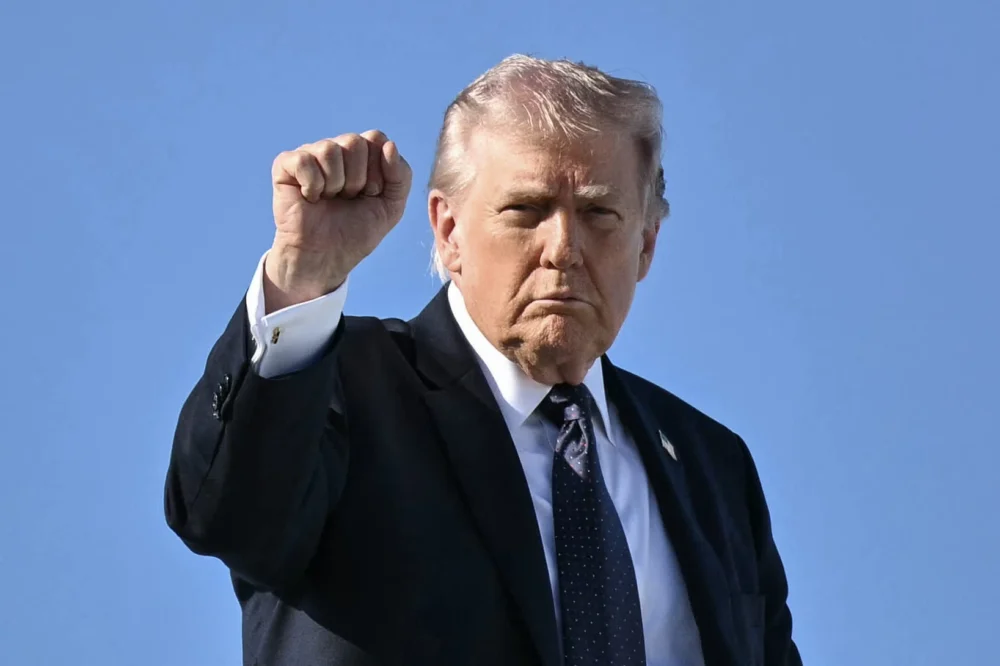
US President Donald Trump has publicly thrown his weight behind cryptocurrency firms in their contentious battle with traditional American banks over the ability to offer interest-like returns on stablecoins. This significant intervention, delivered via a social media post late Tuesday, ratchets up political pressure on the banking sector to concede on an issue that has become the primary stumbling block for critical crypto legislation in Congress. The president’s endorsement, made as he returned to Washington, D.C., from Palm Beach International Airport, Florida, on March 1, 2026, marks a pivotal moment in the ongoing financial industry skirmish, potentially reshaping the future of digital assets within the U.S. financial system.
The core of the dispute revolves around the "Clarity Act," a companion bill to the "Genius Act" that was approved last year. The Genius Act established a foundational framework for regulated stablecoins, aiming to bring greater legitimacy and stability to this burgeoning segment of the digital asset market. However, the Clarity Act, designed to further refine and implement aspects of stablecoin regulation, has stalled in Congress due to fierce opposition from traditional banks regarding the provision allowing crypto firms to offer yields on stablecoin holdings. "The Genius Act is being threatened and undermined by the Banks, and that is unacceptable," Trump declared in his post. "They need to make a good deal with the Crypto Industry because that’s what’s in best interest of the American People."
The immediate market reaction underscored the gravity of Trump’s statement. Shares of Coinbase, the largest U.S. crypto platform and a prominent proponent of stablecoin yields, surged by as much as 15% in midday trading Wednesday. Conversely, stocks of major financial institutions like JPMorgan Chase and Bank of America experienced modest declines, falling less than 1%, reflecting the perceived threat to their established business models. This divergence highlights the deep chasm between the two financial titans and the high stakes involved for both industries.
The Epicenter of Conflict: Stablecoin Yields
At the heart of the contention lies the ability of crypto firms, such as Coinbase, to offer what are effectively interest-bearing accounts for stablecoins. Stablecoins are cryptocurrencies designed to maintain a stable value relative to a traditional fiat currency, typically the U.S. dollar, by being pegged to and backed by reserves. Proponents in the crypto industry view offering yields on these stable assets as a natural evolution and a consumer-friendly innovation, enabling individuals to earn returns on their otherwise idle digital funds. They argue that this fosters financial inclusion and provides a competitive alternative to traditional savings products.
However, traditional banks vehemently oppose this, viewing it as a direct and existential threat to their deposit base. Executives from the nation’s largest lenders, including JPMorgan and Bank of America, have referenced a Treasury study from the second quarter of 2025, which ominously indicated that banks could face a staggering loss of up to $6.6 trillion in deposits if stablecoins were widely allowed to offer competitive yields. Such a seismic shift in deposit flows could destabilize the banking sector, particularly smaller regional banks, by siphoning off a crucial source of funding for loans to businesses and consumers nationwide.
Banks also argue that allowing less-regulated crypto firms to operate as "quasi-banks" by offering yield products without adhering to the stringent regulatory frameworks governing traditional financial institutions poses significant systemic risks. They contend that this creates an uneven playing field, potentially exposing consumers and the broader financial system to unforeseen vulnerabilities. JPMorgan CEO Jamie Dimon articulated this concern bluntly to CNBC’s Leslie Picker, stating, "It can’t be, you have these people doing one thing without any regulation, and these people doing another. If you do that, the public will pay. It will get bad."
Crypto firms, in response, counter that the risks are manageable and often overstated. They assert that many stablecoins are backed by highly liquid and low-risk assets, such as U.S. Treasury bills, which actually boost demand for U.S. sovereign debt. Furthermore, they argue that robust regulation, as envisioned by the Genius and Clarity Acts, would mitigate systemic concerns while fostering innovation.
A Legislative Timeline and Presidential Intervention
The legislative push for comprehensive crypto regulation gained significant momentum in 2025 with the passage of the Genius Act. This landmark legislation aimed to establish a clear regulatory framework for stablecoins, recognizing their growing importance in the digital economy. It sought to provide consumer protection, combat illicit finance, and foster innovation within a regulated environment. However, the Genius Act left certain specifics, particularly regarding stablecoin yields and the precise regulatory oversight, to be addressed by subsequent legislation, primarily the Clarity Act.
The Clarity Act was envisioned as the crucial next step, designed to bring regulatory clarity and operational guidelines for stablecoin issuers and service providers. Its failure to pass has largely been attributed to the impasse over yield offerings. For months, President Trump had attempted to broker a truce, hosting a series of White House meetings between senior executives from both the banking and crypto industries. These confidential discussions, aimed at finding common ground and facilitating the Clarity Act’s passage, reportedly failed to yield a breakthrough, with banks steadfastly refusing to compromise on the yield issue.
Trump’s social media post, therefore, represents a decisive pivot from a mediator role to an explicit endorsement of the crypto industry’s position. This move is not entirely unprecedented for the president, who has previously demonstrated a willingness to directly challenge powerful financial institutions. Earlier in the year, he attempted to pressure banks to cap credit card interest rates, a move that the industry successfully fended off with bipartisan support in Congress. This prior attempt illustrates the inherent challenges of dictating terms to the deeply entrenched and politically influential banking sector, even for a president.
Key Players and Heated Exchanges
The public face of the crypto industry in this dispute has largely been Brian Armstrong, CEO of Coinbase. Armstrong has been a vocal advocate for stablecoin yields, frequently using language similar to Trump’s recent post, emphasizing that "Americans should earn money on their money." He views the ability to generate returns on digital assets as fundamental to the industry’s growth and consumer empowerment. Coinbase itself offers yield products to its customers, which banks often describe as exploiting a "loophole" in existing regulations due to the nascent and evolving nature of crypto oversight.
Armstrong’s influence and direct engagement with the administration were highlighted by a report from Politico, which revealed that he met with President Trump at the White House shortly before Trump’s social media broadside against banks. This private meeting underscores the direct lobbying efforts and the strategic alignment between the crypto industry and the former president.
The tensions between Armstrong and banking CEOs have escalated into highly public and occasionally acrimonious exchanges. A notable instance occurred in January at the World Economic Forum in Davos, Switzerland, where Jamie Dimon reportedly told Armstrong he was "full of s—" during a chance encounter. This anecdote vividly illustrates the deep animosity and fundamental disagreement that characterizes the relationship between the two financial factions. Dimon, a long-standing critic of cryptocurrencies, has consistently voiced skepticism about their utility and safety, advocating for stringent regulation and highlighting potential risks to the traditional financial system.
Political and Economic Implications
President Trump’s decision to back the crypto industry could significantly influence members of his Republican Party, which currently holds a majority in Congress. While some Republicans have been open to crypto innovation, others maintain a more cautious stance, often aligning with traditional financial interests. Trump’s explicit support could galvanize GOP lawmakers to push harder for the Clarity Act’s passage, potentially overcoming internal party divisions. However, it remains uncertain whether his endorsement alone is sufficient to secure the bill’s passage, especially given the banking industry’s formidable lobbying power and bipartisan support on certain issues. The fate of the Clarity Act will likely depend on complex negotiations and the willingness of lawmakers from both parties to compromise.
Beyond the immediate legislative impact, Trump’s intervention raises fresh questions about potential conflicts of interest. The president and his family have reportedly generated significant wealth from investments and interests in various firms, including the crypto platform World Liberty Financial. While the exact nature and extent of these holdings are often subject to scrutiny, critics are likely to highlight these connections, suggesting that the president’s policy stance may be influenced by personal financial gains. Any perceived conflict could complicate legislative efforts, providing ammunition for opponents of the Clarity Act and potentially eroding public trust.
Economically, the implications of allowing stablecoin yields are far-reaching. For the crypto industry, it represents a monumental step towards mainstream adoption and legitimization, potentially unlocking trillions of dollars in value and fostering new financial products and services. For consumers, it promises competitive returns on stable digital assets, offering an alternative to low-yield traditional savings accounts. However, for banks, the prospect of losing a substantial portion of their deposit base could necessitate fundamental shifts in their business models, potentially leading to reduced lending capacity, increased competition for deposits, and a re-evaluation of their role in the evolving financial landscape. The debate also touches upon the broader U.S. financial competitiveness on a global stage, with proponents arguing that embracing crypto innovation is crucial to maintaining America’s leadership in finance.
The standoff between traditional finance and the nascent crypto industry represents a defining moment in the evolution of money and financial services. With President Trump now explicitly siding with crypto firms, the pressure on Congress to resolve the stablecoin yield issue has intensified, setting the stage for a critical legislative battle that could profoundly shape the future of the American economy.

