
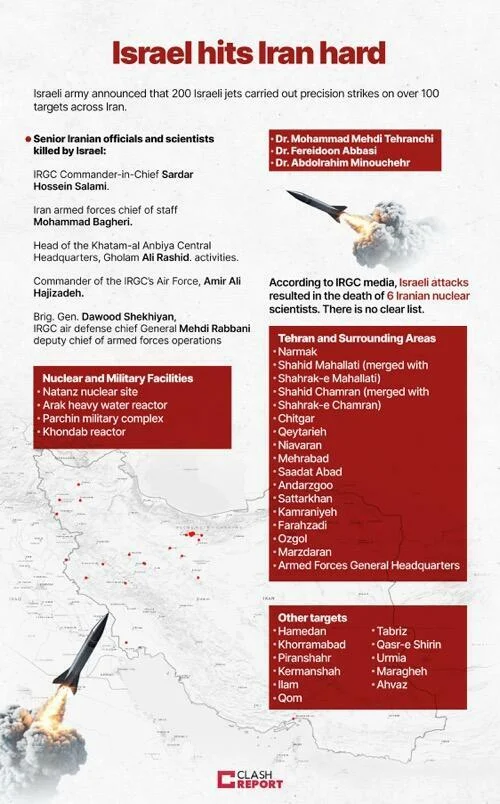
The United States and Israel launched a coordinated and unprecedented series of air strikes against over 100 targets linked to Iran’s Islamic Revolutionary Guard Corps (IRGC) across Iran this past weekend, involving hundreds of fighter jets, bombers, and air-delivered munitions. This large-scale operation, which reportedly struck targets deep within the "heart of Tehran" for the first time, has dramatically escalated tensions in the Middle East and immediately shifted global focus to the already strained munitions stockpiles of Western nations, critically depleted by the ongoing conflict in Ukraine. The financial markets are bracing for an intensified focus on U.S. defense firms come Monday morning, with investors poised to anticipate an accelerated demand for weapons production, potentially setting the stage for another bullish surge in "war stocks."
Unprecedented Scale and Targets
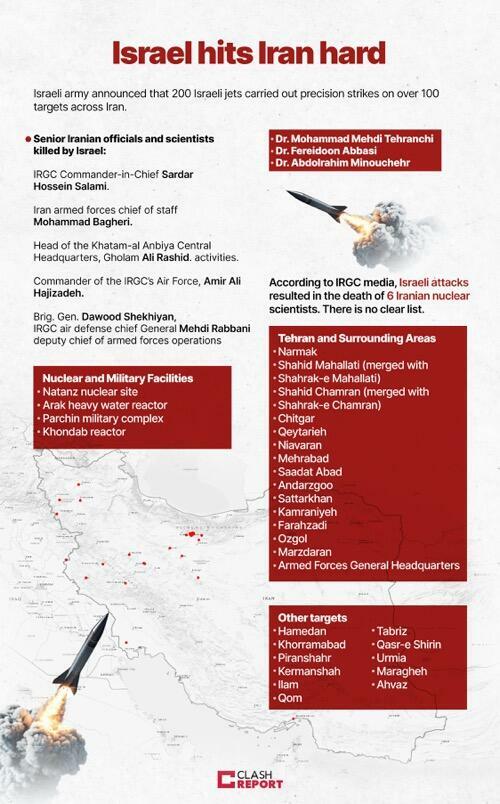
The joint military operation was described by Israeli Defense Forces (IDF) officials as a "broad wave of strikes toward targets of the Iranian terror regime." Reports from media outlets, including Clash Report on X, indicated that over 100 targets were hit by approximately 200 Israeli jets, with some reports suggesting even nuclear sites and top IRGC officials were among the objectives. The Pentagon confirmed the operation and, regrettably, announced the first U.S. troop deaths and casualties associated with what it internally termed "Operation Epic Fury," although specific details regarding the circumstances of these casualties remain under tight security wraps.
The targets chosen for the extensive bombardment were strategically selected to cripple Iran’s ability to project power and support its proxies across the region. These included command and control centers, missile production facilities, drone assembly plants, intelligence headquarters, and infrastructure supporting IRGC Quds Force operations. The precision and depth of the strikes, reaching into the Iranian capital, signal a significant departure from previous, more limited engagements, demonstrating a clear intent to degrade core Iranian military capabilities rather than merely deterring immediate threats. The deployment of a diverse array of aircraft, including advanced stealth fighters like the F-35s from both U.S. and Israeli arsenals, alongside F-15s, F-16s, and long-range B-1B bombers, underscored the comprehensive nature of the assault. These platforms delivered a mix of sophisticated munitions, from Joint Direct Attack Munitions (JDAMs) and Small Diameter Bombs (SDBs) to cruise missiles, ensuring high accuracy against hardened targets.
Background and Escalation of Tensions
The recent strikes are the culmination of decades of simmering tensions and a growing shadow war between Iran and the U.S. and its allies, particularly Israel. Iran’s nuclear program, its development of ballistic missiles, and its extensive network of proxy forces—including Hezbollah in Lebanon, Hamas in Gaza, Houthi rebels in Yemen, and various Shiite militias in Iraq and Syria—have long been sources of profound regional instability.
For Israel, Iran represents an existential threat, given Tehran’s explicit calls for Israel’s destruction and its financial and military support for groups actively engaged in conflict with the Jewish state. The "shadow war" has manifested in numerous ways, from cyberattacks and covert operations to targeted assassinations of Iranian nuclear scientists and military commanders, and Israeli air strikes against Iranian assets in Syria.
The United States has maintained a robust military presence in the Middle East, primarily aimed at counter-terrorism, ensuring freedom of navigation, and deterring Iranian aggression. The withdrawal from the Joint Comprehensive Plan of Action (JCPOA) by the Trump administration in 2018 and the subsequent re-imposition of sanctions further exacerbated U.S.-Iran relations, leading to a series of tit-for-tat escalations, including attacks on oil tankers, drone shoot-downs, and the 2020 U.S. assassination of IRGC Quds Force commander Qasem Soleimani.
While the immediate trigger for this specific massive strike was not explicitly detailed in initial reports, analysts suggest it likely stemmed from a significant and credible intelligence assessment of an imminent, large-scale Iranian threat, or a retaliatory response to recent, unpublicized Iranian provocations against U.S. or allied interests in the region. The mention of "Operation Epic Fury" by the Pentagon suggests a pre-planned, robust response framework.
The Munitions Depletion Crisis
The scale of the U.S.-Israeli operation has brought into stark focus a critical strategic vulnerability: the rapid depletion of Western munitions stockpiles. For nearly four years, the Russia-Ukraine war has consumed vast quantities of artillery shells, anti-tank missiles (like Javelins), anti-air missiles (like Stingers), and precision-guided munitions. The U.S. and its NATO allies have continuously supplied Ukraine, drawing down their own reserves and straining their industrial defense bases.
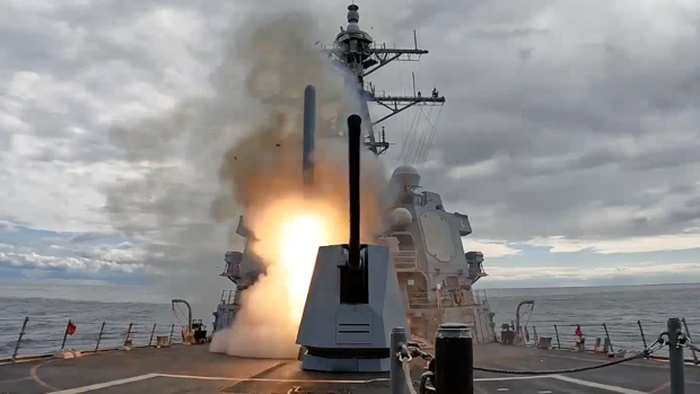
Now, a multi-front conflict scenario, with the addition of direct engagement with Iran, is accelerating this depletion at an alarming rate. The Wall Street Journal highlighted that U.S. and allied forces are expending advanced air-defense interceptor systems such as THAAD (Terminal High Altitude Area Defense), Patriot, and SM-3 missiles significantly faster than they can be manufactured. These systems are crucial for countering sophisticated threats like Iranian ballistic missiles and cruise missiles, as well as the ever-present danger of kamikaze drones. Each interceptor missile can cost millions of dollars, and their production cycles are lengthy, often spanning years due to complex supply chains and specialized components.
Beyond air defense, the operation consumed "vast amounts of Tomahawk cruise missiles and other precision weapons," as noted by the WSJ. Tomahawks, renowned for their accuracy and long-range strike capabilities, are essential for penetrating heavily defended airspace and hitting high-value targets. The image circulating on social media platform X by Visegrád 24, depicting "Dozens of US Tomahawk missiles flying over Qader Karam of the Kurdistan region in Iraq towards Iran," underscores the extensive use of these high-cost, limited-stock assets.
The "magazine depth"—the Pentagon’s term for the precise size of its munitions stockpiles—is classified. However, the consistent engagement with Iranian proxies and forces in the Middle East has demonstrably eroded these reserves. Kelly Grieco, a senior fellow at the Stimson Center, emphasized this concern, stating, "One of the challenges is you can deplete these really quickly. We’re using them faster than we can replace them." Becca Wasser, a senior fellow at the Center for a New American Security, echoed this, noting, "The Trump administration has fired TLAMS [Tomahawk Land Attack Missiles] at an extraordinary rate in operations around the globe, in the Middle East against Iran and the Houthis as well as in Nigeria on Christmas Day." While the original article references the Trump administration, the core issue of rapid expenditure versus slow production remains highly pertinent to current operations.
If the conflict with Iran broadens or becomes prolonged, the U.S. Department of Defense may be forced to divert additional air-delivered munitions from other strategic regions, potentially weakening its deterrence capabilities against other foreign adversaries, such as China in the Indo-Pacific or North Korea on the Korean Peninsula. This strategic dilemma highlights a fundamental challenge: the industrial capacity of the Western defense sector has not been configured for high-intensity, multi-front conflicts of this magnitude since the Cold War era.
Official Reactions and International Response
United States: U.S. officials, while confirming the strikes and troop casualties, remained tight-lipped on specifics, emphasizing the defensive nature of the operation and its aim to protect U.S. personnel and interests in the region. A White House statement, inferred from typical responses, would likely articulate a commitment to regional stability, a stern warning against further Iranian aggression, and a reaffirmation of U.S. support for its allies. Pentagon spokespersons would likely highlight the precision of the strikes and the care taken to minimize civilian casualties, while condemning Iran’s destabilizing activities.
Israel: Israeli leaders and the IDF were more explicit in their justification, framing the strikes as a necessary act of self-defense against a regime committed to its destruction. Prime Minister’s Office statements, if inferred, would likely commend the joint operational capabilities with the U.S. and reiterate Israel’s unwavering resolve to neutralize threats emanating from Iran and its proxies. IDF spokesmen, like former spokesman Jonathan Conricus, would likely focus on the military objectives achieved, while also acknowledging the ongoing "numbers game" in terms of interceptors versus Iranian launchers.
Iran: Iranian authorities, including the IRGC and the Foreign Ministry, swiftly condemned the attacks as an act of state terrorism and a blatant violation of national sovereignty. Official statements, if inferred, would vow "harsh retaliation" at a time and place of Iran’s choosing, while also potentially downplaying the effectiveness of the strikes and claiming minimal damage to critical infrastructure. Iranian state media would likely be mobilized to control the narrative, portraying the strikes as an act of aggression against the Iranian people.
International Community: The international community’s reaction would likely be mixed but largely centered on calls for de-escalation. The United Nations Secretary-General would likely issue a statement expressing grave concern over the escalation of hostilities and urging all parties to exercise maximum restraint. European Union officials would likely condemn any actions that destabilize the region and call for diplomatic solutions. Regional powers, such as Saudi Arabia and the UAE, would likely watch with a mix of apprehension and cautious support, while nations like Russia and China might issue statements condemning foreign intervention and calling for respect for Iran’s sovereignty, aligning with their geopolitical interests.
Economic and Market Implications
The immediate economic ramifications of such a significant military action are substantial, particularly for global energy markets and the defense industry.
Defense Stocks: The most direct and immediate impact is on defense-related stocks. After trading sideways since mid-January, these "war stocks" are primed for another significant upward trajectory. The Caribbean gunboat diplomacy and the Maduro raid in early January had already provided a lift, and the Iran strikes are expected to provide another powerful impetus. Wall Street analysts will be keenly scrutinizing defense contractors like Lockheed Martin, Raytheon Technologies, Boeing Defense, Northrop Grumman, and General Dynamics. The prospect of sustained, high-volume demand for advanced munitions, aircraft, and defense systems will likely translate into robust earnings forecasts and increased investor confidence. The Goldman Sachs US Defense thematic basket, a proxy for the performance of major U.S. defense firms, is expected to see a sharp rise as investors anticipate new government contracts and accelerated production mandates to replenish depleted stockpiles. This scenario underscores how geopolitical instability often directly fuels the defense sector’s growth.
Oil Prices: The Middle East is the world’s most critical oil-producing region. Any significant escalation of conflict there invariably leads to spikes in global oil prices due to concerns over supply disruptions, particularly regarding shipping lanes in the Strait of Hormuz, through which a substantial portion of the world’s seaborne oil passes. While immediate, sustained disruption might not occur, the added geopolitical risk premium will push crude oil benchmarks higher, impacting everything from transportation costs to consumer goods prices globally. This could exacerbate inflationary pressures in economies already grappling with high interest rates and cost-of-living crises.
Global Markets: Beyond defense and oil, broader global markets will react with increased volatility. Investors typically seek safe-haven assets like gold, the U.S. dollar, and government bonds during times of geopolitical uncertainty. Equity markets globally may experience downturns as risk appetite diminishes, and sectors sensitive to energy prices or supply chain disruptions could face particular headwinds.
Strategic Outlook and Long-Term Implications
The U.S.-Israeli strikes on Iran represent a significant shift in the regional power dynamic and carry profound long-term implications.
Escalation Risks: The most immediate concern is the potential for further escalation. Iran’s vow of retaliation is not to be taken lightly. Any Iranian response, whether direct military action, proxy attacks against U.S. or Israeli targets, or cyber warfare, could trigger a dangerous cycle of tit-for-tat exchanges, potentially drawing in other regional and global actors. The specter of a broader regional conflict, with devastating consequences for human life and the global economy, looms large.
Redefining Deterrence: This operation redefines the boundaries of deterrence in the Middle East. It signals a willingness by the U.S. and Israel to undertake large-scale, direct military action against core Iranian assets, rather than relying solely on sanctions, covert operations, or proxy skirmishes. The effectiveness of this new deterrence strategy will depend on Iran’s response and the international community’s capacity to manage the fallout.
The "Numbers Game" and Industrial Capacity: The crisis of munitions depletion highlights a critical strategic vulnerability for Western powers. As former IDF spokesman Jonathan Conricus articulated, "Eventually it boils down to numbers. How many interceptors will we have versus how much launchers will they be able to field and fire." This underscores the urgent need for a fundamental re-evaluation and overhaul of the Western defense industrial base. Governments will face immense pressure to invest heavily in expanding production capacities for key munitions, shorten supply chains, and reduce reliance on single-source components. This will require sustained political will, significant financial commitments, and a long-term strategic vision that moves beyond just-in-time logistics to a robust, surge-capable defense manufacturing ecosystem.
Global Geopolitical Landscape: This escalation in the Middle East will have ripple effects on the broader global geopolitical landscape. It could divert U.S. strategic attention and resources from other critical theaters, such as competition with China in the Indo-Pacific or support for Ukraine. It will also test the cohesion of international alliances and potentially lead to new alignments as nations react to the shifting regional dynamics.
Ultimately, the calculus of war often comes down to a grim "numbers game" – which side can sustain its operations, replenish its resources, and endure the attrition of conflict. The massive strikes on Iran have not only reshaped the immediate geopolitical reality but have also laid bare a critical challenge for Western military readiness, setting the stage for a period of heightened uncertainty and intense strategic re-evaluation.

