
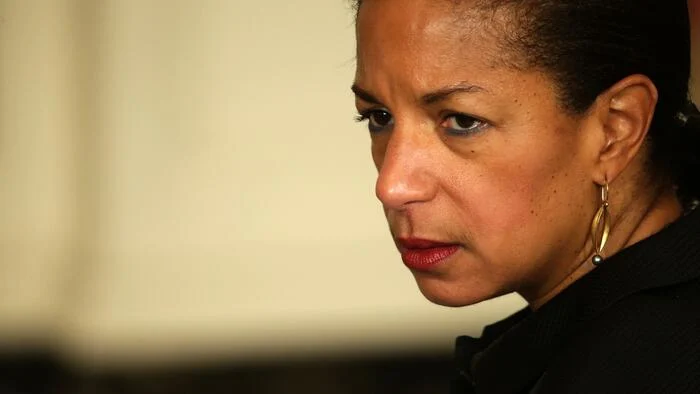
A recent podcast interview featuring Susan Rice, a prominent figure across two Democratic administrations, has sparked a vigorous debate regarding the future of American political discourse and potential ramifications for perceived adversaries. During an appearance on Preet Bharara’s podcast, Rice, who served as U.N. Ambassador and National Security Advisor under President Barack Obama and in various capacities during President Joe Biden’s tenure, delivered a stark warning to conservatives, Republicans, and supporters of former President Donald Trump, employing imagery from the popular series "Game of Thrones."
Rice’s comments, widely interpreted as a signal of impending political retribution, targeted what she described as "elites" in the academic, corporate, and institutional spheres. She asserted that these individuals had capitulated to former President Trump’s influence, stating, "You’ve taken the knee of [President] Donald Trump. You have allowed him to bully you." Her admonition continued with a pointed threat: "And we’re not going to forget that you did that. And you better have your documents ready because when we come back into power, we’re going to…" The clear implication, according to observers, was a vow to pursue legal or punitive actions against those deemed uncooperative with the Democratic agenda upon their return to power.
The remarks immediately drew sharp criticism from figures like Victor Davis Hanson, a Senior Contributor for The Daily Signal, who characterized them as a "direct threat" and "completely vengeful and incoherent." Hanson’s critique, outlined in a video transcript, delved into Rice’s past policy roles, questioned the legitimacy of her implicit accusations, and challenged the certainty of future Democratic electoral victories. He also highlighted what he perceives as a history of "retribution" already enacted by the Democratic Party against former President Trump.
Background to the Controversial Remarks
Susan Rice’s career has been marked by high-profile positions and a series of controversies that have made her a polarizing figure in American politics. Before her roles in the Obama and Biden administrations, she was a Rhodes Scholar and served on the National Security Council and as Assistant Secretary of State for African Affairs during the Clinton administration. Her extensive experience in foreign policy and national security has consistently placed her at the forefront of major global and domestic challenges.
Preet Bharara, the host of the podcast where Rice made her comments, is a former U.S. Attorney for the Southern District of New York. Known for his aggressive prosecution of white-collar crime and public corruption, Bharara gained a reputation as a formidable legal figure. Critics, including Hanson, have sometimes alleged that Bharara’s prosecutorial decisions were influenced by political considerations, though such claims are frequently denied by Bharara and his supporters, who emphasize his commitment to the rule of law.
The "Game of Thrones" reference, with its connotations of political maneuvering, power struggles, and unforgiving consequences, resonated deeply within a political landscape already characterized by intense partisan animosity. Rice’s use of such imagery underscored the gravity of her warning and contributed to its viral spread across media platforms.
A Scrutiny of Susan Rice’s Record
Critics of Rice often point to several key incidents during her tenure in government as evidence of a pattern of misleading the public or engaging in politically motivated actions. Victor Davis Hanson’s analysis particularly emphasized these points:
1. The Benghazi Attack (September 11, 2012): This remains one of the most significant controversies of Rice’s career. Following the attack on the U.S. consulate in Benghazi, Libya, which resulted in the deaths of Ambassador Chris Stevens and three other Americans, Rice appeared on multiple Sunday morning talk shows. She stated that the attack was a spontaneous protest that escalated from a demonstration against an anti-Islam video, rather than a pre-planned terrorist assault. This narrative was later contradicted by intelligence reports and a Senate Intelligence Committee investigation.
- Chronology:
- September 11, 2012: Attack occurs in Benghazi.
- September 16, 2012: Rice appears on five Sunday talk shows, attributing the attack to protests over a video.
- Later Investigations: Congressional and intelligence community reports conclude the attack was likely pre-meditated by Islamist militants, not a spontaneous protest.
- Implications: Critics accused Rice and the Obama administration of deliberately misleading the public to protect the administration’s foreign policy image during an election year. Rice defended her statements by asserting she was relying on the best intelligence available at the time, which was later revised.
2. Syrian Chemical Weapons "Red Line" (2013): Another point of contention arose from the Obama administration’s "red line" declaration regarding the use of chemical weapons by Syrian President Bashar al-Assad. When evidence emerged that Assad had indeed used chemical weapons, and the U.S. ultimately backed away from military intervention, Rice was involved in the administration’s efforts to explain the policy shift. Critics allege she misrepresented the status of Syria’s chemical weapons stockpile after a deal was struck with Russia to dismantle it, suggesting it was entirely eliminated when doubts persisted.
- Chronology:
- August 20, 2012: President Obama states that the use or movement of chemical weapons in Syria would be a "red line."
- August 21, 2013: Sarin gas attack in Ghouta, Syria, widely attributed to the Assad regime.
- September 2013: U.S. and Russia reach an agreement for Syria to surrender its chemical weapons.
- Implications: Critics argued that the administration’s handling of the "red line" undermined U.S. credibility and that Rice’s subsequent statements downplayed the continued threat or existence of Syrian WMDs.
3. Michael Flynn and "Unmasking" (2016-2017): As the Obama administration concluded, Rice became embroiled in the controversy surrounding former National Security Advisor Michael Flynn and the practice of "unmasking." In the final weeks of the Obama presidency, Rice sent an email to herself documenting an Oval Office meeting regarding the FBI’s investigation into alleged Russian interference in the 2016 election and Flynn’s conversations with the Russian ambassador. Critics, including Hanson, suggested this memo was a "fake memo" designed to create a false record and that Rice and others had improperly requested the unmasking of individuals associated with the Trump transition team in classified intelligence reports.
- Chronology:
- December 2016: Michael Flynn has phone calls with Russian Ambassador Sergey Kislyak.
- January 5, 2017: Oval Office meeting, later documented by Rice.
- January 20, 2017: Donald Trump inaugurated; Flynn appointed National Security Advisor.
- Later Investigations: Controversy erupts over unmasking requests and the handling of intelligence related to the Trump transition.
- Implications: These actions fueled accusations from Trump supporters of a politically motivated effort to undermine the incoming administration and raised concerns about the use of intelligence powers for political ends. Rice has consistently maintained that her actions were appropriate and within legal guidelines for national security purposes.
Hanson asserted that these past controversies explain why Rice did not receive a more high-profile national security position in the Biden administration, instead serving as Director of the Domestic Policy Council.
The Substance of the "Retribution" Threat
Hanson’s critique extended beyond Rice’s past, questioning the specific grounds for her threat of retribution. He noted that Rice failed to articulate what "corporate America, the academic world, the institutional world, or the political world" had done wrong to warrant such action. He speculated that her implied grievances might relate to actions like layoffs of individuals associated with Diversity, Equity, and Inclusion (DEI) initiatives, which he countered by citing the Supreme Court’s ruling barring race-based preferences in academic life.
He also addressed the legitimacy of a President issuing executive orders, referencing former President Obama’s declaration, "I have a pen and I have a phone and I’m going to use it," after losing control of Congress. Hanson argued that if the alleged transgressions do not constitute felonies or misdemeanors, then any promised punishment lacks legal and ethical legitimacy. This line of argument suggests that Rice’s threats are based on political disagreement rather than actual wrongdoing under the law.
Challenging the Premise of Future Power
A significant portion of Hanson’s rebuttal focused on undermining Rice’s confidence in a Democratic return to power in 2026 or 2028. He presented an optimistic outlook on the current economic situation under a hypothetical future Trump administration, citing:
- Economic Indicators: Low inflation, low unemployment, solid Gross Domestic Product (GDP) growth, and record levels of foreign investment and energy production. (Note: This assumes a future scenario where Trump has returned to office and these conditions prevail, aligning with the article’s implied future publication date).
- Fiscal Policy: The anticipated positive effects of a "Big, Beautiful Bill" – presumably a future legislative package under a Republican administration – featuring tax code reductions, reduced IRS deductions, and no tax on tips. Hanson suggested these measures would provide "enormous stimuli" and take effect before the midterms.
Beyond the economy, Hanson pointed to the potential for a Trump administration to resolve international conflicts in Ukraine, Cuba, and Iran, which could further bolster their political standing. He concluded that, given these factors, Rice’s certainty about future Democratic electoral success was unfounded.
He also weighed in on the potential Republican leadership for 2028, naming figures like Marco Rubio and JD Vance as formidable candidates, contrasting them with perceived weaker Democratic contenders such as Gavin Newsom, Alexandria Ocasio-Cortez (AOC), Pete Buttigieg, and Kamala Harris. While he mentioned Josh Shapiro as a possible Democratic candidate, he expressed doubt about his chances given what he described as the "antisemitic nature of the new Democratic Socialist Party," referencing the 2024 vice-presidential selection. These projections, while speculative, serve to challenge Rice’s implied political dominance.
The Irony of Retribution: A Counter-Accusation
Perhaps the most potent aspect of Hanson’s critique was his accusation that the Democratic Party, including Rice herself, has already been engaged in a prolonged campaign of retribution against Donald Trump. He provided a detailed list of actions taken against Trump, presenting them as evidence of politicized justice:
- Ballot Challenges: Attempts to remove Donald Trump from state ballots, described as "unprecedented."
- Impeachments: Two impeachments of a president, and a Senate trial of a private citizen after he left office.
- Letitia James Lawsuit: The civil fraud lawsuit brought by New York Attorney General Letitia James, which resulted in a massive fine, with Hanson asserting it was "frivolous" and based on disputed asset valuations where banks, the alleged victims, had no complaint.
- Alvin Bragg Indictment: The charges brought by Manhattan District Attorney Alvin Bragg concerning "hush-money" payments to Stormy Daniels, which Hanson characterized as an attempt to "shoehorn a federal offense onto a state law."
- E. Jean Carroll Lawsuit: The defamation lawsuits brought by E. Jean Carroll, resulting in significant monetary judgments against Trump, which Hanson termed "persecution."
- Jack Smith Investigation & Mar-a-Lago Raid: The special counsel investigation led by Jack Smith, including the FBI raid on Mar-a-Lago, with Hanson comparing it to Joe Biden’s handling of classified documents.
- Fani Willis Indictment: The indictment by Fulton County District Attorney Fani Willis in Georgia concerning alleged efforts to overturn the 2020 election results, which Hanson argued twisted common political requests for vote verification into a felony.
Hanson concluded that all these legal actions were initiated by "politically minded, biased" prosecutors who often faced their own ethical dilemmas. He emphatically stated, "Your party has already taken out retribution. You were the ones that politicized the Department of Justice… Your entire career of the Democratic Party—your career, Hillary Clinton’s career, Barack Obama—has been to destroy Donald Trump." This forms the core of his argument: that Rice’s party has already done what she is now threatening to do, making her statements hypocritical.
Broader Impact and Implications
Susan Rice’s "Game of Thrones" comments and the subsequent critical analysis highlight a deepening chasm in American political discourse. The language of retribution, vengeance, and unyielding partisan warfare suggests a future where political differences are not merely debated but actively punished.
1. Escalating Polarization: Such rhetoric risks further entrenching partisan divides, making bipartisan cooperation increasingly difficult. It fosters an environment where political victory is seen less as an opportunity for governance and more as a chance to settle scores.
2. Erosion of Trust in Institutions: When legal and investigative processes are consistently framed by political figures as tools for partisan retribution, public trust in the judiciary, law enforcement, and other governmental institutions can erode significantly. This can have long-term consequences for the stability of democratic governance.
3. Impact on Political Engagement: The promise of retribution can deter individuals from engaging in political activities or expressing dissenting views for fear of future repercussions. Conversely, it might galvanize partisans who feel their side is justified in seeking vengeance.
4. The 2026 and 2028 Elections: The timing of Rice’s remarks, looking ahead to the 2026 midterm elections and the 2028 presidential race, suggests a strategic attempt to frame future political contests. It serves as both a warning to opponents and a rallying cry for allies, potentially defining the tone and stakes of upcoming campaigns.
Ultimately, Rice’s candid remarks, while perhaps intended as a warning to conservatives, have instead provided her critics with fresh ammunition, painting her and her party as driven by vengeful intentions. The ensuing debate underscores the volatile nature of contemporary American politics, where the lines between political opposition and perceived existential threats continue to blur, and the specter of "retribution" looms large over the electoral landscape. The implications of such a confrontational approach could shape not only future policy but also the very fabric of American political culture for years to come.

