

The S&P 500 index, a critical benchmark for the U.S. equity market and a cornerstone of many retirement portfolios, has experienced an extraordinary ascent over the past several years, raising questions among investors and analysts about the sustainability of its current valuations. In a period marked by rapid technological advancements, particularly in Artificial Intelligence (AI), the market has seen unprecedented growth, prompting a closer examination of underlying economic fundamentals versus investor sentiment.
Unpacking the Recent Market Performance
In a remarkable display of market strength, the S&P 500 has surged by approximately 57 percent in just the last two years. Looking further back, the index has more than doubled its value over the past five years, a trajectory that began in earnest during the post-COVID-19 economic recovery. This dramatic increase has had a profound impact on individual wealth, potentially accelerating retirement timelines for many investors who hold significant portions of their savings in broad market index funds. Conversely, long-retired individuals may find themselves with unexpectedly inflated portfolios, leading to considerations of more extravagant expenditures.

This rapid appreciation has naturally led to inquiries about the market’s true health. A common concern, echoed by many private investors, is whether the current market valuation represents a genuine reflection of economic growth or if it signals an impending "bubble," particularly one fueled by the widespread excitement surrounding Artificial Intelligence. The core question for many is the market’s vulnerability to a significant correction and the potential repercussions for long-term financial planning.
The Fundamental Value of a Stock: Beyond Price Hype
To address these concerns, it is crucial to revisit the fundamental nature of a stock. Conceptually, owning a stock is akin to owning a fractional share of a business, much like owning a rental property. When an investor purchases a rental house, their entitlement is to the stream of rental income generated, after deducting operational expenses. The net amount constitutes the profit. While the market price of rental properties can fluctuate, a mere increase in sale price, without a corresponding increase in rental income, does not inherently improve the profitability for the owner unless the asset is sold. Even then, reinvestment would likely occur at the new, higher market price. True profitability enhancement for a rental property stems from improvements that increase net earnings, such as renovations, efficiency gains, or expanding income streams.
When such a property is eventually sold to another investor, the rational purchase price should be anchored to the expected future income stream. For instance, if a property generates $2,000 per month ($24,000 annually) and sells for $240,000, the investor is acquiring it at a price-to-earnings (P/E) ratio of 10x ($240,000 / $24,000). However, if the same property commands a sale price of $480,000, the P/E ratio climbs to 20x. While this represents an excellent outcome for the seller, it implies a diminished future return for the buyer, as they are paying more for the same income stream.

Applying this principle to the stock market, an investment of $100,000 in the S&P 500 in 2019, with dividends reinvested, would have grown to an estimated $256,960 by early 2025 – a substantial 157% gain. Yet, during the same period, the underlying corporate earnings attributable to that $100,000 investment only increased from approximately $5,290 to $7,540, a more modest 42% gain. This divergence highlights a significant shift in valuation: the market’s P/E ratio has expanded from around 20x in 2019 to roughly 30x today, according to data from financial analysis sites like multpl.com. This indicates that investors are currently paying a higher premium for each dollar of corporate earnings, suggesting that future returns as a percentage of portfolio value may be lower compared to periods when stocks were available at more favorable valuations.
The Role of Anticipated Earnings Growth: The AI Catalyst
The willingness of investors to pay higher P/E multiples is often justified by expectations of future earnings growth. If a rental property is overpriced based on current rents but is situated near a forthcoming major corporate campus, the anticipation of rapidly climbing future rents would logically justify a higher present purchase price. Similarly, a company’s stock price can surge on news that portends significant future profitability. The example of Peloton during the COVID-19 pandemic illustrates this, where initial investor enthusiasm for its perceived permanent growth led to a stock price spike, only for it to recede as reality set in and sales normalized.
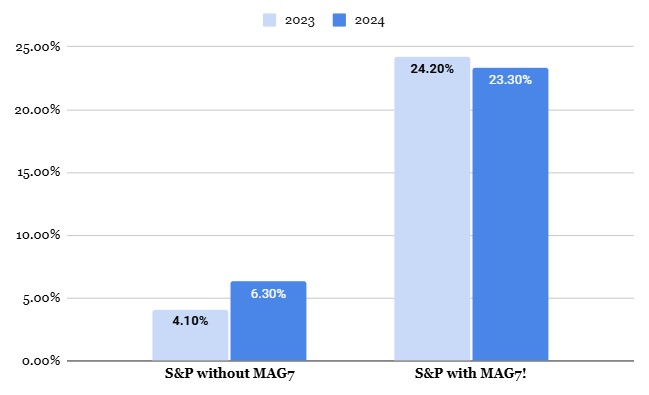
However, when the entire market, or a substantial portion of it, experiences a similar valuation expansion, it prompts questions about whether the entire economy is poised for accelerated growth. In the current market euphoria, this isn’t precisely the case across the board. A deeper analysis of the S&P 500 reveals that approximately three-quarters of the recent market growth has been concentrated in just seven mega-cap technology companies, collectively dubbed the "Magnificent Seven": Apple, Nvidia, Microsoft, Amazon, Google (Alphabet), Meta (Facebook), and at times, Tesla.

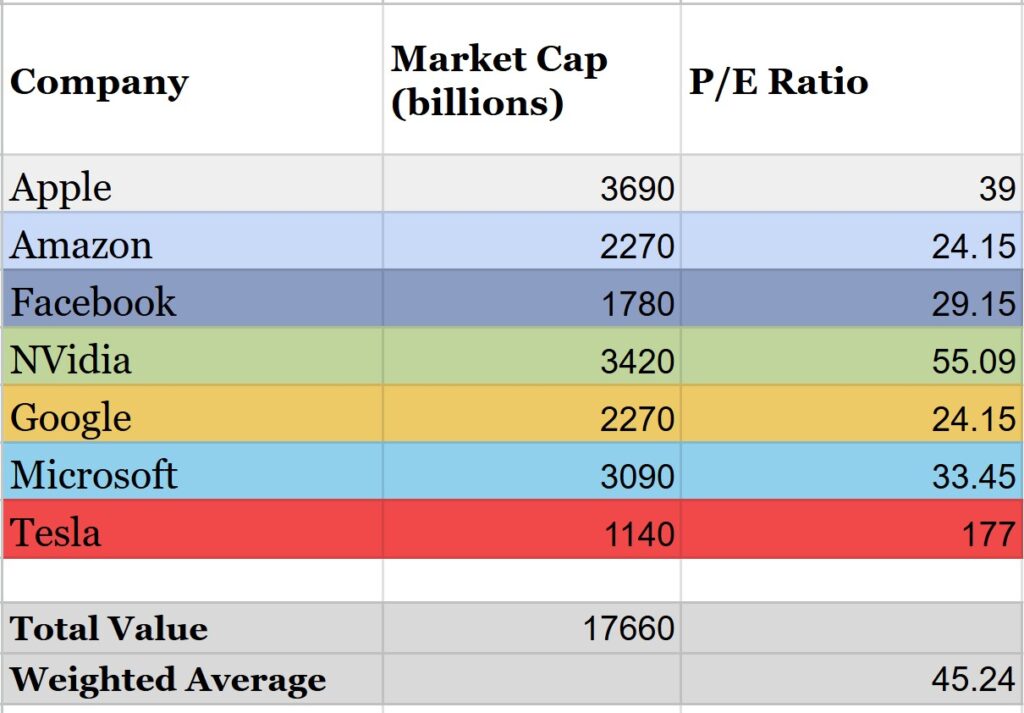
These companies, characterized by their high profitability and significant technological leadership, have seen their share prices aggressively bid up by investors anticipating continued and accelerated future growth. Collectively, they represent over 25% of the S&P 500’s total market capitalization, a staggering figure exceeding $17.66 trillion. Their individual P/E ratios are considerably higher than the rest of the market, with a weighted average around 45x. Tesla, in particular, often trades on the immense promise of future innovation rather than its current earnings. Excluding these seven giants, the remaining 493 companies in the S&P 500 exhibit a more moderate, albeit still elevated, P/E ratio of approximately 20x. This disparity suggests that while the broader U.S. economy is expected to remain healthy, the market’s current premium is largely predicated on the sustained, rapid growth of these leading tech firms.
Artificial Intelligence: The Engine of Hype and Potential Disruption
The unifying theme driving the extraordinary valuations of the Magnificent Seven, and indeed much of the broader market’s optimism, is the transformative potential of Artificial Intelligence. Recent breakthroughs in AI have astonished the business world, with software now demonstrating human-like reasoning capabilities across an expanding array of applications. This has ignited a fervent belief across industries that a new era of unprecedented productivity and profitability is on the horizon.
Six of the Magnificent Seven companies are investing hundreds of billions of dollars in building vast infrastructures of supercomputers dedicated to AI development, such as OpenAI’s ambitious "Stargate" project. Nvidia, the seventh, is a primary beneficiary of this spending, as it manufactures the high-performance chips essential for these AI systems, allowing it to command premium prices amidst insatiable demand.
Beyond infrastructure, AI’s applications are rapidly expanding. It can process and analyze complex documents, identify legal loopholes, debug software, power autonomous vehicles, diagnose medical conditions with high accuracy, accelerate drug discovery, and even animate humanoid robots for labor. The overarching vision is an "infinite workforce" of intelligent AI agents, potentially removing the historical constraints of finite human intelligence and labor, thereby unlocking exponential economic growth.
While many experts, including those who have closely followed the field, believe in the eventual realization of these transformative potentials, the timeline and the ultimate impact remain uncertain. Key questions linger: Will the projected profits materialize at the expected scale, or will unforeseen challenges such as cost overruns, intense competition, or even unanticipated risks from increasingly autonomous AI systems derail these forecasts? Furthermore, the societal implications of widespread AI adoption, particularly concerning potential mass unemployment and subsequent social upheaval, are critical considerations that could profoundly affect economic stability and market sentiment. The speculative image of a single figure like Sam Altman accumulating unprecedented wealth while the world grapples with job displacement underscores these anxieties.
Historical Perspective and Future Expectations
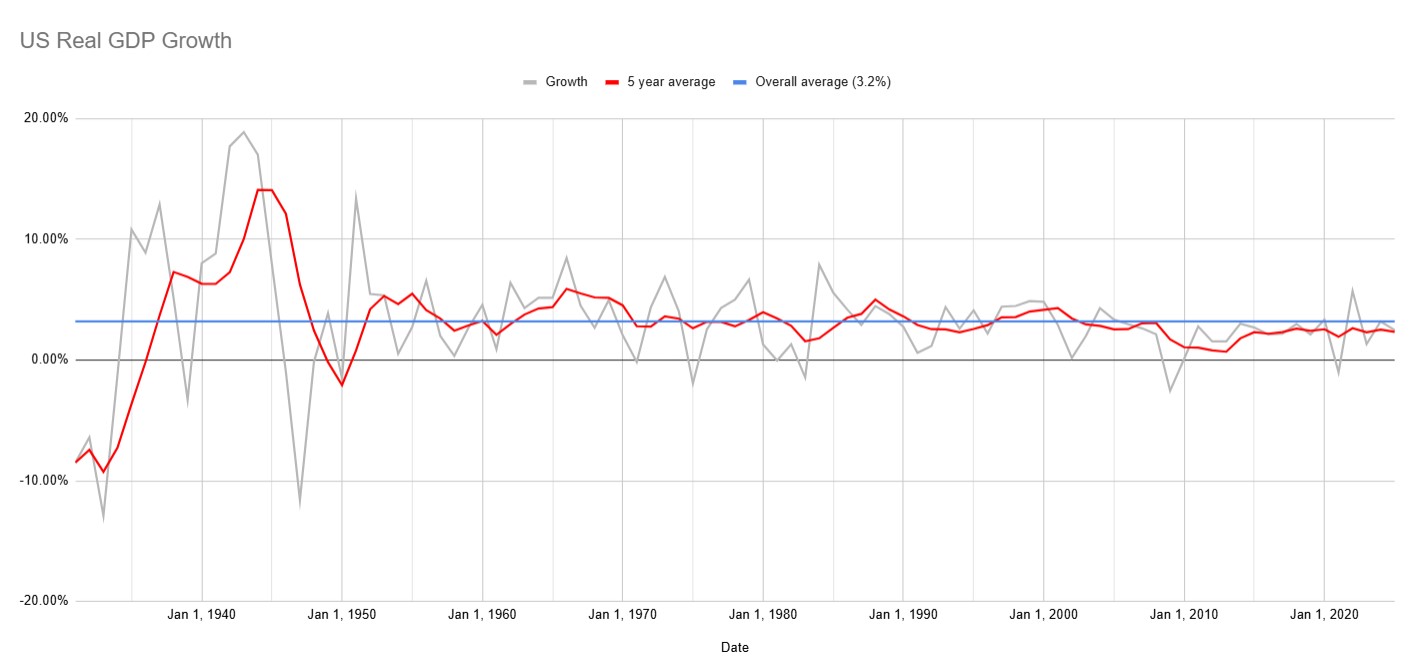
In navigating such unprecedented market conditions, historical economic patterns often serve as a guiding light. Despite myriad technological revolutions and societal shifts, the long-term real Gross Domestic Product (GDP) growth of the U.S. economy has demonstrated remarkable consistency, averaging around 3% annually after inflation over many decades. Interestingly, recent decades have shown a trend of slightly slower than average growth, which further complicates the rationale behind the current elevated stock market valuations. This historical stability in overall economic growth suggests that while specific sectors may experience booms, the aggregate productive capacity of the economy tends to follow a more predictable, moderate trajectory.
Investment Strategies in an Overvalued Market
Given the current market dynamics, what course of action should investors consider? The consensus among financial experts remains consistent: attempting to time the market by selling off assets in anticipation of a crash and hoping to buy back in at lower prices is a notoriously difficult and often losing proposition. Over the long run, investing in stocks is generally profitable, even if future returns are tempered by current high valuations. The U.S. economy’s fundamental resilience and innovation capacity still make it an attractive place for businesses.
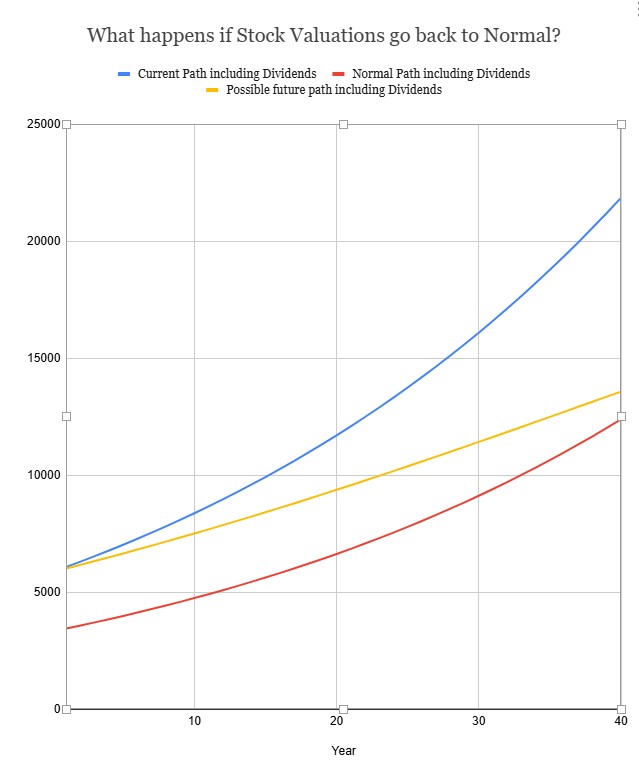
Even if the market’s P/E ratios revert to more historical averages, the long-term growth of company earnings will likely continue, albeit potentially leading to a more moderate growth trajectory than the recent explosive gains. This scenario would imply a path of steady appreciation rather than parabolic surges, a "yellow line" of consistent growth instead of an unsustainable "blue line" of perpetual acceleration.
Alternative Investment Considerations

While the focus often remains on the U.S. stock market, a prudent investment strategy involves exploring other avenues. Vanguard, a leading provider of index funds, annually publishes its 10-year annualized return forecasts, which often provide a sober counterpoint to market exuberance. Their recent projections suggest that international stocks and even bonds could potentially outperform U.S. stocks in the coming decade. This forecast is underpinned by the significantly lower P/E ratios observed in international markets. For instance, a broad international equity fund like VXUS trades at a P/E ratio of approximately 15.9x, nearly 50% less than the current U.S. market average.
However, it’s worth noting that Vanguard has made similar predictions in prior years, only to see U.S. equities continue their outperformance, largely driven by the concentration of AI innovation within the U.S. tech sector.
Diversified portfolio strategies, such as those offered by robo-advisors like Betterment, aim to mitigate risk and potentially enhance returns by allocating investments across a wider range of asset classes beyond just U.S. stocks, including international equities and bonds. While historical performance over the past decade has favored a U.S.-only portfolio, the core principle of diversification remains sound for long-term investors, offering a balanced approach with potentially lower volatility and tax advantages. A typical diversified core portfolio, like Betterment’s, might currently have a weighted average P/E ratio of around 22x, reflecting its broader exposure.
Even legendary investors like Warren Buffett are signaling caution. Berkshire Hathaway’s recent shareholder letter indicates that the "Oracle of Omaha" finds few compelling bargains in the current market, evidenced by the conglomerate’s substantial cash holdings of $334 billion. This conservative stance, even including a reluctance to repurchase its own shares which trade at an average P/E of around 21x, underscores a broader sentiment among value investors that valuations are stretched.
The Case for Debt Reduction
Another alternative strategy, particularly relevant in an environment of elevated market valuations and higher interest rates, is accelerating mortgage payments. Historically, maintaining a mortgage and investing surplus cash in index funds has often yielded superior returns. However, there comes a point where lower expected stock market returns and higher mortgage interest rates converge, making mortgage payoff a more attractive option. For instance, a 7% mortgage effectively represents a guaranteed 7% risk-free return on capital if paid off. This is a compelling alternative to leaving significant sums in low-yield checking or savings accounts, especially for those who value the psychological peace of being debt-free.
The Enduring Principles of Investing
Despite the complexities and uncertainties of the current market, the bedrock principles of sound investing remain unchanged. For most long-term investors, the advice is consistent: maintain a diversified portfolio, continue to invest regularly, and resist the temptation to react to daily market fluctuations or sensational headlines. While keeping abreast of economic news is prudent (e.g., weekly reviews of reputable economic publications), excessive preoccupation with short-term market movements can be detrimental.
Ultimately, true "market-beating returns" for personal well-being are often found not in financial markets but in the intentional allocation of time and energy. Engaging in physical activity, fostering relationships, and pursuing hobbies in the outdoors offers guaranteed returns in terms of health, happiness, and overall life satisfaction—investments that consistently yield dividends regardless of stock market volatility.
In Conclusion: The current S&P 500 surge, heavily influenced by the AI boom and the performance of the Magnificent Seven, presents a fascinating juncture for investors. While valuations are high, the potential for continued innovation is undeniable. Prudent investors will focus on understanding the underlying fundamentals, diversifying their portfolios, and maintaining a long-term perspective, rather than attempting to predict or time the market’s next move.

