
The geopolitical dimensions of talent acquisition became acutely apparent when Jensen Huang, the Taiwanese-American co-founder and chief executive of Nvidia, briefly stepped down from his role on November 12, following unconfirmed reports of an affair with an individual reportedly linked to Chinese intelligence. The news sent ripples of concern through global markets and policy circles, highlighting the sensitivity surrounding key figures in the high-stakes AI industry. His swift reinstatement on November 23 was reportedly influenced by high-level U.S. government intervention, a move that former U.S. President Donald Trump publicly affirmed. Trump, speaking to CNBC, emphasized the imperative to "protect our geniuses," explicitly referring to Huang, whom he described as "clearly a genius." The implicit warning was stark: without such intervention, a figure of Huang’s caliber could hypothetically be lured to China, transferring invaluable intellectual capital and strategic insights. This sentiment reflects a growing anxiety within Washington regarding the potential for critical U.S. technological advantages to be eroded through the loss of key personnel.
A CEO’s Brief Absence: Nvidia’s Volatility and Geopolitical Alarms
Jensen Huang’s temporary departure triggered significant market volatility for Nvidia. The company’s shares, a bellwether for the booming AI sector, initially saw a downturn amidst the uncertainty, only to surge dramatically upon news of his return. This immediate market reaction underscored Huang’s irreplaceable role not just as a corporate leader but as a strategic asset in the global technology landscape. His 30-plus year journey with Nvidia, transforming it from a niche gaming graphics chip company into the indispensable engine of modern AI, speaks volumes about his profound impact. Nvidia’s semiconductors, initially designed for high-performance graphics, evolved to power cryptocurrency mining and, ultimately, became the foundational hardware for training and deploying cutting-edge AI models, from large language models to complex scientific simulations.
The narrative surrounding Huang’s return was further amplified by Donald Trump’s comments, made shortly after his own return to the U.S. from Shenzhen, China, where he had met with Chinese President Xi Jinping. Trump’s remarks to CNBC’s Eamon Javers hinted at Huang possessing "other chips in his brain that nobody else knows about, including me, that nobody else understands," illustrating a perception of his unique, almost singular, contribution to U.S. technological superiority. While Trump conceded there was "never even a suggestion" that Huang was actively recruited by China, the hypothetical scenario he painted – "Jensen could take the next plane to China, and I guarantee you, they would give him whatever he wanted" – served to articulate a deeply held concern within U.S. strategic circles about the vulnerability of its human intellectual capital.
The Shifting Landscape of AI Talent: China’s Ascendancy
The episode with Huang brought into sharp focus a broader, more systemic challenge for the U.S.: the accelerating pace at which Chinese AI companies are narrowing the gap with their U.S. counterparts, not only in the sophistication of their AI models but critically, in the depth and breadth of their engineering and research talent. According to research from the Carnegie Endowment for International Peace, China has, in a remarkable feat achieved in just three years, surpassed the U.S. in terms of its share of global AI talent. This shift is not merely statistical; it represents a fundamental rebalancing of capabilities in a field that is increasingly seen as the determinant of future economic and geopolitical power.
Winston Ma, an AI investor and adjunct professor of law at New York University, succinctly captured this sentiment, stating that Nvidia "was shaken without a single chip or model changing." He emphasized, "Whoever builds and keeps that human layer will hold the rest of the stack." This perspective highlights the strategic importance of talent as the ultimate differentiator, transcending even the most advanced hardware or software architectures. The ability to innovate, adapt, and lead in AI depends fundamentally on the intellectual firepower available.
Beyond Chips: The Human Layer of AI Dominance
The concern over talent extends beyond individual luminaries like Huang to the broader ecosystem of AI engineers and researchers. Damien Ma, director and Maurice R. Greenberg Director’s Chair of Carnegie China, noted that the Huang incident has intensified scrutiny on the individuals involved in the U.S.-China tech race. He monitors closely whether either country might implement policies restricting AI engineers from leaving, although he currently expects limited policy changes. However, he posited that other nations, particularly tech-savvy hubs like Singapore and South Korea, could benefit significantly from any potential inflow of highly skilled AI talent seeking more stable or neutral environments.
The U.S. has, over the past four years, imposed increasing restrictions on China’s access to advanced Nvidia semiconductors, aiming to slow Beijing’s AI progress. These measures were based on the assumption that controlling hardware would effectively cap China’s AI capabilities. However, events in early 2025, notably the emergence of DeepSeek – a Chinese AI model that demonstrated unexpected sophistication despite chip restrictions – upended these assumptions. DeepSeek’s success suggested that sheer ingenuity, optimized software, and a deep talent pool could partially mitigate the impact of hardware limitations, underscoring the resilience and adaptability of China’s AI ecosystem. This development further amplified the urgency of the talent discussion.
The Economics of Expertise: Salary Gaps and Global Recruitment Wars
The global AI talent market is characterized by significant economic disparities, creating complex dynamics in recruitment. Engineers in the U.S. frequently command salaries two or three times higher than their Chinese counterparts. This disparity is attributed to several factors, including foreign exchange rates, the higher valuations of U.S. AI companies, and a generally higher cost of living. Alex Lu, founder of LSY Consulting, noted the substantial financial investment required to recruit top talent in the U.S., which "can get expensive." He cited an anecdote of a U.S. consumer research firm founder who, after visiting China, opted to hire engineers based there, demonstrating a pragmatic response to these cost differentials. Similar scenarios are often recounted by analysts, sometimes involving U.S.-trained Chinese staff based in Singapore, highlighting a "mixed-market approach" to talent acquisition.
Chinese companies, both established giants and burgeoning startups, are demonstrating "very, very aggressive" strategies in "getting good talent from the U.S.," according to Rachel Wu, a partner at Tidalwave Solutions who specializes in recruiting for Chinese tech firms. She provided a compelling example: a Meta engineer based in Canada accepted an offer from a Chinese AI startup for a salary of 1.4 million yuan (approximately $210,000 USD at the time), in addition to attractive stock options. This illustrates the willingness of Chinese companies to offer highly competitive packages to attract international expertise.
Wu also observed a significant evolution in China’s domestic talent supply. Just a few years ago, Chinese companies primarily sought AI talent from the U.S. and Singapore. "Today we see the gap has been filled," she stated, noting a substantial increase in the supply of local talent over the last two to three years. The demand, however, remains "huge." She cited an instance of an ex-Alibaba AI engineering candidate with seven years of experience receiving more than five job offers. Switching between companies can result in a remarkable 25% to 30% pay bump, a trend she expects to persist for another two years, albeit potentially with a slightly moderated compensation increase.
Strategic Implications: Talent Mobility and National Security
The interplay between talent access and hardware restrictions creates a nuanced environment for researchers. The decision of where to work often boils down to a fundamental question for top AI researchers: "where I can do my further research and do I have enough resources to do my research," as articulated by Alex Lu. While China’s talent pool is growing rapidly, the continued U.S. restrictions on advanced AI chips can influence where the most ambitious and resource-intensive research is conducted. If researchers cannot access the necessary computational power in China, they might gravitate towards environments where such resources are readily available. Lu’s industry research suggests that "China is becoming a really important pool for talent, while the U.S. is paying 80% of the money." This implies a potential scenario where the U.S. might be outspending but potentially not out-producing talent in the long run, especially if China’s domestic talent pipeline continues to mature.
Lian Jye Su, a chief analyst at Omdia, acknowledged the validity of Trump’s concerns, stating, "There is some truth to Trump’s comments given Jensen’s knowledge of the AI industry and supply chain." He cautioned that "It would be unwise for the U.S. to let this saga continue to affect its AI ambition, especially when that ambition includes slowing down Chinese progress in AI." This underscores the perception of talent as a national security asset, where the loss of key individuals could have strategic repercussions.
However, Rui Ma, founder of advisory Tech Buzz China, offered a counter-perspective, suggesting that Huang’s identity as a founder makes it more probable he would initiate his own venture rather than assume a managerial role at an existing company. She also highlighted Huang’s "deep belief in America" and the legal frameworks that would prevent him from leveraging his access to critical suppliers like TSMC to benefit a Chinese competitor. These points suggest that while the hypothetical risk is real, the practical likelihood of such a defection by a figure of Huang’s stature might be mitigated by personal convictions and legal constraints.
Cultivating the Future: Education, Innovation, and the Long Game
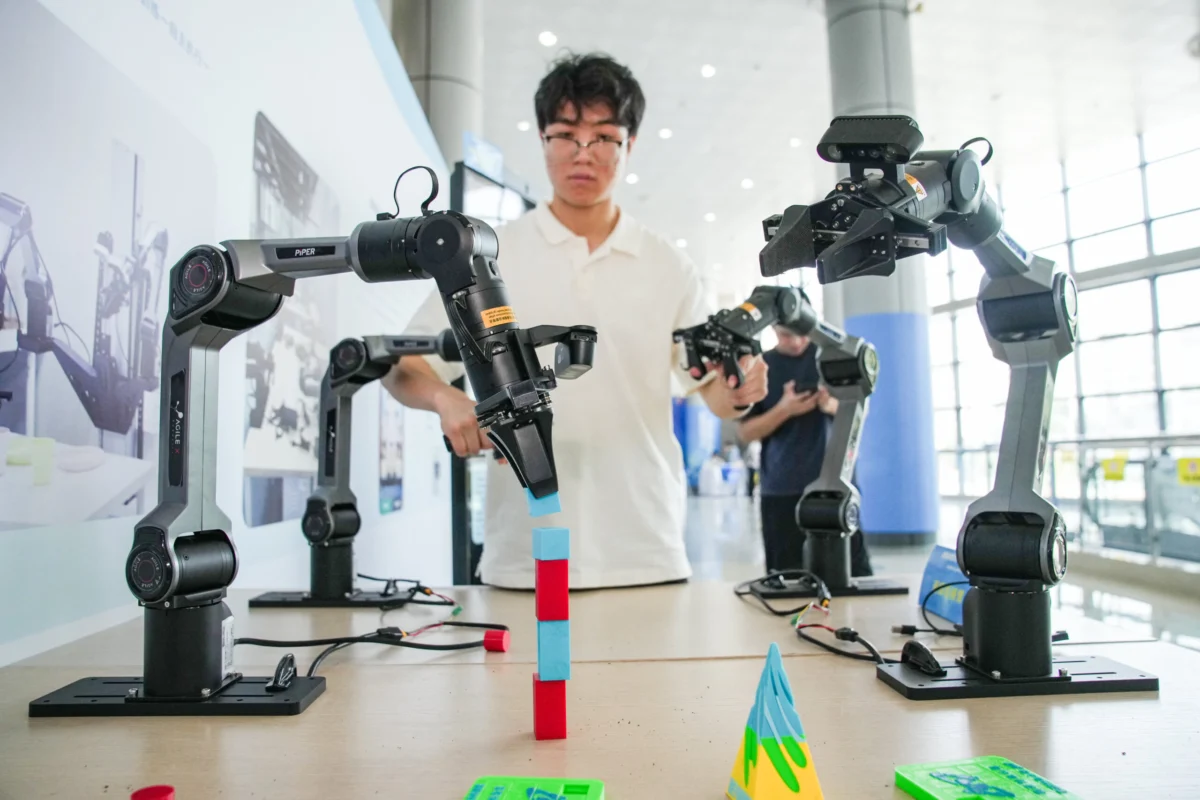
The U.S.-China AI talent race is not merely a corporate HR battle; it is a long-term strategic competition that necessitates sustained investment in education, research, and innovation ecosystems. China’s efforts, exemplified by events like the National Science Popularization Event in Nanning, demonstrate a commitment to building its talent pipeline from the ground up, fostering interest in STEM fields among its youth. This comprehensive approach, combining grassroots initiatives with aggressive international recruitment and substantial domestic investment, positions China as a formidable contender in the global AI landscape.
For the U.S., the challenge is to not only retain its existing "geniuses" but also to cultivate new ones, ensuring a continuous flow of innovation and expertise. This involves maintaining a competitive edge in research funding, fostering an environment of open innovation, and ensuring that its educational institutions remain world leaders in AI and related fields. The implications of this talent competition are profound, influencing not only technological leadership and economic prosperity but also global power dynamics. As AI continues to reshape industries and societies, the nation that can attract, develop, and retain the best human capital will ultimately hold a decisive advantage in shaping the future. The episode involving Jensen Huang serves as a stark reminder that in the age of AI, human ingenuity remains the most valuable and hotly contested resource.

