
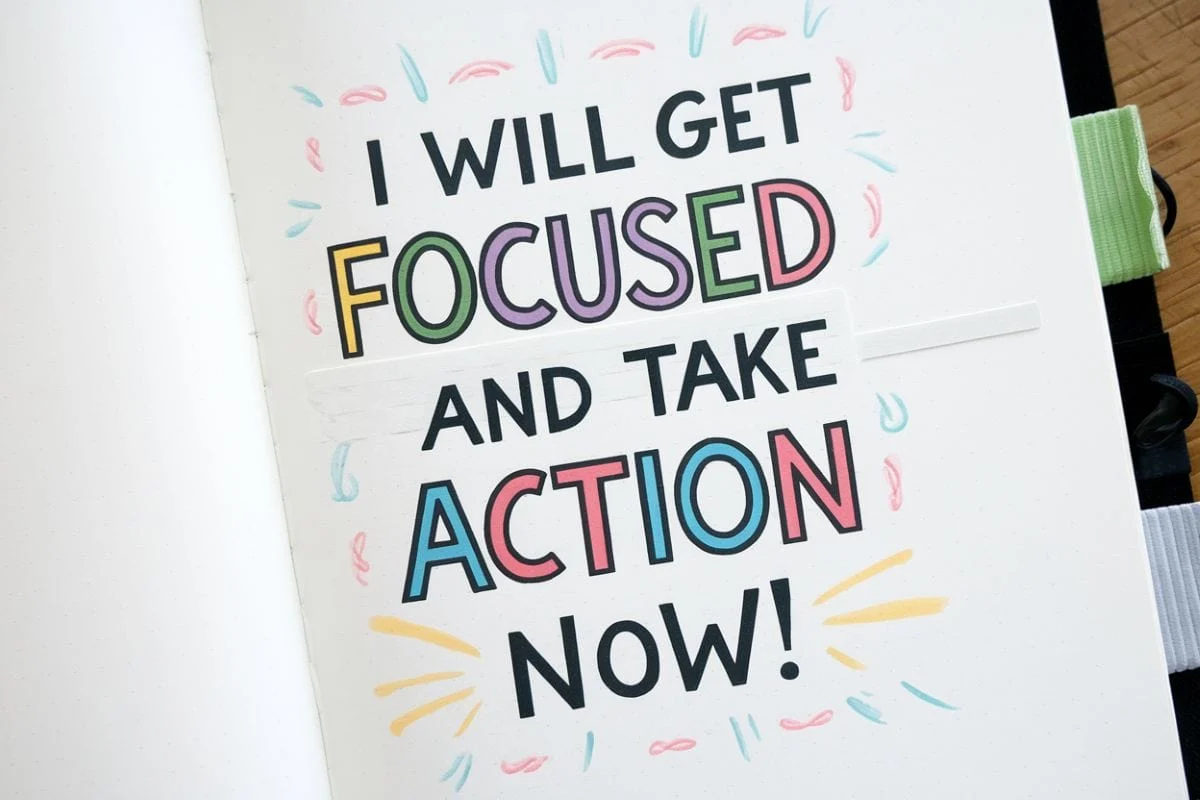
The bullet journal, a customizable analog system, has emerged as a powerful tool for individuals seeking to enhance organization and boost productivity. At its core, the to-do list, a seemingly simple construct, stands out as the most versatile and impactful element within this journaling practice. Its adaptability allows for personalized structuring by priority, time, or category, often enhanced by color-coding for intuitive task management. Whether one leans towards a rigid, structured approach or a more fluid, adaptable layout, the bullet journal offers a to-do list format to suit every need, ultimately fostering a more organized and productive life. This exploration delves into creative and effective ways to integrate to-do lists into your bullet journal, promising to elevate your organizational prowess and drive your productivity to new heights.
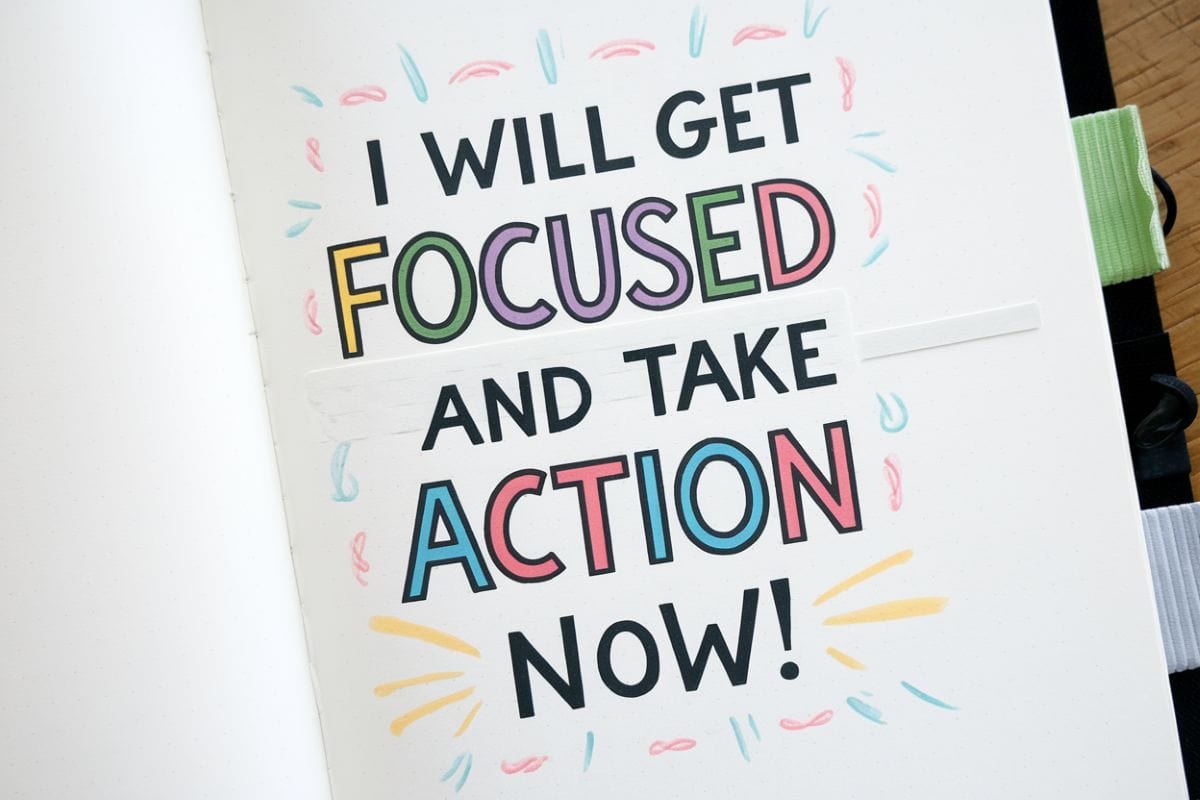
The Foundational Power of the Simple To-Do List
The most straightforward to-do list serves as a remarkably effective method for managing daily tasks. Its inherent simplicity belies its power, offering a clear pathway to organized and productive days. Whether the preference is for a minimalist aesthetic or a more detailed, structured layout, a basic bullet journal to-do list provides the framework necessary to keep track of responsibilities and ensure progress. This foundational approach is the starting point for many who discover the benefits of bullet journaling for task management.
The efficacy of a simple to-do list can be attributed to several psychological principles. The act of writing down tasks creates a tangible commitment, moving them from abstract thoughts to concrete actions. Furthermore, the visual representation of completed tasks provides a sense of accomplishment, which can be a significant motivator. Studies in cognitive psychology suggest that breaking down larger goals into smaller, actionable items, as facilitated by a to-do list, reduces cognitive load and makes tasks appear less daunting. This fundamental practice is the bedrock upon which more complex organizational systems are built.

Elevating Organization with Color-Coded Task Management
Color-coding can transform a standard to-do list into a dynamic, visually organized system that enables immediate prioritization. By assigning specific colors to different categories of tasks—such as urgent items, essential work duties, personal errands, or leisure activities—users can quickly identify what requires their immediate attention and what can be addressed later. This visual cueing system leverages the brain’s natural inclination to process color, making it easier to scan and digest information.
For instance, a common color-coding scheme might designate urgent tasks with red, essential items with yellow, and optional or "if I have time" tasks with blue. This approach not only streamlines the planning process but also helps in managing mental bandwidth by visually segmenting responsibilities. The psychological impact of color is well-documented; certain colors can evoke specific emotions or associations, and their strategic use in a planning system can subtly influence behavior and focus. Research from the field of visual design indicates that well-organized visual information is processed more efficiently, directly translating to improved task management and reduced decision fatigue.

Strategic Prioritization: The "Must Do – Should Do – If I Have Time" Framework
For individuals who find themselves overwhelmed by lengthy task lists, the "Must Do – Should Do – If I Have Time" framework offers a structured solution for prioritization. This method categorizes tasks based on their urgency and importance, ensuring that critical items are addressed first. By clearly delineating what absolutely needs to be accomplished versus what would be beneficial or is optional, this approach allows for a more focused and effective allocation of time and energy.
This tiered approach mirrors effective project management methodologies, where tasks are often classified by priority levels. In a professional context, such a system helps teams understand the critical path of a project and allocate resources accordingly. Applying this to personal productivity, it empowers individuals to maintain momentum on high-impact activities while acknowledging and planning for secondary or aspirational tasks. The psychological benefit lies in providing a clear hierarchy, reducing the anxiety of feeling like everything is equally important and urgent. This clarity fosters a sense of control and allows for more strategic decision-making regarding task execution.

The Refined "Must Do – Should Do" Approach
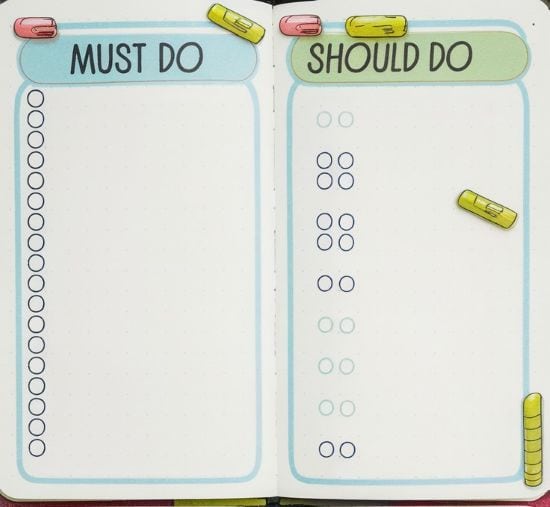
An even more streamlined version of this prioritization method involves focusing solely on "Must Do" and "Should Do" tasks. This simplification can be particularly effective for individuals who benefit from a more minimalist planning style or for days when time is exceptionally limited. By eliminating the "If I Have Time" category, the focus sharpens exclusively on essential and important tasks, further reducing the potential for overwhelm and ensuring that core responsibilities are met. This concentrated approach emphasizes efficiency and the direct completion of critical objectives.
Adapting To-Do Lists for Different Planning Horizons
The effectiveness of a to-do list can be significantly amplified by tailoring its format to the specific planning horizon—daily, weekly, or monthly. Each timeframe demands a different level of detail and scope, and a well-designed bullet journal spread can accommodate these varying needs, thereby enhancing overall planning efficacy.

Daily To-Do List Spreads: Capturing the Moment
Daily to-do lists are indispensable for managing short-term tasks and immediate responsibilities. They provide a granular view of what needs to be accomplished within a 24-hour period, fostering a sense of daily achievement.
A Week at a Glance: Integrated Daily Planning
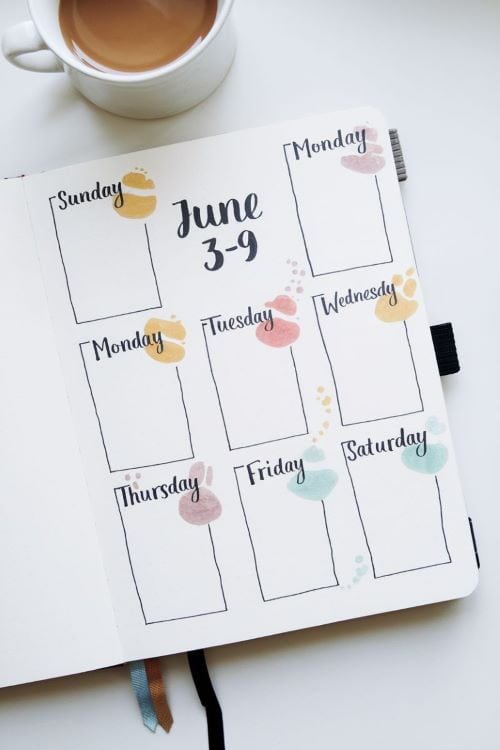
A popular approach is to create a weekly spread that incorporates daily to-do lists. This format allows for a holistic view of the week’s commitments while still providing the structure for daily task management. By allocating space for each day, individuals can list tasks, appointments, and important notes, facilitating efficient planning and execution throughout the week. This integrated system helps in anticipating potential conflicts or overlaps and allows for better time blocking and resource allocation across the entire week. The visual coherence of seeing the entire week laid out can also contribute to a feeling of control and reduce the stress associated with managing multiple days’ worth of tasks.
Monthly To-Do List Spreads: The Bigger Picture
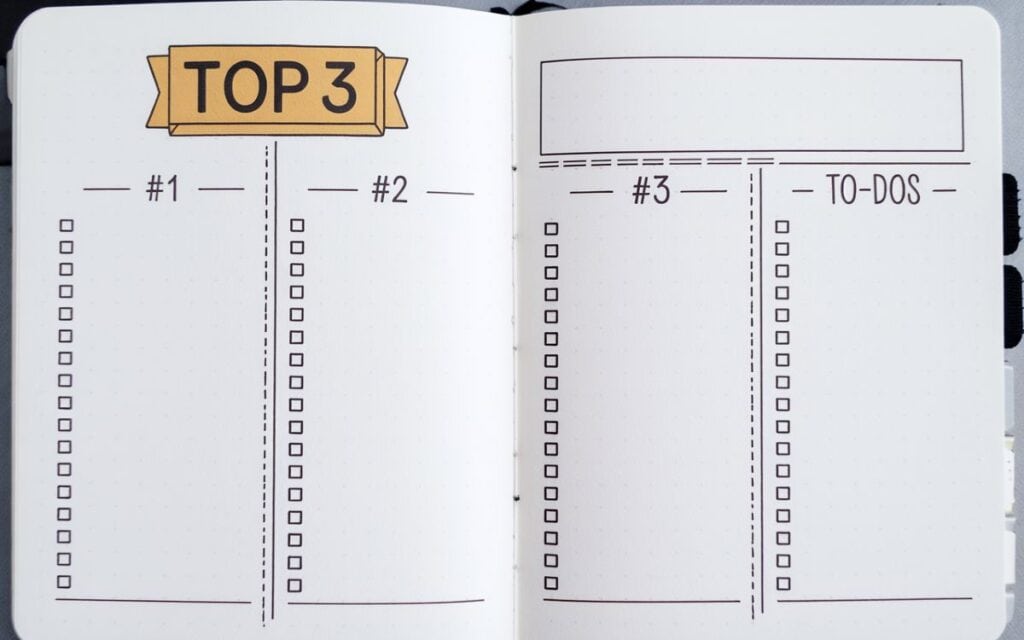
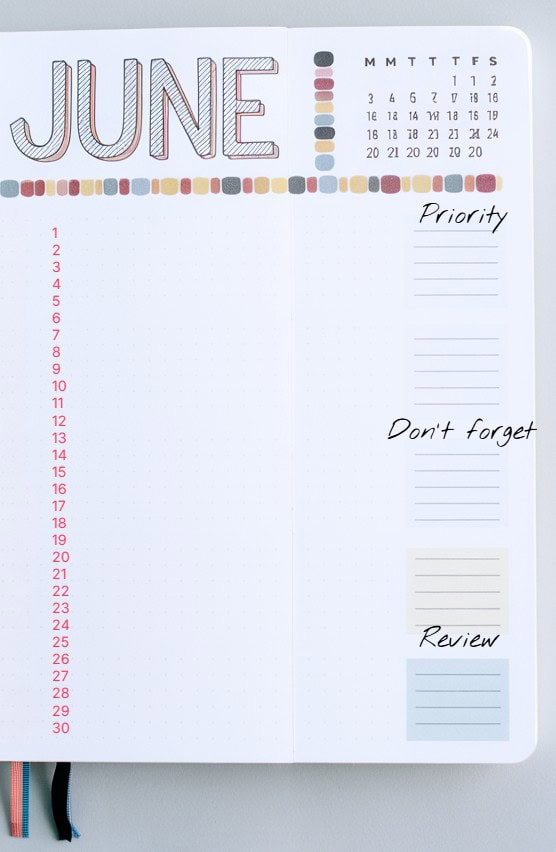
For longer-term planning and task management, monthly spreads are invaluable. These layouts offer a broader perspective, allowing users to map out major tasks, deadlines, and goals for the entire month. This high-level view is crucial for strategic planning, ensuring that larger projects are broken down into manageable weekly or daily steps. A monthly to-do list can also serve as a master list, from which daily and weekly tasks are derived. This ensures that all activities are aligned with overarching monthly objectives, promoting consistent progress towards significant goals.
Routine Task Management: Building Consistency
Routine tasks, whether personal or professional, often form the backbone of daily life. However, they can easily be overlooked amidst more pressing demands. Dedicated bullet journal pages for routine tasks can foster accountability and build consistency, ensuring that these recurring responsibilities are not neglected.
Time-Based Task Scheduling
For individuals who manage their tasks based on available time slots, a time-based to-do list format is ideal. This method involves listing tasks and assigning them to specific time blocks throughout the day. It’s particularly useful for those with fluctuating schedules or who need to fit tasks into the gaps between appointments and other commitments. This approach leverages time management principles by encouraging users to be conscious of how their time is spent and to proactively allocate periods for task completion. It transforms a passive list into an active schedule, promoting a more disciplined and efficient use of time.
Weekly Recurring Tasks: Building Habitual Efficiency
A dedicated spread for weekly recurring tasks can be instrumental in establishing and maintaining habits. By listing common weekly chores or responsibilities, such as grocery shopping, bill payments, or exercise, users can create a consistent checklist. This layout simplifies the process of tracking these essential activities, ensuring they are not forgotten and contributing to a sense of routine and order. The psychological benefit here lies in the reinforcement of habits. As these tasks are consistently checked off, they become ingrained behaviors, requiring less conscious effort over time. This frees up mental energy for more complex or novel tasks.
Weekly Rotating Tasks: Embracing Flexibility
Not all weekly tasks are fixed. For situations where responsibilities vary from week to week, a flexible rotating task list is essential. This type of spread allows individuals to write in specific tasks as they arise each week, providing the necessary adaptability. This approach is particularly beneficial for project-based work or for managing household responsibilities that change based on seasonal needs or unforeseen circumstances. The key advantage is the ability to adapt the planning system to the reality of dynamic workloads, preventing the planning tool itself from becoming a source of frustration due to inflexibility.
Project Planning: Deconstructing Large Goals
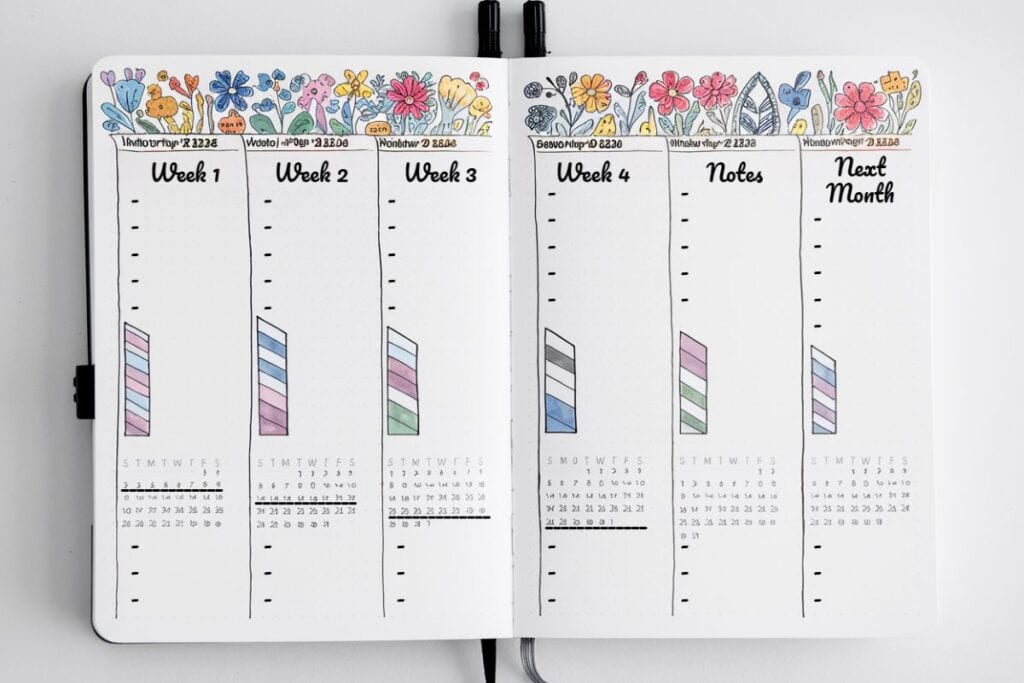
Managing complex, long-term projects can be a significant challenge. A well-designed project planner to-do list within a bullet journal can break down these large endeavors into smaller, more manageable steps. This process of deconstruction is crucial for maintaining momentum and avoiding the feeling of being overwhelmed.
Bullet Journal Project Planner To-Do List
By organizing tasks by milestones, priorities, or deadlines, a project planner to-do list within a bullet journal provides a clear roadmap for project completion. Whether the project is professional, personal, or creative, this structured approach ensures that progress is visible and that all necessary steps are accounted for. This method aligns with principles of project management, such as work breakdown structures (WBS), where large tasks are divided into smaller, more actionable components. The psychological benefit of this approach is profound: seeing progress on smaller tasks builds confidence and motivation, making the overall project seem more achievable. It transforms a daunting mountain into a series of manageable hills.
The Evolving Role of the To-Do List in Productivity
In conclusion, the to-do list within the bullet journal system transcends its basic function as a mere task tracker. It evolves into a dynamic tool that fosters clarity, mitigates overwhelm, and drives consistent progress toward personal and professional goals. The versatility offered by various layouts—from simple checklists to intricate color-coded systems and project-specific planners—empowers individuals to find a method that resonates with their unique planning style and needs.
The true power of bullet journaling lies not in the aesthetic appeal of its pages, but in its adaptability and its capacity to reflect and support an individual’s time management, prioritization skills, and habit-building endeavors. By encouraging experimentation with different layouts and approaches, bullet journaling offers a flexible framework for optimizing productivity. Ultimately, the most effective planner pages are not necessarily the most visually elaborate, but rather those that empower users to organize, take decisive action, and effectively achieve their objectives, embodying the core principle of getting things done.

