

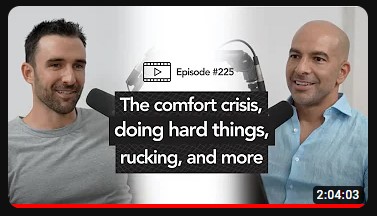
A compelling narrative has emerged from the intersection of health science, psychology, and personal finance, spearheaded by author Michael Easter’s acclaimed work, "The Comfort Crisis." This seminal book, which initially gained significant traction following an insightful discussion on Dr. Peter Attia’s widely influential podcast, posits a provocative thesis: that the unprecedented ease and overindulgence characteristic of modern American life are not blessings but rather insidious contributors to a myriad of physical, mental, and societal ailments. Far from facing an insurmountable debt or health crisis born of scarcity, many contemporary challenges, according to Easter and echoed by various experts, stem from an excess of comfort and a pervasive disengagement from purposeful hardship.
The Genesis of a Groundbreaking Idea

The journey of "The Comfort Crisis" from an intriguing podcast headline to a significant cultural touchstone underscores its resonance with a population grappling with the paradox of modern living. Dr. Peter Attia, a physician renowned for his focus on longevity and performance, introduced Easter’s work, sparking widespread interest. Easter, a former writer for Men’s Health magazine, brings a unique and deeply personal perspective to his examination of comfort and hardship. His past struggles with catastrophic alcohol addiction, a battle he ultimately overcame, lend profound authenticity to his arguments. This firsthand experience with overindulgence in "hollow comforts" provides him with a compelling lens through which to analyze the broader societal battle between ease and resilience.
The book’s structure is a testament to Easter’s journalistic prowess, employing a dual narrative that captivates and educates. It interweaves the demanding, visceral account of his participation in an intensely difficult caribou hunting expedition in a remote Alaskan wilderness with meticulous explorations of scientific research, psychological principles, and cultural observations. This method allows readers to process the raw, experiential lessons of extreme physical and mental challenge alongside academic insights, facilitating a deeper understanding and application of the book’s core tenets in their own lives.
Deconstructing the "Comfort Crisis": A Scientific Perspective

At the heart of Easter’s argument lies a profound psychological insight: the human brain’s inherent tendency to perpetually scan its environment for problems, irrespective of how secure or idyllic that environment may be. This phenomenon, explored through various studies cited in the book, reveals a fascinating adaptive mechanism gone awry in an era of unprecedented safety and convenience. Researchers have demonstrated that as external threats diminish, the human mind doesn’t necessarily achieve greater contentment; instead, it subtly lowers its threshold for what constitutes a "problem." This means that in the absence of genuine challenges, individuals often begin to perceive trivial inconveniences as significant issues, leading to manufactured anxieties and disproportionate reactions.
This psychological dynamic offers a compelling explanation for seemingly irrational societal behaviors, such as the hyper-focus on minor infractions within suburban homeowner associations or the proliferation of seemingly insubstantial "wedge issues" in political discourse. Instead of fostering appreciation for a life largely free from existential threats, an overabundance of comfort can inadvertently cultivate a culture of complaint and division. Data from the American Psychological Association consistently highlights rising stress levels, often attributed to factors that, when viewed from a historical or global perspective, appear relatively minor. This suggests a societal desensitization to true hardship, replaced by a heightened sensitivity to manufactured problems.
Conversely, the book emphasizes the profound resilience cultivated in individuals who navigate genuinely challenging environments. A striking example can be drawn from interviews with Ukrainian citizens living in active war zones, where a surprisingly high percentage reported feeling "safe," a sentiment not drastically different from responses in much more secure Western cities. This speaks to a remarkable human capacity for adaptation, where exposure to genuine adversity recalibrates one’s perception of normalcy and safety, fostering mental fortitude. Similarly, the entrepreneurial drive often observed in first-generation immigrants, who adapt to slightly harsher conditions as "normal," contrasts sharply with the potential for complacency in subsequent generations raised in greater comfort, underscoring the adaptive principle at play. The wealth and business creation observed in many immigrant communities in the U.S. and other developed nations often aligns with this principle, as individuals accustomed to overcoming obstacles approach new opportunities with greater tenacity and a lower expectation of effortless success.
The Healing Power of Nature and Purposeful Exertion
"The Comfort Crisis" also dedicates significant attention to the vital, yet often overlooked, role of nature in human well-being. Modern research overwhelmingly supports the notion that spending time in natural environments offers profound mental and physical health benefits, serving as a powerful antidote to the stressors of urban and sedentary lifestyles. Concepts such as "forest bathing" (Shinrin-yoku) from Japan demonstrate measurable physiological improvements, including reduced blood pressure, lower stress hormone levels (cortisol), and enhanced immune function, even from brief exposures to green spaces. The mere presence of a plant in a hospital room has been shown to accelerate patient recovery, underscoring our intrinsic biological connection to the natural world – a phenomenon known as biophilia. Prolonged engagement with natural settings, as Easter illustrates through his Alaskan journey, amplifies these therapeutic effects, offering a holistic medicine that no cubicle or car commute can replicate.
Furthermore, the book delves into the human relationship with effort and reward, highlighting a fundamental psychological truth: the harder one works for something, the greater the satisfaction derived from its attainment. This principle is starkly juxtaposed against humanity’s innate aversion to physical exertion, a tendency profoundly amplified in comfortable modern societies. A compelling statistic reveals this inclination: a mere 2% of people opt for stairs when an escalator is available. This widespread avoidance of physical effort carries an immense, often unseen, cost.

The consequences of pervasive physical inactivity are staggering. The World Health Organization (WHO) identifies physical inactivity as a leading risk factor for non-communicable diseases (NCDs) such as heart disease, stroke, diabetes, and certain cancers, contributing to millions of preventable deaths annually. Beyond physical health, a sedentary lifestyle is increasingly linked to mental health issues, including higher rates of anxiety and depression. "The Comfort Crisis" unequivocally champions the transformative power of physical movement, particularly when integrated into natural environments and involving significant exertion. Such activities are not merely supplementary but are foundational pillars of human health and resilience, offering reproducible and effective pathways to improved well-being that often precede the need for more specialized medical interventions.
Real-World Application: Embracing Deliberate Hardship
The principles espoused in "The Comfort Crisis" are not merely theoretical; they are profoundly actionable. The author provides a compelling, albeit personally framed, example of deliberate engagement with hardship during a period of "Carpentourism" in the remote mountains of Southwestern Colorado. This experience, though perhaps not "hard" by historical or global standards, provided a stark contrast to the comfortable routines of modern life, thereby amplifying the perceived challenges and the lessons derived.

The journey began with a series of minor adversities: navigating a torrential rainstorm, incurring a traffic fine, and sustaining a significant crack in a new vehicle’s windshield. While these might typically induce stress, the context of reading Easter’s book transformed them into opportunities for perspective and growth. The subsequent days involved physically demanding construction work in a high-desert environment – contending with heat, managing limited water and tools without indoor plumbing, and enduring a constant "blizzard" of tree pollen. Nights were spent alone, converting the vehicle into a makeshift bedroom, far from familiar comforts.
Yet, rather than succumbing to despondency, the experience fostered a profound sense of vitality and self-reliance. The challenges served to sharpen focus, enhance adaptability, and instill a deeper appreciation for fundamental necessities. This period culminated in a paddleboarding excursion on a wild, remote reservoir. Without phones or amenities, battling a stiff headwind and whitecap waves, the physical exertion and slight apprehension gave way to exhilaration and a heightened sense of freedom. Reaching a tranquil, wind-sheltered cove, exploring a pristine meadow, and then drifting back across the lake in serene contemplation, devoid of possessions or plans, underscored the profound rewards of earned experience. The absence of a camera, rather than being a drawback, forced a more intense sensory engagement, etching the memories more deeply.
The return to conventional life further illuminated Easter’s principles. After days of strenuous work and a relatively sparse diet, a healthy background hunger became the norm – a natural human state often suppressed by constant access to food. The subsequent "thank you" dinner, featuring an immense burrito platter, was transformed into an unparalleled culinary experience, its deliciousness amplified by the prior period of deprivation and exertion. This vividly illustrated the effort-reward principle, where purposeful hardship elevates the appreciation for simple comforts.

Societal Implications and Expert Consensus
The insights of "The Comfort Crisis" resonate deeply within broader societal discussions concerning consumerism, well-being, and resilience. The FIRE (Financial Independence, Retire Early) community, for instance, often grapples with the balance between intentional spending and inadvertently re-introducing unnecessary comforts. While purposeful spending on experiences, self-improvement, and generosity is lauded, the subtle creep of "lifestyle inflation" and the acquisition of conveniences that merely soften life’s edges can undermine the very principles of self-reliance and challenge that define the movement.
Experts across various fields increasingly echo Easter’s concerns. Psychologists warn against the detrimental effects of "coddling" and the erosion of grit in younger generations, advocating for environments that encourage problem-solving and perseverance. Public health officials lament the decline of physical literacy and the rise of chronic diseases directly linked to sedentary, hyper-convenient lifestyles. Economists and social commentators point to the societal costs of pervasive consumerism, which often promises ease and instant gratification but delivers fleeting satisfaction and mounting debt.

The core message of "The Comfort Crisis" serves as a powerful counter-narrative to the prevailing cultural push for effortless living. It argues that true fulfillment, robust health, and genuine appreciation are often found not in the elimination of difficulty but in its purposeful embrace.
Charting a Path Forward: Recommendations for a Resilient Future
"The Comfort Crisis" offers more than just a critique; it provides a blueprint for a more fulfilling and resilient life. The recommendations are refreshingly straightforward and deeply rooted in our evolutionary biology, yet they stand in stark contrast to many modern habits:

- Maximize Outdoor Time: Engage with natural environments daily, whether through walks, gardening, or more adventurous pursuits.
- Embrace Heavy Exertion: Incorporate strenuous physical activity, including strength training and endurance challenges, into your routine.
- Minimize Sedentary Behavior: Actively reduce time spent sitting and driving; seek opportunities for movement throughout the day.
- Limit Processed Foods, Sugar, and Alcohol: Prioritize whole, unprocessed foods and practice moderation in consumption of comfort-inducing, but ultimately detrimental, substances.
These are not "alternative" health suggestions but fundamental requirements for human flourishing, often overshadowed by a relentless pursuit of quick fixes and exotic treatments. While adherence to medical advice is paramount, the book implicitly suggests that many contemporary health challenges could be significantly mitigated by first addressing these foundational elements of human well-being. The emphasis is on proactive, lifestyle-based interventions that harness our innate capacity for resilience.
In essence, "The Comfort Crisis" is a potent distillation of wisdom for navigating the complexities of modern existence. It is a clarion call to re-evaluate our relationship with comfort, to understand its hidden costs, and to purposefully reintroduce elements of challenge and effort into our lives. The enduring message, perhaps best encapsulated by the adage "buy better tools, not softer chairs," encourages an intentional approach to life – one that values capacity and capability over passive ease, ultimately paving the way for a more robust, appreciative, and authentically engaged human experience.

