
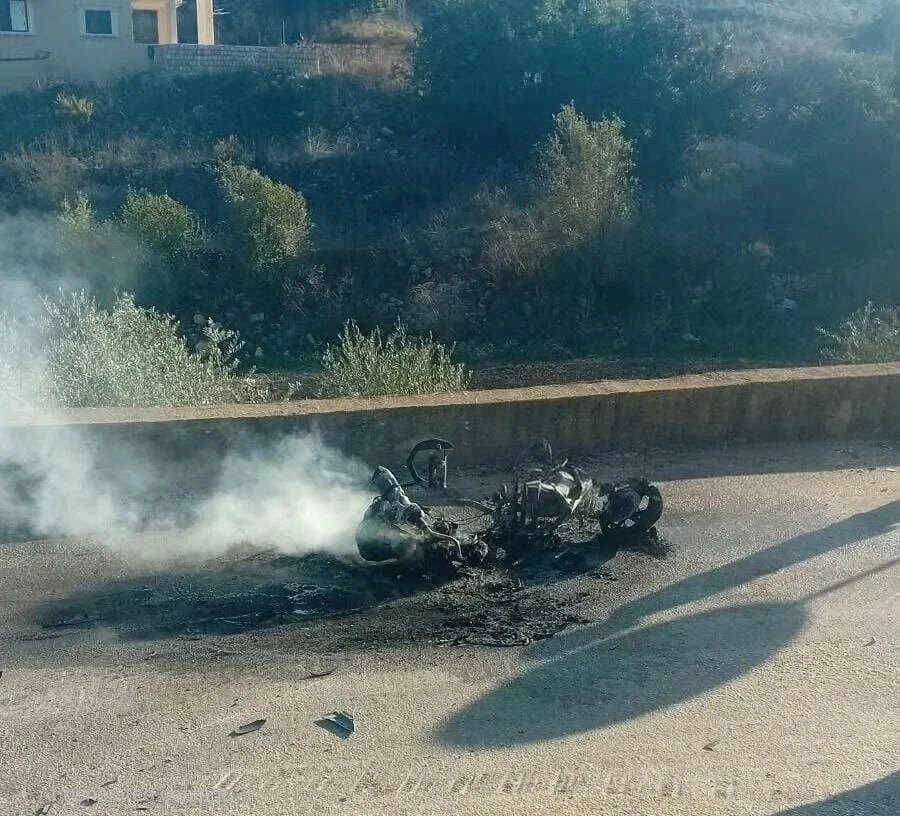
The precarious calm along the Israel-Lebanon border, technically upheld by a fragile and frequently violated truce, has been severely tested following a deadly Israeli drone strike in the southern Lebanese town of Qabrikha. The incident, which resulted in the death of a medical worker and injury of a photojournalist, has ignited outrage in Lebanon and deepened fears of a wider regional conflagration, prompting urgent warnings from Lebanese officials to Hezbollah against further escalation. This strike marks a significant uptick in military activity after a relative lull, underscoring the volatile nature of the border region already reeling from the spillover effects of the ongoing conflict in Gaza.
A Fragile Truce Under Strain
For decades, the southern Lebanese border has been a flashpoint, characterized by intermittent conflict and a delicate balance maintained by international agreements and peacekeeping forces. The current truce, often referencing the cessation of hostilities following the 2006 Lebanon War and enshrined in UN Security Council Resolution 1701, is more a state of uneasy non-belligerence than a true peace. Resolution 1701 calls for the full cessation of hostilities, respect for the Blue Line (the demarcation line between Lebanon and Israel), and the establishment of a demilitarized zone free of armed groups between the Blue Line and the Litani River, except for the Lebanese Armed Forces (LAF) and the United Nations Interim Force in Lebanon (UNIFIL). However, Hezbollah, a powerful Shiite political party and militant group, maintains a significant presence and arsenal in southern Lebanon, frequently clashing with Israeli forces.
Since the eruption of the Israel-Hamas conflict in October, the border has witnessed a dramatic surge in cross-border fire, primarily involving Hezbollah launching rockets and drones into northern Israel, and Israel responding with airstrikes and artillery fire deep into Lebanese territory. These exchanges have caused significant displacement on both sides of the border, with tens of thousands of Israelis evacuated from northern communities and over 90,000 Lebanese civilians displaced from their homes in the south, according to UN figures. The violence has claimed lives on both sides, predominantly Hezbollah fighters and Lebanese civilians, but also Israeli soldiers and civilians.
The Qabrikha Drone Strike: Conflicting Narratives
On Wednesday, the escalation reached a critical point with an Israeli drone strike on the Lebanese town of Qabrikha. The Israel Defense Forces (IDF) released a statement asserting that the strike targeted "suspects" who were "observing" Israeli forces operating within what it described as a "security zone" in southern Lebanon. An official IDF statement elaborated: "Earlier today (Wednesday), the [army] struck two suspects who were observing forces in the area of Qabrikha, located outside the security zone in southern Lebanon. The strike was carried out to eliminate the threat to forces operating in the security zone." The IDF further claimed that Israel "remains committed to the agreement between Israel and Lebanon," despite the operation occurring deep inside Lebanese territory.
However, the Lebanese narrative sharply contradicts the Israeli account. Lebanese health authorities swiftly confirmed that the strike killed one person and wounded another. The deceased was identified as a medical worker, while the injured individual was a local photojournalist. Both were reportedly traversing roads in their own country on a motorcycle when they were struck. Local reports, corroborated by Israeli media accounts which cited Lebanese sources, identified the deceased medical worker as being affiliated with the Amal Movement, a Shiite political party and militia allied with Hezbollah.
The Lebanese public and officials expressed outrage over what they perceive as an unprovoked attack on civilians and a blatant violation of Lebanese sovereignty. The notion of Israeli forces operating a "security zone" inside Lebanese territory is a contentious point, echoing historical grievances over Israeli occupations and incursions. For many Lebanese, the incident is not merely a targeting of "suspects" but an extrajudicial killing of individuals going about their daily lives, further eroding trust and fueling anti-Israeli sentiment. The strike has been highlighted as a stark reminder of the ongoing IDF presence and military actions well within Lebanese sovereign borders, often justified by Israel as pre-emptive self-defense against perceived threats from Hezbollah.
Chronology of Escalation and De-escalation Attempts
The Qabrikha strike is part of a broader, fluctuating pattern of cross-border hostilities since October 7th. Initially, Hezbollah’s engagement was calibrated, primarily targeting Israeli military positions near the border in what it described as a "support front" for Hamas in Gaza. This limited engagement was seen by some analysts as an attempt to exert pressure on Israel without triggering an all-out war, while also demonstrating solidarity with Palestinian factions.
- October 7th, 2023: Hamas launches its unprecedented attack on Israel, triggering the current conflict in Gaza.
- October 8th, 2023: Hezbollah launches rockets and artillery shells into northern Israel in solidarity with Hamas, initiating the border conflict.
- Late 2023 – Early 2024: Daily exchanges of fire become routine, with Hezbollah primarily targeting Israeli military sites and towns, and Israel responding with airstrikes and artillery, pushing deeper into Lebanese territory. Civilian casualties mount on both sides.
- January 2024: An Israeli strike in Beirut kills Saleh al-Arouri, a senior Hamas leader, escalating tensions significantly and leading to more intense Hezbollah retaliatory strikes.
- February – March 2024: While exchanges continue, there are periods of relative de-escalation, possibly due to international diplomatic efforts or a mutual desire to avoid full-scale war. However, targeted assassinations attributed to Israel against Hezbollah commanders continue.
- Late March – Early April 2024: Reports suggest a slight decrease in the intensity of cross-border fire, though skirmishes persist.
- Wednesday, April X, 2024 (Approximate date of article): The drone strike in Qabrikha occurs, marking a significant re-escalation and the first major Israeli military action involving civilian casualties in weeks, reigniting fears of a broader conflict.
- Late Wednesday into overnight hours: Following the Qabrikha incident, reports emerge of intense Israeli strikes taking place across southern Lebanon, indicating a potential cycle of retaliation and counter-retaliation.
Internal Lebanese Divisions and Prime Minister Salam’s Warning
The Qabrikha incident and the broader escalation underscore deep internal divisions within Lebanon regarding Hezbollah’s role and its independent decision-making on matters of war and peace. Lebanese Prime Minister Nawaf Salam issued an urgent and stark warning to Hezbollah, cautioning the group against "plunging the country into a new senseless adventure in service of outside interests." His remarks, though not explicitly naming Hezbollah, were unequivocally directed at the Iran-backed group, which operates largely outside the direct control of the Lebanese state.
Salam’s statement articulated the immense human and economic cost already borne by the Lebanese people, particularly those in the south. He condemned the "exorbitant price in human lives, livelihoods, and destroyed homes" and stressed the right of Lebanese citizens to "live in security and build their future away from the cycle of wars, forced displacements, and destruction." This sentiment resonates deeply with a population still grappling with the devastating aftermath of the 2006 war, which caused widespread destruction and displacement, and an ongoing severe economic crisis that has crippled the country.
Crucially, Salam reiterated that protecting Lebanon is "a national responsibility," directly challenging Hezbollah’s narrative of leading the "resistance" against Israel. He emphasized the paramount importance of "putting Lebanon’s higher interest above all other considerations" and insisted that "the decision of war and peace is the exclusive domain of the state and its constitutional institutions." This assertion is a direct challenge to Hezbollah’s de facto control over military decisions concerning Israel, highlighting the power vacuum and fractured sovereignty within Lebanon. "We do not accept the country again becoming a theatre for the conflict of others," Salam added, echoing a widespread fear among Lebanese citizens who feel their nation is often a proxy battleground for regional powers.
Hezbollah’s Influence and Regional Geopolitics
Hezbollah, meaning "Party of God," is a Shiite Islamist political party and militant group based in Lebanon. Formed in the early 1980s with Iranian support during the Lebanese Civil War, it has evolved into a formidable political and military force. Unlike a conventional political party, Hezbollah maintains an extensive social services network, a political wing with representation in the Lebanese parliament, and a highly sophisticated military wing. It is by far the most well-armed non-state actor in the region, possessing an arsenal estimated to include tens of thousands of rockets and missiles, many of which are precision-guided. Its military capabilities far exceed those of the official Lebanese Armed Forces (LAF).
Ironically, the relative weakness of the LAF is partly attributable to US sanctions and restrictions on military aid to Lebanon, which greatly limit the type and amount of equipment the national army can receive from abroad. This paradoxically empowers Hezbollah, as it remains the primary, and often only, effective deterrent against Israeli incursions in the eyes of many Lebanese, particularly within the Shiite community.
Hezbollah’s substantial popular support base, both within Lebanon (especially among Shiites) and the broader region, stems from its resistance narrative against Israel and its provision of social services. However, its independent military actions and alignment with Iran often clash with the interests of other Lebanese factions, particularly Christian and Sunni communities, who view its armed status as an infringement on state sovereignty and a constant risk to national stability.
The looming specter of a wider regional conflict, potentially involving Iran and its proxies more directly, casts a long shadow over the current situation. Hezbollah is a crucial component of Iran’s "Axis of Resistance," a network of allied groups aimed at countering US and Israeli influence in the Middle East. Any significant escalation on the Lebanon-Israel front could quickly draw in Iran and other regional actors, transforming the localized conflict into a broader regional war with catastrophic implications.
Implications and Future Outlook
The Qabrikha drone strike and the subsequent warnings from Lebanese officials underscore several critical implications:
- Heightened Risk of All-Out War: The incident demonstrates Israel’s willingness to conduct deep strikes within Lebanese territory and Hezbollah’s potential for retaliation. This tit-for-tat dynamic keeps the region on the brink of a full-scale conflict, a scenario neither Israel nor Hezbollah (nor Iran, for now) seems to desire, but one that could easily spiral out of control.
- Erosion of Lebanese Sovereignty: The IDF’s operation within Lebanon and its justification of a "security zone" deep inside another country’s territory further erodes Lebanese sovereignty and highlights the state’s inability to fully control its borders or prevent foreign military actions.
- Internal Instability in Lebanon: The public warnings from Prime Minister Salam expose the deep fissures within Lebanon. Hezbollah’s actions continue to challenge the authority of the state, exacerbating political paralysis and economic hardship. A wider war would be devastating for a country already teetering on the brink of collapse.
- Humanitarian Crisis: Continued escalation would undoubtedly lead to more displacement, casualties, and destruction, exacerbating an already dire humanitarian situation in southern Lebanon and further straining Lebanon’s fragile infrastructure and social services.
- Regional Implications: The Israel-Lebanon front is intimately linked to the broader regional conflict. A significant escalation here could force a shift in military resources, potentially drawing in more actors and further destabilizing the entire Middle East.
The international community, including the United Nations and various diplomatic missions, has been engaged in efforts to de-escalate tensions, but success has been limited. The fragile truce, which relies heavily on deterrence and unspoken understandings, is under immense pressure. The Qabrikha strike serves as a potent reminder that even minor incidents can quickly ignite a powder keg, pushing Lebanon and the wider region closer to a conflict that few desire but many fear is inevitable. The delicate balance hinges on the calculations of all parties, but particularly on whether Hezbollah heeds the warnings of its own government or chooses to prioritize its regional allegiances over the immediate stability of Lebanon.

