
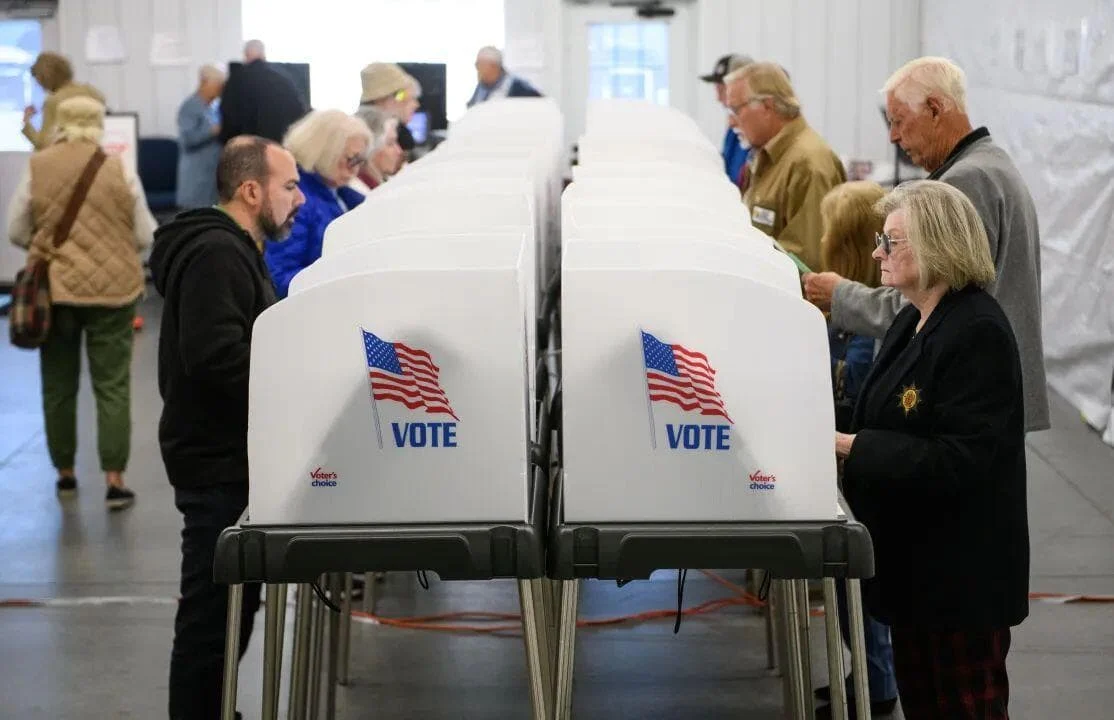
Just two days before the critical midterm elections, the Republican National Committee (RNC) has publicly acknowledged a significant challenge regarding voter turnout among its base, even as various public polling and forecast models project a Democratic advantage in the battle for control of both chambers of Congress. This admission by RNC Chair Joe Gruters highlights a growing anxiety within the Republican Party about its ability to mobilize supporters, contrasting sharply with earlier expectations of a widespread "red wave" that would sweep the GOP into power. The eleventh-hour scramble to energize the electorate underscores the high stakes of these elections, which will determine the legislative direction of the country for the next two years.
The Immediate Pre-Election Landscape and Historical Context
The political atmosphere leading into these midterms has been characterized by intense partisan division and a fierce battle for legislative supremacy. Historically, midterm elections often serve as a referendum on the sitting president and their party. The party out of power typically gains seats in Congress, a pattern frequently observed in American political history. With President Biden’s approval ratings fluctuating in the low 40s and the nation grappling with persistent inflation, economic anxieties, and other pressing issues like crime and border security, many political analysts and Republican strategists initially anticipated a strong showing for the Republican Party.
However, the dynamics have proven more complex than simple historical trends might suggest. Issues such as the Supreme Court’s decision to overturn Roe v. Wade, which revoked the constitutional right to abortion, have notably energized Democratic voters and independents. Simultaneously, concerns over the economy, gas prices, and public safety continue to be potent motivators for the Republican base. Control of both the House of Representatives and the Senate hinges on these elections, determining the legislative agenda, the ability to pass or block presidential initiatives, and significantly influencing the trajectory of the presidential election cycle to follow. The RNC’s candid assessment of a potential turnout deficit, even amidst a generally favorable national environment for the opposition party, reveals the depth of their concern that underlying sentiment might not translate into actual votes.
RNC Chair’s Candid Assessment: A Turnout Discrepancy
RNC Chair Joe Gruters articulated the party’s concerns during an appearance on NewsNation’s The Hill Sunday. When directly questioned by host Chris Stirewalt about potential turnout issues, Gruters confirmed the party’s vulnerability, stating, "Yes, but Democrats tend to turn out early. We tend to vote on Election Day. We expect large turnouts across this country. We know our base is motivated." This distinction between early voting patterns and Election Day turnout is central to the Republican strategy and their current anxiety.
Over recent election cycles, there has been a significant shift in voting methods, with an increasing number of Americans opting for early voting, either through mail-in ballots or in-person early voting centers. While Democrats have increasingly embraced and excelled at these early voting mechanisms, Republicans have traditionally relied more heavily on their base showing up en masse on the designated Election Day. The concern articulated by Gruters is that if this expected Election Day surge doesn’t materialize with sufficient force, the early Democratic lead—established through robust early voting—could become insurmountable.
Gruters’ remarks directly echoed a stark warning issued days prior by Senator Ted Cruz (R-Texas), who cautioned GOP voters against complacency. "If our voters turn out, we win," Gruters affirmed, channeling Cruz’s message. "That’s what Sen. Cruz is trying to communicate. You can’t sit back and think that we’re going to win if you don’t show up to the polls." Cruz himself, on an episode of his podcast The Verdict with Ted Cruz, had painted a grim picture, suggesting that "massive Democratic turnout" could lead to a "bloodbath" for Republicans. He pointed specifically to early voting trends, stating, "If the election were over today, if just the early votes that have been cast so far are counted, Republicans would lose massively." This sentiment reveals a deep-seated worry within the GOP that while Republican enthusiasm might be present, it might not translate into actual votes at the same rate as Democratic mobilization, particularly in the critical early voting period, which has already seen millions of ballots cast.
The Polling and Forecasting Landscape: A Democratic Edge?
Adding to the Republican apprehension are the prevailing public polling and statistical forecast models that largely favor Democrats. A recent Emerson College Polling survey and a CNN/SSRS poll, both conducted in the final weeks before the election, indicated Democrats holding a significant 10-point lead over Republicans in generic ballot questions. The generic ballot, which asks voters whether they intend to vote for a Republican or Democratic candidate without naming specific individuals, often serves as a key barometer for national sentiment in midterm cycles.
More strikingly, Decision Desk HQ, a respected polling partner for The Hill, projected a substantial advantage for Democrats in the battle for congressional control. Their models assigned Democrats an 83% chance of securing control of the House of Representatives and a 62% chance of winning the Senate. These projections, while not guarantees, are based on sophisticated aggregations of various polls, demographic trends, historical data, and other predictive factors. For the RNC to acknowledge a turnout problem amidst such forecasts suggests a recognition of the uphill battle they face. The implication is that even if underlying voter sentiment might lean Republican on certain issues, a failure to convert that sentiment into votes, especially when compared to a seemingly energized Democratic base, could negate any theoretical advantage. The stark numbers from Decision Desk HQ, in particular, serve as a potent reminder of the need for an extraordinary effort in the final hours of the campaign.
The Republican Counter-Strategy: Mobilizing the Base with Donald Trump
In response to these pervasive turnout concerns, the Republican Party is doubling down on its most potent electoral weapon: former President Donald Trump. Gruters emphasized Trump’s relentless campaigning as the party’s primary strategy to galvanize its base. "That’s why the president’s out there every single day being an absolute machine," Gruters stated, underscoring the urgency. "We have to win this race, and in order to do that, we need our voters to turn out on Tuesday."
Trump has been a formidable presence on the campaign trail, holding rallies across the country for various GOP candidates. These events are designed not only to boost individual candidates but also to energize the broader Republican electorate, tapping into the deep loyalty he commands among his supporters. The RNC’s strategy is rooted in the belief that Trump’s unique ability to draw large crowds and inspire his base is unparalleled, making him essential for driving Election Day turnout.
Recognizing the critical nature of the final days, the RNC announced a concentrated effort: Trump would hold tele-rallies for voters in 19 states. This "72-hour sprint," as Gruters described it, is intended to deliver a powerful, direct message to Republican voters just before Election Day. Tele-rallies allow for rapid, wide-reaching communication, bypassing traditional media filters and connecting directly with millions of potential voters in a short timeframe. "Voters across the country want to hear from President Trump before Election Day, and this 72-hour sprint will be a huge boost in the closing days," Gruters explained, highlighting the belief that Trump’s direct appeal is crucial for activating low-propensity voters and ensuring that the Republican base fulfills its Election Day voting tradition.
Expert Analysis: Frank Luntz’s Skepticism and the Turnout Conundrum
Adding another layer of complexity to the election forecast is the perspective of veteran pollster Frank Luntz. Known for his insights into public opinion and voter behavior, Luntz has expressed significant skepticism about the accuracy of current polling, particularly regarding Republican turnout. He has consistently argued that the election’s outcome hinges entirely on whether Trump’s core voters ultimately show up at the polls.
In an interview on NewsNation, host Leland Vittert presented Luntz with compelling data from ColdSpark interviews across five Pennsylvania Senate districts. This data revealed a stark contrast in early voting: Democrats who had voted in each of the last four elections turned out at 129% over quota, while Republicans with the same consistent voting record turned out at a mere 2% over quota. Luntz’s interpretation of this data was unequivocal: "It says that the Democrats are participating, are prepared to participate, and that the Republicans, low-propensity voters, except in the presidential race, are still less likely to participate." This highlights a persistent challenge for the GOP: while their base is highly engaged during presidential elections, that intensity often wanes in midterm cycles, especially among less frequent voters who may only turn out for a presidential candidate.
Luntz further elaborated on the "Trump factor," describing it as a double-edged sword for Republican turnout. "Donald Trump is magic to his voters. When he speaks, they listen, and they don’t hear anyone else," Luntz explained, acknowledging the former president’s unique ability to mobilize his base. However, he immediately added the caveat: "Here’s the problem. He’s also magic to people who don’t like him, who are more likely to participate because they’re thinking of him." This analysis suggests that Trump’s high profile not only galvanizes his supporters but also serves as a potent motivator for his opponents, potentially boosting Democratic turnout as well. This dynamic complicates any simple projection based solely on Republican enthusiasm.
Despite the prevailing forecasts, Luntz cautioned against declaring a definitive "blue wave," suggesting that many pollsters might face embarrassment on Election Day. "Be very careful about this. I think a lot of pollsters are gonna look awfully stupid on Election Day because they’re so out there with their projections," he warned, specifically agreeing with Vittert that he meant pollsters predicting a Democratic surge, even while conceding that Democrats hold an "edge" in both chambers.
Luntz pointed to previous election cycles, specifically the closing stretch of the 2020 campaign, as evidence of a potential Republican opening and late shifts in voter behavior. "But I’m telling you, Leland, there is a significant chance that the Republicans can recapture that vote because in the end, in 2020, in the last, let’s say, 10 days, Republicans won Latino votes that they had never won before," he asserted. "They won union votes that they’d never won before. And they won younger males under age 30 like they’d never done before." This historical precedent highlights the potential for late surges and unexpected demographic shifts that can defy conventional wisdom and pre-election polling.
The Nuances of Polling and the 2016 Lesson Revisited
Luntz’s skepticism about current polling stems from a deeper understanding of voter behavior and the inherent difficulties in accurately measuring public opinion, particularly among certain segments of the electorate. In another interview on CNN, he reiterated his warnings against blue wave predictions, specifically addressing the challenge of polling Trump voters. "We know that they don’t respond to phone calls," Luntz told CNN’s Boris Sanchez. He candidly admitted his own misjudgment in 2016, a pivotal election that defied many expert predictions. "I got 2016 wrong. I believed in the exit polls," he confessed, explaining that "Trump voters walked away, refused to participate because they thought that it was against them." This historical experience underscores the potential for a significant "shy Trump voter" effect or a general distrust of traditional polling mechanisms among a segment of the Republican base, leading to undercounting. Many pollsters struggled in 2016 to accurately capture the sentiment of non-college-educated white voters, a key demographic for Trump.
Luntz, while acknowledging the possibility that current polls could be accurate, expressed unconvinced skepticism, maintaining that pollsters haven’t effectively measured the critical factor: turnout. "And turnout determines everything," he emphasized. He urged viewers to pay close attention to how turnout questions are framed in surveys, noting, "It’s not whether you say you’re going to vote or not, because people lie." This highlights the crucial distinction between stated intent and actual behavior, a variable that can dramatically alter election outcomes, especially in close races. The challenge for pollsters lies in identifying "likely voters" versus merely "registered voters," and their methodologies for doing so can introduce significant biases.
The Stakes and Implications for Election Day
The convergence of Gruters’ concerns about Republican turnout, Cruz’s stark warnings, and Luntz’s nuanced skepticism paints a picture of an election far from settled, despite the prevailing Democratic-leaning forecasts. The RNC’s frantic efforts to mobilize voters through former President Trump’s rallies and tele-rallies in the final hours underscore the belief that the outcome rests squarely on the shoulders of the Republican base. If Luntz’s analysis holds, and a significant portion of the "low-propensity" Republican voters or those who distrust polls ultimately decide to cast their ballots on Election Day, the current projections could be dramatically upended.
The implications of these turnout dynamics are immense. For Republicans, a failure to turn out their voters could mean missing a critical opportunity to regain control of Congress, effectively stifling their legislative agenda and potentially empowering the Biden administration for the remainder of its term. The ability to launch investigations, control committee gavels, and influence the national narrative hinges on these majorities. For Democrats, while current polling appears favorable, any complacency could be disastrous if the Republican Election Day surge materializes as Gruters and Cruz hope. A narrow victory, or even an unexpected defeat, would reshape the political landscape for the 2024 presidential election.
As the nation heads into Election Day, the focus shifts from polls and predictions to the ground game: the tireless efforts of campaigns to get their voters to the polls. This includes phone banking, door-knocking, ride-sharing services, and targeted advertising, all aimed at converting potential voters into actual ballots. The Republican National Committee’s frank acknowledgment of a turnout problem serves as both a public appeal and an internal rallying cry, highlighting the belief that their path to victory, despite unfavorable forecasts, remains firmly in the hands of their motivated, but not yet fully activated, voter base. The next 48 hours will be a test of mobilization, loyalty, and the ultimate power of the electorate to defy or confirm expectations, with the future direction of American policy hanging in the balance.

