
The bullet journal, a customizable analog system for organization and productivity, has emerged as a powerful tool for individuals seeking to manage their tasks efficiently. At its core, the to-do list functionality within a bullet journal offers unparalleled versatility, allowing users to categorize, prioritize, and visualize their responsibilities. This adaptability makes it an indispensable component for anyone aiming to enhance their organizational skills and boost overall productivity, whether through a structured or a more fluid approach. This article delves into various creative and effective methods for integrating to-do lists into a bullet journal, providing actionable strategies for improved organization and task management.
The Foundational Role of To-Do Lists in Bullet Journaling
The genesis of the bullet journal system, developed by Ryder Carroll, lies in its ability to adapt to the user’s needs. While the system encompasses various modules for tracking tasks, events, and notes, the to-do list remains a cornerstone. Its simplicity belies its effectiveness. A well-crafted to-do list serves as a tangible representation of one’s commitments, offering a clear path forward through the complexities of daily life. The ability to organize tasks by priority, time sensitivity, or specific categories, often enhanced by color-coding, transforms a simple list into a strategic productivity tool. This visual organization aids in decision-making, helping individuals allocate their time and energy more effectively.
Creative To-Do List Layouts for Enhanced Productivity
The beauty of the bullet journal lies in its infinite customizability. Users are not bound by pre-defined templates but are encouraged to create layouts that resonate with their personal workflow. This freedom allows for a diverse range of to-do list formats, each catering to different organizational styles and task management preferences.
1. The Simple To-Do Planner Page: A Classic Approach
The most fundamental and arguably the most effective bullet journal spread is the simple to-do list. This layout prioritizes clarity and ease of use. Whether opting for a minimalist design with clean lines or a more elaborate structure with dedicated sections, a straightforward to-do list page can significantly enhance organization and productivity. Its strength lies in its directness, allowing users to quickly jot down tasks and check them off as they are completed. This immediate feedback loop provides a sense of accomplishment and momentum, crucial for sustained productivity. Many users find that a simple list, when consistently maintained, is all they need to stay on track with their daily responsibilities.
2. Color-Coded To-Do Lists: Visualizing Priorities
Color-coding introduces a dynamic visual element to to-do lists, transforming them from mere text into an intuitive organizational system. By assigning specific colors to different categories of tasks, users can instantly grasp the nature and urgency of their commitments. For example, urgent tasks might be highlighted in red, essential items in yellow, and less time-sensitive or discretionary tasks in blue. This visual cueing system streamlines the prioritization process, enabling individuals to focus on what requires immediate attention. The psychological impact of seeing tasks color-coded can also make the workload feel more manageable and less daunting, fostering a proactive approach to task completion.

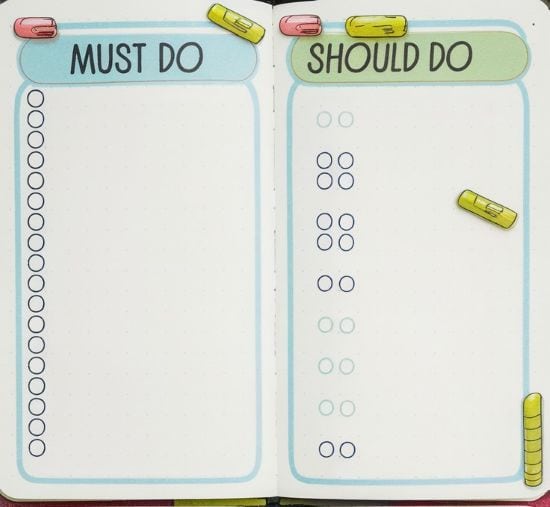
3. Prioritization Frameworks: "Must Do," "Should Do," and "If I Have Time"
For individuals who struggle with discerning the relative importance of tasks, structured prioritization frameworks are invaluable. The "Must Do – Should Do – If I Have Time" format is a highly effective method for categorizing tasks based on their urgency and necessity. This approach ensures that critical tasks are addressed first, followed by important but less time-sensitive items, and finally, those that can be tackled when time permits. This tiered system prevents essential duties from being overshadowed by less critical ones, promoting a more strategic allocation of effort and resources.
4. Streamlined Prioritization: "Must Do" vs. "Should Do"
Building on the previous concept, a simplified version of this prioritization framework focuses solely on "Must Do" and "Should Do" tasks. This streamlined approach can be particularly beneficial for individuals who prefer a more direct method of task classification. By eliminating the "If I Have Time" category, the focus sharpens on essential and important tasks, ensuring that the most critical items are always at the forefront of planning. This method helps to combat the tendency to procrastinate on crucial responsibilities.

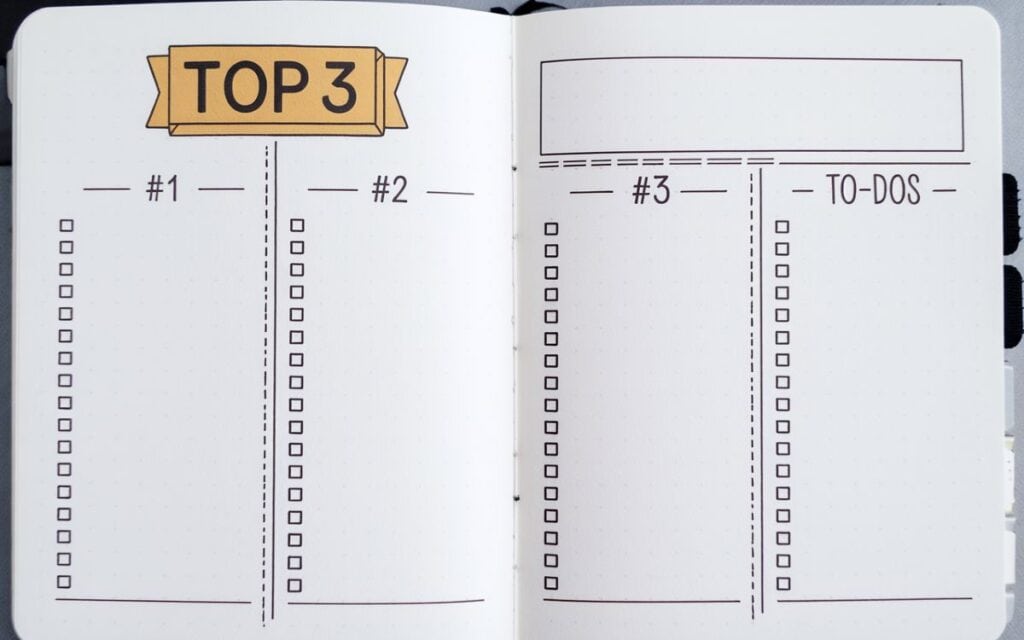
5. The Daily Top 3 Method: Focused Action
The "Daily Top 3" method is a powerful strategy for combating overwhelm and maintaining focus on high-impact activities. This approach involves identifying and committing to completing the three most important tasks for the day. By limiting the focus to a select few, individuals can ensure significant progress on key priorities without feeling inundated by a lengthy to-do list. Whether integrated into a daily planner spread or used as a standalone section, the Daily Top 3 method simplifies task management and fosters a sense of achievement as these core objectives are met. This focused approach is particularly effective for individuals who find large lists demotivating.
Adapting To-Do Lists for Different Planning Horizons
The temporal scope of task management varies greatly among individuals and projects. Whether planning for a single day, an entire week, or a broader month, the bullet journal offers flexible layouts to accommodate these different planning horizons.

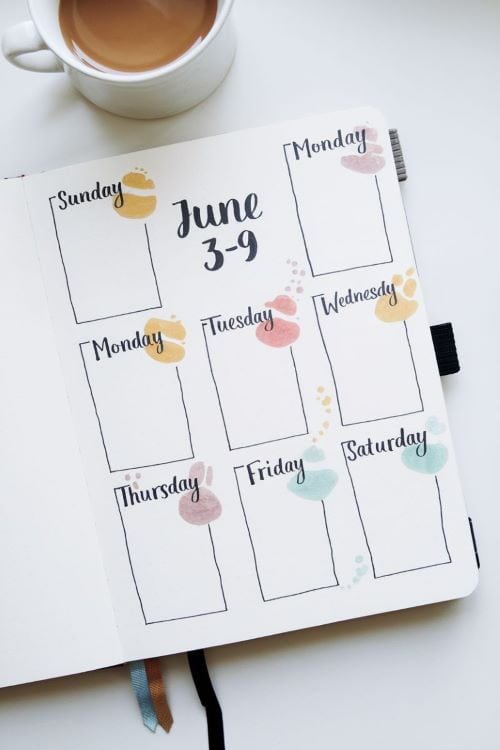
6. Weekly Spreads: Daily To-Do Lists for the Week
A weekly spread that incorporates daily to-do lists provides a comprehensive overview of a week’s commitments. This layout allows users to plan their tasks day by day while maintaining a bird’s-eye view of the entire week. It facilitates better time management by enabling the distribution of tasks across different days, preventing overload on any single day. This format is ideal for individuals who prefer a structured approach to their weekly planning, ensuring that all necessary tasks are accounted for and scheduled appropriately.
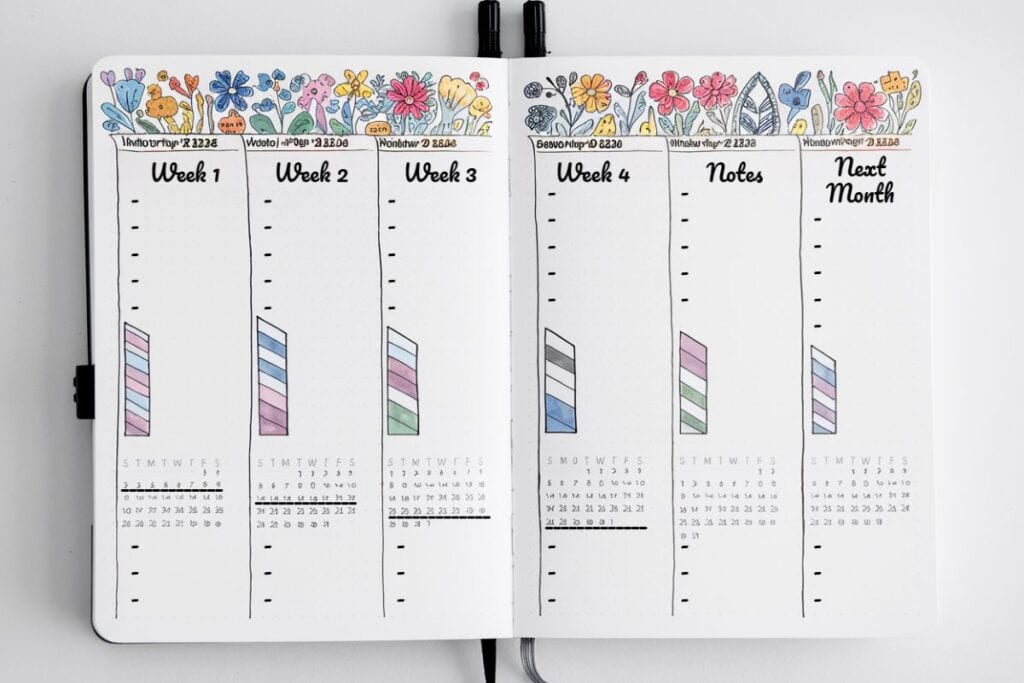
7. Monthly Overviews: Consolidating Weekly Tasks
Extending the planning horizon, a monthly spread designed for to-do lists offers a strategic perspective on longer-term goals and commitments. This layout is particularly useful for tracking recurring tasks, project milestones, and important deadlines that span across several weeks. By visualizing the entire month, individuals can better plan their workload, anticipate potential bottlenecks, and ensure that all major objectives are on track for completion. This approach fosters a proactive mindset, allowing for better preparation and resource allocation.
8. Monthly Spread Variations: Enhancing Clarity
Monthly spreads can be adapted in numerous ways to enhance clarity and usability. Some layouts might include a general monthly task list alongside a calendar view, while others might dedicate separate sections for different categories of monthly objectives. The key is to create a system that allows for efficient tracking of both immediate and long-term tasks, ensuring that no critical commitment is overlooked.
Addressing Routine and Project-Based Tasks
Beyond daily or weekly planning, bullet journals are exceptionally adept at managing routine tasks and complex projects. Dedicated spreads can be created to ensure consistency in habit formation and systematic progress on long-term endeavors.
9. Time-Based Task Management
For individuals whose schedules are dictated by specific time slots or who need to manage tasks that are best completed at particular times, a time-based to-do list is invaluable. This layout allows users to allocate tasks to specific hours or time blocks, providing a clear structure for their day. It is particularly useful for those who need to juggle multiple appointments, time-sensitive errands, or work commitments that require strict adherence to a schedule.
10. Tracking Recurring Weekly Tasks
Consistency is key to building habits and maintaining routines. A dedicated spread for recurring weekly tasks helps ensure that essential chores, self-care activities, or work-related duties are not forgotten. By listing these tasks and providing a checkbox for each week, users can track their completion and build a sense of accountability. This systematic approach reinforces positive habits and contributes to a more organized and efficient lifestyle.
11. Flexible Weekly Task Management
Not all weeks are created equal, and some roles or personal circumstances require a dynamic approach to weekly task management. A spread designed for rotating weekly tasks allows for flexibility. Users can simply write in the specific tasks that need to be accomplished each week, checking them off as they are completed. This adaptability is crucial for environments where priorities shift frequently or where project demands vary week to week.
12. Project Planner To-Do Lists: Breaking Down Large Goals
Managing large or complex projects can feel overwhelming. A project planner to-do list within a bullet journal provides a structured method for breaking down these large endeavors into smaller, manageable steps. By outlining milestones, deadlines, and individual tasks, users can visualize their progress and stay motivated. This systematic approach not only makes daunting projects seem less intimidating but also ensures that all necessary components are addressed in a logical sequence, leading to successful project completion. This method is applicable to everything from academic assignments and business initiatives to personal creative pursuits.
The Enduring Value of Bullet Journal To-Do Lists
Ultimately, the to-do list within a bullet journal is more than just a simple organizational tool; it is a catalyst for clarity, a reducer of overwhelm, and a consistent driver of progress toward personal and professional goals. The effectiveness of these lists stems from their adaptability. Whether one gravitates towards minimalist designs, vibrant color-coding, or intricate project breakdowns, the core principle remains: finding a system that resonates and adhering to it.
The bullet journal’s capacity extends beyond mere task tracking; it becomes a reflection of an individual’s time management philosophy, their prioritization strategies, and their commitment to building productive habits. By encouraging experimentation with different layouts and approaches, bullet journaling empowers users to discover the most effective methods for their unique needs. The most successful planner pages are not necessarily the most aesthetically elaborate but those that genuinely facilitate organization, inspire action, and, crucially, help individuals achieve their objectives. As the saying goes, the best system is the one that gets things done.

