
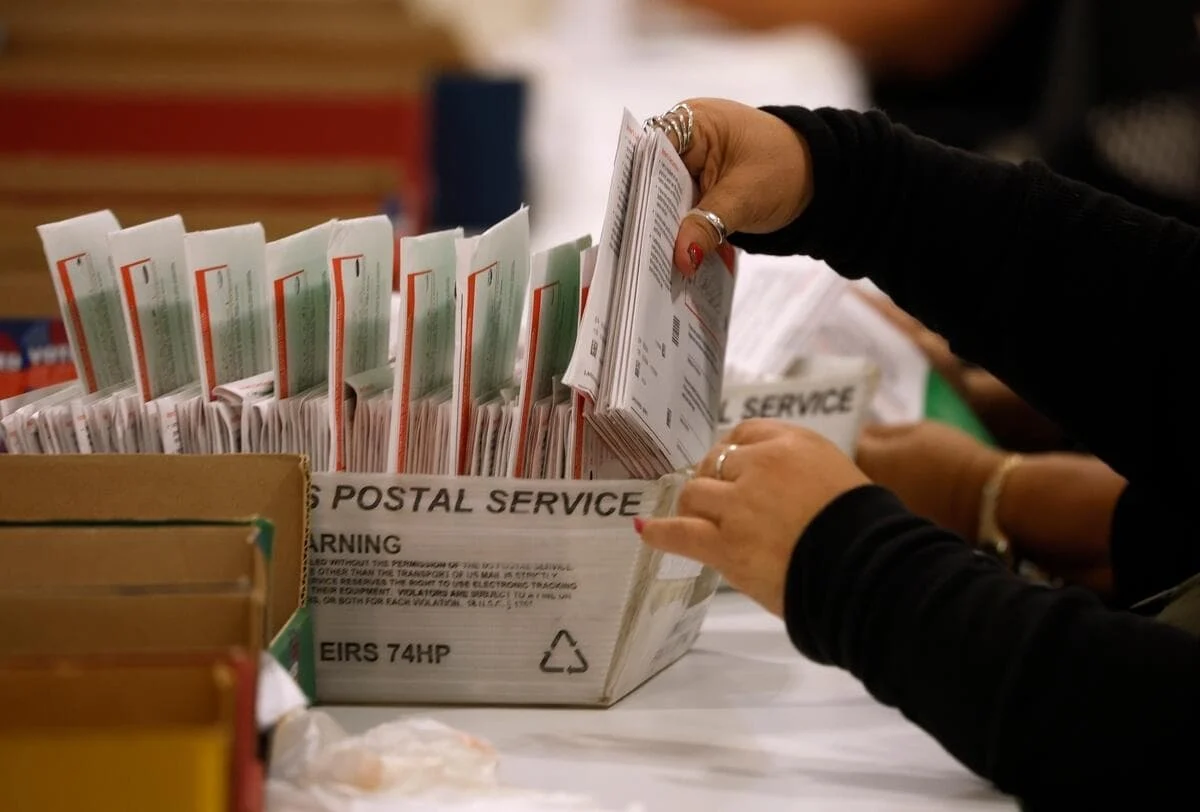
A U.S. appeals court has decisively rejected a request from the Trump administration’s Department of Justice (DOJ) to prevent California from counting approximately 20,000 ballots identified as potentially originating from non-citizen voters. The ruling, issued by a panel of the U.S. Court of Appeals for the Ninth Circuit, underscores the significant challenges and legal complexities involved in election integrity disputes, particularly concerning voter eligibility and the practicalities of ballot segregation close to an election.
The 39-page majority opinion, decided 2-1, stated the court’s refusal to "contravene the Elections Clause by undermining the Constitution’s plain text." This rejection upheld an earlier district court decision, emphasizing that if the United States government sought different procedures for mail-in ballots, such proposals should be directed to Congress, not the judiciary. The court highlighted the substantial practical difficulties in identifying and segregating specific ballots without risking "potentially catastrophic effects on the entire system" and the disenfranchisement of eligible citizens.
Background to the Legal Challenge
The legal battle commenced when the Department of Justice, under the Trump administration, filed a lawsuit alleging that California election officials were not adequately equipped to prevent non-citizens from casting ballots in the upcoming midterm elections. The DOJ’s core concern was that an estimated 20,000 individuals, identified through a comparison of state voter registration rolls with federal immigration databases, were suspected non-citizens who had received mail-in ballots. The department argued that if these ballots were processed and mixed with legitimate ones, it would lead to the dilution of lawful votes, a fundamental concern for election integrity.
California, a state that heavily relies on mail-in voting, particularly since the onset of the COVID-19 pandemic, automatically sends ballots to all registered voters. The DOJ’s complaint posited that state and county officials themselves had confirmed a lack of robust mechanisms and the legal authority to definitively prevent non-U.S. citizens from voting. This, according to the federal government, meant that potentially illegal votes would be counted, thereby undermining the democratic process.
Los Angeles County, a defendant in the lawsuit, countered by filing a motion to dismiss the case. Its argument centered on the DOJ’s alleged lack of legal standing, asserting that the executive branch, like any other plaintiff, must demonstrate a concrete, actual, or imminent injury directly traceable to the county’s conduct, which it claimed the DOJ failed to do. The county also highlighted the administrative burden and potential for widespread disruption that such an injunction would cause, especially so close to the election date.
The Ninth Circuit’s Rationale and Legal Precedent
The Ninth Circuit’s ruling echoed the district court’s findings, prioritizing the practical realities of election administration and the constitutional framework governing elections. The court declined the government’s emergency request for an injunction that would have mandated the segregation and verification of the 20,000 ballots before they could be tallied. This decision was made in the immediate lead-up to the November 8, 2022, midterm elections, a period when election systems are operating at peak capacity.
Central to the court’s reasoning was the "Elections Clause" of the U.S. Constitution (Article I, Section 4, Clause 1), which grants states primary authority over the "Times, Places and Manner of holding Elections for Senators and Representatives," while also allowing Congress to "make or alter such Regulations." The majority opinion interpreted this clause as vesting substantial authority in the states for election administration, suggesting that any fundamental changes to voting procedures, especially those as disruptive as segregating a large block of ballots, should originate from legislative action rather than judicial intervention.
The court also heavily weighed the practical implications of the DOJ’s request. California officials had consistently described the list of suspected non-citizens as "highly unreliable," noting that it likely included many legitimate U.S. citizens. They emphasized that their existing systems were not designed to flag or remove voters based on retrospective citizenship checks, especially when such checks relied on potentially flawed data cross-referencing. The logistical nightmare of identifying, segregating, and verifying the citizenship of 20,000 specific individuals from millions of mail-in ballots, without disrupting the entire tabulation process or disenfranchising eligible voters, was deemed an insurmountable task by both state officials and the lower court. The appeals court affirmed this assessment, finding "no clear error" in the district court’s determination that such an operation was not feasible.
Challenges in Voter Roll Maintenance and Citizenship Verification
The case in California is not an isolated incident but rather highlights a recurring tension in American elections: the balance between ensuring broad access to the ballot and maintaining the integrity of voter rolls. States, under the National Voter Registration Act (NVRA) of 1993, are required to maintain accurate voter registration lists. However, verifying citizenship during the initial registration process and subsequently cleaning voter rolls is a complex undertaking.
Most states rely on an applicant’s self-attestation of citizenship when they register to vote. Direct access to federal immigration databases for state and local election officials is often limited, both legally and practically. Furthermore, data matching between state voter rolls and other federal or state databases (like motor vehicle departments or social security administration records) can be prone to errors due to discrepancies in names, addresses, or birth dates. An individual might be listed as a non-citizen in one database for immigration purposes, while being a naturalized citizen and therefore eligible to vote. Conversely, some non-citizens may obtain driver’s licenses or state IDs, which can sometimes be mistakenly used as a basis for voter registration, especially if safeguards are not robust.
California officials’ assertion that their list was "highly unreliable" is a common defense in such disputes. Voter registration databases are dynamic, constantly changing with new registrations, address updates, and removals due to death or relocation. The sheer volume of data makes precise, real-time verification of citizenship a daunting administrative and technical challenge.
Broader Context: Election Integrity Debates and Federal Scrutiny
The Trump administration’s focus on alleged voter fraud and election integrity was a hallmark of its tenure, particularly leading up to and following the 2020 presidential election. This lawsuit in California, alongside other actions, exemplified a broader federal effort to scrutinize local and state election practices.
- Alaska Subpoenas: The article mentions the DOJ’s involvement in a "spoiler-candidate controversy" in Alaska. In that case, campaign aides to Democratic Senate candidate Mary Peltola were accused of attempting to recruit a third-party candidate with the same name as the Republican incumbent, Sen. Dan Sullivan, potentially to siphon votes. While Peltola’s campaign denied the claims, the state’s governor and police confirmed an investigation, indicating federal interest in various forms of election interference.
- Washington State Voter Rolls: The DOJ also provided a list of approximately 400 alleged non-citizen voters to officials in Washington state. In response, Washington Secretary of State Steve Hobbs stated that his state, like California, lacked the capacity to confirm citizenship status during voter registration. He acknowledged that it was not "unusual for noncitizens" to appear on state voter registration lists, underscoring the systemic difficulty across states. This further illustrates the nationwide challenge election officials face in reconciling voter eligibility with available data and administrative capabilities.
- Trump’s Reward Offer: President Trump’s public offer of a $1 million reward for information leading to the arrest and conviction of individuals engaging in voter fraud also signals the heightened rhetoric and scrutiny surrounding election integrity during that period. While the practical impact of such an offer is debatable, it certainly fueled public discourse and intensified focus on potential irregularities.
These parallel actions demonstrate a consistent pattern of the Trump administration leveraging federal resources to pursue claims of voter fraud and to pressure state election officials to adopt more stringent verification measures.
Implications and Future Outlook
The Ninth Circuit’s ruling carries several significant implications for the landscape of election law and administration:
- Reinforcement of State Authority: The decision reinforces the constitutional principle that states hold primary authority over the administration of their elections. While Congress has oversight, and federal courts can intervene in cases of constitutional violations, the ruling suggests a judicial reluctance to impose last-minute, logistically complex mandates on state election systems without clear legislative backing.
- High Bar for Federal Intervention: The court’s emphasis on the "catastrophic effects" of attempting to segregate ballots so close to an election sets a high bar for federal intervention, especially for emergency injunctions that could disrupt established election processes. This protects election officials from eleventh-hour changes that could compromise the integrity or efficiency of the vote.
- Continued Debate on Voter Eligibility: The case will likely contribute to ongoing debates about voter eligibility, citizenship verification, and the accuracy of voter rolls. While the court sided with the practicalities of election administration, the underlying concern about non-citizen voting remains a point of contention for many. This could prompt renewed calls for legislative solutions at both federal and state levels to improve voter registration integrity without infringing on the rights of eligible citizens.
- Administrative Burden and Data Limitations: The ruling highlights the inherent administrative burden and data limitations faced by state election officials. Implementing comprehensive, real-time citizenship verification without errors or biases is a monumental task that requires significant resources, technological infrastructure, and inter-agency cooperation. The current patchwork of state laws and federal data access restrictions makes a uniform solution challenging.
- Impact on Voter Confidence: Such high-profile legal battles, regardless of their outcome, can sometimes impact public confidence in election results. While the court’s decision provides clarity on the legal and practical limits of intervention, the existence of the lawsuit itself can fuel narratives about potential irregularities.
In conclusion, the Ninth Circuit’s rejection of the DOJ’s request in California represents a victory for state-level election administration and a reaffirmation of the practical limitations of judicial intervention in complex election processes. While the debate over voter integrity, particularly concerning non-citizen voting, is likely to persist, this ruling underscores the courts’ cautious approach to imposing sweeping changes that could disenfranchise legitimate voters or destabilize election systems on the eve of a major election. It redirects the impetus for such changes back to the legislative branches, emphasizing the need for carefully considered, prospective reforms rather than reactive, last-minute judicial mandates.

