

Following the decisive United States intervention in Venezuela on January 3rd, 2026, which marked a significant turning point in the nation’s political landscape and effectively concluded President Nicolás Maduro’s protracted 13-year rule, global attention has overwhelmingly converged on the South American country’s vast oil industry. Once a titan among global oil producers, Venezuela’s output had dwindled dramatically over years of systemic underinvestment, mismanagement, and crippling international sanctions. However, with the U.S. administration, under President Trump, explicitly setting its sights on rapidly re-engaging with Venezuelan crude, many analysts and energy sector stakeholders are intensely speculating on the speed and efficacy with which its immense hydrocarbon resources can be brought back online. While the immediate and widespread focus remains fixed on Venezuela’s considerable, albeit dormant, potential as an oil superpower, a growing consensus among energy experts and international corporations suggests that more immediate and impactful success may be realized through the strategic exploitation of its equally significant natural gas fields. This nuanced perspective posits that gas could offer a quicker path to economic revitalization and regional energy leadership, leveraging existing infrastructure and fostering crucial international collaborations.
The Venezuelan Transformation: A New Energy Era Dawns
The events of January 3rd, 2026, represent a watershed moment in Venezuelan history, ushering in a new political and economic epoch. The U.S.-led intervention, framed by Washington as a move to restore democratic governance and alleviate a humanitarian crisis exacerbated by years of economic collapse, has fundamentally reshaped the operational environment for foreign investment in the nation’s energy sector. For over a decade, Venezuela’s oil and gas industries suffered from a confluence of internal decay and external pressures. The socialist policies implemented during the Chávez and Maduro administrations, including widespread nationalizations, price controls, and an erosion of institutional integrity, systematically dismantled the once-robust state oil company, Petrόleos de Venezuela S.A. (PDVSA). Coupled with a brain drain of skilled personnel and chronic underinvestment in exploration, production, and maintenance, Venezuela’s oil output plummeted from a peak of over 3.2 million barrels per day (bpd) in the late 1990s to well under 500,000 bpd in recent years preceding the intervention. This precipitous decline not only crippled the national economy, which is overwhelmingly reliant on oil revenues, but also left a vast, untapped potential awaiting a stable and investor-friendly environment.
The new administration, backed by the U.S., has swiftly moved to signal its openness to international partnerships and market-oriented reforms. This shift is particularly evident in the energy sector, which is seen as the primary engine for economic recovery. While the long-term vision certainly encompasses restoring Venezuela to its former glory as a major oil producer, the challenges inherent in rehabilitating a deeply deteriorated oil infrastructure, from rusty pipelines and dilapidated refineries to neglected drilling equipment, are immense and will require substantial capital and time. It is against this backdrop that the more accessible and less infrastructure-intensive natural gas reserves are emerging as a compelling, shorter-term opportunity.
Decades of Decline: The Oil Paradox and U.S. Re-engagement
Venezuela is unequivocally home to the world’s largest proven oil reserves, conservatively estimated at approximately 300 billion barrels. This colossal endowment, however, has paradoxically become a symbol of national economic distress rather than prosperity. Years of political instability, corruption, and economic mismanagement under the previous regime led to a catastrophic reduction in output, transforming a global energy powerhouse into a struggling producer unable to meet its own needs or capitalize on soaring international prices. The nationalization policies implemented by Hugo Chávez in the early 2000s, while initially popular, progressively alienated foreign investors and led to a steady decline in technological advancement and operational efficiency. The subsequent imposition of stringent U.S. sanctions, targeting PDVSA and related entities, further constricted the industry’s ability to access international markets, technology, and financing, accelerating its deterioration.
The recent U.S. intervention, therefore, has ignited renewed investor interest in Venezuela’s energy market. President Trump’s administration has vociferously committed to rapidly redeveloping Venezuela’s long-neglected oil resources, viewing it as a strategic imperative for global energy security and a boon for American economic interests. On February 13th, 2026, the White House issued a press release unequivocally stating, "The Trump Administration is rapidly implementing President Trump’s vision to reopen and develop Venezuela’s oil industry for the shared benefit of the American and Venezuelan people. Thanks to President Trump’s leadership, the United States has already issued several general licenses at record speed for oil and gas companies to make unprecedented investments in Venezuela’s energy infrastructure."
The statement further underscored the administration’s perspective: "Venezuela holds tremendous economic potential, but years of instability, corruption, and economic mismanagement have limited the nation’s growth and prosperity. These general licenses invite American and other aligned companies to play a constructive role in supporting economic recovery and responsible investment." This policy shift signals a clear intent to dismantle the barriers that previously isolated Venezuela’s energy sector, paving the way for a potential influx of foreign capital and expertise. However, the sheer scale of the required investment and the extensive rehabilitation needed for the oil sector mean that immediate, large-scale production increases might still be several years away, pushing some stakeholders to consider alternative, more agile solutions.
Unlocking the Subsurface Treasure: Venezuela’s Natural Gas Potential
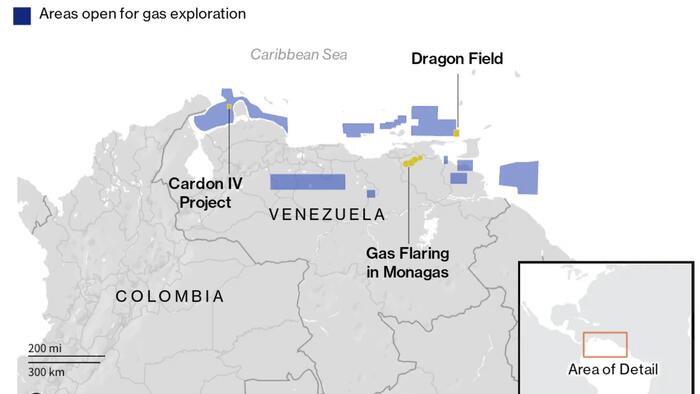
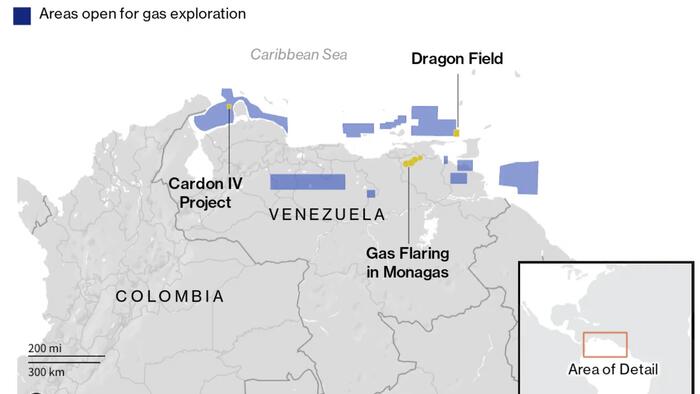
While the world understandably fixates on Venezuela’s vast, untapped oil reserves, a compelling argument is emerging for the greater mid-term potential residing in the exploitation of its equally impressive natural gas reserves. Venezuela ranks among the top ten countries globally in terms of proven natural gas reserves, with estimates hovering around 197 trillion cubic feet (Tcf). A significant portion of these reserves, particularly the most accessible ones, are trapped deep beneath the seafloor, primarily off the country’s eastern coast, strategically positioned along its maritime border with Trinidad and Tobago.
These offshore gas fields were initially discovered several decades ago, promising a future of diversified energy production. However, successive Venezuelan governments largely left them untouched, fixated instead on the seemingly inexhaustible profits from crude oil production. The technical complexities of offshore gas extraction, coupled with the substantial capital investment required for processing and liquefaction infrastructure (necessary for exporting liquefied natural gas, or LNG), were consistently deprioritized in favor of easier, albeit ultimately mismanaged, oil revenues. Moreover, the long-standing U.S. sanctions against Venezuela’s government and its state-owned oil company, PDVSA, severely restricted the development of the gas industry. These sanctions deterred foreign companies with the necessary capital and technology from engaging in large-scale projects, effectively freezing development for years. The absence of a robust domestic gas infrastructure further compounded the issue, leaving vast reserves dormant while the nation grappled with energy shortages.
Historically, major international oil companies, such as Shell, demonstrated persistent interest in Venezuela’s gas business, even when geopolitical instability and U.S. sanctions made investment in the oil sector highly precarious. Their foresight recognized the strategic value and long-term potential of these gas reserves, particularly given the global shift towards cleaner energy sources and the increasing demand for LNG. The new political climate, free from the constraints of the previous regime and with a clear U.S. mandate for economic recovery, is now creating an unprecedented window of opportunity for these long-held interests to materialize.
The Critical Role of Regional Collaboration with Trinidad and Tobago
A pivotal factor in the rapid and successful development of Venezuela’s offshore natural gas industry is the indispensable cooperation with its island neighbor, Trinidad and Tobago. This small Caribbean nation boasts a mature and sophisticated natural gas sector, possessing the critical infrastructure necessary to transport fuel onshore, process it, and export it as liquefied natural gas (LNG). This is a stark contrast to Venezuela, which lacks such extensive and modern gas infrastructure.
An energy partnership between the two countries could be transformative. Trinidad and Tobago’s pre-existing infrastructure, including its established LNG terminals and pipeline networks, could serve as a vital conduit for Venezuelan gas, enabling a significantly faster path to market than if Venezuela were to attempt to build its own facilities from scratch. This symbiotic relationship would offer Trinidad and Tobago a crucial supply of gas to bolster its own declining production, ensuring the continued viability of its processing plants and export capabilities. For Venezuela, it represents an immediate and cost-effective solution to monetizing its vast offshore reserves.
However, the path to this collaboration has historically been fraught with challenges. The two nations are separated not only geographically but also by language (Spanish and English) and, crucially, by recent geopolitical alignments. Trinidad and Tobago has generally maintained a cautious stance, often aligning with the United States in its diplomatic and economic policies concerning the Maduro presidency and the imposition of sanctions on Venezuelan energy. This strained relationship, characterized by distrust and differing political agendas, previously hindered any meaningful progress on joint energy ventures. With the new political reality in Venezuela, the opportunity for a genuinely collaborative and mutually beneficial partnership has never been greater. The U.S. administration, having played a key role in the political transition, is now actively encouraging this regional energy integration, recognizing its strategic importance.
The Dragon Field: A Catalyst for Immediate Development
Among Venezuela’s numerous natural gas prospects, the giant Dragon field stands out as the most promising candidate for immediate development. Its strategic location and the advanced stage of prior exploration activities make it the closest to being brought online. Situated off Venezuela’s eastern coast, near the maritime border with Trinidad and Tobago, Dragon holds substantial reserves that have been known for decades. The Venezuelan government, under previous administrations, did conduct initial exploration activities in the field. However, these efforts were ultimately stymied by a severe lack of funding to continue development and overcome the technical challenges of deepwater extraction. A significant setback occurred in 2010 with the sinking of an exploration rig, further dampening prospects and deterring investment in an already difficult political and economic climate.
Despite these historical hurdles, the allure of Dragon’s potential remained strong. In a significant diplomatic and economic breakthrough in 2023, the Venezuelan government, even under the previous regime, managed to forge a deal with Shell, allowing the Anglo-Dutch energy giant to explore and develop the Dragon field. This agreement was a testament to the field’s strategic value and Shell’s long-term vision for the region. The core of the plan involves constructing a relatively short, approximately 17-kilometer subsea pipeline connecting the Dragon field directly to Shell’s existing and extensive infrastructure on the island of Trinidad. This innovative approach bypasses the need for Venezuela to build its own complex and expensive onshore processing facilities from scratch, dramatically accelerating the project timeline and reducing initial capital expenditure.
If Shell successfully develops Dragon, the field is projected to generate approximately $500 million annually in revenue, based on prevailing natural gas prices. Crucially, a significant portion of this revenue, estimated at least 45 percent, is expected to flow directly to Venezuela in the form of taxes and royalties, providing a much-needed injection of foreign currency and contributing to the national budget. Wael Sawan, CEO of Shell, expressed considerable optimism regarding the project’s timeline and economic impact, stating in an interview with CNBC, "These are opportunities that could potentially be activated within months, with potentially a few billion dollars of investments and production in the next couple of years." This optimistic outlook underscores the speed and efficiency with which gas projects, particularly those leveraging existing regional infrastructure, can be brought to fruition compared to the more arduous task of rejuvenating the dilapidated oil sector.
Beyond Dragon: Other Prospects and Easing Sanctions
The momentum generated by the Dragon field agreement is not isolated. Other major international energy companies are also eyeing Venezuela’s gas potential. British Petroleum (BP), for instance, is actively pursuing another significant Venezuelan gas project, the Cocuina field. The feasibility of such ventures has been significantly bolstered by recent policy adjustments from the U.S. Treasury Department. In late February 2026, the Treasury Department appeared to grant oil and gas firms greater leniency and flexibility to negotiate with Venezuela and operate within the South American country. This loosening of restrictions, carefully calibrated to support the new government and encourage economic recovery, provides a more predictable and favorable operating environment for international companies.
Rachel Ziemba, an adjunct senior fellow at the Centre for a New American Security, observed the nuanced approach of the U.S. administration, noting, "They are splicing together an environment that allows the existing players to operate." This implies a strategic framework designed to facilitate rather than hinder foreign investment, moving away from the blanket punitive measures of the past. This policy shift is critical for attracting the necessary capital, technology, and expertise required to unlock Venezuela’s vast energy wealth. It signals a commitment from Washington to ensure that the economic benefits of resource development directly support the Venezuelan people and the new government, aligning with the stated goals of the January 3rd intervention. The renewed interest from companies like BP in fields such as Cocuina indicates a broader confidence in the stability and long-term potential of Venezuela’s gas sector under the new political dispensation.
Broader Implications: Economic Revival and Geopolitical Realignments
The strategic pivot towards natural gas development in Venezuela carries profound implications, not only for the nation’s devastated economy but also for regional energy dynamics and global geopolitics.
Economic Revival: For Venezuela, the rapid development of its natural gas sector offers a lifeline for an economy in tatters. The influx of billions of dollars in foreign investment will stimulate job creation, both directly in the energy sector and indirectly across various support industries. Revenue streams from gas exports, in the form of taxes and royalties, will provide much-needed foreign currency, helping to stabilize the national currency, rebuild public services, and finance critical infrastructure projects. Furthermore, a diversified energy portfolio, moving beyond an almost exclusive reliance on oil, will provide greater economic resilience and reduce vulnerability to volatile global oil prices. The transfer of technology and expertise from international partners will also be invaluable for modernizing Venezuela’s industrial base.
Regional Energy Hub: The collaboration between Venezuela and Trinidad and Tobago, particularly around projects like the Dragon field, holds the potential to transform the Caribbean-Latin American region into a powerful new energy hub. By combining Venezuela’s abundant gas reserves with Trinidad and Tobago’s sophisticated processing and export infrastructure, the partnership could establish a reliable and significant source of LNG for global markets. This is particularly relevant in a world increasingly seeking diversified and secure energy supplies, especially in light of geopolitical shifts impacting traditional energy routes. The region could become a key supplier to Europe, North America, and other markets, bolstering regional energy security and fostering deeper economic integration among Caribbean nations. U.S. Energy Secretary Chris Wright aptly summarized this potential, stating that developing a regional natural gas collaboration could be "a real potential win-win for Trinidad and Tobago, a win for the global L.N.G. market, a win for Venezuela."
Geopolitical Realignments: The U.S.-backed economic revitalization of Venezuela, particularly through its energy sector, will inevitably lead to significant geopolitical realignments. It reinforces U.S. influence in a region where rival powers like China and Russia had sought to expand their footprint during Venezuela’s isolation. A stable and prosperous Venezuela, integrated into regional energy networks and aligned with Western partners, would represent a strategic victory for U.S. foreign policy. It could also diminish the leverage of these rival powers, which had previously extended loans and support to the Maduro regime in exchange for access to resources. This new era could reshape power dynamics across Latin America, promoting greater regional stability and economic interdependence.
Challenges Ahead: Despite the immense potential, significant challenges remain. Sustaining political stability in Venezuela will be paramount, as will implementing robust anti-corruption measures to ensure that energy revenues benefit the broader population rather than enriching a select few. Technical hurdles associated with developing complex offshore gas fields and environmental considerations, including the responsible management of extraction and processing, will also require diligent oversight. Ensuring transparent governance, adherence to international environmental standards, and fostering a truly competitive and fair market will be crucial for the long-term success and sustainability of Venezuela’s energy revival.
In conclusion, while President Trump’s administration and many global observers are primarily focused on the long-term redevelopment of Venezuela’s colossal oil industry, a more pragmatic and potentially swifter path to economic recovery and regional energy leadership lies in unlocking the nation’s vast natural gas potential. The strategic importance of immediate gas development, particularly through collaboration with neighboring Trinidad and Tobago, cannot be overstated. This approach, exemplified by projects like the Dragon field, promises not only rapid revenue generation for Venezuela but also the creation of a dynamic new regional Latin America-Caribbean energy hub, fundamentally reshaping the energy landscape and fostering stability and prosperity in the years to come.