
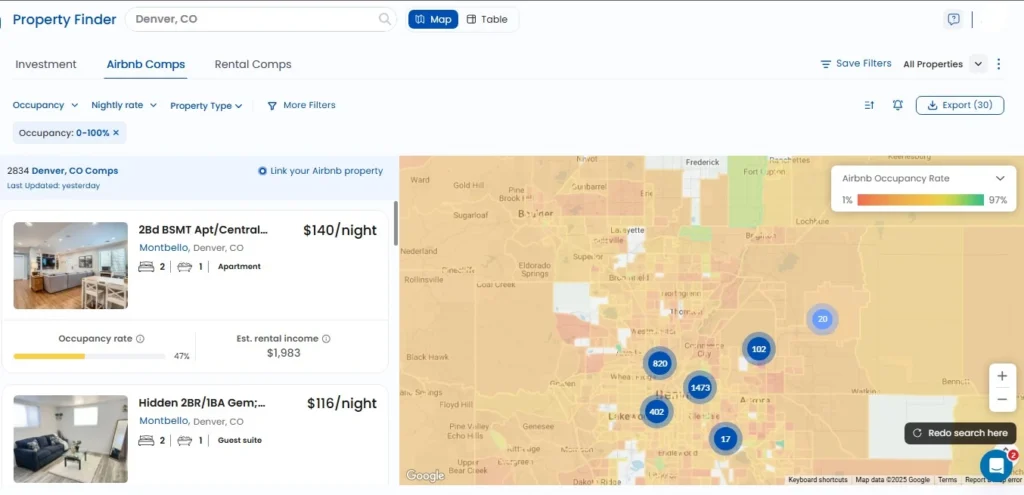

For individuals venturing into Airbnb investing, whether as a novice or an experienced portfolio manager, a singular question looms larger than most: "How frequently will this property actually be booked?" This fundamental inquiry is directly addressed by the occupancy rate, a key metric that, until recently, has been notoriously difficult to ascertain with precision. Traditional methods of evaluating Airbnb listings often involve sifting through scattered property calendars, which can be inherently misleading, and the platform itself does not publicly disclose granular booking data. This lack of accessible, verifiable information frequently leads to inaccurate assumptions and potentially flawed investment decisions. Enter the Airbnb Occupancy Rate API (Application Programming Interface), a sophisticated tool that is revolutionizing how investors approach market analysis and property evaluation. By providing instant access to verified booking patterns, overarching market trends, and granular property-level insights, these APIs empower investors to move beyond guesswork and make data-driven decisions.
Understanding the Core Metric: What is Airbnb Occupancy Rate and Why It Matters
At its heart, an occupancy rate for an Airbnb property quantifies the proportion of available days that the listing is actually occupied by paying guests. For instance, if a property is listed as available for 30 days within a given month and is successfully booked for 21 of those days, its occupancy rate would be calculated as (21 booked days / 30 available days) * 100 = 70%.
It is crucial to distinguish between "booked" nights and "blocked" nights. Blocked dates, where a host manually sets the calendar to unavailable for personal use, maintenance, renovations, or other reasons, do not contribute to income generation and are typically excluded from the calculation of available days. Reliable occupancy rate APIs are designed to intelligently remove these owner-blocked dates from the equation, thereby preventing an artificial inflation of the occupancy rate. This distinction is vital for both short-term and long-term rental analyses, ensuring that the calculated rate accurately reflects potential revenue-generating periods.
The significance of accurate occupancy data cannot be overstated for Airbnb investors. It serves as a foundational element for several critical investment calculations:
- Cash Flow Projections: A precise occupancy rate directly informs the projected income from a property, enabling more accurate estimations of monthly or annual cash flow.
- Return on Investment (ROI) Calculations: Knowing how often a property is likely to be booked is essential for forecasting the time it will take to recoup the initial investment and begin generating profit.
- Pricing Strategies: Understanding market occupancy trends allows investors to set competitive nightly rates that maximize bookings without sacrificing profitability.
- Market Viability Assessment: High occupancy rates in a specific area often signal strong demand, indicating a potentially lucrative market for short-term rentals. Conversely, low occupancy can be a warning sign of oversupply or insufficient demand.
- Property Valuation: The income-generating potential, heavily influenced by occupancy rates, is a key factor in determining a property’s overall market value.
Relying on incomplete data or anecdotal evidence for occupancy can lead to significant miscalculations in all these areas, potentially resulting in underperforming investments or missed opportunities.
The Mechanics of Airbnb Occupancy Rate APIs: Bridging the Data Gap
An Application Programming Interface (API) acts as an intermediary, allowing different software systems to communicate and exchange information. In the context of Airbnb occupancy, an API functions as a sophisticated data retriever and interpreter. Users can request specific data points, such as occupancy rates and average daily rates (ADR), and the API will access the relevant databases, extract the information, and deliver it in a structured format that can be readily integrated into spreadsheets, custom dashboards, or investment analysis software.
The data powering these APIs is typically aggregated from a variety of sources to provide a comprehensive market view:
- Historical Booking Data: Analyzing past booking patterns for thousands, if not millions, of listings provides a robust foundation for understanding demand.
- Listing Availability Calendars: While individual calendars can be misleading, aggregated calendar data, when properly interpreted, can reveal booking trends and seasonality.
- Market Trends and Demand Signals: APIs often incorporate data on local events, tourism statistics, and search interest to gauge current and future demand.
- Property-Specific Features: Information about amenities, size, and guest reviews can also be factored in to understand performance variations.
By synthesizing this diverse data, APIs offer a far more panoramic and accurate representation of market performance than the manual sampling of a few scattered listings.
Ensuring Data Integrity: Cleaning, Verification, and Sample Size
The reliability of any data-driven analysis hinges on the quality of the data itself. Robust Airbnb occupancy rate APIs employ rigorous processes to clean and verify their information:
- Data Cleaning: This involves identifying and removing duplicate entries, correcting errors, and standardizing data formats to ensure consistency.
- Anomaly Detection: Sophisticated algorithms are used to flag and address unusual data points that might skew the overall analysis, such as exceptionally high or low booking frequencies that deviate significantly from the norm.
- Verification Algorithms: These systems cross-reference data from multiple sources to confirm accuracy and identify discrepancies. For instance, booking data might be validated against calendar availability patterns.
- Exclusion of Unreliable Data: Listings with incomplete information, extremely low review counts, or suspicious booking patterns might be excluded from the analysis to maintain data integrity.
The concept of sample size is paramount to the accuracy of any statistical estimate, and occupancy rates are no exception. A larger sample size, meaning data collected from a greater number of properties within a specific market, generally leads to more stable and trustworthy results. A widely accepted rule of thumb suggests that a minimum of 10-20 comparable listings are needed for a reasonably accurate occupancy estimate in a given market. Many advanced APIs also incorporate a "confidence score" based on the sample size, allowing users to quickly assess the reliability of the provided occupancy figures, especially in emerging or less saturated markets.
Navigating Market Nuances: Small Markets and Seasonality
The challenge of data scarcity is particularly pronounced in smaller or less developed short-term rental markets. To address this, effective APIs utilize a hierarchical fallback mechanism to maintain data consistency. This typically follows an Address > ZIP Code > City Level hierarchy. If insufficient comparable rental data is available at the individual property address level, the API will automatically leverage data from the broader ZIP code. If even that proves insufficient, it will then resort to city-level performance metrics. This layered approach ensures that reliable occupancy figures can be generated even in areas with limited listing density, preventing the API from relying on minuscule sample sizes that could lead to misleading conclusions.
Seasonality is another critical factor that significantly influences Airbnb occupancy rates. Demand for short-term rentals often fluctuates dramatically throughout the year, driven by holiday periods, local events, and weather patterns. A comprehensive API will not simply present a single, static occupancy figure. Instead, it provides a detailed view of historical occupancy over a 12-month period, revealing distinct seasonal patterns. Furthermore, many sophisticated tools calculate a 12-month rolling average. This metric smooths out extreme fluctuations, such as unusually high bookings during a major festival or a dip during an off-season month, offering a more realistic and stable representation of a property’s true year-round performance potential. The combination of detailed seasonal data and rolling averages provides investors with a nuanced understanding of a property’s income-generating capacity across all four seasons.
The Superiority of APIs Over Manual Research
The traditional approach of manually researching Airbnb occupancy rates is fraught with inefficiencies and inaccuracies. Clicking through countless calendars, attempting to decipher availability, and piecing together disparate information is an extremely time-consuming endeavor. This manual process often results in a limited dataset, potentially missing crucial booking activity and leading to an incomplete picture.
APIs offer a definitive advantage by providing reliable, standardized, and comprehensive Airbnb market data. Instead of relying on raw averages that can be heavily skewed by a few outlier luxury listings, high-quality APIs leverage median values and percentile data. For instance, the median Average Daily Rate (ADR) or occupancy rate offers a more realistic depiction of typical performance within a market. Some advanced APIs even provide 25th and 75th percentile data, enabling investors to model both conservative and aggressive revenue scenarios, thereby grounding their financial projections in reality rather than aspirational outliers.
Unlocking Investment Strategies with Airbnb Occupancy Rate APIs
The accessibility of an Airbnb Occupancy Rate API unlocks a suite of powerful analytical capabilities for investors:
1. Rapid and Confident Market Analysis
With a single API request, investors can gain immediate insights into new markets, including:
- Market Occupancy Rates: Understanding the general demand level across a city or region.
- Average Daily Rates (ADR): Gauging the typical nightly price point in the market.
- Revenue Per Available Night (RevPAR): A crucial metric combining occupancy and ADR to assess overall revenue generation potential.
- Market Trends: Identifying growth patterns or potential saturation.
This enables investors to swiftly identify promising markets and avoid underperforming ones without engaging in time-consuming, speculative research.
However, occupancy alone does not tell the full story. Savvy investors understand the importance of pairing occupancy data with other key financial metrics. The Average Daily Rate (ADR) and Revenue Per Available Night (RevPAR) are essential components of a comprehensive revenue analysis. The formula for RevPAR is:
RevPAR = Occupancy Rate × Average Daily Rate (ADR)
This calculation provides a more holistic view of a property’s earning potential. For an even deeper dive into performance, investors often consider the Gross Rental Income, which can be estimated using:
Gross Rental Income = Occupancy Rate × Number of Available Nights × Average Daily Rate
This combination of metrics provides a robust framework for understanding not only how often a property is booked but also how much revenue it generates when it is occupied.
2. In-Depth Property Evaluation
For any specific property address, many APIs can provide:
- Property-Specific Occupancy: The historical booking frequency of that exact listing.
- Historical ADR: The average nightly rate the property has commanded.
- Projected Revenue: An estimate of potential annual income based on historical performance and market data.
- Comparable Property Analysis: Data on similar properties in the immediate vicinity to benchmark performance.
This granular data is invaluable for determining whether a specific property is a worthwhile investment opportunity.
3. Strategic Comparison: Short-Term vs. Long-Term Rentals
Some advanced APIs offer integrated data for both short-term (Airbnb) and traditional long-term rentals. This allows investors to perform crucial comparative analyses, such as:
- Rental Income Potential: Comparing the projected earnings from an Airbnb listing versus a long-term lease.
- Occupancy Rate Differences: Understanding the typical booking frequency for each rental strategy in a given market.
- Investment Risk Profiles: Assessing the relative stability and potential volatility of each rental model.
This comparative analysis is vital for aligning investment strategies with individual financial goals and risk tolerance.
4. Custom Tool Development
For data-driven organizations or teams managing multiple properties, API data can be leveraged to build custom solutions:
- Automated Investment Reports: Generating regular performance summaries for clients or internal stakeholders.
- Dynamic Dashboards: Visualizing key market and property metrics in real-time.
- Predictive Modeling Tools: Developing custom algorithms to forecast future rental income or identify emerging investment opportunities.
This level of customization allows for highly tailored investment analysis and operational efficiency.
Selecting the Right Airbnb Occupancy Rate API: Key Considerations
Choosing the most suitable Airbnb Occupancy Rate API is crucial for maximizing investment success. Here are practical tips for making an informed decision:
1. Prioritize Accuracy and Transparency
A dependable API should offer:
- Data Source Clarity: Understanding where the data originates and how it’s collected.
- Methodology Explanation: Insights into the algorithms used for cleaning, verification, and calculation.
- Regular Updates: Assurance that the data is current and reflects real-time market conditions.
- Confidence Scores: A quantifiable measure of the reliability of occupancy estimates.
2. Evaluate Additional Metrics
While occupancy is a primary indicator of demand, revenue is the ultimate objective. Look for APIs that also provide:
- Average Daily Rate (ADR): The average price guests pay per night.
- Revenue Per Available Night (RevPAR): A comprehensive measure of revenue generation.
- Nightly Rates and Trends: Historical pricing data and forecasts.
- Occupancy Trends: Seasonal patterns and year-over-year changes.
- Investment Metrics: Such as cash-on-cash return and cap rates, which are derived from occupancy and revenue data.
3. Beware of Red Flags
Exercise caution if an API exhibits any of the following characteristics:
- Unrealistically Smooth Data: Occupancy rates that appear too consistent across all properties and time periods may indicate over-simplification or artificial smoothing.
- Lack of Transparency: Vague explanations regarding data sources or calculation methodologies.
- Limited Sample Size Indicators: APIs that do not provide information on the number of listings used for their calculations.
- Outdated Data: Information that has not been updated recently and does not reflect current market conditions.
Differentiating API Solutions: Mashvisor vs. AirDNA
While various data providers exist, understanding their distinct offerings is key. AirDNA, for instance, is recognized for its user-friendly dashboards and broad market overviews, making it suitable for high-level market research and identifying general trends across cities and regions. Its visual tools and aggregated data provide a valuable macro perspective.
Mashvisor, however, adopts a more investor-centric approach with its Airbnb Occupancy Rate API, offering significantly greater detail at both the neighborhood and individual property levels. This depth of analysis is particularly beneficial for investors and property managers who require granular insights for precise property-level decision-making. Mashvisor’s API typically provides:
- Property-Level Occupancy and ADR: Detailed historical performance data for individual addresses.
- Neighborhood-Level Insights: Aggregated data for specific micro-markets within a city, revealing hyper-local demand patterns.
- Investment Calculations: Direct integration of occupancy and ADR data into key investment metrics like cash-on-cash return and ROI.
- Customizable Data Exports: The ability to extract raw data for bespoke analysis and integration into proprietary systems.
- Long-Term Rental Comparables: Data to directly compare Airbnb performance against traditional rental yields.
In essence, while AirDNA excels at providing market snapshots, Mashvisor offers the data depth and flexibility required for detailed, property-specific investment analysis, making it a preferred choice for investors seeking precise, actionable intelligence beyond general market overviews.
Practical Application: Utilizing an Occupancy Rate API
The integration of an occupancy rate API into an investment workflow can be streamlined into a series of practical steps:
- Market Selection: Identify a city or specific geographic area of interest for potential investment.
- Market Overview Retrieval: Query the API to obtain the overall occupancy rate and average daily rate (ADR) for the selected market, gaining an initial understanding of demand and pricing.
- Neighborhood Comparison: Analyze occupancy and ADR data across different neighborhoods within the city to pinpoint areas with the highest demand and revenue potential.
- Property-Specific Analysis: Input the address of a target property to retrieve its historical occupancy, ADR, and projected revenue estimates.
- Financial Modeling: Incorporate the API-derived occupancy and revenue data with estimated operating expenses (cleaning, utilities, taxes, mortgage, etc.) to run realistic financial projections.
- Strategy Comparison: Utilize the API’s capabilities to compare the projected performance of an Airbnb strategy against that of a long-term rental strategy for the same property, informing the optimal investment approach.
This end-to-end process, when executed through an API, can often be completed in a matter of minutes, providing significantly more reliable insights than traditional manual research methods.
Frequently Asked Questions About Airbnb Occupancy Rate APIs
What is an Airbnb occupancy rate API?
An Airbnb occupancy rate API is a specialized data tool designed to collect, analyze, and deliver accurate metrics on the booking frequency of Airbnb listings across various markets. It serves as a vital resource for investors conducting market research and property evaluations.
How do these APIs obtain occupancy data?
These APIs typically aggregate and analyze vast datasets, including historical booking records, listing availability calendars, seasonality, local event data, and other performance indicators. This information is then processed through sophisticated algorithms for cleaning, verification, and calculation.
Why shouldn’t I just check Airbnb calendars manually?
Manual checks of Airbnb calendars often display blocked dates, which do not reflect actual bookings or revenue-generating potential. APIs provide verified, large-scale data that accounts for booking patterns and market trends, offering a level of accuracy and comprehensiveness that manual research cannot match.
Can an API predict future revenue?
While no tool can predict the future with absolute certainty, Airbnb occupancy rate APIs utilize historical performance data, seasonal trends, and current demand patterns to generate reliable revenue estimates. These projections are based on data-driven analysis, offering a more informed outlook than guesswork.
Do I need to be a developer to use an API?
Not necessarily. Many platforms and tools are built on top of APIs, offering user-friendly interfaces that require no coding knowledge. However, developers can leverage the raw API data to build custom solutions and integrate it into existing workflows.
Conclusion: Data-Driven Decisions for Airbnb Investment Success
Investing in the Airbnb market transforms from a speculative endeavor into a calculated strategy when armed with accurate, real-time data. An Airbnb Occupancy Rate API serves as an indispensable tool, empowering investors to comprehensively understand market demand, meticulously evaluate individual properties, and make investment decisions with a high degree of confidence. By moving beyond guesswork and scattered information, investors can leverage these powerful APIs to identify lucrative opportunities, optimize their portfolios, and achieve their financial objectives in the dynamic short-term rental landscape.