

The global financial markets have recently experienced a period of unprecedented volatility, with the U.S. stock market completing a multi-year climb by early 2025 before embarking on a wild journey of steep declines and rapid recoveries. This dramatic oscillation, which saw the market shed a full 20% of its value at its nadir only to rebound remarkably close to its previous peak, has been widely attributed to the escalating global trade disputes and, more specifically, the implementation of substantial tariffs. As nations grapple with an unpredictable economic landscape, businesses, investors, and policymakers are seeking clarity amidst the storm, attempting to decipher the long-term implications of these protectionist measures.
The Tariff Tempest: A Market Rollercoaster
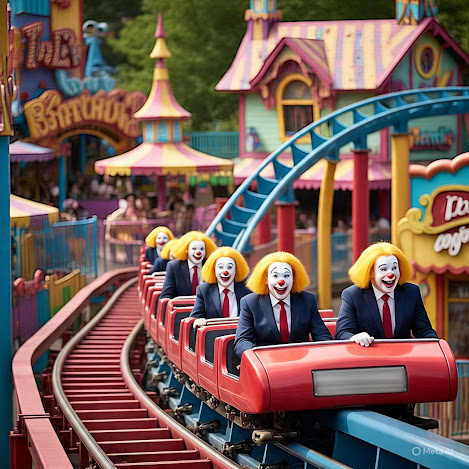
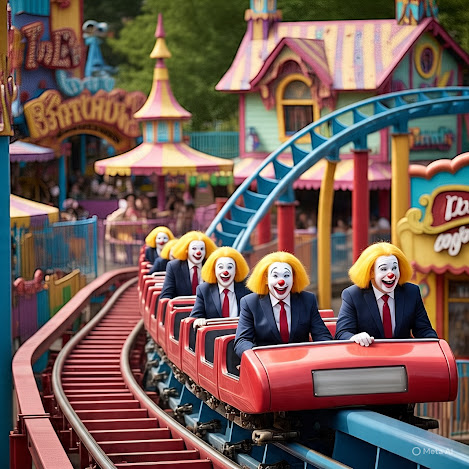
The immediate aftermath of February 2025 marked a significant turning point for the stock market. Following a robust multi-year growth trajectory, investor confidence began to waver as the prospect of widespread tariffs materialized. This period culminated in a sharp correction, with major indices experiencing some of the most pronounced single-day drops and subsequent recoveries in recent history. For instance, the S&P 500, a key benchmark for U.S. equities, registered a decline of approximately 20% from its high, signaling deep investor concern over future corporate earnings and economic stability. This downturn was particularly acute around early April, coinciding with specific governmental announcements regarding trade policy. However, in a testament to the market’s underlying resilience and perhaps a belief in eventual de-escalation, a significant portion of these losses has since been recouped, bringing the market back near its previous all-time highs as of mid-2025. This rapid whipsaw action has left many investors bewildered, highlighting the direct and immediate impact of trade policy on asset valuations.
Understanding Tariffs: A Primer on Trade Policy
At its core, a tariff is a tax levied by a government on imported goods or services. It functions essentially as a sales tax on foreign-made products entering the domestic market. While these duties are technically paid by the importing entity—be it an individual ordering an e-bike directly from overseas or a multinational corporation like Amazon, Walmart, or Apple bringing in container loads of goods—the financial burden ultimately falls on the end consumer. Importers, facing increased costs, invariably pass these expenses onto buyers through higher retail prices to maintain their profit margins. Beyond consumer goods, tariffs also impact businesses directly. Industries reliant on imported raw materials or components, such as construction (steel, copper, lumber) or manufacturing, face elevated project costs, which can translate into higher housing prices or delayed infrastructure development.
Economically, tariffs generally lead to higher domestic prices across a broad spectrum of goods and services, acting akin to a widespread sales tax. This tends to slow down the economy by reducing consumer purchasing power and overall spending. On the fiscal side, the revenue generated from tariffs flows into the national treasury, potentially contributing to budget funding or deficit reduction. However, the prevailing economic consensus favors tax systems that are as low, fair, and predictable as possible to foster business investment, incentivize hard work, and enable long-term economic planning. The current tariff regime, characterized by frequently changing, often arbitrary, and unusually high rates, deviates significantly from these principles, introducing substantial uncertainty into the economic environment.
Historical Context and the Shift in US Trade Strategy
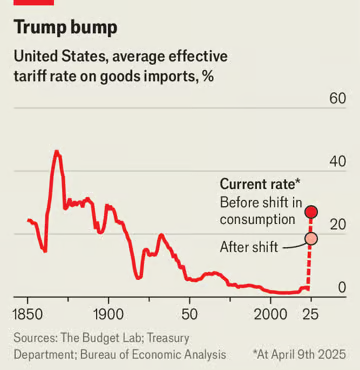
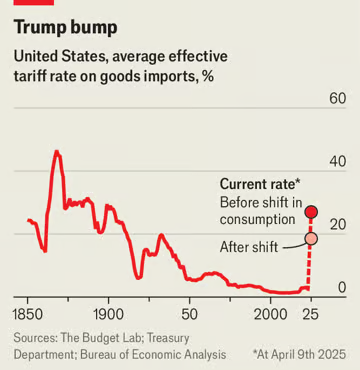
For much of the post-World War II era, the United States has been a leading proponent of free trade, advocating for reduced tariffs and the establishment of multilateral trade agreements like GATT (General Agreement on Tariffs and Trade) and its successor, the World Trade Organization (WTO). This approach was rooted in the belief that open markets foster global economic growth, innovation, and international cooperation. Average U.S. tariff rates plummeted from highs seen in the early 20th century (e.g., the infamous Smoot-Hawley Act of 1930, which contributed to the Great Depression by stifling international trade) to historically low levels, often below 2-3% on average, in recent decades.
However, recent administrations have shown a marked shift towards a more protectionist stance, often employing tariffs as a tool to address perceived trade imbalances or to protect domestic industries. While President Joe Biden utilized tariffs on certain goods, such as imported solar panel components, ostensibly to support domestic manufacturing and please specific constituencies, his predecessor, Donald Trump, significantly escalated this strategy. Trump’s approach involved the imposition of broad-based tariffs on goods from key trading partners, notably China, under the guise of national security or to compel renegotiation of trade deals. This marked a departure from the established framework of rules-based international trade, favoring unilateral action and bilateral pressure. The increase in solar panel tariffs by Trump, following Biden’s initial imposition, exemplifies how protectionist policies can gain bipartisan traction despite their potential economic drawbacks. Economists frequently point out that such tariffs, especially on critical components like those for solar energy, can inadvertently stifle growth in nascent industries and raise costs for consumers seeking affordable, clean energy.
The Rationale Behind the Measures: Presidential Perspectives
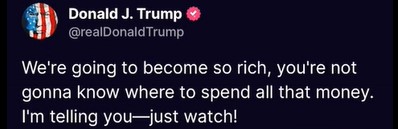
The rationale behind the current administration’s aggressive use of tariffs has been a subject of intense debate. Public statements from President Trump have often suggested a belief that tariffs would directly enhance national wealth by protecting domestic industries and reducing trade deficits. This perspective often emphasizes the "first-order" effects, such as increased hiring by a protected domestic manufacturer, while overlooking the broader "second-order" economic consequences. For instance, while a tariff on imported automobiles might theoretically boost sales for a domestic automaker like General Motors, leading to new jobs and factories, it also means that consumers face higher prices and reduced choice. Moreover, the protected company might face less competitive pressure, potentially leading to reduced innovation and efficiency in the long run.
Financial markets, however, have consistently reacted negatively to tariff announcements. When tariffs are proposed or increased, share prices typically fall, reflecting investors’ and corporate leaders’ understanding that such measures generally lead to higher costs, reduced profitability, and slower economic growth. Conversely, any indication of tariff reductions or trade truces usually results in a market rebound. This disconnect between the administration’s stated economic theory and the market’s practical assessment has led many analysts to conclude that the tariffs are primarily a tactical maneuver. The prevailing theory suggests that these high, fluctuating tariffs are wielded as leverage in trade negotiations, aimed at extracting more favorable terms from trading partners or at compelling them to address issues like intellectual property theft or market access restrictions.
Economic Ripple Effects: Beyond Consumer Prices
The economic ramifications of elevated tariffs extend far beyond immediate consumer price increases. On a macro level, sustained high tariffs can lead to inflation, as the cost of imported goods, raw materials, and components permeates the entire supply chain. This erodes consumer purchasing power, potentially dampening retail sales and overall economic activity. Businesses, particularly those with complex international supply chains, face increased operational costs and significant uncertainty, which can defer investment, hinder expansion plans, and ultimately constrain job creation. For example, U.S. manufacturers relying on specialized foreign components may struggle to compete globally if their input costs rise disproportionately.
The impact on specific sectors can be severe. The agricultural sector, for instance, often bears the brunt of retaliatory tariffs from countries affected by U.S. duties, leading to reduced exports and financial hardship for farmers. Technology companies, deeply integrated into global supply chains, face challenges in sourcing components and assembling products efficiently. The overall effect is a less efficient economy, where resources are diverted to less productive domestic industries that might otherwise struggle to compete, rather than flowing to areas of comparative advantage. International bodies like the International Monetary Fund (IMF) and the World Bank have consistently warned that trade wars and protectionist policies undermine global economic growth and stability, risking a slowdown in world trade and investment.
Global Reactions and Geopolitical Fallout
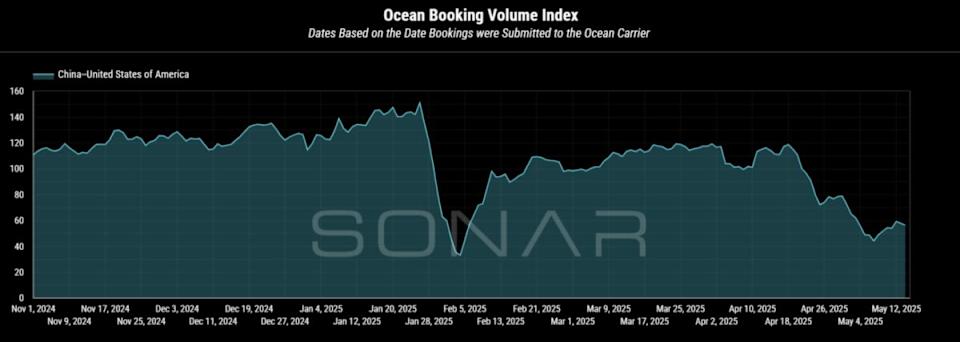
The unilateral imposition of tariffs by the U.S. has not occurred in a vacuum. Major trading partners, including China, the European Union, Canada, and Mexico, have frequently responded with retaliatory tariffs on American goods. These tit-for-tat measures escalate trade tensions, creating a cycle of protectionism that harms all parties involved. China, for instance, has targeted U.S. agricultural products and other goods, impacting American exporters. The EU has threatened or implemented tariffs on iconic American products, while Canada and Mexico have historically reacted strongly to duties on steel and aluminum.
Beyond direct economic retaliation, the U.S. tariff policy has strained diplomatic relations and weakened multilateral institutions. The World Trade Organization (WTO), designed to resolve trade disputes and promote free trade, has seen its authority challenged as nations increasingly resort to unilateral actions rather than established dispute resolution mechanisms. This erosion of the rules-based international trading system poses a long-term risk to global economic cooperation and stability, potentially leading to a more fragmented and less predictable global economy. The geopolitical implications include increased distrust among allies and adversaries alike, complicating efforts to address other pressing global challenges.
Navigating the Legal Landscape: Checks and Balances
The broad executive authority to impose tariffs, particularly under statutes like Section 232 of the Trade Expansion Act of 1962 (national security grounds) or Section 301 of the Trade Act of 1974 (unfair trade practices), has been a point of contention. Critics argue that such expansive powers, when wielded by a single individual with little congressional oversight, undermine the constitutional separation of powers and the democratic process. The U.S. Constitution’s framers envisioned a system where Congress held the power to regulate commerce, including setting tariffs, to prevent the concentration of economic power in the executive branch.
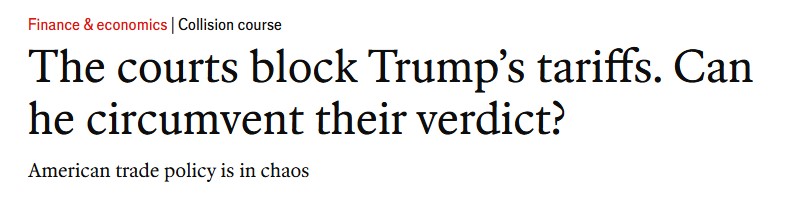
This constitutional challenge is beginning to manifest in the court system. Companies and industry groups affected by the tariffs have initiated legal challenges, arguing that the executive branch has overstepped its authority or that the justifications for the tariffs are invalid. These legal battles, some of which have been highlighted in publications like The Economist, represent a critical test for the American system of checks and balances. The outcome of these cases will not only determine the legality of current tariffs but also potentially redefine the scope of presidential power in trade policy for future administrations. The ability of the judiciary to rein in executive overreach will be crucial in restoring predictability and balance to trade policy.
Investor Sentiment and Future Scenarios
Despite the ongoing trade disputes and high tariff levels—which remain significantly higher than pre-2025 rates, by some estimates seven times higher—the U.S. stock market’s remarkable rebound to near all-time highs suggests a prevailing investor belief in an eventual resolution. This optimism likely stems from the historical precedent of economic resilience and the expectation that the current protectionist phase will ultimately give way to a return to more open trade policies, perhaps after the upcoming election cycle or through successful negotiations.
However, two primary scenarios remain possible. The "dark side" scenario envisions the current high tariffs becoming entrenched. This could lead to a sustained period of economic contraction, characterized by inflation, widespread job losses, significant supply chain disruptions, and increased political instability both domestically and internationally. Businesses would be forced to reconfigure their operations, potentially leading to a painful and inefficient shift towards domestic production, even for goods that are cheaper and more efficiently produced abroad. Conversely, the "bright side" scenario predicts that the tariffs are indeed a negotiating tactic that will ultimately be rolled back. In this outcome, a truce would lead to a market rebound, renewed global trade, increased economic efficiency, and stable prices. This scenario aligns with the broad consensus that free trade, when conducted fairly, fosters greater prosperity for all participants. The historical success of the U.S. economy, built on relatively low tariffs and extensive international trade, supports the idea that the best strategy in a trade war is often to avoid engaging in one altogether.
The Media Lens: Distinguishing Information from Noise
In this era of heightened economic uncertainty and rapid policy shifts, the role of media in shaping public perception is more critical than ever. Unfortunately, the contemporary media landscape is often driven by the pursuit of attention, with sensational headlines and emotionally charged narratives frequently prioritized over objective reporting. This "click-funded" model incentivizes outrage and fear, regardless of factual accuracy, as these emotions tend to generate higher engagement.
For individuals attempting to understand complex economic issues like tariffs, this media environment presents a significant challenge. It becomes imperative to approach news consumption with a critical eye. One strategy is to limit exposure to sensationalized news and instead focus on personal financial planning and well-being. Another is to become a "subject matter expert" in areas of personal interest, delving into original sources, academic research, and reputable economic analyses to form independent, fact-based opinions. As many seasoned observers note, the deeper one’s understanding of a subject, the more apparent the inaccuracies and biases in mainstream media reporting become. Therefore, in navigating the ongoing tariff debate and its economic implications, informed discernment remains the most valuable tool for investors and citizens alike. The long-term trajectory of the economy, despite short-term fluctuations, generally favors resilience and adaptation, making prudent financial decisions and a calm approach more beneficial than succumbing to media-driven panic.