


The global financial landscape has experienced an unprecedented surge in recent years, with the S&P 500 index, a benchmark for broad market performance, registering remarkable gains. Over the past two years alone, the index has climbed approximately 57%, and its value has more than doubled over the last five years. This sustained bullish momentum has significantly impacted the net worth of investors, potentially accelerating retirement timelines for many and prompting others to reassess their financial strategies. The rapid appreciation has also ignited widespread debate among financial experts and individual investors regarding the sustainability of this growth, with many questioning whether current valuations reflect genuine economic strength or merely an impending financial bubble, particularly fueled by the burgeoning enthusiasm surrounding Artificial Intelligence (AI).
The Unfolding Market Phenomenon: A Deeper Look at Recent Gains
The period between 2019 and early 2025 has been characterized by dramatic shifts in market dynamics. Following the initial economic disruptions of the COVID-19 pandemic, markets experienced a swift recovery, driven by unprecedented monetary and fiscal stimulus, coupled with rapid technological adoption. The S&P 500’s ascent from the "Covid Era" lows has been particularly steep. For an investor who allocated $100,000 to the market in 2019 and diligently reinvested dividends, their portfolio would now stand at approximately $256,960, representing a staggering 157% return on the original investment.

However, a closer examination reveals a divergence between asset price growth and underlying corporate earnings. Data from financial analysis platforms like multpl.com indicates that the share of company earnings attributable to that same $100,000 basket of stocks has only increased from $5,290 to $7,540 during the same period, a comparatively modest 42% gain. This disparity highlights a significant expansion in the market’s price-to-earnings (P/E) ratio, a key valuation metric. The P/E ratio for the S&P 500 has climbed from roughly 20 in 2019 to approximately 30 today. This trend suggests that investors are willing to pay a substantially higher multiple for each dollar of corporate earnings, indicating elevated expectations for future growth.
Understanding Valuations: The Rental Property Analogy
To demystify stock valuation, financial analysts often draw parallels to real estate. Owning a stock is akin to owning a fractional share of a business, much like owning a rental property. When one owns a rental house, the primary financial benefit is the recurring rent collected after expenses. The selling price of the house to another investor is typically based on this future stream of income. For instance, if a property yields $2,000 per month ($24,000 annually) and sells for $240,000, the P/E ratio (or price-to-rent equivalent) is 10 ($240,000 / $24,000). If, however, the same property commands a sale price of $480,000 while rents remain static, the P/E ratio doubles to 20. While this benefits the seller, it implies a less favorable outlook for the buyer, who acquires the income stream at a higher cost.

In the stock market, a rising P/E ratio, without a commensurate increase in earnings, signifies that future returns, as a percentage of portfolio value, are likely to be lower. This does not imply that stocks will become unprofitable, but rather that the cost of acquiring future income streams has increased.
The "Magnificent Seven" and Market Concentration
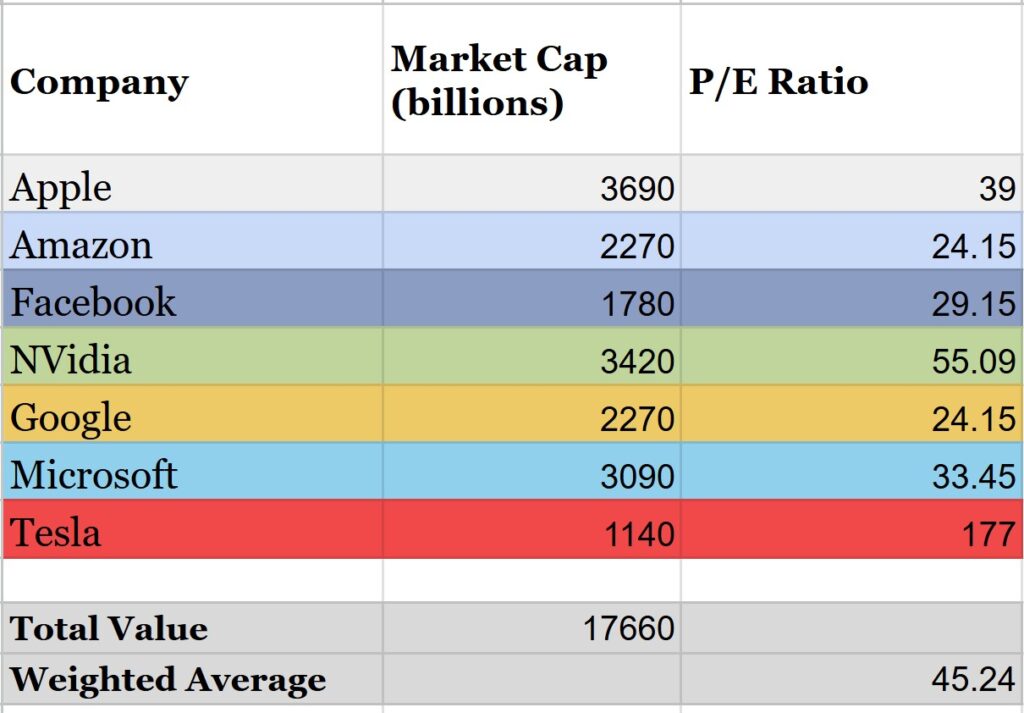
A critical factor contributing to the current market euphoria is the disproportionate influence of a select group of companies. Of the 500 large-cap companies comprising the S&P 500, approximately three-quarters of the recent growth has been driven by just seven technology giants, colloquially known as the "Magnificent Seven": Apple, Nvidia, Microsoft, Amazon, Google (Alphabet), Meta Platforms (Facebook), and occasionally Tesla. These companies collectively command a market capitalization exceeding $17.66 trillion, representing over 25% of the entire S&P 500’s value.

These tech titans exhibit significantly higher P/E ratios compared to the broader market, with a weighted average P/E of around 45. In contrast, if these seven companies are excluded, the remaining 493 companies in the S&P 500 exhibit a more modest P/E ratio of approximately 20. This indicates a highly concentrated market, where investor enthusiasm and capital allocation are heavily skewed towards a few dominant players, primarily driven by expectations of their continued innovation and market dominance.
Artificial Intelligence: The Engine of Hype and Potential
The central theme underpinning the recent surge in these tech companies, and indeed the broader market’s optimistic outlook, is the rapid advancement and perceived transformative potential of Artificial Intelligence. Recent breakthroughs in AI, particularly in areas like large language models and machine learning, have enabled software to exhibit human-like reasoning across a widening array of applications. This has ignited a frenzy across industries, with businesses anticipating a new era of unprecedented productivity and profitability.
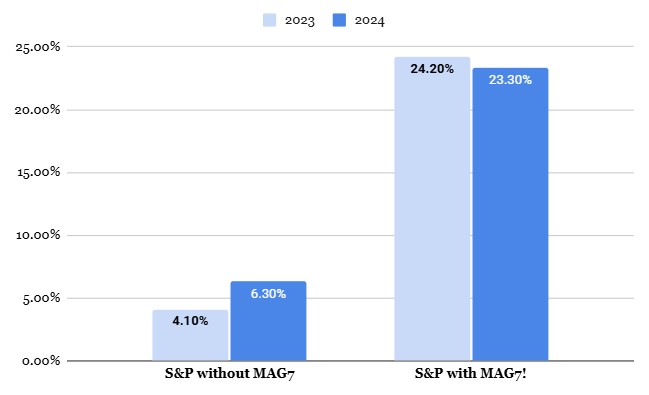
Six of the Magnificent Seven companies are investing hundreds of billions of dollars into building vast data centers equipped with supercomputers to power their AI initiatives. Nvidia, the seventh, is a primary beneficiary of this infrastructure boom, as it manufactures the specialized graphics processing units (GPUs) essential for AI computations, allowing it to command premium prices amidst insatiable demand.
The applications of AI are expanding rapidly, from processing and analyzing complex documents and code to driving autonomous vehicles, aiding medical diagnostics (e.g., identifying melanoma), accelerating drug discovery, and even animating humanoid robots for labor. The overarching narrative is that AI will provide an "infinite workforce" of highly intelligent, cost-free "employees," thereby removing traditional constraints on human intelligence and labor, and unlocking immense economic potential.
While many, including those closely observing the field, believe in the transformative power of AI, the timeline and precise impact remain uncertain. Key questions linger: Will the projected profits materialize as forecasted, or will they be tempered by unforeseen costs, intensified competition, or even societal disruptions such as widespread unemployment? The potential for massive economic upheaval, including significant job displacement, is a topic of increasing concern and debate among economists and policymakers.
Historical Context and Future Projections
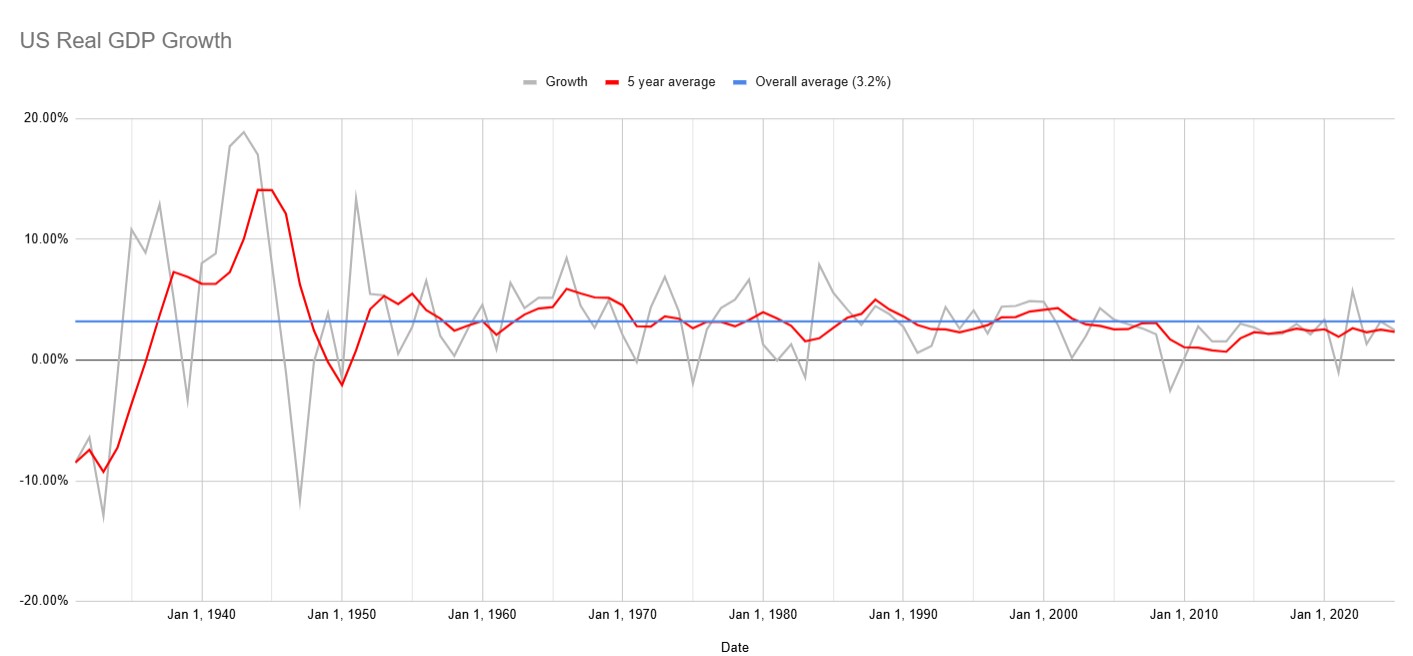
Despite the current excitement, historical economic data offers a grounding perspective. Over many decades, the real Gross Domestic Product (GDP) growth of the U.S. economy has averaged a remarkably consistent figure of approximately 3% after inflation. Interestingly, recent decades have shown a trend of slower than average growth, which, paradoxically, stands in contrast to the elevated stock market valuations. This historical stability in underlying economic growth underscores the importance of distinguishing between market sentiment and fundamental economic expansion.
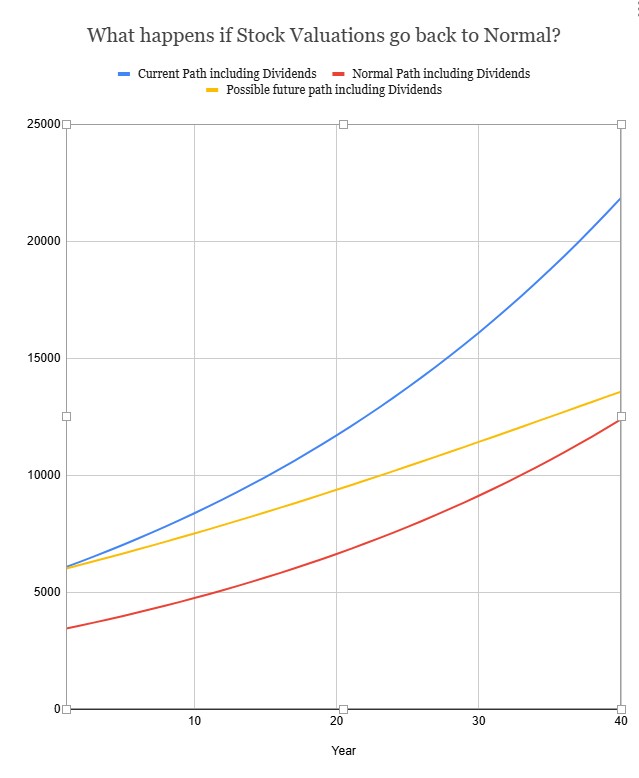
For investors, the critical takeaway is that while owning stocks for the long term is generally profitable, the current high valuations suggest that future returns might be more modest than in periods when stocks were acquired at lower P/E ratios. Attempting to "time the market" by selling assets now in anticipation of a future downturn and repurchasing them at lower prices is a notoriously difficult and often losing strategy. Over the long run, even if valuations normalize, economic growth and corporate earnings are expected to continue their upward trajectory, albeit potentially along a less aggressive path than the recent surge.

Diversification and Alternative Strategies
Given the elevated valuations in the U.S. market, investors are increasingly exploring diversification strategies. Vanguard, a leading provider of index funds, issues annual 10-year annualized return projections. Their latest forecasts suggest that international stocks and even bonds are expected to outperform U.S. stocks in the coming decade. This projection is largely based on the comparatively lower P/E ratios of international markets; for example, the Vanguard Total International Stock Index Fund (VXUS) currently has a P/E ratio of approximately 15.9, making European and other global equities appear significantly "on sale" compared to their U.S. counterparts. However, it is worth noting that Vanguard has made similar predictions in previous years that have not yet materialized, partly due to the concentrated AI boom in the U.S.
Robo-advisors like Betterment offer diversified portfolios that allocate investments across various asset classes beyond just U.S. stocks, including international equities and bonds, with automatic rebalancing features. Such diversified portfolios aim to achieve slightly higher returns with reduced volatility and potential tax advantages. A typical Betterment "core portfolio" currently holds a weighted average P/E ratio of about 22, offering a more balanced valuation compared to the concentrated U.S. market.
Legendary investor Warren Buffett, often referred to as "The Oracle of Omaha," also provides insights into market sentiment through the actions of Berkshire Hathaway. His firm is currently holding an extraordinary $334 billion in uninvested cash, signaling a cautious stance that reflects a perception of overvalued assets and a scarcity of attractive investment opportunities. Berkshire Hathaway itself, with a P/E ratio averaging around 21 in recent years, is not aggressively repurchasing its own shares, further indicating a disciplined approach to valuation.
Another alternative strategy involves evaluating debt repayment, particularly mortgages. While conventionally, maintaining a mortgage and investing surplus cash into index funds has often yielded better long-term returns, the current environment of higher interest rates (e.g., a 7% mortgage) and potentially lower expected stock returns makes the trade-off more nuanced. Paying off a high-interest mortgage can be viewed as securing a guaranteed 7% return, a highly attractive proposition compared to leaving substantial cash in low-yielding checking or savings accounts. Beyond the pure financial calculation, the psychological benefit of being mortgage-free holds significant value for many.
Conclusion: Navigating Uncertainty with Prudence
The current stock market boom, heavily influenced by the AI revolution, presents both immense opportunities and considerable uncertainties. While the transformative potential of AI is undeniable, the elevated valuations and concentrated market leadership warrant a cautious yet consistent investment approach. The wisdom often espoused by seasoned financial advisors remains pertinent: maintain a long-term perspective, adhere to a disciplined investment strategy, and avoid reacting impulsively to daily market headlines. While understanding economic trends and expert forecasts is valuable, the most reliable "market-beating returns" often come from investing in one’s own well-being and engaging in activities that yield tangible personal enrichment, such as physical pursuits and time spent outdoors. The true wealth, ultimately, lies beyond mere financial figures, in a life well-lived and free from excessive financial anxiety.
Sources and Further Reading:
- Multpl.com for historical S&P 500 P/E ratios and earnings data.
- Vanguard’s official investor outlook reports.
- Berkshire Hathaway’s annual shareholder letters.
- Betterment’s core portfolio details.
- The Economist for in-depth global economic analysis.