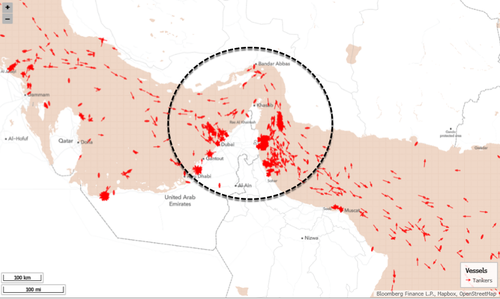

Maritime traffic through the Strait of Hormuz, a critical and indispensable global chokepoint for energy shipments, has experienced significant disruptions following the intensification of the U.S.-Israeli military campaign, codenamed "Operation Epic Fury." This joint operation targets command-and-control infrastructure belonging to Iran’s Islamic Revolutionary Guard Corps (IRGC) across multiple Iranian cities, escalating regional tensions to unprecedented levels. As of Sunday morning, vessel-tracking data revealed a near standstill in tanker movements, with a limited number observed exiting the Strait, while reports simultaneously emerged of an attack on a sanctioned oil tanker near the Omani coast, further compounding the volatile situation.
The Strategic Nexus: Strait of Hormuz Under Duress
The Strait of Hormuz, a narrow waterway connecting the Persian Gulf with the Arabian Sea and the broader Indian Ocean, is arguably the most critical energy chokepoint in the world. It handles approximately 20% of global petroleum liquids consumption and roughly 27% of global seaborne oil trade. For decades, its strategic importance has made it a focal point of geopolitical contention, particularly between Iran and Western powers. Any significant disruption to traffic through this waterway has immediate and far-reaching implications for global energy markets, supply chains, and economic stability. The current crisis marks one of the most severe challenges to its uninterrupted flow in recent memory, threatening to reverberate across international markets and diplomatic spheres.
Historically, the Strait has been a flashpoint for various incidents, from the "Tanker War" during the Iran-Iraq conflict in the 1980s to more recent episodes of ship seizures, limpet mine attacks, and drone incidents. These past events underscore Iran’s capability and willingness to leverage its geographical position to exert pressure, particularly when facing what it perceives as external aggression or severe economic sanctions. The current situation, however, appears to represent a qualitative escalation, intertwining a direct military campaign against Iranian targets with direct interference in maritime commerce.
"Operation Epic Fury" and Escalating Regional Tensions
"Operation Epic Fury," the U.S.-Israeli military campaign, commenced with a stated objective of dismantling critical IRGC command-and-control capabilities. The Islamic Revolutionary Guard Corps is a major military, political, and economic force within Iran, distinct from the regular armed forces. It is designated as a terrorist organization by the United States and has long been accused by Washington and its allies of destabilizing the Middle East through its support for proxy groups, missile development, and nuclear ambitions. The targeting of IRGC infrastructure across multiple Iranian cities signifies a profound escalation from previous, more limited engagements, directly challenging the core of Iran’s security apparatus and potentially its leadership.
The specifics of the attacks, though not fully detailed in initial reports, suggest a coordinated effort to degrade Iran’s ability to project power and respond effectively. Such a large-scale operation inevitably raises the specter of a broader regional conflict, drawing in other actors and potentially leading to a full-scale confrontation. The U.S. and Israel have consistently expressed concerns over Iran’s nuclear program and its regional activities, with "Operation Epic Fury" appearing to be a decisive move to alter the strategic calculus in the region.
A Chokepoint Under Pressure: Disruptions to Maritime Traffic
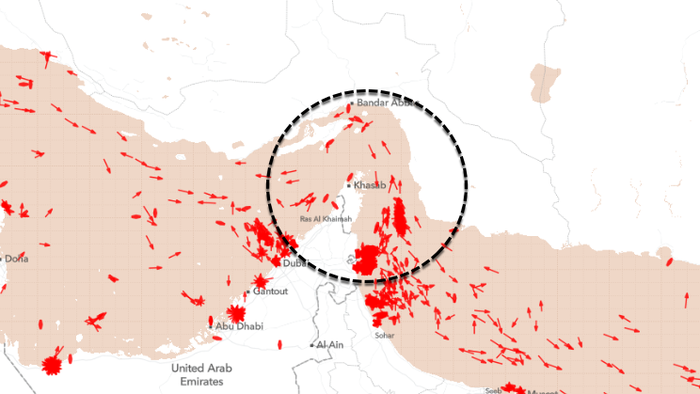
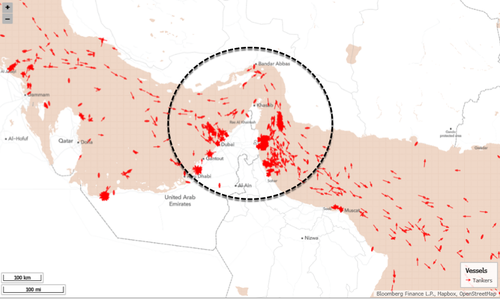
The immediate and tangible consequence of this escalating conflict has been the severe disruption of oil and gas tanker traffic through the Strait of Hormuz. On Sunday morning, Automatic Identification System (AIS) vessel-tracking data, a standard tool for monitoring ship movements, painted a stark picture: tanker traffic had slowed to a near standstill. Numerous vessels were observed in holding patterns on both sides of the Strait’s entrance and exit, indicating a widespread reluctance or inability of shipping companies to proceed through the perilous waterway. This paralysis is a direct reflection of the heightened risk perception among mariners, insurers, and vessel operators, who are acutely aware of the potential for collateral damage or targeted attacks.
The implications of such a slowdown are immediate for global energy markets. Even a temporary reduction in flow can send shockwaves through supply chains, leading to price spikes and increased volatility. The Strait’s role in delivering energy from major producers like Saudi Arabia, UAE, Kuwait, and Iraq to global consumers, particularly in Asia, makes its smooth operation non-negotiable for the global economy. The current state of gridlock suggests that fears of further escalation are already impacting the practical realities of international trade.
The Attack on the Skylight: Unanswered Questions and Accusations
Adding another layer of complexity and danger to the situation was the reported attack on the sanctioned oil tanker Skylight. Oman’s Maritime Security Centre officially confirmed that the Skylight, flying the flag of the Republic of Palau, was targeted five nautical miles north of Khasab Port, a strategic location near the Strait’s entrance. The vessel, identified as a "dark fleet" tanker, was operating under U.S. Treasury sanctions, indicating its involvement in illicit oil trade, likely for Iran.
Crucially, there were no immediate confirmed reports identifying the perpetrator of the Skylight attack. However, the timing and nature of the incident immediately fueled speculation and accusations. Javier Blas, a prominent energy journalist, suggested that "all the evidence suggests that Iran attacked one of its own (very small) dark fleet oil tankers (which was under US Treasury sanctions). It feels like a false flag operation." Blas further noted that the tanker had been in the same area for approximately ten days and was not actively crossing the Strait of Hormuz at the time of the incident, lending weight to the "false flag" theory. This hypothesis suggests that Iran might have orchestrated the attack to create a pretext for further actions or to amplify the perception of insecurity in the Strait, thereby increasing pressure on the international community.
Conversely, Iran’s semi-official Tasnim news agency had reported on Saturday, prior to the Skylight incident, that the Strait of Hormuz was "effectively closed to vessel traffic." This statement, coupled with Mohsen Rezaei, a member of the Expediency Discernment Council, warning on state TV that "no American ship is allowed to enter the Persian Gulf," underscores Iran’s intent to control access and potentially disrupt maritime activity in response to "Operation Epic Fury." Whether the Skylight incident was an independent act, a genuine attack by an unknown party, or indeed a "false flag" operation, its impact has been to further exacerbate the already tense environment and heighten the risk of miscalculation.
Immediate Repercussions: Shipping and Insurance Markets React
The escalating crisis has triggered immediate and significant reactions within the global shipping and insurance industries. German container liner Hapag-Lloyd AG, one of the world’s largest shipping companies, swiftly announced the suspension of all transits through the waterway, citing its "official closure." This decision by a major player signals the severe concerns about safety and viability of operations in the region. Similarly, France’s CMA CGM SA, the world’s third-largest container line, issued directives for ships within its fleet to suspend passage through the Suez Canal and take immediate shelter, indicating a broader apprehension about regional instability that extends beyond the Strait of Hormuz itself, affecting alternative routes.
The financial implications for maritime operations are also mounting. The Financial Times reported that shipowners have begun canceling existing insurance policies for vessels transiting through the Gulf region and, for those willing to continue operations, premiums have surged dramatically. War risk insurance, already a significant cost for operating in such volatile areas, has likely seen exponential increases, adding substantial financial burden to carriers and ultimately to the cost of goods transported. This surge in costs and cancellations reflects a clear consensus within the industry that the risk profile of the Strait of Hormuz and surrounding waters has fundamentally shifted from manageable to extremely hazardous. Such disruptions not only impact the direct movement of oil but also global trade, as container lines reroute or halt services, leading to delays and higher consumer prices.
Expert Perspectives: Iran’s Asymmetric Lever and Market Volatility
Energy market analysts have been quick to assess the implications of the unfolding crisis. Fernando Ferreira, an analyst with Rapidan Energy Group, articulated Iran’s strategic calculus in a Saturday briefing. "Iran understands that threatening traffic through Hormuz is its most credible asymmetric lever," Ferreira explained. This "asymmetric lever" refers to Iran’s ability to inflict significant economic costs on its adversaries, particularly the U.S. and its partners, without needing to match their conventional military might. Even limited interference, such as the current slowdown or targeted incidents, can raise global oil prices and impose immediate economic costs, thereby increasing pressure on Washington to de-escalate.
Ferreira warned, "We expect at least moderate disruptions to Gulf oil flows in the coming days, with the risk tilted toward something more severe if tensions escalate further." This forecast underscores the precarious balance in the region and the potential for a rapid deterioration of the situation, with corresponding impacts on energy supplies.
Echoing these concerns, Goldman Sachs analyst Adam Crook advised clients shortly after "Operation Epic Fury" began that "Oil remains the most direct and liquid expression as a geopolitical hedge." While a full closure of the Strait of Hormuz remains a "tail scenario" – a low-probability, high-impact event – Crook emphasized that "even a disruption of flows through the Strait via other means (targeting of ships, insurance issues) poses an upside scenario closer to $100/bbl." He further noted that "an attack on Iranian Oil infrastructure puts 2mb/d of Iran Crude exports at risk," highlighting additional potential pressure points beyond the Strait itself.
Indeed, initial market reactions confirmed these fears. A synthetic weekend market via IG showed crude oil prices surging by as much as 9% early Sunday morning, a clear indicator of market apprehension and the immediate pricing-in of increased geopolitical risk premiums. This sharp jump reflects the recognition among traders that supply disruptions are not merely theoretical but are becoming a tangible reality.
Global Economic Fallout: Oil Prices and Supply Chain Vulnerabilities
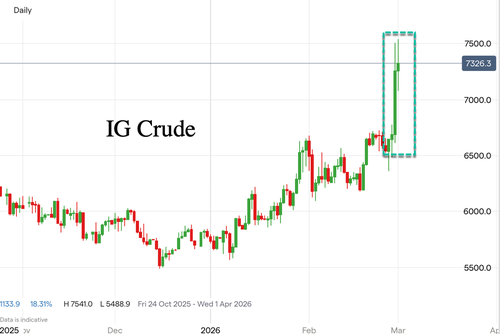
The immediate impact of disrupted flows through the Strait of Hormuz will undoubtedly be felt in global energy markets, particularly through higher Brent crude futures prices when markets open fully. Brent crude, the international benchmark, is highly sensitive to geopolitical tensions in the Middle East due to the region’s outsized role in global oil production and exports. A sustained disruption could quickly push prices towards or beyond the $100 per barrel mark, as forecasted by analysts, triggering broader inflationary pressures across economies dependent on oil imports.
Beyond crude oil, the ripple effects will extend to refined products, natural gas (some of which also transits the Strait), and ultimately to the cost of transportation for all goods. Global supply chains, already strained by recent geopolitical events and economic shifts, will face renewed pressure. Higher fuel costs for shipping and aviation will translate into increased operational expenses for businesses, which will likely be passed on to consumers, further fueling inflation and potentially dampening economic growth worldwide. This situation could exacerbate existing economic fragilities in many nations struggling with post-pandemic recovery and ongoing geopolitical uncertainties.
The China Factor: Beijing’s Energy Security at Risk
Perhaps the biggest pressure point from a prolonged disruption in the Strait of Hormuz will be on China. China is not only the top buyer of Iranian seaborne crude, often procured at discounted rates due to sanctions, but also one of the most exposed major end markets for Hormuz-linked flows overall. Any significant or prolonged disruption would directly threaten Beijing’s energy security, tightening its supplies and forcing it to seek more expensive alternatives in an already constrained global market.
This vulnerability comes at a particularly sensitive time for Beijing. It follows recent moves by the Trump administration to crimp China’s access to cheap Venezuelan crude, further limiting its options for diversified, low-cost energy imports. The confluence of these events — the Strait of Hormuz crisis, the Venezuelan crude squeeze, and the ongoing broader U.S.-China geopolitical rivalry — places immense strain on China’s energy strategy. All of this is unfolding just ahead of a scheduled meeting between President Trump and Chinese leadership in Beijing, approximately a month from now. The energy crisis could add significant leverage to the U.S. negotiating position or, conversely, harden China’s resolve in the face of perceived economic pressure.
Pathways to De-escalation? Future Outlook and Geopolitical Risks
The current crisis in the Strait of Hormuz represents a dangerous escalation in the long-standing tensions between Iran and Western powers, particularly the U.S. and Israel. The immediate future is fraught with uncertainty, with the risk of further military confrontation remaining high. De-escalation pathways appear narrow, requiring a concerted diplomatic effort from international actors, possibly including European nations and regional powers, to mediate between the parties.
However, the aggressive posture adopted by all sides suggests that a quick resolution is unlikely. The U.S.-Israeli "Operation Epic Fury" aims to achieve specific strategic objectives, while Iran has clearly signaled its readiness to retaliate and leverage its strategic position. The attack on the Skylight, regardless of its perpetrator, serves as a stark reminder of the volatile nature of the region and the potential for incidents to spiral out of control. The global community now watches with bated breath, aware that the stability of international energy markets and the broader geopolitical landscape hangs precariously in the balance. The consequences of a sustained closure or intense conflict in the Strait of Hormuz would be catastrophic, impacting everything from the price of gasoline to the stability of international trade and alliances.