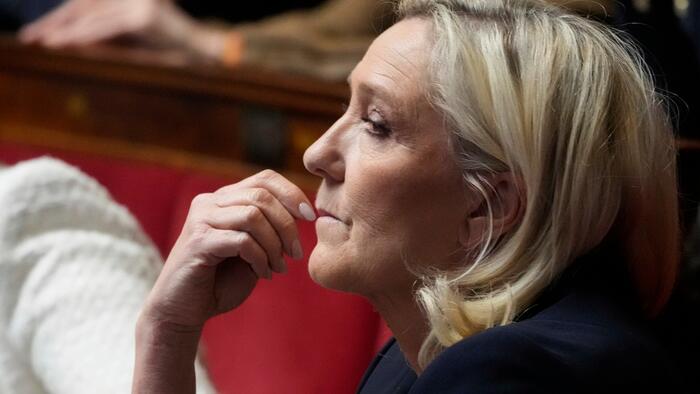

Marine Le Pen, the influential leader of France’s National Rally (Rassemblement National, RN), has publicly declared her firm intention not to seek the presidency in the 2027 election should she be subjected to house arrest, even if her current ban from public office is lifted. This significant pronouncement, made during an interview with French television station BFMTV, follows her conviction in March 2025 on charges widely perceived as politically motivated. In a strategic move that could reshape the landscape of French politics for years to come, Le Pen simultaneously endorsed Jordan Bardella, the current leader of the National Rally, as her preferred successor and the party’s torchbearer for the upcoming presidential contest. The pivotal legal decision regarding her appeal is anticipated on July 7, a date that now holds immense political weight.
The Legal Battle and its Political Ramifications
The legal proceedings against Marine Le Pen stem from charges dating back several years, specifically allegations of misusing European Parliament funds by employing parliamentary assistants for party political work rather than their designated legislative duties. These charges, initially brought to light by the European Anti-Fraud Office (OLAF), led to her conviction in March 2025. The court’s verdict included a five-year ban from holding public office, a four-year prison sentence (with three years suspended), and a substantial fine of €100,000. This ruling immediately sparked widespread condemnation from within the National Rally and allied political circles, who vehemently argued that the timing and nature of the prosecution constituted a deliberate political maneuver designed to neutralize Le Pen, a consistent frontrunner in presidential polls, ahead of the crucial 2027 election cycle. Donald Trump, among other international figures, publicly criticized the conviction, drawing parallels to perceived political weaponization of justice in other nations.
The French legal system often commutes shorter prison sentences, such as the one handed to Le Pen, into alternative forms of detention, including house arrest with an electronic monitoring device, commonly known as an ankle monitor. It is precisely this prospect that Le Pen has rejected outright as incompatible with the demands of a presidential campaign. Her statement to BFMTV, "You cannot campaign under these conditions. Can you campaign without going out in the evenings to meet your constituents at rallies?", underscored the practical impossibility of engaging in a nationwide political contest while under such stringent restrictions. For a candidate who thrives on direct contact with voters, rallies, and public appearances, an electronic tag would severely curtail her ability to connect with the electorate and articulate her vision, effectively silencing her campaign before it could even begin.
A Detailed Timeline of the Judicial Saga
The saga surrounding Marine Le Pen’s legal challenges, particularly concerning the alleged misuse of EU funds, stretches back several years, intertwining with her political ascendancy:
- 2015-2016: Investigations by OLAF begin into the employment of parliamentary assistants by Members of the European Parliament (MEPs) from the then-Front National (FN), including Marine Le Pen. Allegations surface that these assistants were paid by the EU but worked for the party in France.
- February 2017: Just months before the 2017 French presidential election where Le Pen was a leading candidate, preliminary charges are filed against her regarding the fictitious parliamentary assistant case. Le Pen refuses to comply with judicial summons during the election campaign, citing parliamentary immunity.
- June 2017: Following the presidential election, Le Pen is placed under formal investigation for breach of trust and complicity in breach of trust concerning the alleged misuse of EU funds.
- 2019-2023: The investigation continues, accumulating evidence and testimonies. Several other RN MEPs and officials are also implicated in related cases.
- Late 2023/Early 2024: The case moves towards trial, with prosecutors preparing their arguments. The political timing becomes increasingly scrutinised given the proximity to the 2027 presidential election.
- March 2025: A French court delivers a guilty verdict against Marine Le Pen, imposing a five-year ban from public office, a four-year prison sentence (three suspended), and a €100,000 fine. This conviction is immediately appealed by Le Pen’s legal team.
- May-June 2025: The appeal trial takes place, during which prosecutors reiterate their request for the original sentence to be upheld, including the five-year ban and the potential for house arrest.
- July 7, 2025: The Court of Appeal is scheduled to deliver its final ruling on Le Pen’s case, a decision that will either clear her path for a 2027 run or solidify her ban and potential house arrest. Le Pen has affirmed her intention to be present in court, stating, "Of course I will go, as I went every day to the trial in the first instance and on appeal because I respect justice."
The Rise of Jordan Bardella: A New Era for the National Rally?
Le Pen’s declaration of non-candidacy, contingent on her legal situation, is inextricably linked to her unambiguous endorsement of Jordan Bardella. This move formalizes a succession plan that has been quietly unfolding within the National Rally for several years. Bardella, at 29 years old, is a relatively young but highly visible figure within French politics. He joined the party (then the National Front) at the age of 16 and rapidly ascended through its ranks, benefiting from Le Pen’s mentorship and strategic positioning. He became a Member of the European Parliament in 2019 and was elected president of the National Rally in November 2022, succeeding Le Pen who stepped down to focus on her presidential ambitions.
Bardella represents a new generation of nationalist politicians, combining a polished media presence with a strong grasp of social media, allowing him to connect with younger voters. While maintaining the core tenets of the RN’s platform – including strong stances on immigration, national sovereignty, and law and order – he has been instrumental in the party’s continued "de-demonization" strategy, aiming to broaden its appeal beyond its traditional base. His public approval ratings have consistently climbed, particularly among conservative youth and working-class voters.
Le Pen’s endorsement is not merely a suggestion but a powerful mandate. She outlined her preferred scenario: "The best-case scenario is that I am elected president of the Republic and he is my prime minister." However, acknowledging the grim reality of her legal challenges, she added, "If I cannot be a candidate, Jordan will find himself a prime minister," and she would take "whatever role he wants me to have." She emphasized Bardella’s autonomy, stating, "If I cannot be a candidate, he will determine at what level he needs my presence, my advice and my experience." This ensures a smooth transition of power and maintains a semblance of unity within the party, crucial for its electoral prospects.
Marine Le Pen’s Enduring Political Legacy
Marine Le Pen’s potential departure from the presidential race would mark the end of an era for French politics. For over a decade, she has been the undisputed leader of the French far-right, transforming the National Front, founded by her father Jean-Marie Le Pen, into the National Rally. Her "de-demonization" strategy involved moderating the party’s rhetoric, expelling controversial figures, and focusing on socio-economic issues rather than purely identitarian ones. This approach allowed her to significantly broaden the party’s appeal, particularly among working-class voters disillusioned with traditional parties.
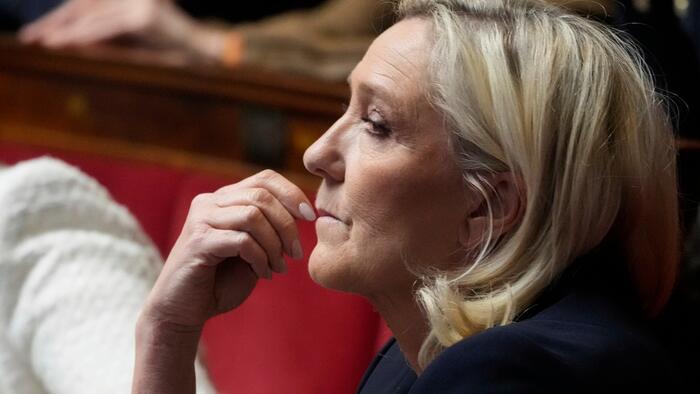
Her presidential election performances illustrate this steady rise:
- 2012: Le Pen secured 17.90% of the vote in the first round, placing third.
- 2017: She advanced to the second round for the first time, garnering 21.30% in the first round and 33.90% in the run-off against Emmanuel Macron.
- 2022: She again reached the second round, achieving 23.15% in the first round and an unprecedented 41.45% in the run-off against Macron, demonstrating the RN’s significant and growing electoral power.
Her consistent presence in the final rounds of presidential elections has made her a central figure in French political discourse, forcing mainstream parties to adapt their strategies and rhetoric to counter the RN’s growing influence. Her potential absence from the 2027 ballot would leave a massive void and present an unprecedented test for the party she meticulously reshaped.
Reactions and Broader Implications for French Politics
The news of Le Pen’s conditional withdrawal and Bardella’s anointment has sent ripples across the French political spectrum. Within the National Rally, the reaction has been one of staunch support for Le Pen and outrage over the perceived judicial overreach. Party officials and members have rallied behind her, reiterating accusations of a politically motivated "judicial coup" aimed at thwarting democratic choice. They frame Le Pen as a martyr, a victim of an establishment unwilling to tolerate a populist challenge to its power. This narrative is crucial for mobilizing their base and could potentially galvanize support for Bardella as he steps into the spotlight.
From the ruling centrist coalition, led by President Emmanuel Macron, and other mainstream parties, the response has been more guarded. While they would likely refrain from commenting directly on judicial decisions, the implicit relief at Le Pen’s potential removal from the 2027 race would be palpable. However, they also face a new challenge: Bardella, while less experienced, is often seen as more palatable to a broader electorate than the traditional image of Marine Le Pen, who still carries some of the historical baggage of the Le Pen name. His youth and modern image could potentially broaden the RN’s appeal even further, attracting voters who might have been hesitant to support Marine Le Pen directly.
Internationally, the situation is being closely watched, particularly by populist and conservative movements. The initial condemnation by figures like Donald Trump highlights a shared narrative among some right-wing leaders who perceive judicial systems as being co-opted for political ends. This could further fuel debates about the independence of the judiciary and the integrity of democratic processes in Western nations.
The most significant implication, however, lies in the 2027 presidential election. Marine Le Pen was consistently polling as a strong contender, often ahead in hypothetical first-round matchups. Her absence drastically alters the strategic calculations for all other candidates. Jordan Bardella, while popular, lacks Le Pen’s extensive track record and name recognition as a presidential candidate. He will need to rapidly consolidate his position, not just as party leader, but as a credible head of state. His ability to rally Le Pen’s diverse voter base – encompassing disillusioned working-class voters, traditional conservatives, and young populists – will be crucial.
Moreover, Le Pen’s decision could influence the "republican front," the traditional alliance of mainstream parties that historically unites to block the far-right in the second round of elections. If Bardella is perceived as less polarizing than Le Pen, the effectiveness of this front could be diminished, making the path to the Élysée Palace potentially more accessible for the National Rally. Conversely, his relative inexperience might also make him a more straightforward target for established political figures.
The Broader Debate: Justice, Politics, and Democracy
This entire episode reignites a perennial debate in democratic societies: the delicate balance between judicial independence and the potential for political influence, or at least the perception thereof. When high-profile political figures face legal challenges, especially on the eve of major elections, questions inevitably arise about the motivations and timing of such prosecutions. Le Pen’s supporters view her conviction as a clear case of "lawfare" – the use of legal systems to discredit and sideline political opponents. They argue that the judiciary, meant to be impartial, is being weaponized by the establishment to protect its interests.
Conversely, proponents of the legal process emphasize the principle that no one, regardless of their political standing, is above the law. They assert that investigations and convictions, even if they affect prominent politicians, are necessary to uphold the rule of law and ensure accountability. The challenge lies in convincing a deeply polarized public that justice is being served fairly, without bias or political agenda. The July 7 ruling will not only determine Marine Le Pen’s immediate political future but will also significantly impact public trust in France’s democratic institutions, setting a precedent for how legal challenges against leading political figures are perceived and managed in the run-up to crucial elections.
As France looks towards the 2027 presidential election, the legal and political drama surrounding Marine Le Pen ensures a turbulent and unpredictable path. The Court of Appeal’s decision on July 7 will undoubtedly be a watershed moment, potentially ushering in a new era for the French far-right under Jordan Bardella and fundamentally reshaping the country’s political landscape for years to come.