
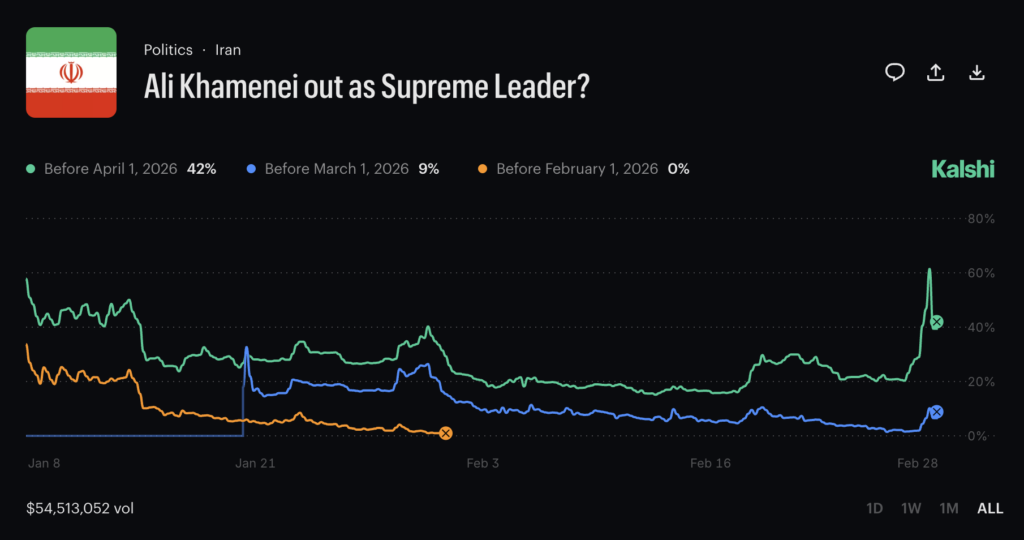

Tarek Mansour, a co-founder of the prediction market platform Kalshi, has issued a statement addressing the platform’s decision to void certain trading positions following the confirmed death of Iran’s Supreme Leader, Ayatollah Ali Khamenei. The move, aimed at preventing individuals from profiting directly from death, has ignited debate within the prediction market community and raised broader questions about ethical considerations in event-based trading.
The controversy stems from Kalshi’s market titled "Ali Khamenei out as Supreme Leader." Following reports of Khamenei’s death on Sunday, July 21, 2026, by Iranian state media, a flurry of trading activity occurred. However, Kalshi chose to void positions that were opened after the official confirmation of his death, leading to accusations of stifled user profits.
Kalshi’s Stance: Upholding Ethical Guidelines
Mansour articulated Kalshi’s policy on its X (formerly Twitter) account, stating, "We don’t list markets directly tied to death. When there are markets where potential outcomes involve death, we design the rules to prevent people from profiting from death. That is what we did here." This statement underscores the platform’s commitment to adhering to ethical principles, even when they may impact user gains.
A spokesperson for Kalshi further elaborated to Cointelegraph, emphasizing that the platform’s policy against "death markets" is a clear and long-standing one. This policy was reiterated on Saturday, July 20, 2026, the day before the news broke, and the specific stipulations regarding death carve-outs were reportedly included in the market rules. Despite these disclosures, the decision to void trades generated considerable backlash from users who felt their potential profits were unfairly curtailed.
Reimbursement and Resolution for Traders

To mitigate the impact of the voided positions, Kalshi announced a comprehensive reimbursement plan. All fees associated with the "Ali Khamenei out as Supreme Leader" market will be refunded to users. Furthermore, traders who held positions prior to Khamenei’s death will be compensated based on the "last-traded price before his death." This approach aims to ensure that those who participated in the market before the definitive news of his passing are not penalized.
For users who opened positions after the death was confirmed, Kalshi is reimbursing the difference between the higher entry price they paid and the last traded price before the confirmation. This measure is intended to protect individuals who may have been misled by rapidly evolving information or who entered the market at an inflated price due to the immediate aftermath of the news.
Timeline of Events and Market Reaction
The events unfolded rapidly:
- Early Sunday, July 21, 2026: Iranian state media reports the death of Supreme Leader Ayatollah Ali Khamenei. These reports follow an alleged attack launched by Israel and the United States a day earlier, on Saturday, July 20, 2026.
- Saturday, July 20, 2026: Kalshi reiterates its policy against "death markets" on its official X account.
- Following Confirmation of Death: Trading activity on the "Ali Khamenei out as Supreme Leader" market intensifies.
- Post-Confirmation: Kalshi makes the decision to void positions opened after the confirmation of Khamenei’s death.
- Subsequent Days: Tarek Mansour provides an update and details the reimbursement plan. Public reactions and criticisms emerge on social media.
The market reaction, as depicted in screenshots shared by Mansour and Kalshi, shows a surge in the "Ali Khamenei out as Supreme Leader" market’s price around the time of the reported death. This price fluctuation highlights the speculative nature of such markets and the potential for rapid gains and losses.
Broader Context: Prediction Markets and Geopolitical Tensions
This incident occurs within a broader context of heightened geopolitical tensions and increased scrutiny of prediction markets. In February 2026, six traders on a rival platform, Polymarket, collectively netted approximately $1 million by betting on a U.S. strike on Iran before the end of the month. These trades raised significant red flags due to the timing and the creation of new wallets specifically for these bets shortly before the alleged strike.

Investigations by onchain analysts revealed that all six wallets were created in February, with a majority of their activity focused on markets related to a strike on Iran. Crucially, some of these positions were reportedly filled just hours before the first explosions were heard over Tehran, as reported by Bloomberg. Such patterns led to widespread suspicion of insider trading, where individuals might possess non-public information that allows them to make profitable bets.
Adding to the climate of concern, in January 2026, U.S. President Donald Trump announced the arrest of an individual who had leaked information tied to a raid and capture operation in Venezuela. This announcement fueled speculation from onchain analysis platforms like Lookonchain, suggesting a potential link between the leaker and winning bets placed on Polymarket shortly before the U.S. raid in Caracas. While no direct connection was definitively proven, these incidents underscore the vulnerability of prediction markets to the exploitation of insider information.
Implications for Prediction Market Regulation and Ethics
The Kalshi situation, while distinct from allegations of insider trading, highlights the ongoing challenge of balancing the open nature of prediction markets with the need for ethical conduct and public trust. The core issue for Kalshi was not the trading of information, but the potential for profiting from a sensitive event involving loss of life.
The platform’s proactive stance in voiding certain trades and implementing a fair reimbursement policy suggests a commitment to learning and adapting. However, the backlash from users indicates a divergence of opinion on where the lines of ethical trading should be drawn. Some users may view any market related to a significant geopolitical event as fair game for speculation, while platforms like Kalshi are increasingly adopting a more cautious approach, prioritizing the avoidance of scenarios that could be perceived as exploitative.
The broader implications for the prediction market industry are significant. As these platforms gain more traction and handle larger sums of money, the pressure to implement robust compliance measures and clear ethical guidelines will intensify. The ability of platforms to self-regulate effectively will be crucial in determining their long-term viability and their standing with both users and regulatory bodies. The Kalshi incident serves as a case study in the complex ethical landscape of prediction markets, demonstrating the ongoing need for transparency, clear rule-making, and a commitment to responsible operation. The future of these markets may well depend on their capacity to navigate such sensitive situations with integrity and foresight.