
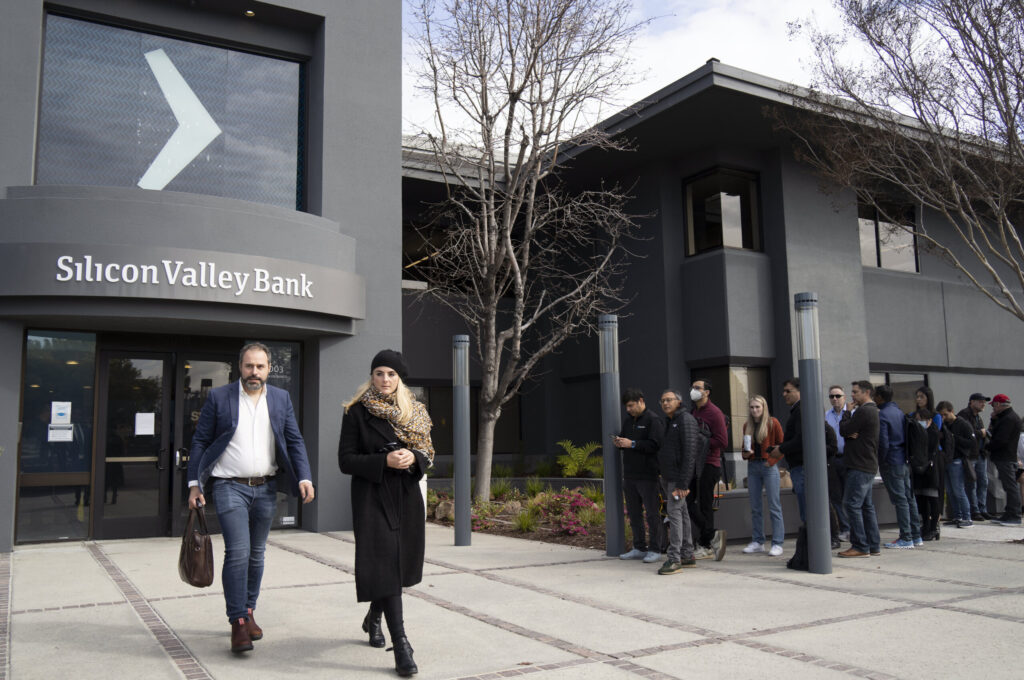

The echoes of the March 2023 banking crisis, particularly the sudden implosion of Silicon Valley Bank (SVB), continue to resonate through the financial world, having catalyzed a profound strategic pivot for global banking giant JPMorgan Chase. What began as a moment of industry-wide instability and regulatory urgency swiftly transformed into an unprecedented opportunity for JPMorgan to aggressively expand its footprint in the lucrative and strategically vital innovation economy sector. Three years ago, as the crisis unfurled, JPMorgan Chase executive Doug Petno found himself abruptly pulled from a colleague’s retirement party in New York City by CEO Jamie Dimon. The mandate was clear and urgent: regulators were inquiring if JPMorgan was interested in acquiring the rapidly failing West Coast lender, SVB, a bank intrinsically woven into the fabric of America’s startup community.
The Unraveling of Silicon Valley Bank and the Broader Crisis
The events of March 2023 sent shockwaves through the global financial system, with Silicon Valley Bank at the epicenter. For decades, SVB had been the quintessential bank for startups, venture capitalists, and technology companies, deeply integrated into the ecosystem of innovation. Its collapse on March 10, 2023, following a massive, rapid withdrawal of deposits, underscored vulnerabilities in the banking sector and highlighted the unique risks associated with a highly concentrated client base. The bank’s business model, which thrived on low-interest rate environments and the rapid growth of its tech clients, became severely exposed when the Federal Reserve aggressively raised interest rates. SVB had invested heavily in long-duration, low-yielding bonds during a period of ultra-low rates. As rates climbed, the market value of these bonds plummeted. When a significant portion of its depositors, many of whom were startups facing a tougher fundraising environment, began withdrawing funds, SVB was forced to sell these bonds at a substantial loss to meet liquidity demands. The announcement of a capital raise to cover these losses, coupled with warnings from prominent VCs, triggered a classic bank run, leading to $42 billion in deposit withdrawals in a single day.
This crisis was not isolated. The failure of SVB was quickly followed by the collapse of Signature Bank, a major lender to the cryptocurrency industry, and shortly thereafter, First Republic Bank, another institution with a significant tech and high-net-worth client base. These events collectively triggered fears of contagion, prompting swift and decisive action from U.S. financial regulators, including the Federal Deposit Insurance Corporation (FDIC) and the Federal Reserve, to backstop deposits and stabilize the system. The government’s intervention, guaranteeing all deposits at SVB and Signature Bank beyond the standard $250,000 FDIC limit, was an extraordinary measure aimed at preventing a wider panic and ensuring the stability of the financial system.
JPMorgan’s Deliberations and the "Flight to Safety"
Amidst this turmoil, the phone call to Doug Petno on March 9, 2023, marked the beginning of a critical weekend of intense deliberations within JPMorgan Chase. Regulators, grappling with the sudden failure of a systemically important regional bank, were exploring all options, including a potential acquisition by a larger, more stable institution. Jamie Dimon, JPMorgan’s formidable CEO, along with Petno and other senior leaders, meticulously weighed the complexities of acquiring SVB. The bank had just seen $42 billion in deposits vanish, and its balance sheet presented a formidable challenge.
Ultimately, JPMorgan decided against purchasing SVB. This decision was influenced, in part, by an unforeseen development that unfolded over that very weekend: a massive "flight to safety." As SVB’s collapse became public and fears gripped the startup community, thousands of clients, seeking refuge for their capital, began opening accounts with JPMorgan Chase. "We had three years’ worth of incoming clients in a weekend," Petno, who serves as co-head of JPMorgan’s commercial and investment bank, revealed in an exclusive interview. He elaborated on the extraordinary efforts, noting, "Onboarding teams were opening up accounts around the clock." This unprecedented influx of new clients from the very ecosystem SVB had dominated underscored a critical market vacuum and an undeniable opportunity.
Seizing the Vacuum: Building a New Innovation Economy Powerhouse
Emboldened by this dramatic influx of new business, Petno and his team recognized the opportune moment to transform JPMorgan’s existing, albeit nascent, startup banking efforts into a formidable competitor. Their objective was not merely to fill the void left by SVB but to rival other agile fintech players like Brex, Ramp, and Mercury, all of whom had successfully carved out profitable niches serving founders and venture capital investors. "We went to our board and said, ‘there’s a vacuum in the market,’" Petno recounted, highlighting the collective realization within the bank that "at that very moment, everybody saw the opportunity."
JPMorgan had initiated its foray into startup banking in 2016, a strategic move prompted by an awareness of the rising influence of tech-focused rivals during its westward expansion. However, these initial efforts primarily targeted larger, more mature startups. The bank’s limitations at the time included a lack of a comprehensive digital banking solution—a crucial offering for younger founders—and an insufficient number of investment bankers dedicated to smaller, riskier ventures. For years, the sentiment among some in the VC community was that JPMorgan’s processes were too cumbersome, with account opening taking too long and issue resolution often requiring time-consuming branch visits. "They want to go to the website to open an account, and if it’s more than 15 minutes, they’re done," Petno acknowledged, recognizing the need for a fundamental shift in approach.
The post-SVB environment provided the impetus for this transformation. Petno and his team moved with remarkable speed, strategically recruiting key talent from the collapsed institution, including John China, then-President of SVB Capital. China, now co-leading JPMorgan’s innovation economy business alongside Andrew Kresse, brought invaluable expertise and relationships from the heart of the startup world.
The momentum continued when, in late April 2023, JPMorgan once again found itself in the position of acquiring a wounded California-based bank. This time, it made the winning bid for First Republic Bank, another institution that had catered extensively to the tech community and high-net-worth individuals. This acquisition was a strategic coup, not only expanding JPMorgan’s client base but also significantly bolstering its capabilities and resources in the innovation sector. The integration of First Republic’s banking operations, combined with the lessons learned from SVB’s collapse and the rapid client onboarding experience, proved highly synergistic. As a direct result, JPMorgan’s revenue from startup banking doubled in 2023, according to company reports, signaling the successful execution of its aggressive expansion strategy.
Beyond Deposits: A Strategic Play for Tech Insights
For JPMorgan Chase, already a colossus in both Main Street and Wall Street finance with over $180 billion in revenue last year, winning the specialized niche of startup banking is far more than a simple play for deposits. It is a multi-faceted strategy that serves as a vital component of the bank’s broader growth objectives and, critically, a direct pipeline to staying abreast of cutting-edge technological developments. With a staggering tech budget of nearly $20 billion this year, JPMorgan aims not only to serve startup clients and venture capital investors but also to actively learn from them.
The firm maintains a vigilant watch on Silicon Valley startups for innovative solutions to challenges it faces internally, spanning areas from advanced cybersecurity protocols to the burgeoning field of quantum computing. This symbiotic relationship is exemplified by JPMorgan’s proactive approach when a client announces AI-related cutbacks. The bank dispatches teams of bankers to investigate how these clients are implementing artificial intelligence to optimize operations and reduce expenses. Petno notes that while AI agents contribute to efficiencies, the deeper analysis often reveals that over-hiring and inefficient legacy processes are frequently the primary drivers behind such restructuring, providing valuable insights for JPMorgan’s own operational strategies.
The Evolving Landscape and JPMorgan’s "Killer App" Vision
JPMorgan has quadrupled its total client base in the innovation economy business to nearly 12,000, supported by a dedicated team of 550 bankers strategically positioned on both coasts. These teams leverage resources from various divisions across the company, offering a comprehensive suite of services. Founders and venture capital investors are managed by the private bank, startups by the commercial bank, and VC funds as distinct clients, a business largely inherited from the First Republic acquisition. While specific revenue figures for the startup business were not disclosed, Petno affirmed that its growth rate was "dramatically higher" than the bank’s established main business lines, underscoring its strategic importance.
Despite this impressive growth, Petno remains focused on continuous improvement, particularly concerning the firm’s digital banking offerings for startups. He hints at an ongoing project poised to help JPMorgan "leapfrog competitors," suggesting a significant investment in developing a "killer app" or a suite of digital tools designed specifically for the nuanced needs of the innovation sector. The competitive landscape remains dynamic, with existing players like Mercury and Ramp, as well as more traditional institutions such as Stifel and Customers Bank, vying for market share. The recent acquisition of Brex by Capital One for $5.15 billion in January further illustrates the increasing consolidation and strategic M&A activity within this specialized banking segment.
JPMorgan’s long-term vision is to become the ultimate "one-stop shop" for founders, providing comprehensive financial solutions throughout their entire company lifecycle. This strategy involves identifying high-potential companies early, mirroring SVB’s successful approach, and nurturing relationships from the seed round through to an initial public offering (IPO) and beyond. The aim is to offer not only core banking services but also lucrative investment banking advice, facilitating international expansion, and catering to all evolving needs. "Once you’re onboarded, you can never outgrow JPMorgan, from unicorn all the way to a Magnificent 7," Petno declared, articulating the bank’s ambitious goal of partnering with the next generation of global technology titans.
Broader Implications and Future Outlook
JPMorgan’s aggressive expansion into startup banking post-SVB carries significant implications for the financial industry, the innovation economy, and regulatory oversight. For the banking sector, it highlights the enduring advantage of scale and diversification during periods of crisis. The "flight to safety" demonstrated that even in a highly specialized niche, trust and stability often trump hyper-specialization when systemic risks emerge. It also underscores the potential for larger institutions to absorb and adapt the best practices of smaller, more agile players, particularly in areas like digital experience and tailored services.
For the startup ecosystem, this shift could mean a more consolidated banking landscape. While niche fintechs offer specialized tools and flexibility, the comprehensive offerings and financial stability of a behemoth like JPMorgan provide a compelling alternative, particularly for startups seeking to scale rapidly or navigate complex international operations. The focus on deep relationships from seed to IPO also suggests a potential for more integrated financial advisory services, which could be beneficial for founders navigating the challenging journey of growth.
From a regulatory perspective, the events of March 2023 and the subsequent consolidation reinforce discussions around "too big to fail" institutions and the systemic importance of even regional banks with concentrated risks. JPMorgan’s ability to swiftly capitalize on the market dislocation further solidifies its position as a dominant force, prompting ongoing scrutiny regarding market concentration and competition.
Ultimately, JPMorgan Chase’s strategic pivot in the wake of SVB’s demise represents more than just opportunistic expansion; it is a calculated evolution. By learning from the crisis, addressing its past limitations, and leveraging its immense resources, JPMorgan is not merely participating in the innovation economy—it is actively working to shape its financial future, aiming to be the indispensable partner for the next wave of disruptive companies.