
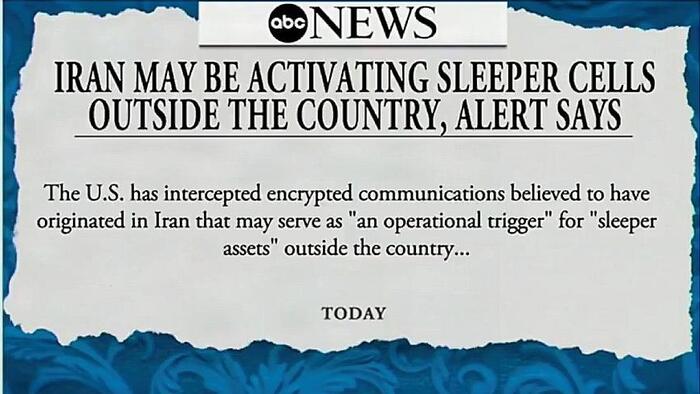

In a dramatic escalation of geopolitical tensions, U.S. intelligence agencies have intercepted what appears to be an "operational trigger" message from Iran, signaling the potential activation of clandestine sleeper cells embedded in foreign nations. This alarming development coincides with explicit threats issued by Tehran directly targeting President Donald Trump, following the death of Iran’s former supreme leader, Ayatollah Ali Khamenei, in a U.S.-Israeli airstrike. The intercepted communication, identified shortly after Khamenei’s demise on February 28, has put global security apparatuses on high alert, raising profound concerns about potential retaliatory attacks orchestrated by Iran or its proxies worldwide.
The Intelligence Intercepts and Activation of Covert Networks
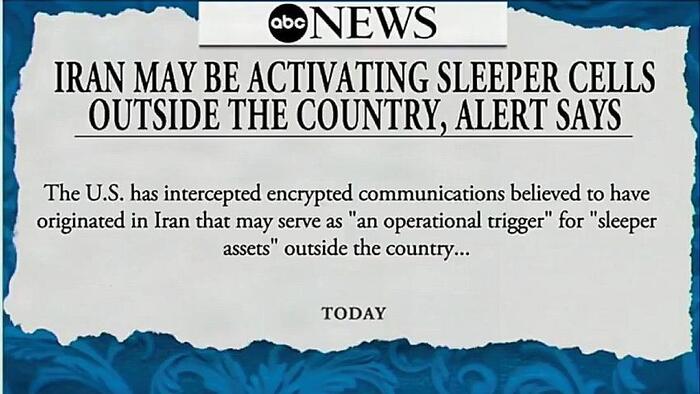
The core of the current crisis stems from a highly sensitive intelligence intercept, first reported by ABC News, which has been described as an "operational trigger" for Iranian sleeper cells. This encrypted message, believed to have originated from within Iran, was flagged by U.S. analysts shortly after the death of Ayatollah Ali Khamenei. Intelligence officials characterize the signal as bearing characteristics consistent with historical methods used to activate covert assets operating outside their originating country, often bypassing conventional internet-based communications to ensure secrecy and evade detection. These methods can include "numbers stations" broadcasting coded messages, dead drops, or one-time pad communications, which are notoriously difficult to trace to their source or decode without prior knowledge.
The alert explicitly states that "the signals could be intended to activate or provide instructions to prepositioned sleeper assets operating outside the originating country." Such assets, often deeply embedded within foreign societies, could include individuals with no overt ties to Iran, trained operatives, or even sympathizers awaiting specific directives. The sophisticated nature of these communications underscores Iran’s long-standing capability and commitment to maintaining a covert global network, often leveraging its Islamic Revolutionary Guard Corps (IRGC) Quds Force for foreign operations. The Quds Force, an elite branch of the IRGC, is responsible for extraterritorial operations and has a documented history of supporting proxy groups and conducting clandestine activities across the Middle East, Africa, Latin America, and even within Western nations.
Concerns are further compounded by intelligence reports suggesting that Iranian-linked operatives have been utilizing indirect routes, such as through Venezuela, to enter Western nations. This strategy allows them to establish and reinforce networks in proximity to the United States, potentially creating a direct threat to American soil and its allies. These routes exploit existing migration patterns and porous borders, making it challenging for security agencies to differentiate between genuine migrants and covert operatives. The historical precedent for such infiltration methods adds a layer of urgency to the current alerts.
Escalating Tensions and the Succession Crisis in Tehran
The current crisis is inextricably linked to the dramatic events surrounding the death of Ayatollah Ali Khamenei. On February 28, the world was rocked by news of a U.S.-Israeli airstrike that resulted in the demise of Iran’s long-serving supreme leader. This act, perceived by Tehran as an overt declaration of war, immediately plunged the region into an unprecedented state of alert. Khamenei’s death triggered a swift, albeit controversial, succession process, leading to the appointment of his son, Mojtaba Khamenei, as the new supreme leader.
Mojtaba Khamenei’s ascension has been met with mixed reactions both internally and internationally. Widely regarded as a more extremist figure with deep ties to the IRGC, his leadership is seen by some analysts as portending a more aggressive and uncompromising stance from Tehran. Reports suggest Mojtaba himself may have been wounded in the ongoing conflict, further fueling speculation about his personal motivations and potential for vengeance. His reputation as "vengeful" within certain intelligence circles only heightens concerns about the trajectory of Iranian foreign policy under his command. While state media has rallied support for the new leader, internal dissent is palpable, with reports of protests in Iran featuring chants of "death to Mojtaba," indicating significant opposition to his rule and the clerical establishment. This internal unrest could either temper or exacerbate Iran’s external aggression, depending on how the new leadership chooses to consolidate power.
The U.S.-Israeli airstrike that killed the elder Khamenei represents a significant turning point in the decades-long shadow war between the two nations and their proxies. This direct targeting of Iran’s highest religious and political authority signifies a profound shift from previous covert operations or proxy conflicts, pushing the confrontation into uncharted and exceedingly dangerous territory.
Direct Warnings and Rhetorical Escalation
The diplomatic and rhetorical exchanges between Washington and Tehran have mirrored the escalating military and intelligence activities. President Trump, speaking on Fox News, issued a stark warning to the newly appointed Mojtaba Khamenei, stating that he would be unable to "live in peace." Trump further expressed his dissatisfaction with the appointment, cautioning Iran to brace for "death, fire and fury" if it were to carry out its threats of shutting down the Strait of Hormuz. This rhetoric, reminiscent of his earlier "fire and fury" warnings to North Korea, underscores the severity of the U.S. posture.
Iran’s security chief, Ali Larijani, swiftly dismissed Trump’s remarks as "empty threats." In a chilling counter-warning, Larijani stated, "Even those greater than you could not eliminate the Iranian nation. Take care of yourself not to be eliminated!" This direct, personal threat against the U.S. President signals a dangerous new phase in the adversarial relationship, moving beyond traditional geopolitical posturing to explicit personal warnings. Such an exchange, disseminated widely across global media, serves to further inflame an already volatile situation and leaves little room for de-escalation through diplomatic channels.
The Threat Landscape: Operatives, Plots, and Vulnerabilities
The threats articulated by Iran are not merely rhetorical; they are underpinned by a demonstrable history of plotting and attempted attacks. Days prior to these latest developments, Asif Merchant, a Pakistani national reportedly trained by Iran’s IRGC, was convicted for plotting to assassinate President Trump during the 2024 election campaign. This plot, investigators confirmed, was linked to avenging the 2020 killing of IRGC Quds Force commander Qasem Soleimani in a U.S. drone strike. Merchant’s conviction provides concrete evidence of Iran’s intent and capability to carry out high-profile assassinations targeting U.S. officials.
Further compounding these concerns, Merchant reportedly told FBI agents that he suspected Iran was behind the July 13, 2024, assassination attempt on President Trump in Butler, Pennsylvania. He claimed that this attempt mirrored his own scheme, which he alleged was orchestrated under coercion from the IRGC, with threats made against his family. Prosecutors presented evidence during his trial alleging that Merchant actively recruited hitmen targeting various U.S. politicians, including President Trump, former Vice President Joe Biden, and former UN Ambassador Nikki Haley. During the course of his recruitment efforts, Merchant was documented handing over $5,000 to undercover agents, further solidifying the evidence against him.
Security experts are increasingly warning of the multifaceted nature of the threat, encompassing both highly organized cells and lone actors inspired by Iranian rhetoric or ideology. Former Department of Homeland Security (DHS) adviser Charles Marino emphasized the potential for simultaneous, coordinated attacks by cells comprising 10-20 individuals. Such groups, he warned, could target "soft spots" like concerts, sporting events, or other large public gatherings, maximizing casualties and psychological impact. The upcoming World Cup, designated a National Special Security Event (NSSE) by the U.S. government, is a particular point of concern. NSSE designations are applied to major events that require extensive federal security planning and resources due to their high-profile nature and potential as terrorist targets. The World Cup, with its massive international audience and numerous venues, presents an attractive target for groups seeking to make a global statement.
The IRGC’s history of utilizing proxy groups and establishing sleeper networks means that even without direct Iranian state involvement, "lone wolf" attacks inspired by state rhetoric remain a significant danger. The propagation of extremist ideologies through state media and online channels can radicalize individuals who may then act independently, making detection and prevention exceptionally challenging for counter-terrorism agencies.
Military Responses and Regional Dynamics
The U.S. has responded forcefully to Iranian actions and threats. Defense Secretary Pete Hegseth announced that U.S. strikes had successfully eliminated the IRGC leader believed to be behind the assassination plot against President Trump. Hegseth characterized the recent period as the "most intense day" of attacks on Iran, indicating a significant escalation in military engagement. He also noted that refined intelligence was leading to more precise and effective strikes, which in turn appeared to be impacting Iran’s retaliatory capabilities, with fewer missiles fired in recent hours.
This military escalation is occurring within a broader regional conflict. Israeli Prime Minister Benjamin Netanyahu has affirmed that Israel is "not done yet" in Iran, signaling further military actions. Concurrently, Israel has issued warnings to Lebanese residents ahead of anticipated strikes on Hezbollah, Iran’s most powerful proxy in the region. This suggests a concerted effort by Israel to degrade Iranian influence and capabilities, both directly and through its proxies.
Amidst these regional strains, French President Emmanuel Macron has reassured Cyprus of France’s unwavering support, underscoring the broader international concern about regional stability. The eastern Mediterranean, a critical strategic waterway, could be drawn into a wider conflict, impacting global trade and energy routes.
The capital city of Tehran has also borne the brunt of these escalating hostilities, with reports of massive airstrikes and "unusually large" explosions. Images of smoke billowing over the city have circulated widely, depicting the devastating impact of the conflict on urban centers. Despite the intense military pressure, Iran’s Foreign Minister Abbas Araghchi has categorically ruled out resuming negotiations with the U.S., citing past betrayals and lack of trust. This stance suggests a hardened position from Tehran, making diplomatic de-escalation even more challenging. President Trump, for his part, has vowed on Truth Social to end the war "very soon" but also indicated that further actions are imminent, reiterating his promise to hit Iran "twenty times harder" if the flow of oil is blocked. Iran, however, insists it will determine the war’s end and continue missile attacks as needed, signaling a protracted and dangerous confrontation.
Economic Fallout: The Strait of Hormuz and Global Markets
A critical flashpoint in the conflict is the Strait of Hormuz, a narrow waterway connecting the Persian Gulf to the open ocean. Iran has made good on its threats, with the Strait effectively shut down to oil tankers. This closure has immediately halted a significant portion of global crude oil shipments, leading to an unprecedented surge in global oil prices. The Strait of Hormuz is one of the world’s most strategically important chokepoints, through which approximately 20% of the world’s total petroleum liquids consumption, or about 21 million barrels per day, passes. Any disruption here has immediate and severe repercussions for global energy markets.
The immediate consequence has been a massive spike in global oil prices, with crude futures soaring to record highs. Energy storage facilities worldwide are rapidly filling up as tankers are unable to transit the Strait, exacerbating the supply crisis. Saudi Arabia’s state oil company, Aramco, or a similar entity, has issued dire warnings of an impending "market catastrophe" due to these disruptions. Such an event would trigger widespread economic instability, potentially pushing major economies into recession, fueling inflation, and disrupting global supply chains far beyond the energy sector. The economic fallout alone could be catastrophic, affecting everything from manufacturing and transportation to consumer prices and financial markets.
In a move designed to fracture international solidarity against it, Iran’s IRGC announced that countries expelling U.S. and Israeli ambassadors would be granted passage through the Strait of Hormuz. This tactic aims to create divisions among nations, offering economic incentives for political alignment with Tehran, further complicating international efforts to address the crisis.
Broader Implications for Global Security and Stability
The confluence of these events – intelligence intercepts signaling activated sleeper cells, direct threats between heads of state, ongoing military strikes, and the severe disruption of global energy markets – underscores an extraordinarily precarious security landscape. The potential implications for U.S. national security, the stability of the Middle East, and indeed, global order, are profound.
The immediate concern for the United States and its allies is the risk of terrorist attacks by activated sleeper cells or inspired lone actors. Counter-terrorism agencies face an immense challenge in identifying, tracking, and neutralizing these threats, especially given the historical difficulty in detecting covert operatives. The sophistication of Iranian intelligence, coupled with its proxies’ reach, means that targets could be diverse, ranging from government facilities and military personnel to civilian infrastructure and public spaces.
Geopolitically, the conflict risks drawing in a wider array of regional and international actors. The direct targeting of Iran’s supreme leader and the subsequent threats from Tehran have shattered any remaining pretense of a "shadow war," elevating the conflict to an overt and highly dangerous confrontation. The possibility of miscalculation or unintended escalation looms large, potentially spiraling into a full-scale regional war with devastating humanitarian and economic consequences.
The internal dynamics within Iran are also critical. While state media attempts to project an image of unity, protests against Mojtaba Khamenei signal deep divisions. The new leader’s legitimacy, particularly after a controversial succession and amidst ongoing conflict, could be fragile. This internal instability could lead to further repression or, conversely, to a more aggressive external policy designed to rally nationalistic support.
In conclusion, the current security landscape is fraught with peril. The activation of Iranian sleeper cells, coupled with direct threats to President Trump and the economic ramifications of the Strait of Hormuz closure, presents a complex and urgent challenge to international security. The global community watches with bated breath as this multifaceted crisis continues to unfold, with the potential for further escalation and far-reaching consequences for peace and stability worldwide.