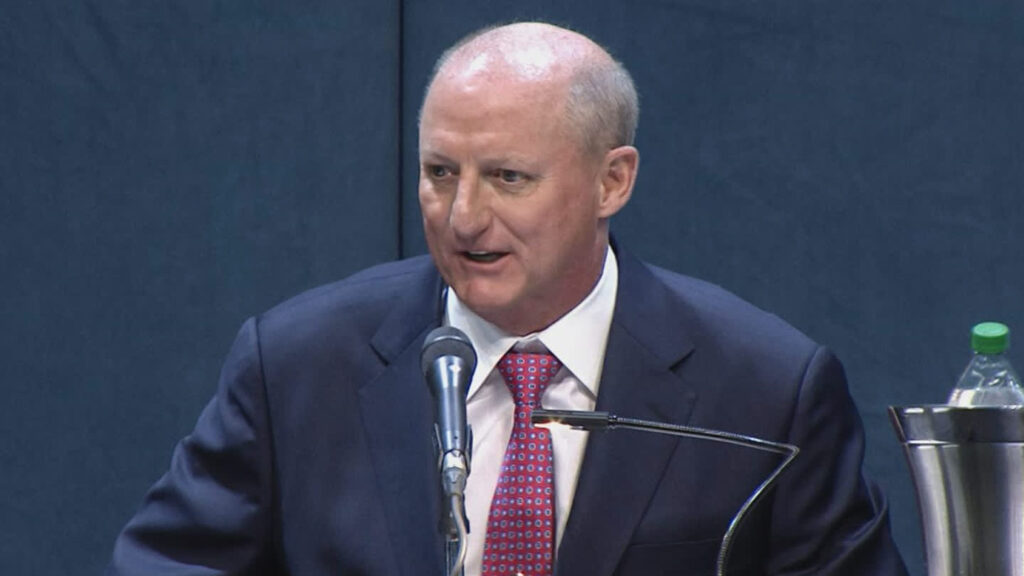

Greg Abel, stepping into the formidable role of chief executive at Berkshire Hathaway, has used his inaugural annual shareholder letter to firmly signal a path of continuity, reassuring investors that the conglomerate’s bedrock principles of financial conservatism and disciplined investing, meticulously cultivated under the legendary Warren Buffett, will endure "into perpetuity." The highly anticipated missive, released Saturday alongside Berkshire’s robust fourth-quarter 2025 earnings and the company’s annual report, marks a pivotal moment in the storied history of the multinational conglomerate, cementing the formal transition of leadership.
"I am honored by our Board’s decision to appoint me CEO of Berkshire and humbled to succeed Warren as I write my first annual letter to you," Abel, 63, penned in the opening lines of the letter, acknowledging the immense shadow cast by his predecessor. "Warren is obviously a very hard act to follow." This statement, while modest, underscores the monumental task ahead for Abel, who officially assumed the CEO position at the start of 2026, with Buffett, 95, transitioning to remain active as chairman.
A New Era, Familiar Principles: The Transition of Leadership
The succession at Berkshire Hathaway has been one of the most closely watched corporate transitions in modern financial history. For decades, the question of "who after Warren?" loomed large over the Omaha-based giant, with investors and analysts scrutinizing every hint and development. Warren Buffett, often dubbed the "Oracle of Omaha," built Berkshire Hathaway from a struggling textile mill into a diversified powerhouse with a market capitalization exceeding hundreds of billions of dollars, achieving an average annual gain of over 20% for shareholders since 1965, far outpacing the S&P 500. His unique blend of value investing, long-term holding, and a hands-off decentralized management style became a blueprint for success and a source of fascination for generations of investors.
Greg Abel’s designation as Buffett’s successor was officially confirmed in May 2021, though he had been widely considered the frontrunner for years, having steadily risen through the ranks and earning Buffett’s explicit trust. His appointment as Vice Chairman of Berkshire’s non-insurance operations in 2018, alongside Ajit Jain overseeing the insurance businesses, was a clear signal of the impending leadership shift. This carefully orchestrated, multi-year transition aimed to minimize disruption and instill confidence in the continuity of Berkshire’s unique culture and strategic direction. Abel’s first letter as CEO, therefore, was not merely a formality but a critical communication designed to affirm that the core tenets of Berkshire’s success would remain inviolate.
Upholding the Fortress: Financial Prudence and Capital Discipline
Central to Abel’s message was a steadfast commitment to preserving Berkshire’s unparalleled financial strength and maintaining strict capital discipline. He articulated a clear framework of foundational values, emphasizing the safeguarding of the company’s "fortress-like balance sheet." This metaphor, long a favorite of Buffett’s, signifies an unshakeable financial foundation, designed to withstand any economic storm and seize opportunities when they arise.
"We maintain a fortress-like balance sheet, ensuring Berkshire’s foundation is never compromised," Abel wrote, elaborating on the practical implications of this principle. "We preserve this financial strength by using debt sparingly and prudently. Our substantial liquidity enables us to meet our obligations even under the most adverse conditions and to respond swiftly when opportunities arise." This commitment to financial conservatism is a hallmark of Berkshire’s approach, distinguishing it from many corporations that leverage debt more aggressively. The disciplined use of debt ensures flexibility and reduces vulnerability during periods of market volatility or economic downturns.
The Strategic Mountain of Cash
One of the most striking figures highlighted in the letter was Berkshire’s prodigious cash pile, which stood at an astounding $373.3 billion at the close of 2025. This vast sum, often a topic of discussion among analysts, was described by Abel not as a sign of investment paralysis, but as "strategic dry powder." This substantial liquidity, he explained, is a deliberate choice, affording the company the unparalleled ability to act decisively when significant investment opportunities surface, without ever jeopardizing its underlying resilience.
Market observers have long recognized Berkshire’s penchant for holding substantial cash reserves, a strategy that has allowed it to deploy capital during times of crisis when other companies are retrenching. For example, during the 2008 financial crisis, Berkshire made several high-profile investments, including a $5 billion preferred stock investment in Goldman Sachs, which yielded significant returns. The current cash hoard, while presenting a challenge for deployment in a competitive market, also positions Berkshire uniquely to execute large-scale acquisitions or make substantial investments should a compelling opportunity arise, echoing Buffett’s historical approach of being "greedy when others are fearful." Analysts suggest that while such a large cash balance can dilute returns if not effectively deployed, it also serves as a powerful deterrent against financial distress and a strategic weapon for future growth.
The Enduring No-Dividend Stance
Abel also used his letter to reaffirm Berkshire’s long-standing, and sometimes debated, resistance to paying a cash dividend. This policy, a cornerstone of Buffett’s capital allocation strategy, prioritizes reinvestment over distribution, aiming to compound shareholder value internally.
"Our approach to cash dividends continues to be that Berkshire will not pay dividends so long as more than one dollar of market value for shareholders is reasonably likely to be created by each dollar of retained earnings," Abel stated, adding that the company’s board reviews this policy annually. This principle aligns with a philosophy that Berkshire can generate higher returns by reinvesting its earnings into its diverse businesses or through strategic acquisitions, rather than distributing them to shareholders who would then face personal income taxes. For long-term investors focused on capital appreciation, this policy has historically been a significant advantage, allowing their investment to compound tax-efficiently within the Berkshire structure. However, for income-focused investors or those accustomed to regular payouts, it remains a distinctive feature of Berkshire’s financial model.
Stewarding the Portfolio: Investment Philosophy Endures
Beyond the balance sheet, Abel provided insights into Berkshire’s investment philosophy and the stewardship of its vast equity portfolio. He underscored that the same disciplined framework applies uniformly across all capital allocation activities, whether it involves acquiring an entire business, purchasing shares of a public company, or repurchasing Berkshire’s own stock.
"We will assess value carefully, act patiently, and hold for the long term – preferably forever," he wrote, echoing Buffett’s famous adage about buying wonderful businesses at fair prices and holding them indefinitely. This patient, value-oriented approach, often contrasted with the short-term trading prevalent on Wall Street, has been a bedrock of Berkshire’s success, enabling it to capitalize on the compounding power of strong businesses over decades.
A Concentrated Approach to Enduring Value
Abel reiterated that Berkshire’s equity portfolio would remain concentrated in a select group of high-quality American companies, which he expects to compound value over decades. He specifically named Apple, American Express, Coca-Cola, and Moody’s as examples. These companies represent iconic brands with strong competitive advantages, aligning perfectly with Berkshire’s long-term investment criteria. Notably absent from this specific list was Bank of America, which, despite its omission from this particular enumeration, ranked as Berkshire’s third-largest holding at the close of 2025, underscoring the dynamic nature of portfolio communication versus full disclosure.
The concentrated approach, with limited trading activity, will continue to be the norm. However, Abel clarified that Berkshire would be prepared to "significantly adjust" a position if the long-term economic prospects of a company were to fundamentally change. This pragmatic flexibility acknowledges that while the preference is to hold forever, prudent portfolio management requires adapting to evolving business realities. The ability to pivot, albeit rarely, is a critical component of risk management within a concentrated portfolio strategy.
A New Hand on the Equity Tiller
A key question that had lingered over the leadership transition concerned the direct oversight of Berkshire’s massive equity portfolio, a role historically synonymous with Warren Buffett himself. Abel settled this query decisively, stating that he would directly oversee the equity portfolio, confirming his hands-on engagement with all facets of capital allocation.
"At Berkshire, equity investments are fundamental to our capital allocation activities; responsibility ultimately resides with me as CEO," Abel wrote, drawing a clear line of authority. While Ted Weschler, a seasoned investment manager who joined Berkshire in 2011, will continue to manage approximately 6% of the portfolio—including investments previously overseen by Todd Combs—Abel’s direct involvement in the primary equity allocation signifies a direct transfer of this critical responsibility from Buffett. The mention of Todd Combs is particularly relevant as Combs, another long-time investment lieutenant to Buffett and CEO of Geico, recently departed for JPMorgan, necessitating a re-evaluation of portfolio management structures. This shift underscores Abel’s comprehensive command over Berkshire’s investment strategy, integrating it fully with his broader CEO responsibilities.
The Architect of Continuity: Greg Abel’s Journey and Vision
Greg Abel’s extensive background within Berkshire Hathaway positions him uniquely to ensure the continuity he espouses. Known internally as a highly capable and hands-on operator, Abel has cultivated a deep bench of subsidiary CEOs reporting directly to him. His journey with Berkshire began in 2000 when the conglomerate acquired MidAmerican Energy, where Abel had been instrumental. He eventually became the CEO of MidAmerican Energy in 2008, a role that saw him expand the company significantly, transforming it into a diversified energy business. Prior to joining Berkshire, Abel had a distinguished career at CalEnergy, where he played a pivotal role in its growth and diversification.
This 25-year tenure within the Berkshire ecosystem, primarily overseeing its vast non-insurance operations, has given him an intimate understanding of the conglomerate’s diverse businesses and its unique decentralized management model. This model, which empowers subsidiary managers with significant autonomy while requiring stringent capital discipline and ethical conduct, is another value Abel highlighted in his letter, along with Berkshire’s "reputation for integrity."
A Decades-Long Vision
Abel underscored that he views his role as a profound, long-term commitment, intending to steward Berkshire for decades to come. His vision extends far beyond typical corporate cycles, mirroring the generational outlook synonymous with Buffett.
"Our owners’ time horizon extends beyond the tenure of any individual CEO," he wrote. "I will not be your CEO for the next 60 years as simple arithmetic makes that – shall we say – an ambitious plan. However, 20 years from now, when I will have just a fraction of the tenure that Warren had, my intention is that you – or your descendants – will be proud that your company is even stronger." This forward-looking statement not only reinforces the long-term investment horizon of Berkshire but also positions Abel as a custodian of an enduring legacy, rather than merely a transient executive. It sets a high bar for his own performance, measured not in quarters, but in decades, a testament to the unique culture of patient capital at Berkshire Hathaway.
The Enduring Oracle: Buffett’s Continued Presence
Despite the formal handover of the CEO title, Warren Buffett remains an active and influential figure within Berkshire Hathaway. Abel explicitly noted that Buffett continues to be actively engaged as chairman, maintaining his routine of coming into the office five days a week and continuing to provide invaluable input. This ongoing presence ensures a seamless transition, allowing Abel to draw upon Buffett’s unparalleled wisdom and experience while gradually imprinting his own leadership style on the conglomerate. It also provides an additional layer of reassurance to investors who have relied on Buffett’s guidance for nearly six decades. The chairman role is not merely titular; it signifies Buffett’s continued strategic counsel and deep involvement in key decisions, though the ultimate operational responsibility now rests firmly with Abel.
Beyond Quarterly Noise: A Unique Communication Stance
In a stark contrast to typical Wall Street practices, Abel also made clear that Berkshire Hathaway will not adopt the conventional cadence of quarterly earnings calls. This decision reaffirms a long-standing tradition at Berkshire, which has consistently eschewed short-termism in favor of a long-term focus on intrinsic value creation.
"We concentrate on quality, not frequency. If a significant issue arises, you will hear from me, but it will not be through quarterly commentary, given our long-term horizon," he wrote. This approach signals a continued disdain for the often-distracting quarterly earnings treadmill, which can pressure companies to prioritize short-term results over long-term strategic investments. By opting out of this ritual, Berkshire reinforces its commitment to patient capital and allows its management teams to focus on operational excellence and enduring value creation without the constant pressure of analyst expectations and quarterly reporting cycles.
Analyst Perspectives and Market Implications
Abel’s inaugural letter was largely met with positive reactions from the investment community, affirming investor expectations for continuity and stability. Analysts generally viewed the letter as a well-crafted communication that successfully articulated Abel’s vision while paying homage to the company’s foundational principles. The clear delineation of his direct oversight of the equity portfolio, for instance, provided clarity on a crucial aspect of Berkshire’s future investment strategy.
The implications of Abel’s leadership are multi-faceted. While continuity is the overarching theme, the sheer scale of Berkshire’s cash pile and its inherent challenge of deployment will be a constant test for Abel. Investors will be keenly watching for his approach to large-scale capital allocation, expecting him to identify and execute "elephant-sized" acquisitions that can meaningfully move the needle for a company of Berkshire’s magnitude. His deep operational experience, particularly in the energy sector, suggests a pragmatic, value-driven approach to identifying and integrating new businesses.
The consistent emphasis on integrity and decentralized management also bodes well for the continued health of Berkshire’s diverse subsidiaries. By empowering competent managers and fostering an entrepreneurial spirit, Berkshire has historically attracted and retained top talent, a model Abel is clearly committed to preserving. The ongoing presence of Warren Buffett as chairman, while undoubtedly a comfort, also means Abel will operate with the wisdom of the "Oracle" at his disposal, providing a unique blend of new leadership with enduring guidance.
In conclusion, Greg Abel’s first shareholder letter as CEO of Berkshire Hathaway is a definitive statement of intent: the core values and strategic principles that propelled Berkshire to unprecedented success under Warren Buffett are not merely historical relics but living tenets that will guide the conglomerate into its next chapter. It is a promise of stability, discipline, and a relentless pursuit of long-term value, ensuring that the fortress built by Buffett will not only endure but continue to grow stronger for generations of shareholders to come.